Sub-Earth
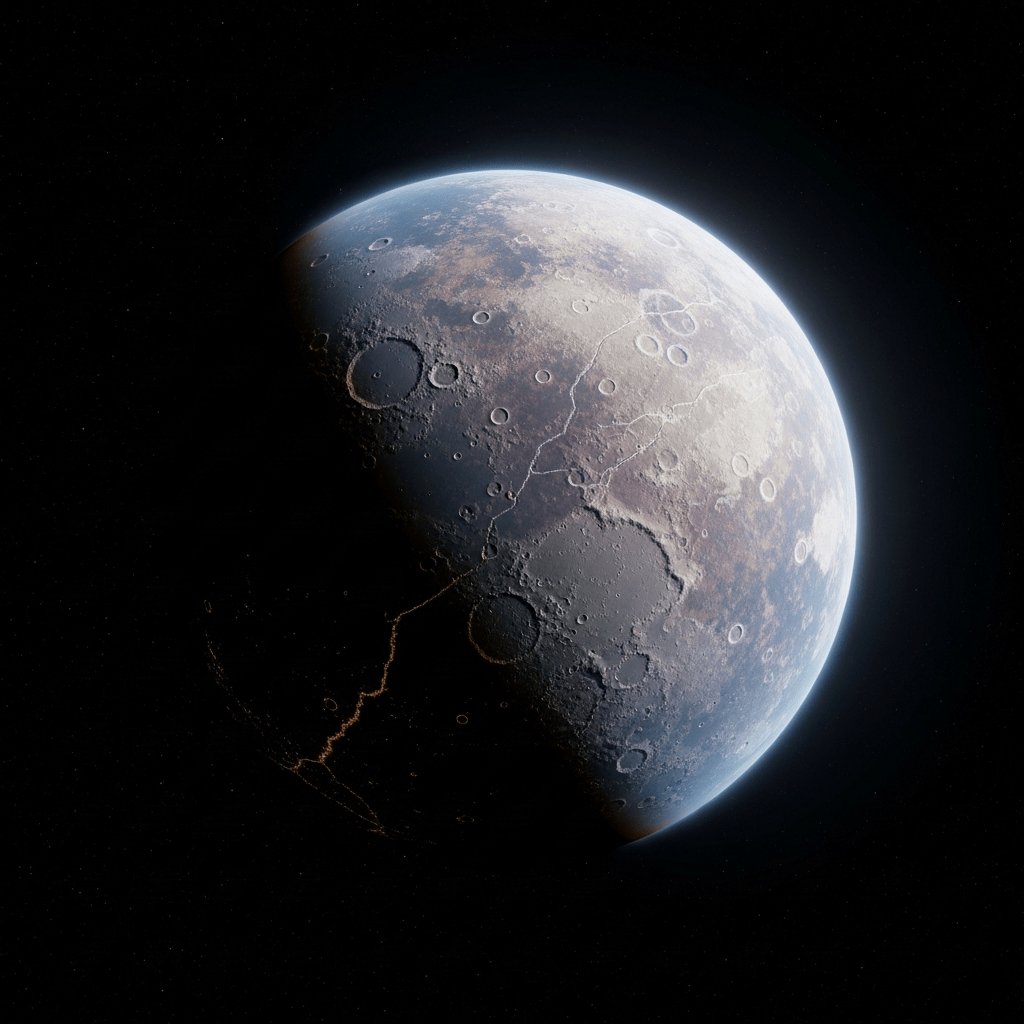
Sub-Earth planets are planetary bodies smaller in mass and size than Earth, encompassing objects from Moon-sized up to just below Earth’s mass and radius.
Sub-Earth planets are planetary bodies smaller in mass and size than Earth, encompassing objects from Moon-sized up to just below Earth’s mass and radius.
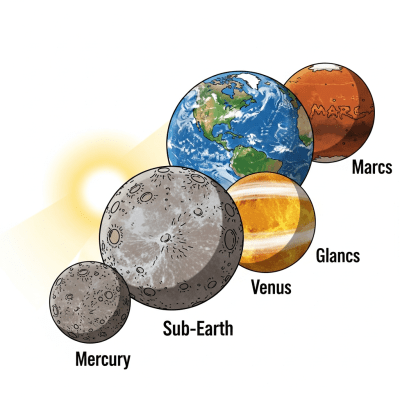
The term "Sub-Earth" arose with advances in exoplanet detection and comparative planetology, as scientists sought to classify planets by their mass and radius relative to Earth. Emerging in the early 2010s through research and catalogs like the NASA Exoplanet Archive, it captures the lower end of the planetary size spectrum, including Mercury-, Mars-, and Moon-sized worlds. While not formally defined by the IAU, it is widely adopted in the exoplanet community to better understand planetary diversity and formation.
Sub-Earth planets belong to the terrestrial category, defined primarily by their rocky composition and masses less than one Earth mass. They include subclasses such as Moon-sized, Mercury-sized, and Mars-sized planets. This classification distinguishes them from larger terrestrial planets and overlaps with terms like "small rocky planets" in compositional taxonomies, though boundaries with large moons and minor planets remain ambiguous.
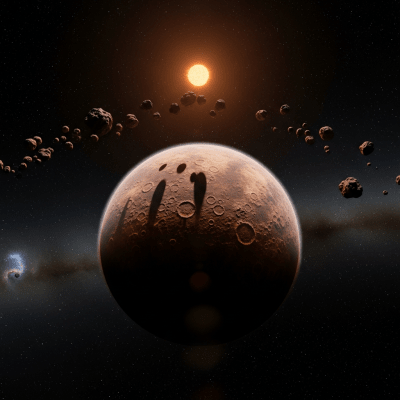
These planets typically exhibit solid, rocky surfaces with varied iron-to-silicate ratios influencing their density and structure. Their radii range from about 0.27 Earth radii (Moon-sized) up to just under 1 Earth radius. Visually, they resemble smaller terrestrial worlds, often lacking thick atmospheres and featuring cratered, barren landscapes similar to Mercury or the Moon.
Sub-Earth planets function as fundamental building blocks in planetary systems, often representing remnants of planet formation or failed accretion. Their low gravity usually results in tenuous or absent atmospheres, limiting surface interactions. While not directly utilized by humans, studying these planets enhances our understanding of planetary formation, system evolution, and the range of possible terrestrial worlds.
Bring this kind into your world illustrated posters, mugs, and shirts.
Archival print, museum-grade paper
Buy Poster
Stoneware mug, dishwasher safe
Buy Mug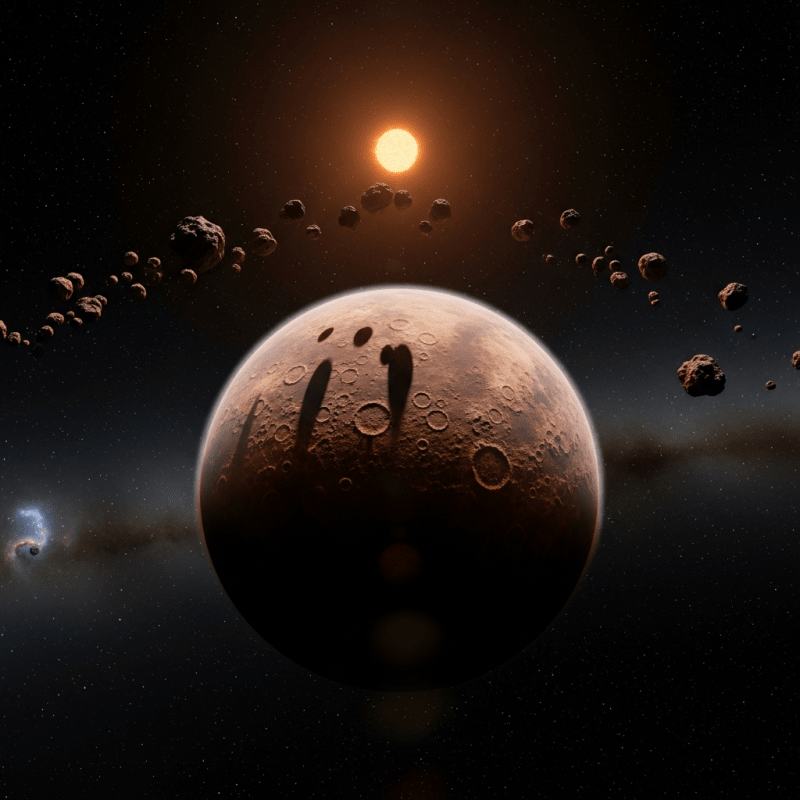
Soft cotton tee, unisex sizes
Buy ShirtThough less prominent in mythology or popular culture than larger planets, sub-Earth worlds like Mercury and Mars have inspired human imagination and exploration. Their small size and proximity to Earth make them subjects of scientific inquiry and artistic representation, symbolizing the diversity and complexity of planetary bodies beyond our home world.
Sub-Earth planets can occupy a broad range of orbits around their stars. In the Solar System, Mercury orbits close to the Sun, while Mars lies farther out. Exoplanet data is limited due to detection biases, but sub-Earths may be found in various orbital distances and periods, reflecting diverse system architectures.
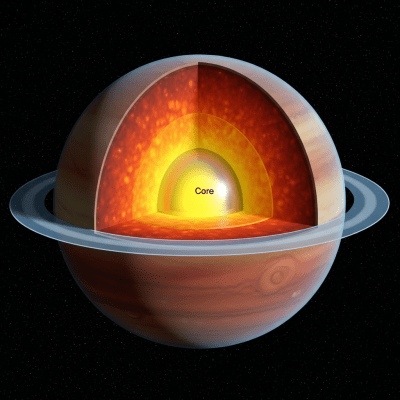

These planets have masses less than 1 Earth mass and radii smaller than 1 Earth radius, with compositions dominated by rocky materials such as silicates and metals. Their densities vary, influenced by iron content and internal structure, ranging from about 3.3 to 5.4 grams per cubic centimeter. Morphologically, they possess solid surfaces without extensive gaseous envelopes.
Atmospheres on sub-Earth planets are often tenuous or absent due to their weak gravity. Mercury and the Moon have exospheres composed of sparse gases, while Mars maintains a thin atmosphere primarily of carbon dioxide. These atmospheres are generally insufficient to support Earth-like weather or climate systems.
Sub-Earth planets within the Solar System, such as Mercury and Mars, have been explored by numerous robotic missions revealing their geology and atmospheres. Mercury was visited by Mariner 10 and MESSENGER, while Mars has been extensively studied by orbiters and rovers. The Moon, Earth's satellite, has been explored by crewed Apollo missions and robotic landers. Exoplanetary sub-Earths remain beyond direct exploration but are targets for future detection and characterization efforts.
Due to their small size and often tenuous atmospheres, sub-Earth planets generally have limited potential for habitability as we understand it. Their low gravity makes retaining thick atmospheres difficult, and surface conditions can be extreme. However, their diversity offers valuable insights into planetary environments and the factors influencing habitability across different worlds.