Rogue Planet
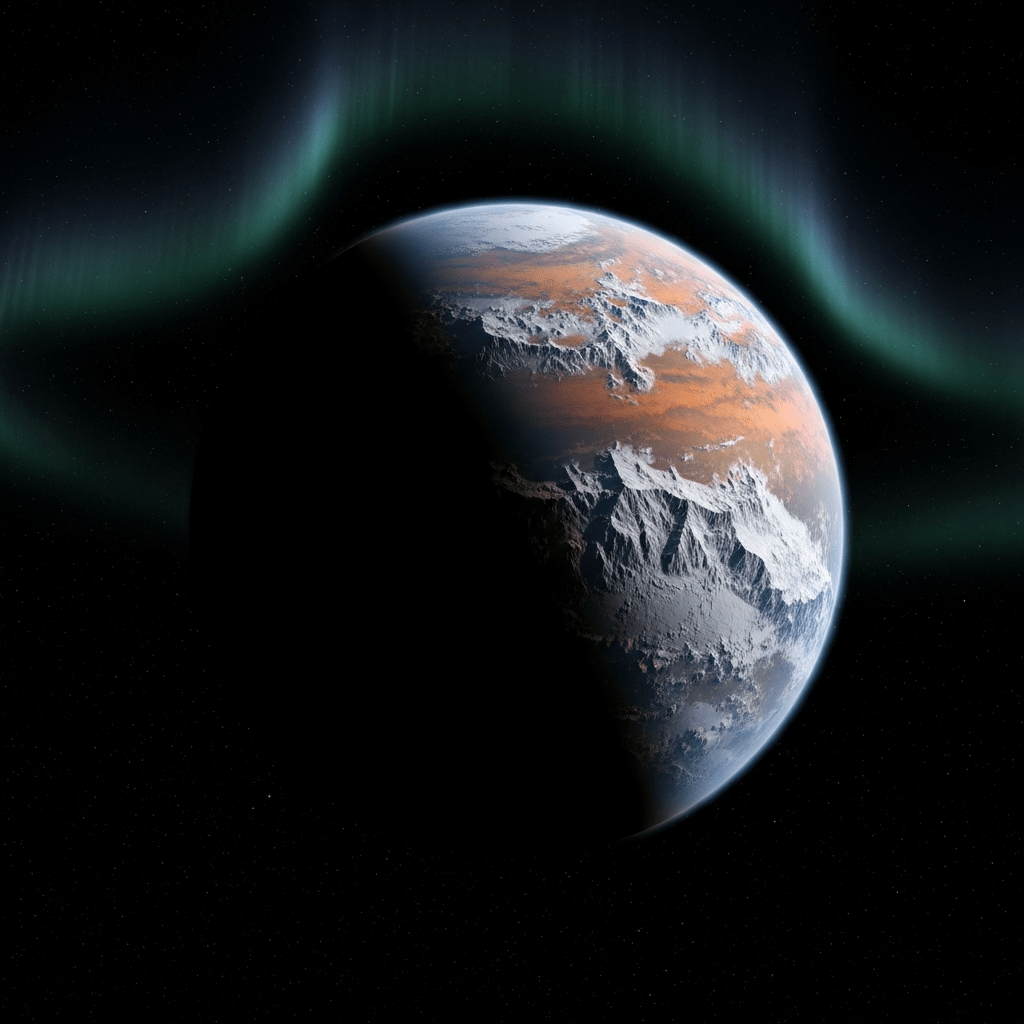
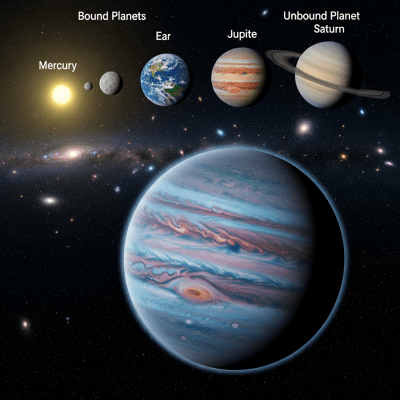
A rogue planet is a planetary-mass object that drifts through space without being gravitationally bound to any star.
A rogue planet is a planetary-mass object that drifts through space without being gravitationally bound to any star.
Rogue planets were first recognized in the early 21st century through advances in gravitational microlensing and direct imaging surveys. They are thought to originate either from ejection during chaotic interactions within planetary systems or from direct collapse in molecular clouds, forming independently like stars but below the mass threshold for fusion.
Classified primarily by their dynamical status, rogue planets belong to a unique category of planetary bodies unbound to any host star. Unlike typical planets defined by orbit, they are identified by their free-floating nature, distinguishing them from bound terrestrial, gas giant, or ice giant classes.
Due to their isolation and observational challenges, rogue planets' appearances are largely unknown. Some young, massive examples emit infrared light hinting at thick atmospheres, but their sizes, colors, and surface characteristics remain largely speculative.
Rogue planets traverse interstellar space independently, without orbiting a star. They do not interact with humans directly but serve as important natural laboratories for understanding planetary formation, dynamics, and the diversity of planetary systems beyond traditional star-bound models.
Bring this kind into your world illustrated posters, mugs, and shirts.

Archival print, museum-grade paper
Buy Poster
Stoneware mug, dishwasher safe
Buy Mug
Soft cotton tee, unisex sizes
Buy ShirtRogue planets capture imagination as cosmic wanderers, often depicted in science fiction as mysterious, lonely worlds. Their existence challenges traditional views of planetary systems and inspires artistic and literary exploration of isolation and the vastness of space.
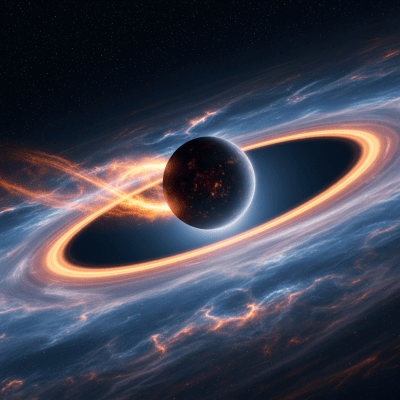
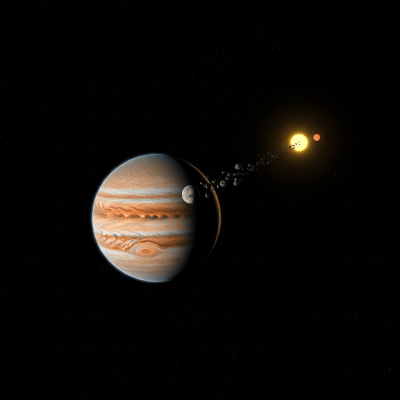
Rogue planets do not have stable orbits around stars. Instead, they drift through the galaxy, potentially influenced only by the gravitational fields of the galaxy or nearby star clusters, making their trajectories unpredictable and unbound.

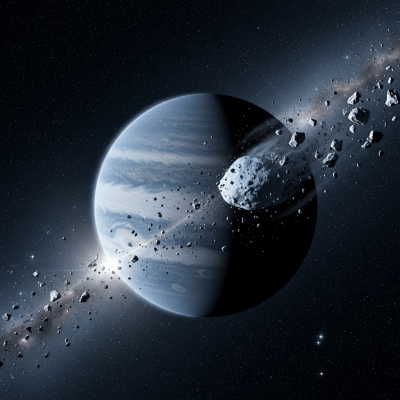
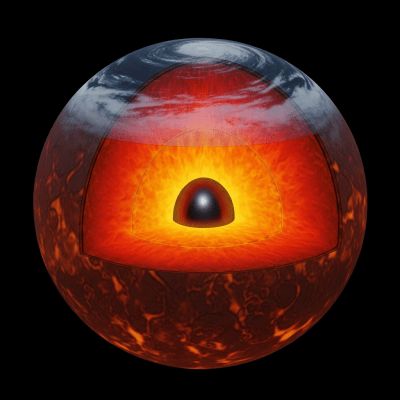
Rogue planets span a wide mass range, typically up to about 13 Jupiter masses, the approximate deuterium-burning limit. Their radii and densities are largely unknown due to observational limits. Composition is uncertain, but they may resemble gas giants or terrestrial planets depending on formation history.
While detailed atmospheric data is scarce, some rogue planet candidates exhibit infrared emissions indicative of thick atmospheres. However, the exact composition and structure remain unknown, and many may have tenuous or no atmospheres due to their isolation and cooling over time.
Rogue planets have not been visited by spacecraft. Their discovery relies on indirect detection methods like microlensing surveys (e.g., MOA, OGLE) and infrared imaging from telescopes. These techniques have gradually revealed a population of free-floating planetary-mass objects in the galaxy.
The potential for habitability on rogue planets is extremely limited due to their lack of stellar energy and frigid temperatures, often below 100 K. While internal heat or thick atmospheres might provide localized warmth, the absence of sunlight makes surface life as we know it improbable.