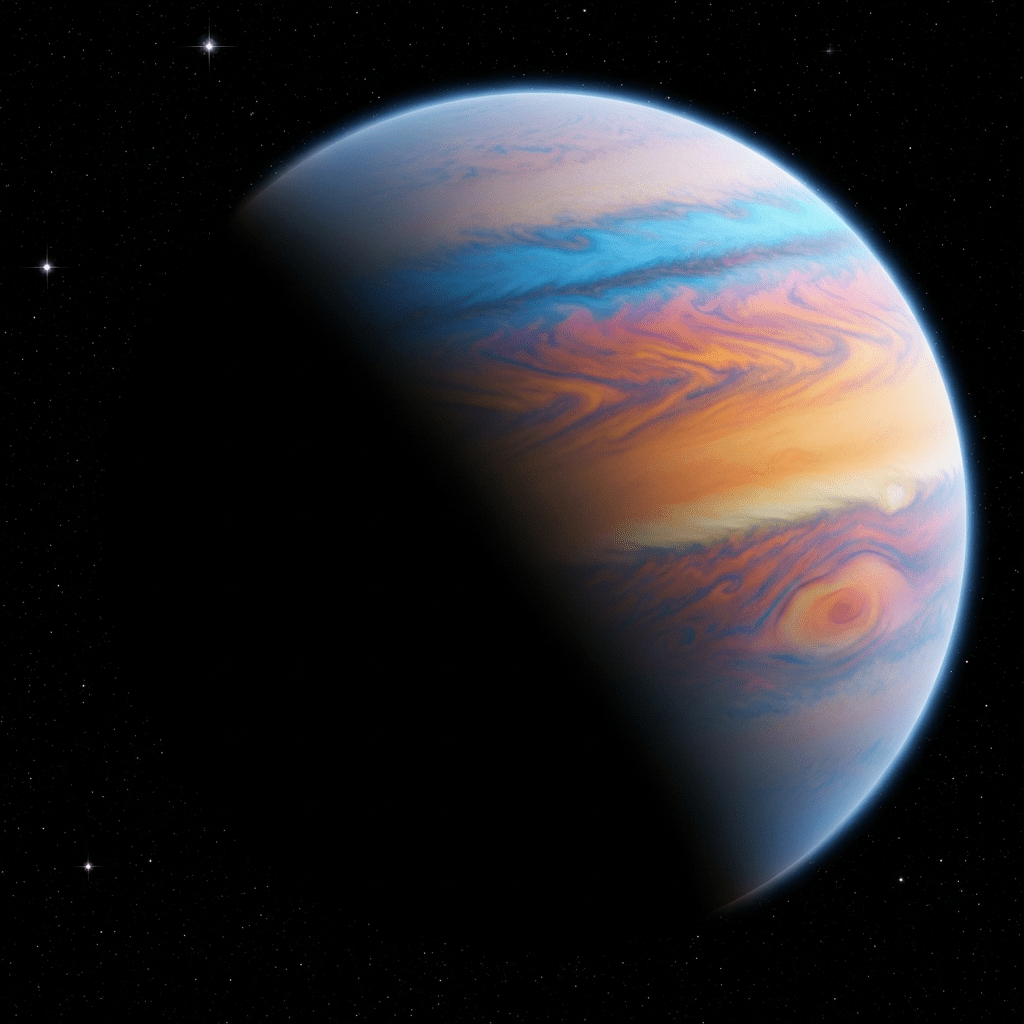
Puffy / Inflated Planet
A puffy or inflated planet is a gas giant distinguished by its unusually large radius relative to its mass, resulting in an exceptionally low density and a highly expanded atmosphere.
A puffy or inflated planet is a gas giant distinguished by its unusually large radius relative to its mass, resulting in an exceptionally low density and a highly expanded atmosphere.
The concept of puffy or inflated planets arose in the early 2000s with the discovery of exoplanets whose sizes far exceeded predictions from standard planetary models. This phenomenon was first systematically studied among hot Jupiters, with key examples like WASP-17b highlighting the class. The term gained traction through research by NASA’s Exoplanet Archive, the Extrasolar Planets Encyclopaedia, and numerous peer-reviewed studies exploring the causes of atmospheric inflation.
Puffy planets belong to the broader category of gas giants but are set apart by their inflated radii and low densities. They are often considered a morphological modifier rather than a fundamental taxonomic class, overlapping with hot Jupiters and some hot Neptunes. Their defining trait is the expansion of their hydrogen-helium atmospheres beyond typical sizes for their mass range.
These planets appear as gas giants with radii often exceeding 1.2 times that of Jupiter, sometimes reaching nearly twice Jupiter’s size. Their atmospheres are highly expanded and tenuous, dominated by molecular hydrogen and helium, with traces of alkali metals and exotic compounds that arise from intense heating. This gives them a bloated, voluminous form unlike denser gas giants.
Puffy planets primarily interact with their environment through their extended atmospheres, which are shaped by intense stellar irradiation and internal heat sources. Their inflated envelopes cause deep transit signatures, making them easier to detect via the transit method. They serve as natural laboratories for studying atmospheric physics under extreme conditions, though they have no direct utility for humans.
Bring this kind into your world illustrated posters, mugs, and shirts.
Archival print, museum-grade paper
Buy Poster
Stoneware mug, dishwasher safe
Buy Mug
Soft cotton tee, unisex sizes
Buy ShirtIn modern astronomy and popular science, puffy planets capture imagination as exotic worlds that challenge our understanding of planet formation and structure. They appear in scientific discussions and media as striking examples of planetary diversity, often symbolizing the extremes of exoplanetary science and the surprises found beyond our Solar System.
Most puffy planets orbit very close to their host stars, typically within 0.1 astronomical units. Their orbits are usually short-period, lasting only a few days, exposing them to intense stellar flux that heats and inflates their atmospheres. This proximity is a key factor in their inflated state.
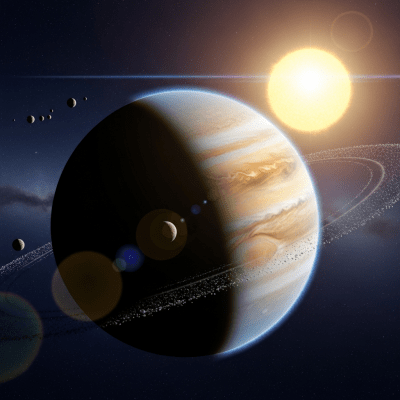
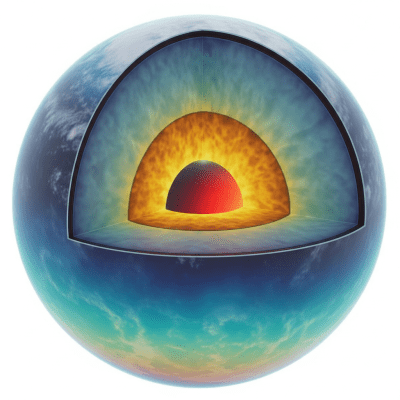
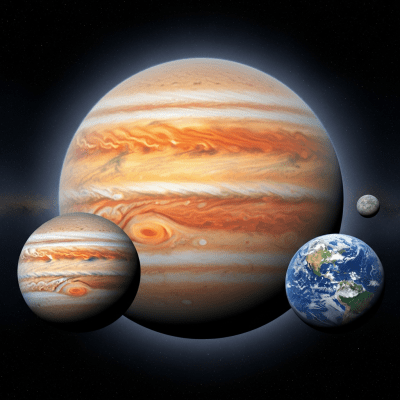
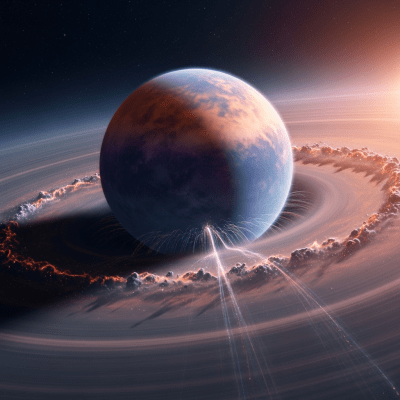
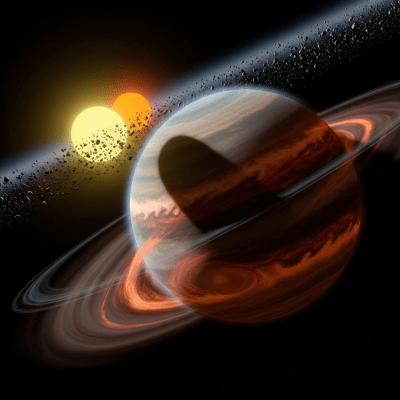
Puffy planets generally have masses around 0.1 to 2 Jupiter masses but possess radii exceeding 1.2 Jupiter radii, sometimes approaching 1.9. Their mean densities are exceptionally low, often below 0.3 grams per cubic centimeter. Compositionally, they are dominated by hydrogen and helium, with extensive, highly expanded gaseous envelopes.
These planets boast thick, extended atmospheres rich in molecular hydrogen and helium. High temperatures foster the presence of alkali metals and exotic compounds, contributing to complex atmospheric chemistry. Their atmospheres are inflated due to heating mechanisms, making them some of the most voluminous planetary envelopes known.
Human exploration of puffy planets is limited to remote observations. They were first identified through transit surveys in the early 2000s, with WASP-17b and Kepler-51 system planets serving as canonical examples. Advances in space telescopes and spectroscopy have since improved understanding of their atmospheres and inflation mechanisms.
Puffy planets are inhospitable to life due to their extreme temperatures, lack of solid surfaces, and volatile-rich, expanded atmospheres. Their close proximity to host stars results in harsh radiation environments, precluding conditions suitable for Earth-like habitability or colonization.