Neptune-Like
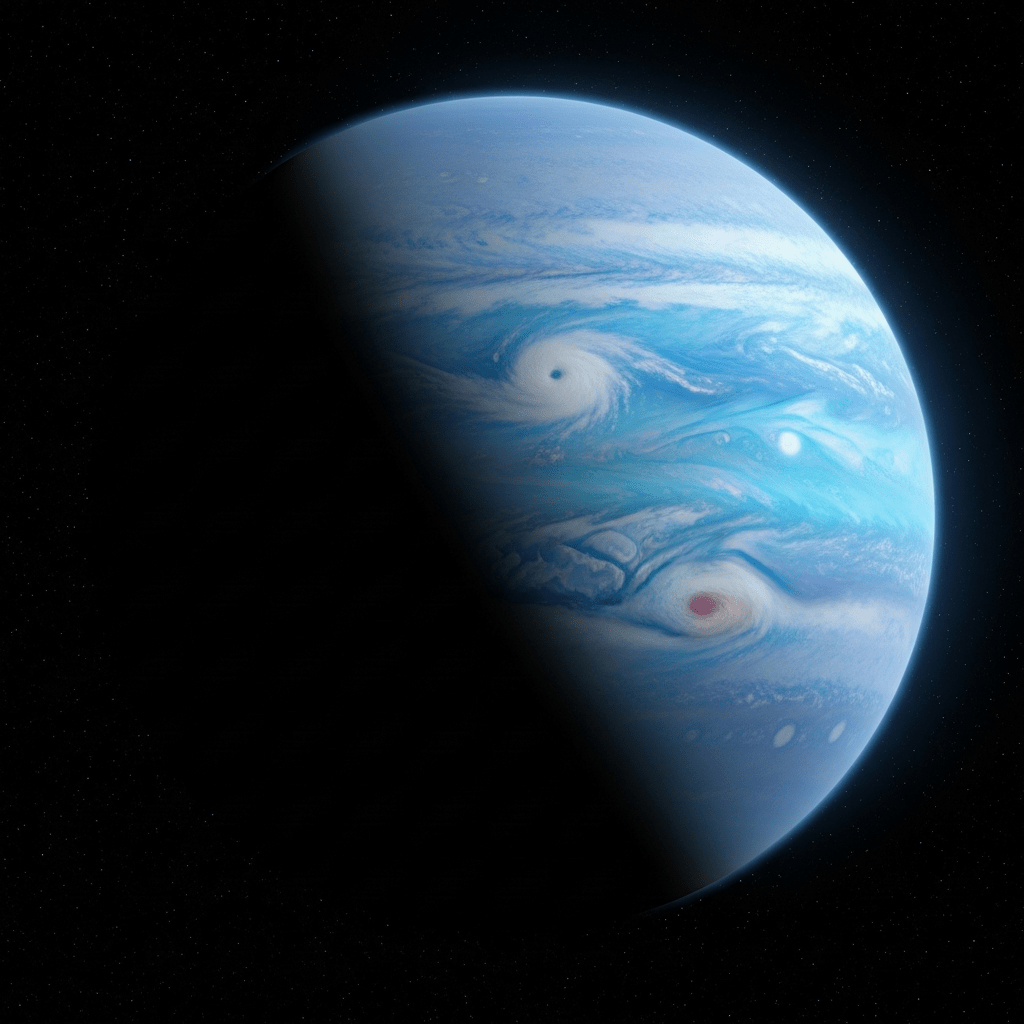
Neptune-like planets are intermediate-sized giant planets characterized by substantial volatile content and hydrogen-helium envelopes, closely resembling Neptune in mass, radius, and composition.
Neptune-like planets are intermediate-sized giant planets characterized by substantial volatile content and hydrogen-helium envelopes, closely resembling Neptune in mass, radius, and composition.
The term "Neptune-like" emerged from comparative planetology, using Neptune as the archetype for intermediate-mass giant planets. It gained prominence with exoplanet discoveries in the late 2000s and 2010s, as astronomers identified planets with similar mass, radius, and atmospheric characteristics to Neptune. This classification bridges the gap between smaller mini-Neptunes and larger gas giants, supported by institutions like NASA and ESA as well as peer-reviewed studies.
Neptune-like planets belong to the ice giant category within planetary taxonomy. They are defined by their intermediate mass (typically 10–25 Earth masses) and radius (about 3–6 Earth radii), with a bulk composition rich in volatile ices and a moderate hydrogen-helium envelope. This class overlaps with related types such as mini-Neptunes and ice giants, serving as a distinct group of volatile-rich giants smaller than gas giants but larger than terrestrial planets.
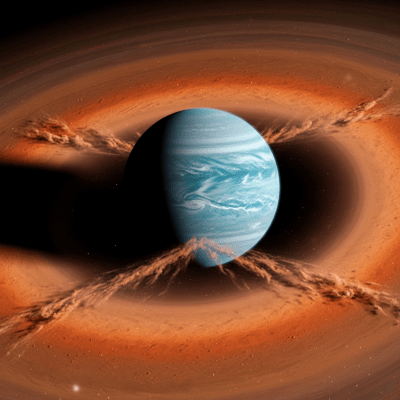
These planets exhibit a striking blend of gaseous and icy characteristics. Visually, they possess thick atmospheres dominated by hydrogen and helium, with cloud layers of methane and ammonia that give them a blue hue, much like Neptune. Their form is that of a large, rounded body with no solid surface, composed of an icy-rocky core enveloped by volatile-rich layers and a substantial gas envelope.
Neptune-like planets function as intermediate giants in planetary systems, often influencing the architecture and dynamics of their surroundings. While they do not have direct utility to humans, their study provides crucial insights into planetary formation, migration, and atmospheric processes. Their diverse orbital distances—from close-in hot Neptunes to distant cold Neptunes—offer natural laboratories for understanding atmospheric retention and evolution under varying stellar conditions.
Bring this kind into your world illustrated posters, mugs, and shirts.
Archival print, museum-grade paper
Buy Poster
Stoneware mug, dishwasher safe
Buy Mug
Soft cotton tee, unisex sizes
Buy ShirtNeptune-like planets, anchored by the iconic Solar System Neptune, have inspired scientific curiosity and popular imagination alike. They appear in science fiction as mysterious blue worlds and often symbolize the boundary between rocky planets and gas giants. Their discovery in exoplanet surveys has expanded our understanding of planetary diversity, influencing educational narratives and public fascination with worlds beyond Earth.
In the Solar System, Neptune orbits at an average distance of 30.1 astronomical units (AU) from the Sun, completing one orbit every 164.8 Earth years. Exoplanet Neptune-like worlds are found across a broad range of orbits, from close-in hot Neptunes with short orbital periods to cold Neptunes orbiting far from their stars. This diversity affects their equilibrium temperatures and atmospheric dynamics.
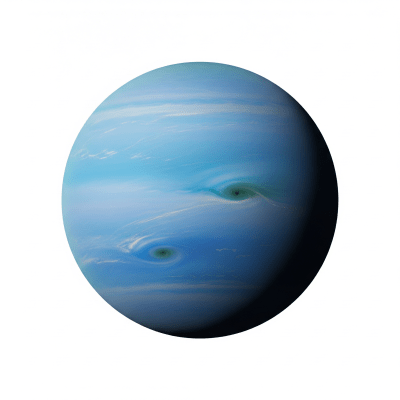
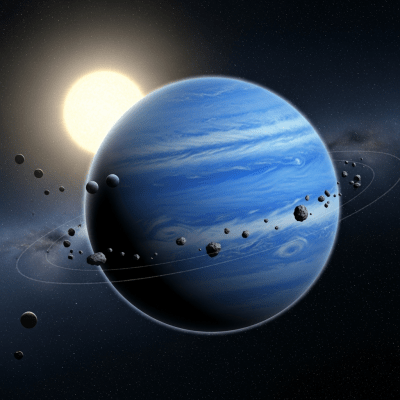
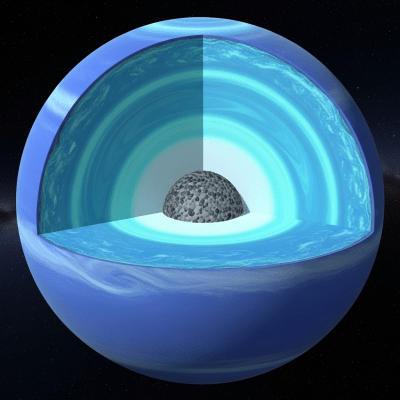
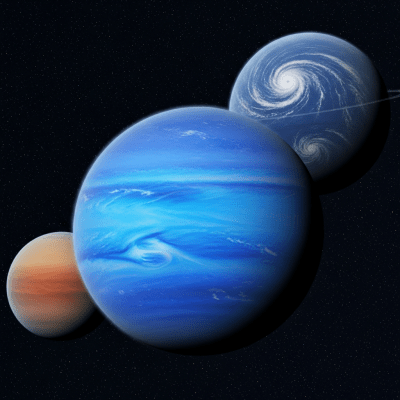
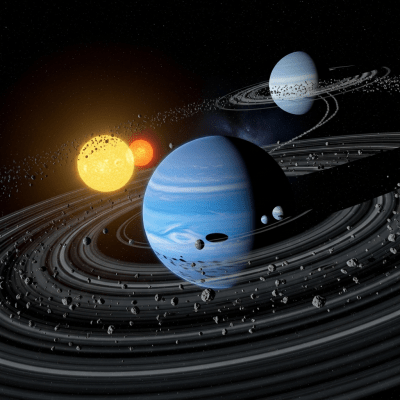
Neptune-like planets typically have masses around 17 Earth masses and radii near 3.9 Earth radii, with densities averaging about 1.6 grams per cubic centimeter. Their interiors consist of a rocky and icy core surrounded by layers of volatile ices and a hydrogen-helium envelope that is less massive than that of gas giants, resulting in intermediate bulk properties between terrestrial and gas giant planets.
These planets possess thick atmospheres dominated by hydrogen and helium, enriched with methane, water vapor, and ammonia. Methane clouds contribute to their characteristic blue coloration. Their atmospheres are substantial but thinner than those of gas giants, with complex layering and volatile chemistry that influence their thermal profiles and weather patterns.
Neptune-like planets have been studied extensively through observations of Neptune itself by spacecraft such as Voyager 2, which provided detailed data on its atmosphere and magnetic field. Exoplanet discoveries since the early 2000s, enabled by transit and radial velocity methods, have identified numerous Neptune-like worlds, expanding knowledge of their occurrence and properties. Ongoing missions and telescopes continue to probe their atmospheres and compositions.
Due to their thick volatile-rich atmospheres, lack of solid surfaces, and often extreme temperatures, Neptune-like planets are considered inhospitable for life as we know it. Their environments do not support Earth-like habitability, though their moons, if present, might offer more favorable conditions. Understanding their atmospheres and formation helps inform broader studies of planetary habitability in diverse systems.