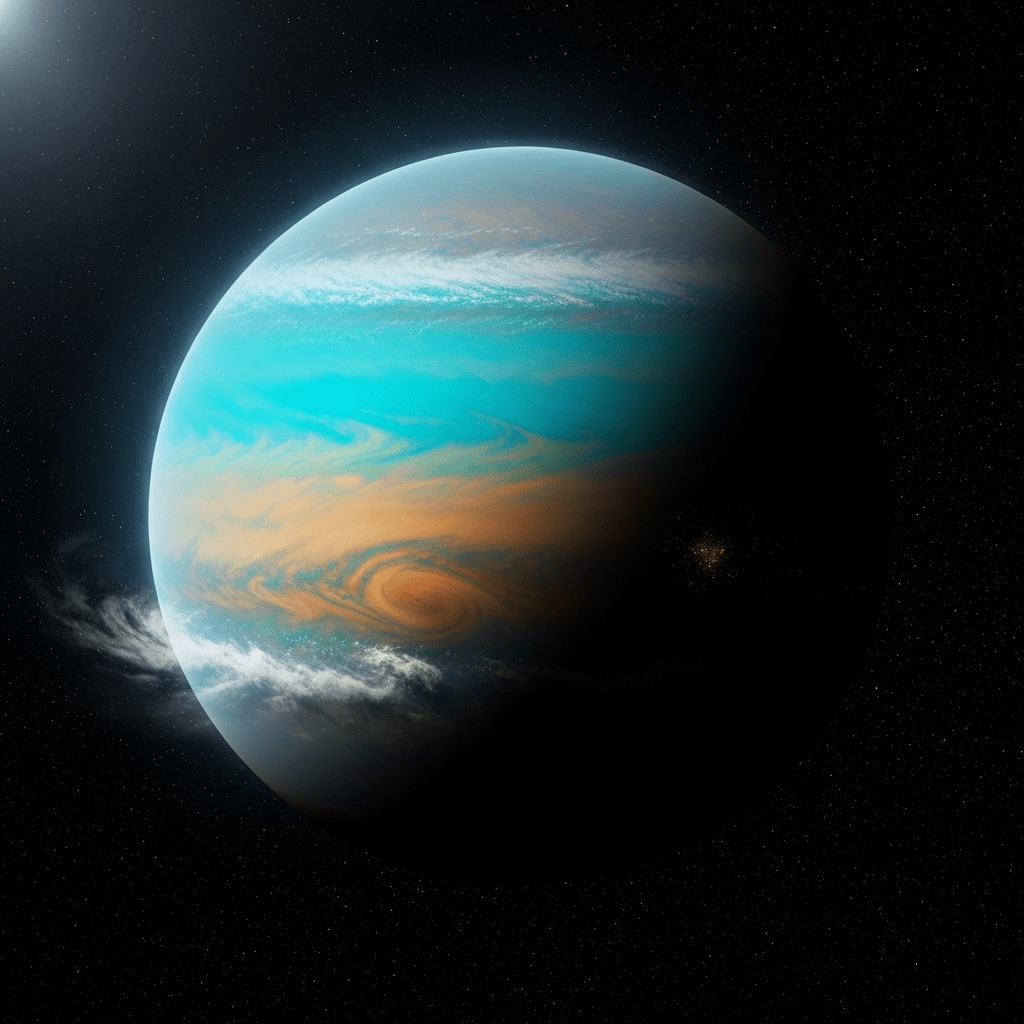
Mini-Neptune
A Mini-Neptune is a class of intermediate-sized planets smaller than Neptune but larger than Earth, distinguished by thick volatile-rich atmospheres that yield low overall densities.
A Mini-Neptune is a class of intermediate-sized planets smaller than Neptune but larger than Earth, distinguished by thick volatile-rich atmospheres that yield low overall densities.
The term "Mini-Neptune" arose in the early 2010s from exoplanet surveys like NASA's Kepler mission, which revealed many planets with sizes and masses between Earth and Neptune. This category emerged to describe planets with substantial gaseous envelopes atop rocky or icy cores, bridging terrestrial super-Earths and gas giants.
Mini-Neptunes belong to the broader planetary taxonomy as a distinct subclass characterized by moderate mass and radius ranges—typically 2 to 10 Earth masses and 1.6 to 4 Earth radii. They are often grouped under "other" in composition-based schemes, representing volatile-rich planets with significant hydrogen and helium envelopes but smaller than ice giants.
Mini-Neptunes appear as planets with thick, gaseous atmospheres enveloping a dense core. Their low mean densities, often below 3 grams per cubic centimeter, reflect substantial hydrogen and helium layers mixed with volatiles like water vapor and methane, giving them a puffy, less compact form compared to rocky planets.
While Mini-Neptunes do not have direct human usage, their study informs understanding of planetary formation and atmospheric evolution. Their substantial gaseous envelopes influence thermal properties and potential atmospheric escape, making them key targets for atmospheric characterization and comparative planetology.
Bring this kind into your world illustrated posters, mugs, and shirts.

Archival print, museum-grade paper
Buy Poster
Stoneware mug, dishwasher safe
Buy Mug
Soft cotton tee, unisex sizes
Buy ShirtMini-Neptunes have gained prominence in modern astronomy and popular science as emblematic of the diversity of exoplanets discovered beyond our Solar System. Though absent from traditional mythologies, they feature in educational materials and media exploring planetary types and the search for habitable worlds.
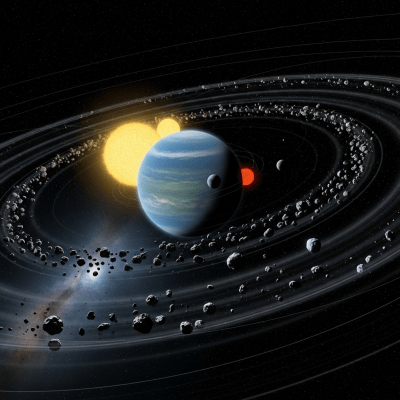
Mini-Neptunes are found across diverse orbital distances and periods, from close-in orbits of days to weeks to wider separations. Their orbital eccentricities vary, but no strict orbital constraints define the class. Many detected Mini-Neptunes orbit close to their stars due to observational biases in transit and radial velocity methods.
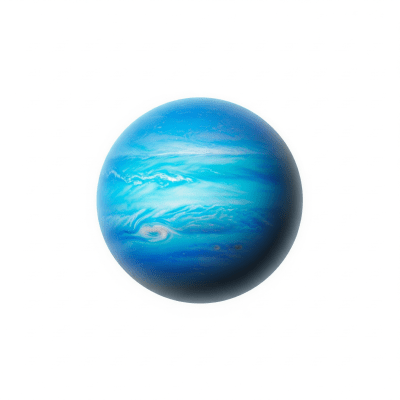
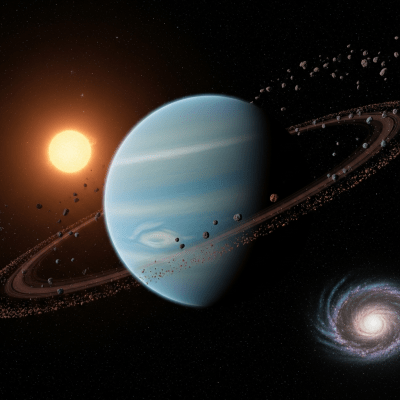
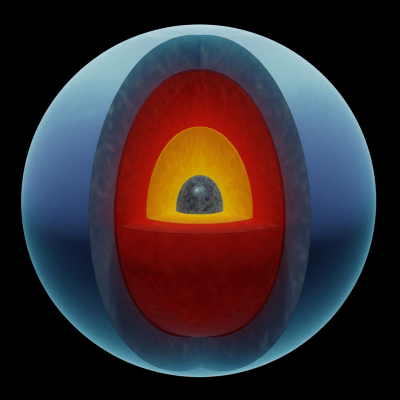

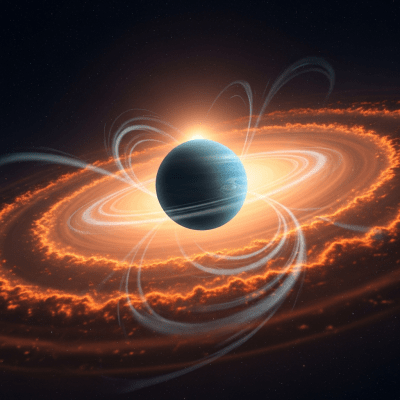
Typically, Mini-Neptunes have masses around 6 Earth masses and radii near 2.6 Earth radii, with mean densities near 2.5 grams per cubic centimeter. Their composition includes a rocky or icy core enveloped by a thick layer of hydrogen, helium, and volatiles, resulting in a puffy morphology distinct from denser terrestrial planets.
Mini-Neptunes possess significant atmospheres dominated by hydrogen and helium, often accompanied by water vapor and methane. These thick gaseous envelopes contribute to their low densities and influence thermal and spectral characteristics. Direct atmospheric studies remain challenging but are advancing through transmission spectroscopy.
Mini-Neptunes have been primarily studied through remote observations by missions like NASA's Kepler and TESS, which identified numerous candidates. Ground-based radial velocity measurements have refined mass estimates, while space telescopes have begun probing atmospheric compositions. No spacecraft have yet visited a Mini-Neptune directly.
Due to their thick hydrogen-helium atmospheres and likely high surface pressures, Mini-Neptunes are generally considered inhospitable to life as we know it. However, some may harbor conditions suitable for life in upper atmospheric layers or on potential moons, though such scenarios remain speculative and unconfirmed.