Ice Giant
An ice giant is a type of giant planet whose interior is dominated by volatile substances such as water, ammonia, and methane, setting it apart from gas giants that are primarily hydrogen and helium.
An ice giant is a type of giant planet whose interior is dominated by volatile substances such as water, ammonia, and methane, setting it apart from gas giants that are primarily hydrogen and helium.
The term "ice giant" emerged in planetary science during the late 20th century to distinguish Uranus and Neptune from the larger gas giants Jupiter and Saturn. This classification was formalized through spacecraft observations, notably Voyager 2 flybys in the 1980s, and subsequent theoretical models of planetary interiors, gaining recognition from authorities like the IAU and NASA.
Ice giants belong to the broader category of giant planets but are specifically characterized by a high fraction of volatile ices in their composition. They typically range from about 7 to 25 Earth masses and 3 to 5 Earth radii, with Uranus and Neptune serving as canonical examples. This class is distinct from gas giants, which are dominated by hydrogen and helium, and from terrestrial planets, which are rocky.
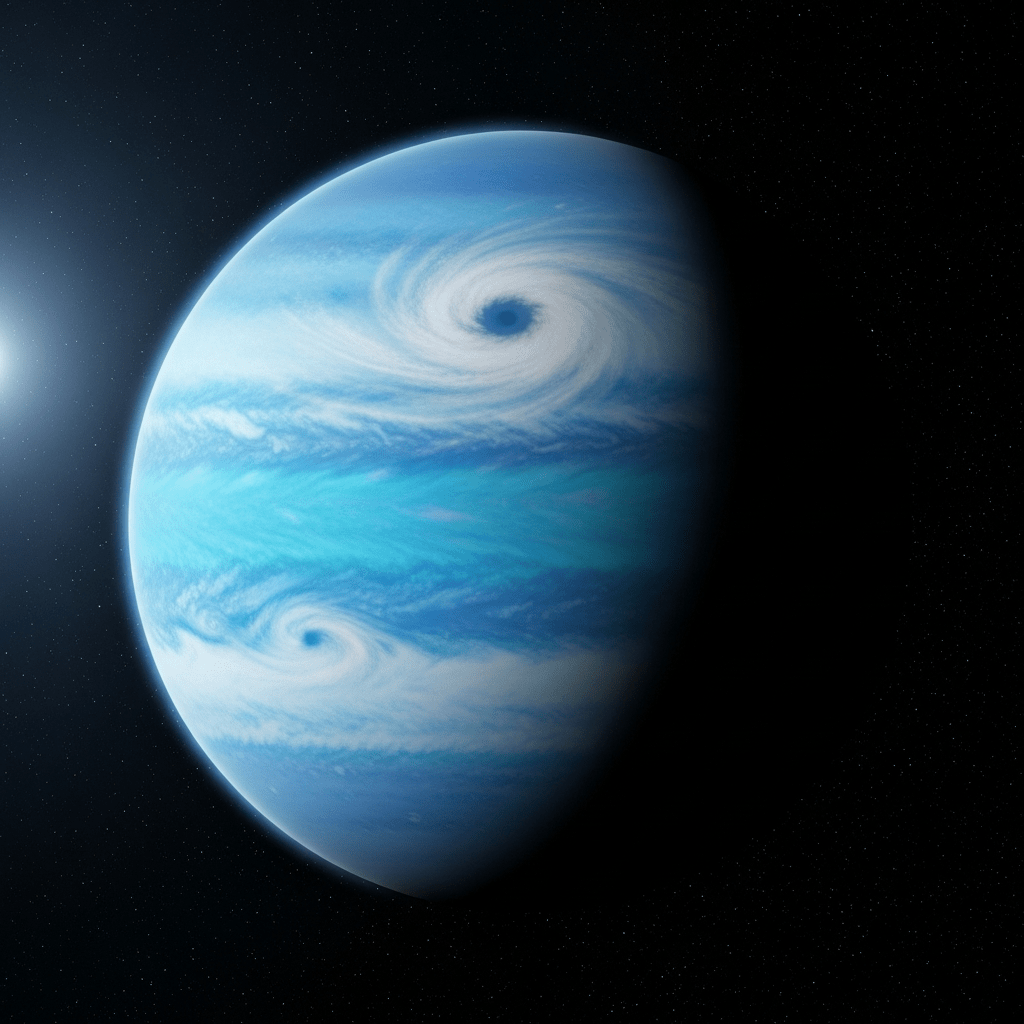
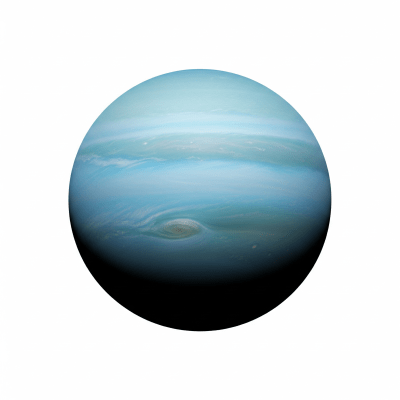
Ice giants present a striking blue hue, primarily due to methane in their thick atmospheres, which absorb red light. Their form includes a layered interior with a rocky and metallic core, an extensive icy mantle composed of water, ammonia, and methane ices, and a surrounding envelope of hydrogen and helium gases. Unlike gas giants, their atmospheres contain higher proportions of volatile compounds, contributing to their unique coloration and cloud structures.
While ice giants do not have direct utility to humans, their study provides critical insights into planetary formation and the distribution of volatile materials in planetary systems. Their unique composition and structure influence their thermal evolution and magnetic fields, making them key objects for understanding the diversity of giant planets both in our Solar System and beyond.
Bring this kind into your world illustrated posters, mugs, and shirts.
Archival print, museum-grade paper
Buy Poster
Stoneware mug, dishwasher safe
Buy Mug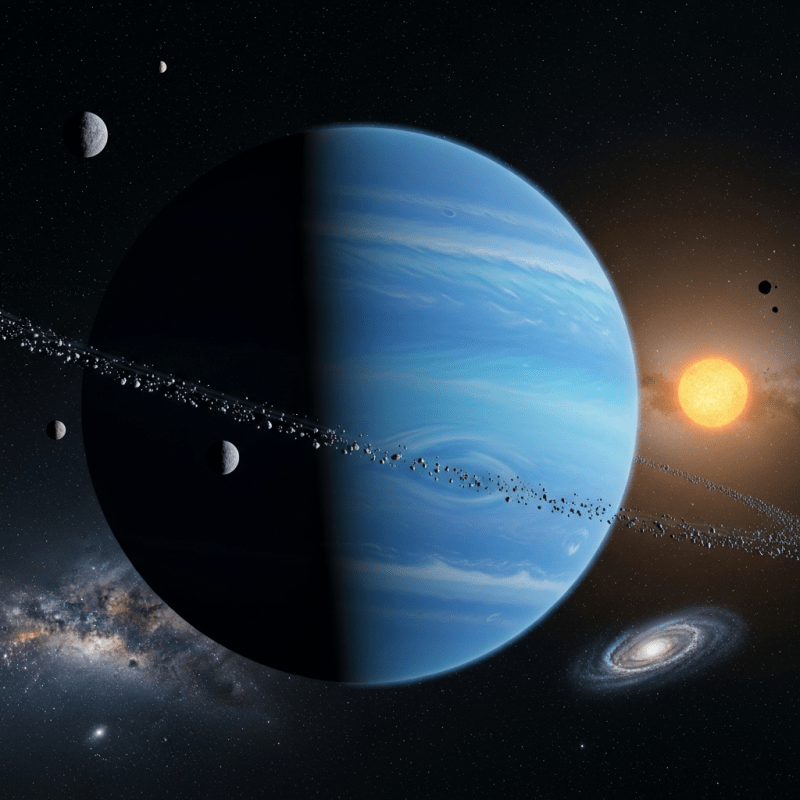
Soft cotton tee, unisex sizes
Buy ShirtUranus and Neptune, the archetypal ice giants, have inspired mythology and art, named after Roman gods of the sky and the sea respectively. In modern culture, these planets symbolize the mysterious and distant realms of our Solar System, often featured in science fiction as enigmatic worlds with exotic atmospheres and climates.
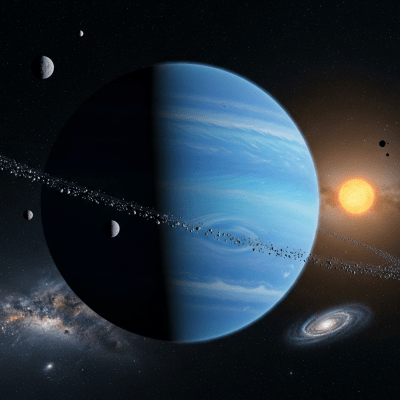
In the Solar System, ice giants orbit at great distances from the Sun: Uranus at about 19.2 astronomical units with an orbital period of 84 Earth years, and Neptune at roughly 30.1 astronomical units taking 165 Earth years to complete an orbit. For exoplanets, ice giants can be found at a variety of orbital distances, as the classification depends on composition rather than orbital location.
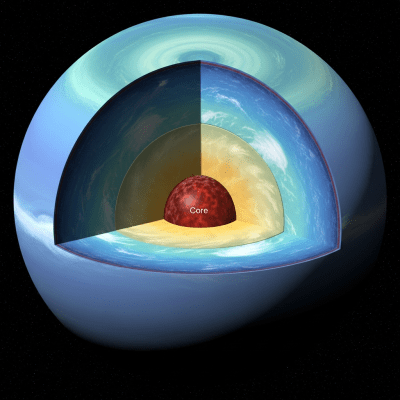
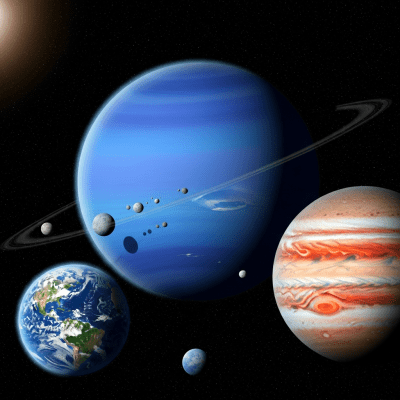
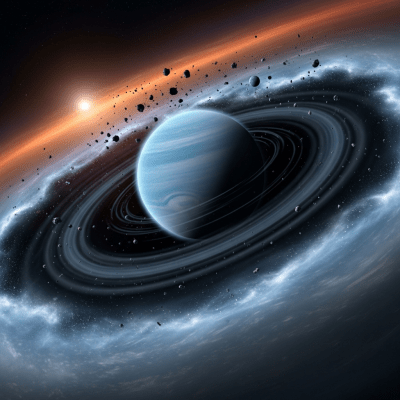
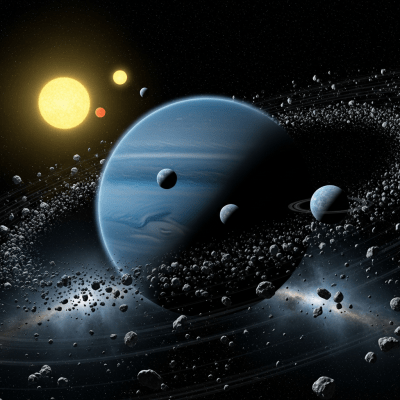
Ice giants typically have masses around 10 to 20 Earth masses and radii near 4 Earth radii. Uranus, for example, has a mass of approximately 14.5 Earth masses and a radius of 4.0 Earth radii, with a mean density of about 1.27 grams per cubic centimeter. Their interiors consist of a dense core of rock and metal, surrounded by a mantle rich in water, ammonia, and methane ices, enveloped by a thick atmosphere of hydrogen and helium mixed with volatile gases.
Ice giants possess thick atmospheres primarily composed of hydrogen and helium, but with significantly higher amounts of methane, water vapor, ammonia, and hydrocarbons compared to gas giants. Methane plays a key role in their distinctive blue coloration by absorbing red light. Their atmospheres feature cloud layers of methane ice and other volatile compounds, creating complex weather patterns and layered structures.
Our understanding of ice giants advanced significantly with the Voyager 2 spacecraft flybys of Uranus in 1986 and Neptune in 1989, which provided detailed data on their atmospheres, magnetic fields, and moons. Since then, observations from telescopes and space missions have refined models of their interiors and atmospheres. However, no dedicated missions have yet been launched specifically to study ice giants in depth.
Ice giants are inhospitable to life as we know it due to their lack of solid surfaces, extreme cold temperatures, and thick, volatile-rich atmospheres. Their distant orbits and harsh environments make colonization or habitability highly unlikely, though studying their moons may offer more promising prospects for astrobiology.