Hot Neptune
A Hot Neptune is a type of exoplanet similar in mass and size to Neptune but orbiting very close to its host star, resulting in high surface temperatures and distinctive atmospheric conditions.
A Hot Neptune is a type of exoplanet similar in mass and size to Neptune but orbiting very close to its host star, resulting in high surface temperatures and distinctive atmospheric conditions.
The concept of Hot Neptunes arose in the early 2000s as exoplanet surveys, such as those from Kepler and HARPS, began discovering Neptune-sized planets on extremely close orbits unlike anything in our Solar System. This observationally driven classification emerged to distinguish these warm, intermediate-mass worlds from both hot Jupiters and cooler Neptune analogs, reflecting a new population revealed by advancing detection methods.
Hot Neptunes belong to the ice giant category, characterized by masses roughly between 10 and 40 Earth masses and radii around 3 to 6 Earth radii. They are defined not only by their size and composition—hydrogen, helium, ices, and rock—but also by their close-in orbits, typically within 0.1 astronomical units of their stars, which sets them apart from cooler Neptune-like planets.
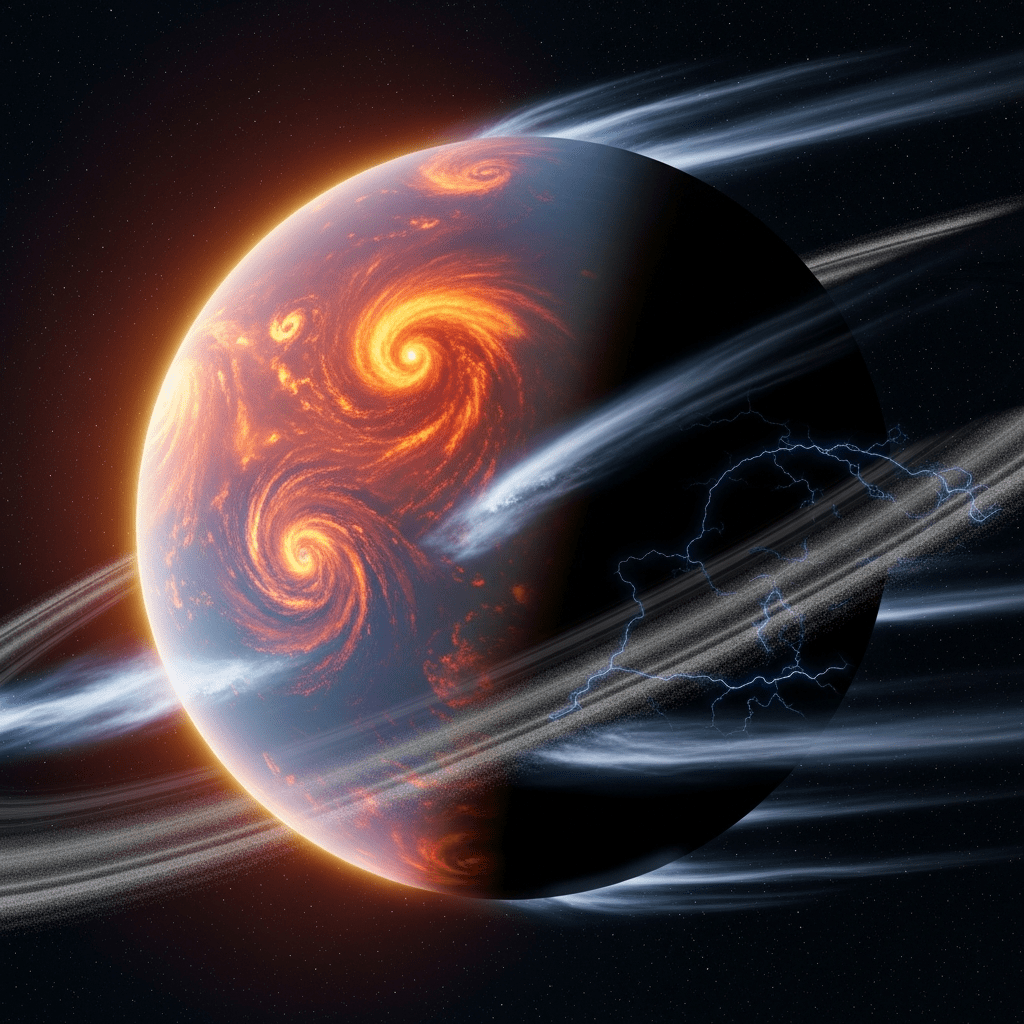
Visually, Hot Neptunes would appear as moderately sized planets with thick gaseous envelopes dominated by hydrogen and helium, possibly exhibiting atmospheric inflation due to intense stellar radiation. Their atmospheres may contain traces of water vapor and methane, and their proximity to their stars likely results in glowing, heated cloud layers and extended exospheres detectable in transit observations.
While Hot Neptunes do not have direct utility for humans, their behavior in planetary systems provides critical insights into planetary formation and migration. Many are believed to have formed beyond the snow line before migrating inward, and some show signs of atmospheric escape, shedding mass under intense stellar irradiation. These processes help astronomers understand planetary evolution and atmospheric dynamics under extreme conditions.
Bring this kind into your world illustrated posters, mugs, and shirts.

Archival print, museum-grade paper
Buy Poster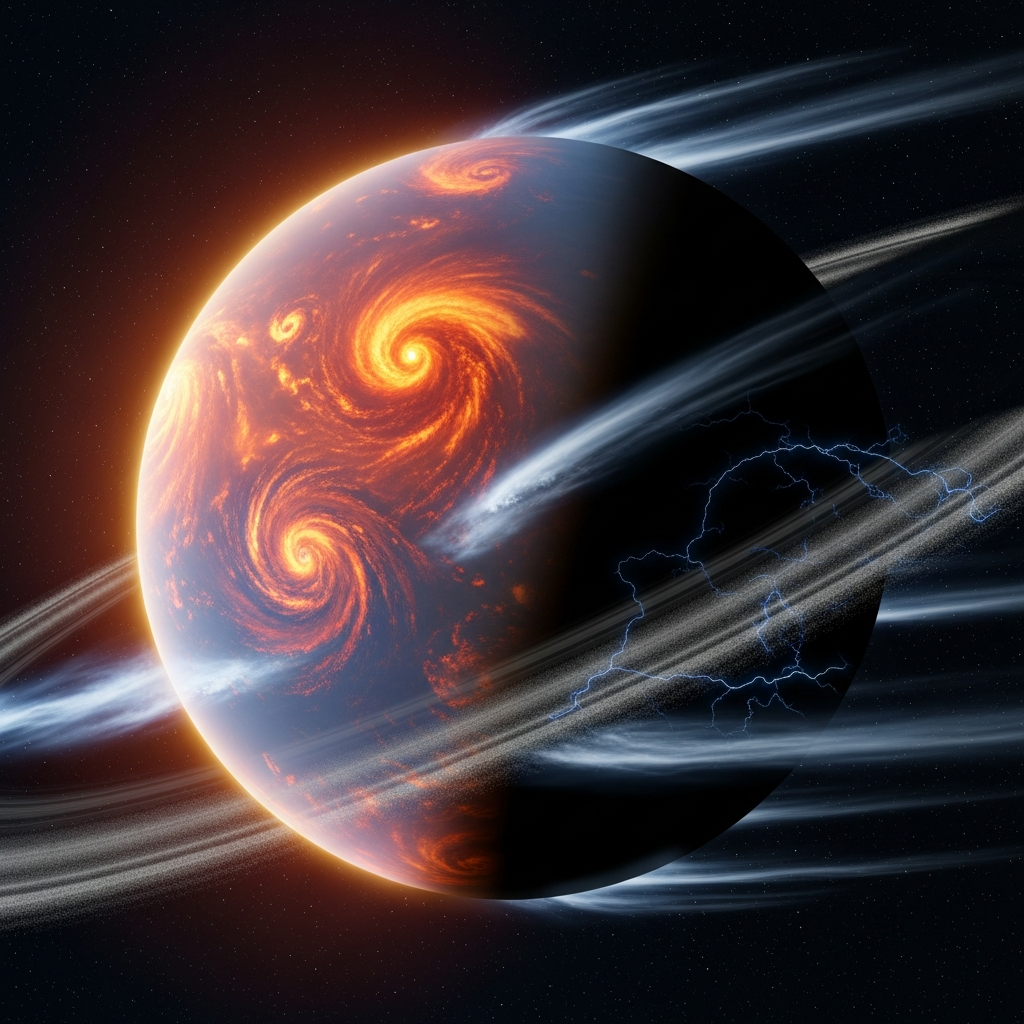
Stoneware mug, dishwasher safe
Buy Mug
Soft cotton tee, unisex sizes
Buy ShirtThough not prominent in traditional mythology or art, Hot Neptunes have captured the imagination of the scientific community and space enthusiasts as emblematic of the diversity of planetary systems beyond our own. They feature in modern exoplanet research narratives and popular science discussions as intriguing worlds that challenge our understanding of planet formation and atmospheric survival.
Hot Neptunes orbit extremely close to their host stars, typically at semi-major axes less than 0.1 astronomical units, often around 0.03 to 0.05 AU. Their orbital periods are short, commonly ranging from 2 to 6 Earth days. This tight orbit exposes them to intense stellar radiation, driving their high equilibrium temperatures, usually exceeding 700 Kelvin.

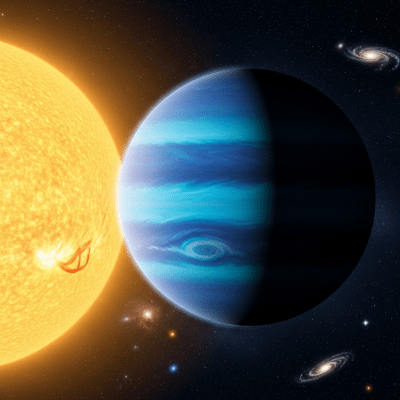

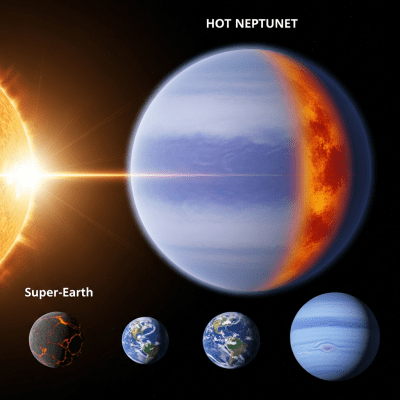
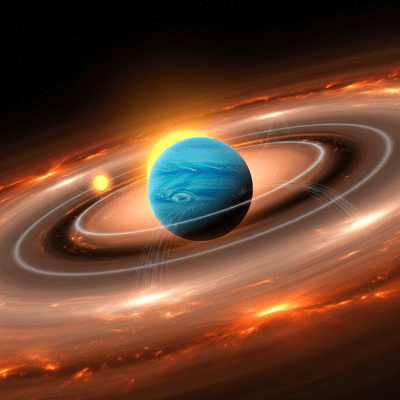
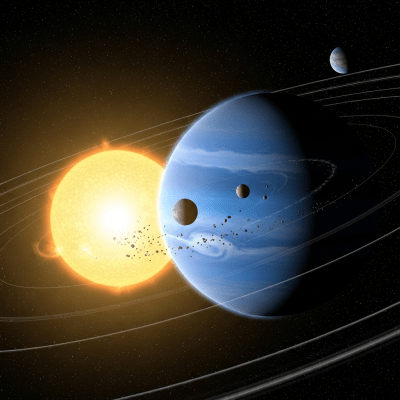
These planets have masses around 10 to 40 Earth masses, with a typical example near 22 Earth masses, and radii between 3 and 6 Earth radii, often about 4.2 Earth radii. Their densities vary widely, from about 0.5 to 3 grams per cubic centimeter, reflecting a mix of rocky cores and thick gaseous envelopes. Their morphology is that of ice giants with substantial atmospheres dominated by hydrogen and helium.
Hot Neptunes possess significant atmospheres primarily composed of hydrogen and helium, often enriched with water vapor and methane. These atmospheres can be inflated due to stellar heating and may exhibit signs of escape, such as extended hydrogen exospheres. Atmospheric retention varies, with some planets losing mass over time under intense irradiation.
Hot Neptunes have been discovered primarily through transit and radial velocity surveys conducted by missions like Kepler and ground-based programs such as HARPS. Notable examples include GJ 436 b and HAT-P-11 b, which have been studied extensively to characterize their atmospheres and orbital dynamics. While no spacecraft has visited one directly, remote observations continue to refine our understanding of this class.
Due to their close proximity to host stars, high equilibrium temperatures, and thick hydrogen-helium atmospheres, Hot Neptunes are considered inhospitable to life as we know it. Their intense radiation environments and potential atmospheric escape processes further diminish prospects for habitability or colonization.