Gas Giant
A gas giant is a massive planet primarily composed of hydrogen and helium, characterized by a large radius, high mass, and an extensive atmosphere without a well-defined solid surface.
A gas giant is a massive planet primarily composed of hydrogen and helium, characterized by a large radius, high mass, and an extensive atmosphere without a well-defined solid surface.
The concept of gas giants emerged in the mid-20th century as planetary science advanced, with Jupiter serving as the archetype. Formalized by organizations like the International Astronomical Union and NASA, the classification is grounded in planetary formation theories and observational astronomy. Gas giants form through core accretion, where a solid core accumulates a vast gaseous envelope, or via disk instability, a rapid collapse of gas in the protoplanetary disk.
Gas giants belong to the broader category of giant planets, distinguished by their dominant hydrogen-helium composition and mass range typically between 0.3 and 13 Jupiter masses. They contrast with ice giants, which have higher proportions of ices, and terrestrial planets, which are rocky. The upper mass limit aligns with the deuterium-burning threshold, separating gas giants from brown dwarfs.
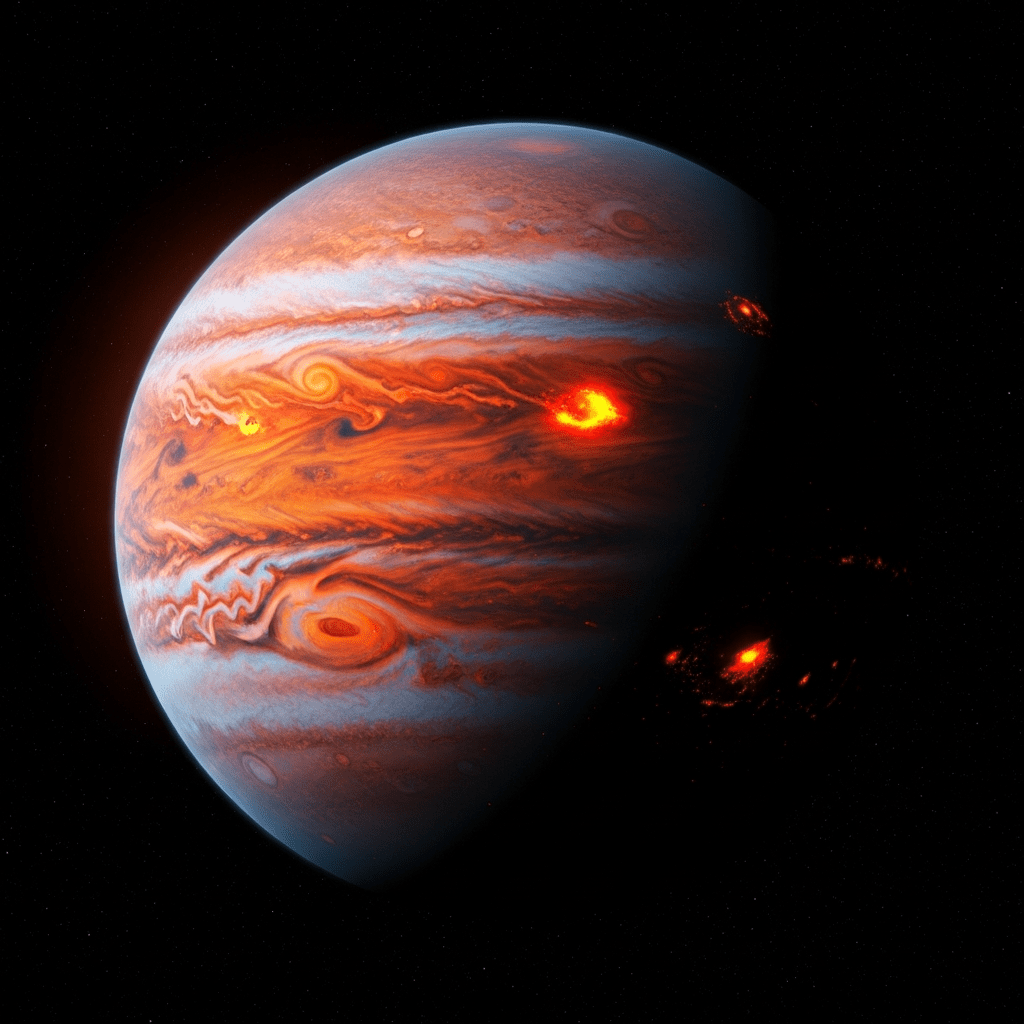
Gas giants exhibit large radii—generally between 0.8 and 2.0 times that of Jupiter—with thick, deep atmospheres dominated by hydrogen and helium. They lack a solid surface, instead presenting layered cloud formations composed of ammonia, water vapor, and other compounds, giving them a visually dynamic and often banded appearance.
While gas giants do not have direct utility for humans, their gravitational influence shapes planetary system architectures and can affect the habitability of neighboring worlds. In astronomy, their large size and mass make them easier to detect via transit and radial velocity methods, serving as key targets in exoplanet studies and comparative planetology.
Bring this kind into your world illustrated posters, mugs, and shirts.
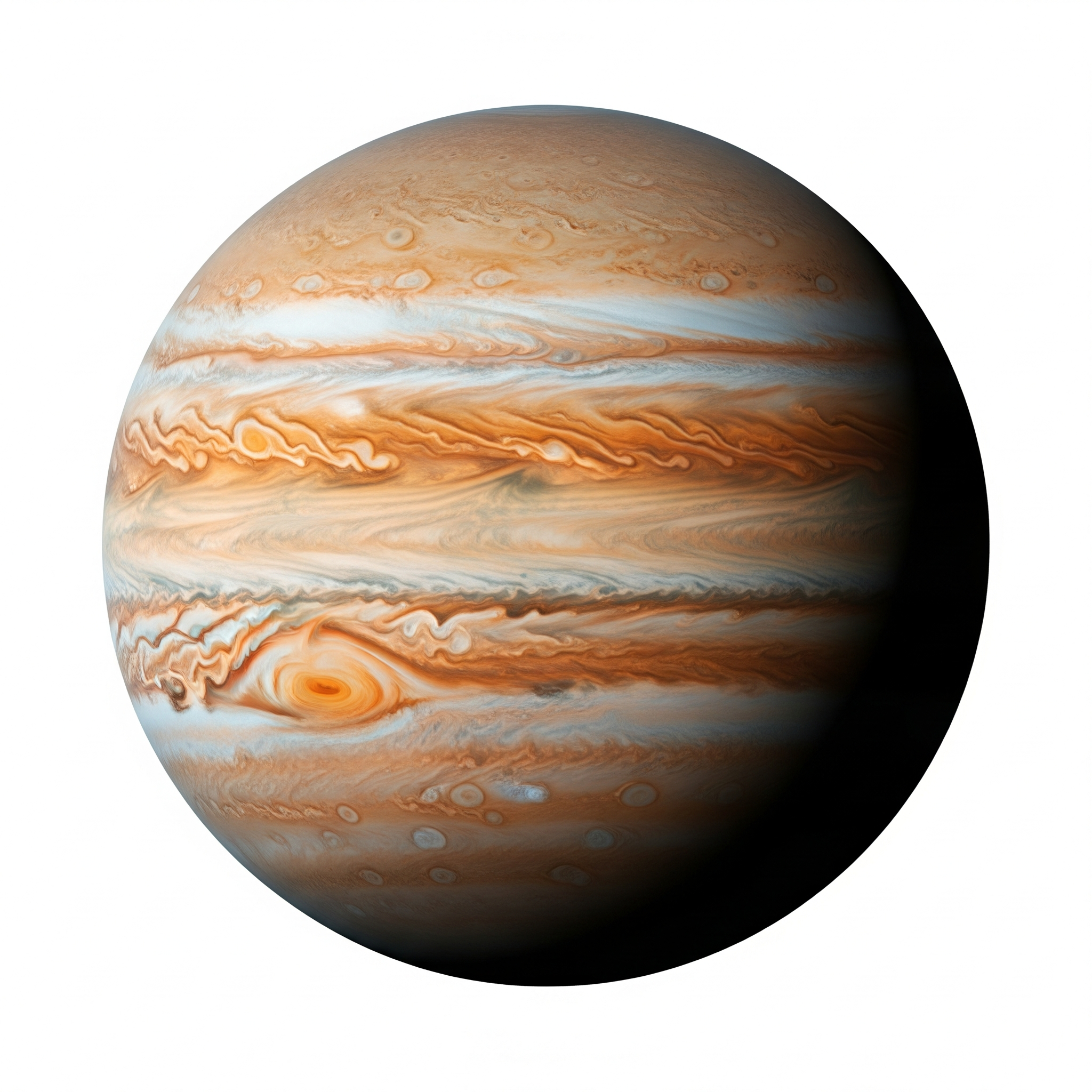
Archival print, museum-grade paper
Buy Poster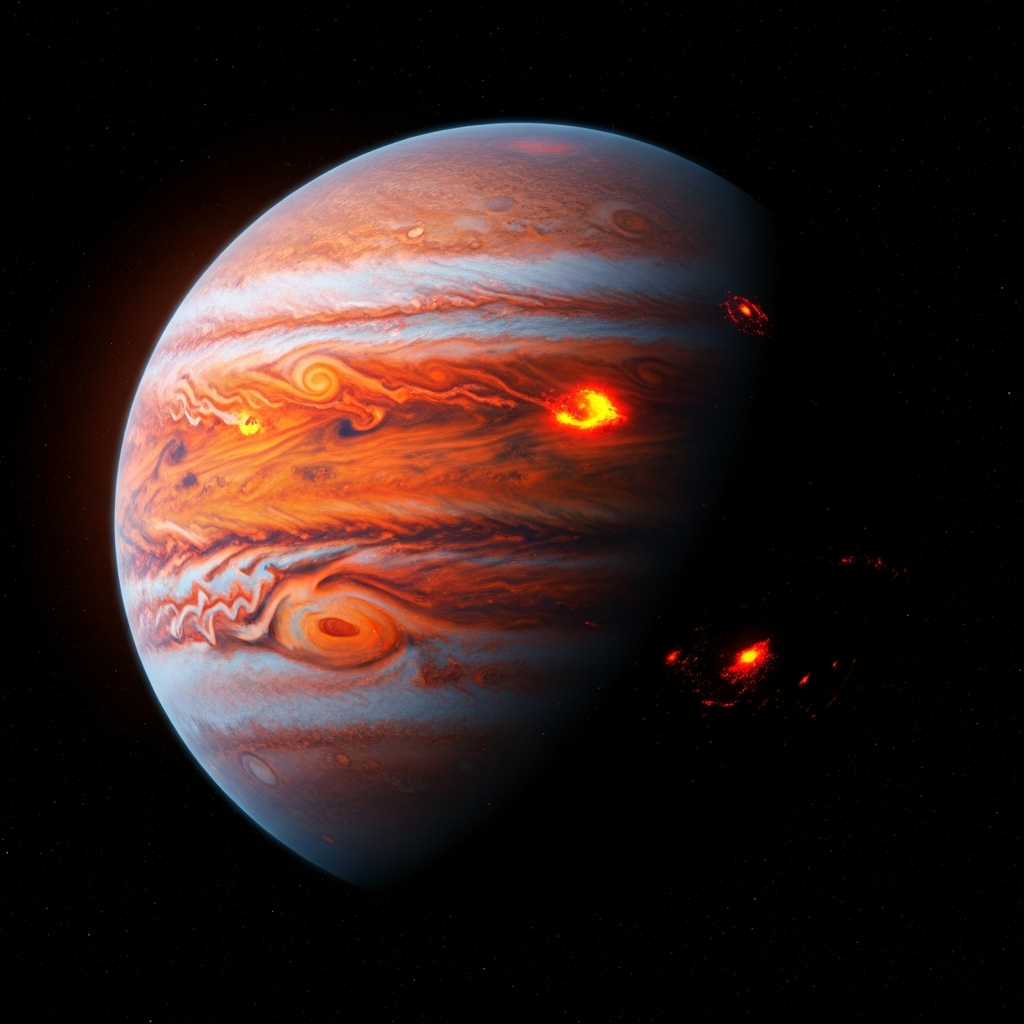
Stoneware mug, dishwasher safe
Buy Mug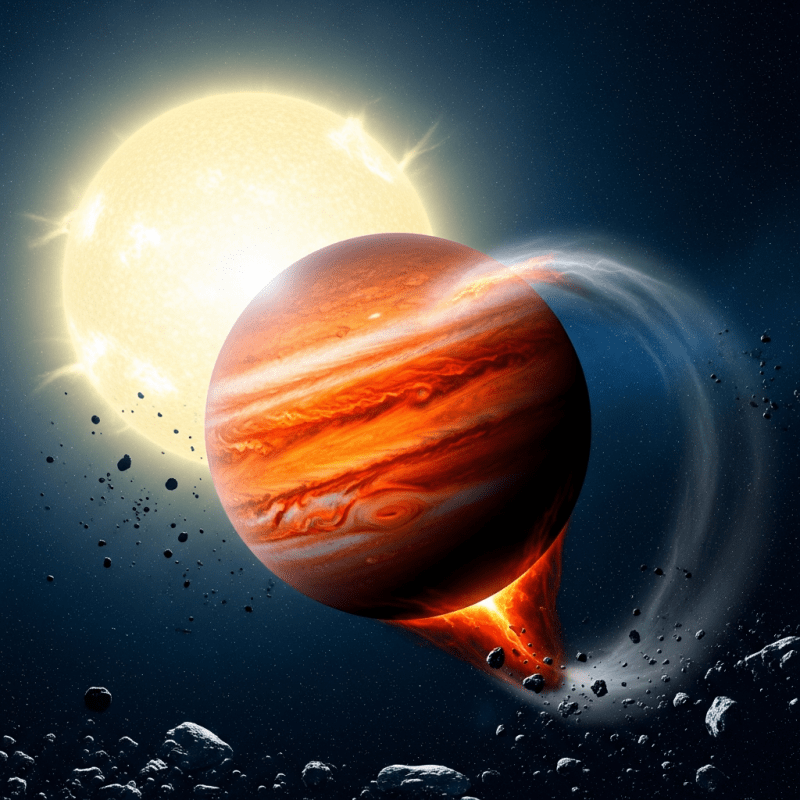
Soft cotton tee, unisex sizes
Buy ShirtGas giants have long captured human imagination, symbolizing grandeur and mystery in mythology and art. Jupiter, the largest gas giant in our Solar System, is named after the Roman king of gods, reflecting its prominence. In modern culture, gas giants often feature in science fiction as exotic worlds or gas-rich habitats.
Gas giants occupy a broad range of orbits. In our Solar System, Jupiter and Saturn orbit at approximately 5.2 and 9.5 astronomical units (AU) from the Sun, respectively. Exoplanet gas giants include "Hot Jupiters" that orbit very close to their stars—often within 0.1 AU with orbital periods of just days—and "Cold Jupiters" found at greater distances with longer periods. Their orbital eccentricities can vary, with some exhibiting highly elliptical paths.
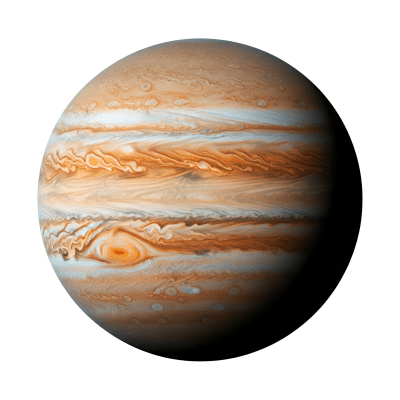
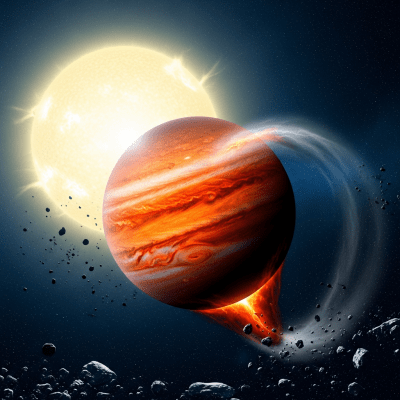
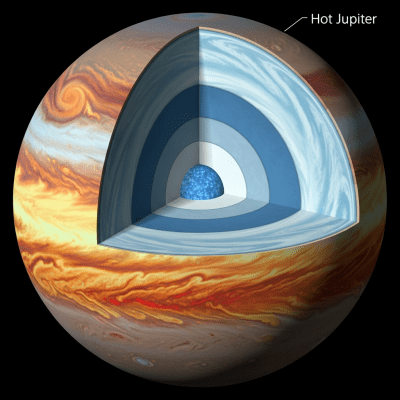
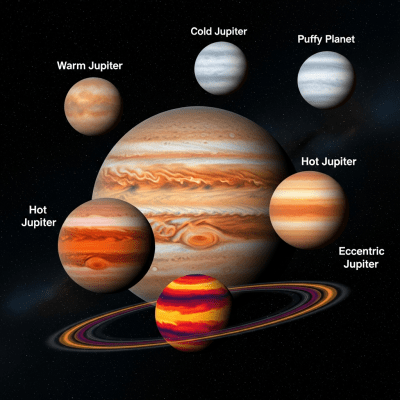

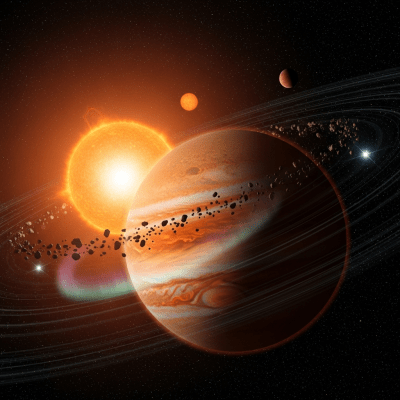
Gas giants typically have masses from about 0.3 up to 13 Jupiter masses and radii ranging from 0.8 to 2.0 Jupiter radii. Their densities are low, generally between 0.2 and 1.6 grams per cubic centimeter, reflecting their gaseous nature. They possess small cores estimated to be less than 10–15% of their total mass, enveloped by thick hydrogen-helium atmospheres.
Gas giants feature extensive atmospheres dominated by hydrogen and helium, with trace amounts of methane, ammonia, and water vapor. These atmospheres form multiple cloud layers, including ammonia and water clouds, contributing to their complex weather systems and striking visual patterns. The atmospheric thickness and composition vary with temperature and proximity to their star.
Exploration of gas giants began with telescopic observations and advanced through robotic missions such as NASA's Pioneer and Voyager flybys, Galileo orbiter around Jupiter, and Cassini-Huygens mission to Saturn. These missions revealed detailed atmospheric dynamics, ring systems, and magnetic fields, greatly enhancing our understanding of gas giant planets.
Gas giants themselves are inhospitable to life as we know it due to their lack of solid surfaces and extreme atmospheric conditions. However, some of their moons may offer environments conducive to habitability. The presence of gas giants can also influence the habitability of other planets in their system by affecting orbital stability and shielding inner worlds from excessive cometary impacts.