Chthonian Planet
A Chthonian planet is a dense, rocky or metallic remnant core of a gas giant whose atmosphere has been stripped away by intense stellar radiation or tidal forces.
A Chthonian planet is a dense, rocky or metallic remnant core of a gas giant whose atmosphere has been stripped away by intense stellar radiation or tidal forces.
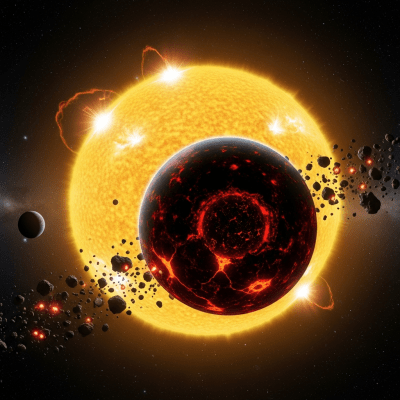
Chthonian planets originate from gas giants that orbit very close to their host stars. Over time, extreme stellar irradiation and tidal interactions cause their thick gaseous envelopes to evaporate, leaving behind the exposed, solid core. This concept emerged in the early 2000s through theoretical models of atmospheric escape and planetary evolution, offering an evolutionary end-state for hot Jupiters subjected to harsh stellar environments.
Classified within the terrestrial category, chthonian planets represent a unique subclass of rocky planets formed by the stripping of gas giants. They are distinguished from typical terrestrial planets by their origin as remnants of formerly massive, gas-rich worlds and are often associated with ultra-short-period orbits and high densities.
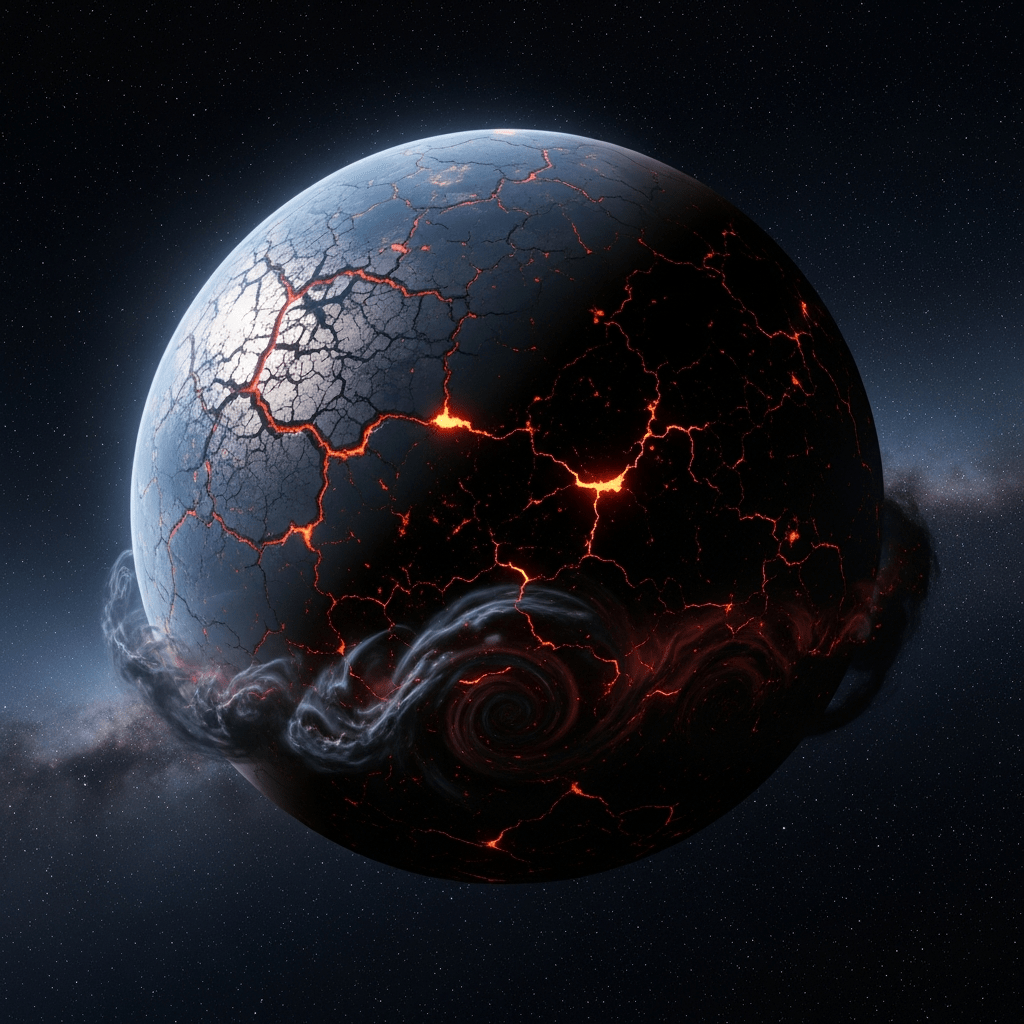
These planets appear as compact, dense bodies dominated by silicate rock and iron-nickel metal. Lacking significant gaseous envelopes, their morphology is that of a solid, rocky or metallic core, often smaller in radius than their gas giant progenitors but still potentially larger than Earth. Their surfaces are expected to be barren and exposed to intense stellar radiation.
Chthonian planets do not serve a direct functional role for humans but are important in understanding planetary evolution and atmospheric escape processes. They illustrate how extreme stellar environments can transform gas giants into stripped rocky cores, shedding light on the life cycles of close-in exoplanets and the dynamics of planetary atmospheres under intense irradiation.
Bring this kind into your world illustrated posters, mugs, and shirts.
Archival print, museum-grade paper
Buy Poster
Stoneware mug, dishwasher safe
Buy Mug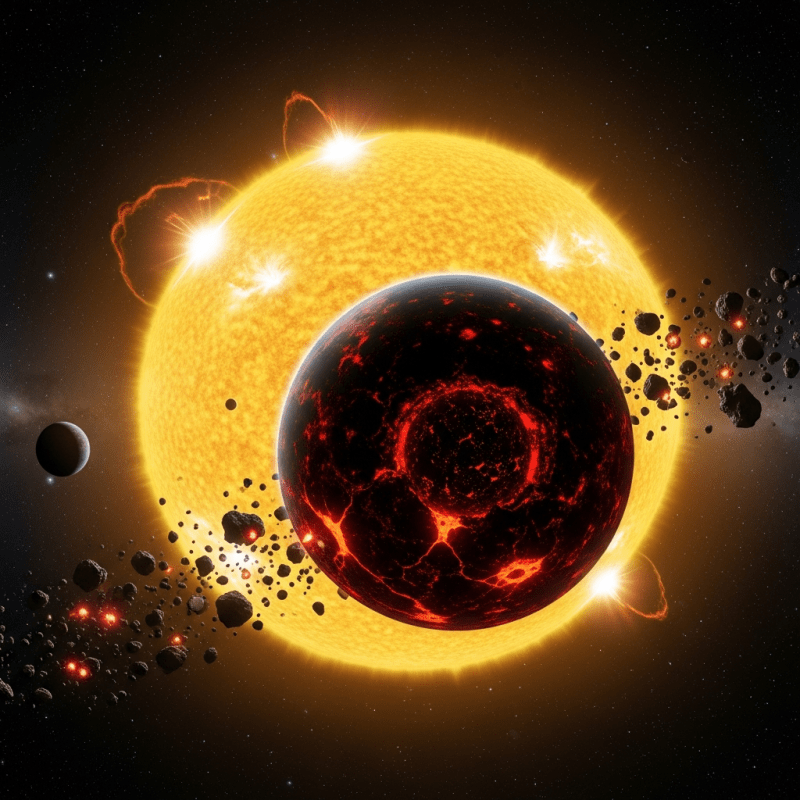
Soft cotton tee, unisex sizes
Buy ShirtWhile chthonian planets have not prominently featured in mythology or traditional culture, their evocative name—derived from the Greek word for "of the earth"—reflects the notion of an exposed planetary core. In modern astronomy and science fiction, they symbolize the harsh consequences of stellar proximity and planetary transformation, inspiring narratives about planetary death and rebirth.
Chthonian planets orbit very close to their host stars, typically at distances around 0.05 astronomical units (AU). Their orbital periods are short, often about 5 Earth days or less, placing them in high-insolation environments. Their orbits tend to be nearly circular due to tidal interactions, though eccentricity data is limited.
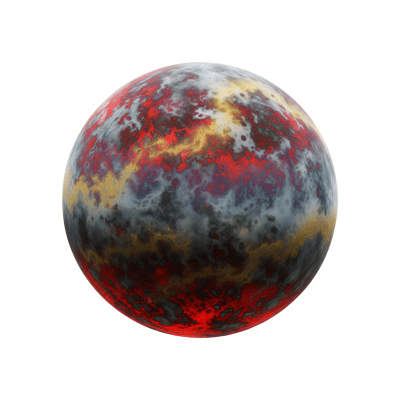
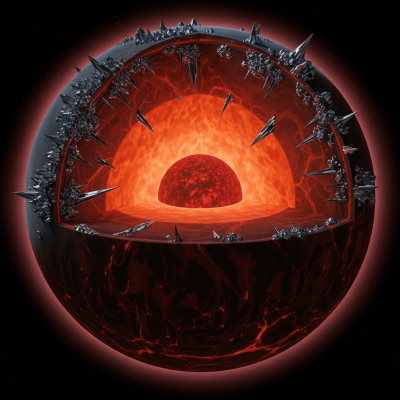
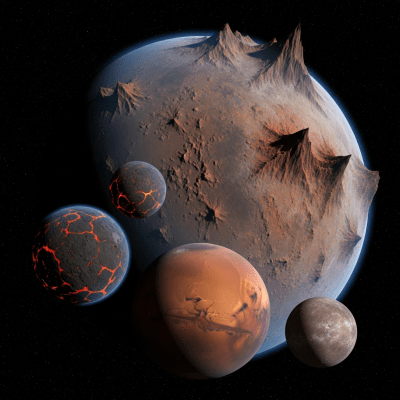
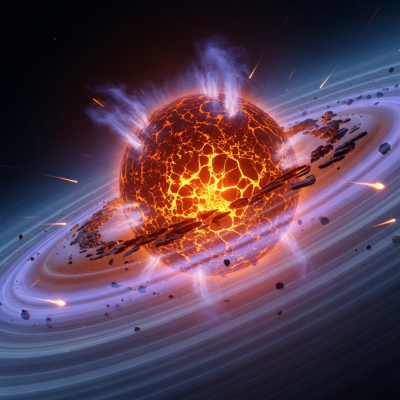

These planets generally have masses near 10.5 Earth masses and radii around 1.5 Earth radii, reflecting their compact, dense nature. Their mean densities exceed 5 grams per cubic centimeter, consistent with a composition dominated by silicate rock and iron-nickel metal. Morphologically, they lack significant gaseous envelopes, presenting as solid, rocky or metallic cores.
Chthonian planets typically lack substantial atmospheres due to the intense stellar radiation that strips away gaseous envelopes. Any remaining atmosphere is expected to be extremely thin, possibly composed of refractory elements or secondary gases released through outgassing. Detecting such tenuous atmospheres remains challenging with current technology.
To date, no spacecraft or direct observational missions have targeted chthonian planets specifically. Their existence is inferred through theoretical models and indirect observations of atmospheric escape in hot Jupiters. Advances in exoplanet detection and characterization continue to refine our understanding of these stripped cores.
Due to their proximity to host stars, high equilibrium temperatures (around 1200 K), and lack of substantial atmospheres, chthonian planets are inhospitable to life as we know it. Their harsh environments and intense radiation preclude conditions suitable for habitability or colonization.