
Veined Octopus
The Veined Octopus (Amphioctopus marginatus) is a medium-sized, highly intelligent cephalopod native to the Indo-Pacific, renowned for its distinctive veined appearance and unique tool-use behaviors.
The Veined Octopus (Amphioctopus marginatus) is a medium-sized, highly intelligent cephalopod native to the Indo-Pacific, renowned for its distinctive veined appearance and unique tool-use behaviors.
Amphioctopus marginatus was first described in 1832 by Georges Louis Duvernoy. While the exact location of the original type specimen remains unclear, this species has long been recognized within the family Octopodidae and the genus Amphioctopus, establishing its place among benthic octopuses of the Indo-Pacific region.
The Veined Octopus belongs to the order Octopoda, family Octopodidae, and genus Amphioctopus. This classification places it among the true octopuses, characterized by their eight arms and soft bodies, within the broader class of cephalopods.
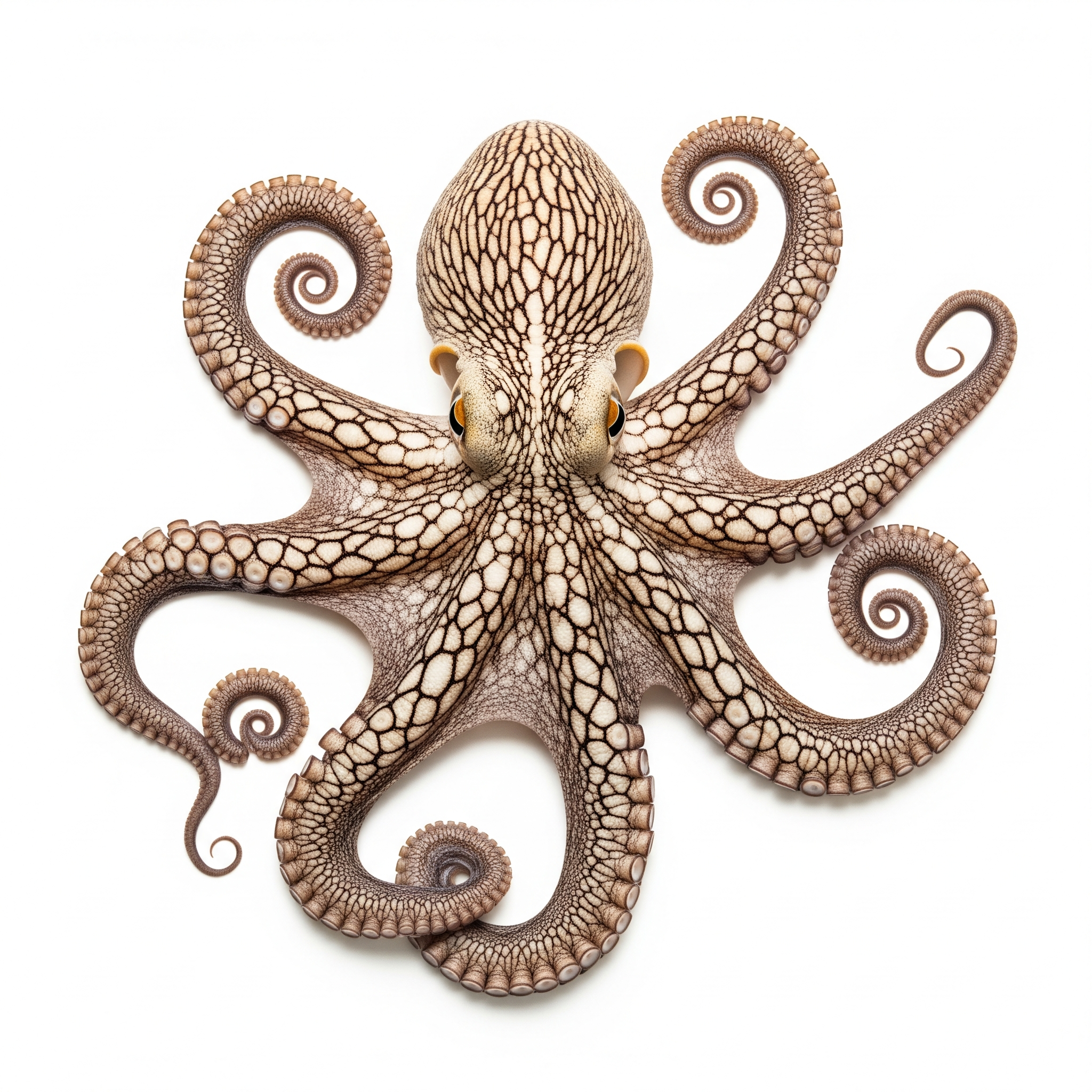
This octopus typically reaches a mantle length of up to 15 cm with arms extending about 30 cm. Its body coloration ranges from pale to dark brown, marked by distinctive dark, vein-like patterns along the arms and mantle. The skin texture is highly dynamic, rapidly changing through chromatophore control to provide effective camouflage against sandy and muddy sea floors.
The Veined Octopus is notable for its remarkable intelligence and advanced problem-solving skills. It is one of the few invertebrates known to use tools, famously carrying coconut shells and seashells to build portable shelters for protection. This behavior highlights its adaptability and complex interaction with its environment.
Bring this kind into your world illustrated posters, mugs, and shirts.
Archival print, museum-grade paper
Buy Poster
Stoneware mug, dishwasher safe
Buy Mug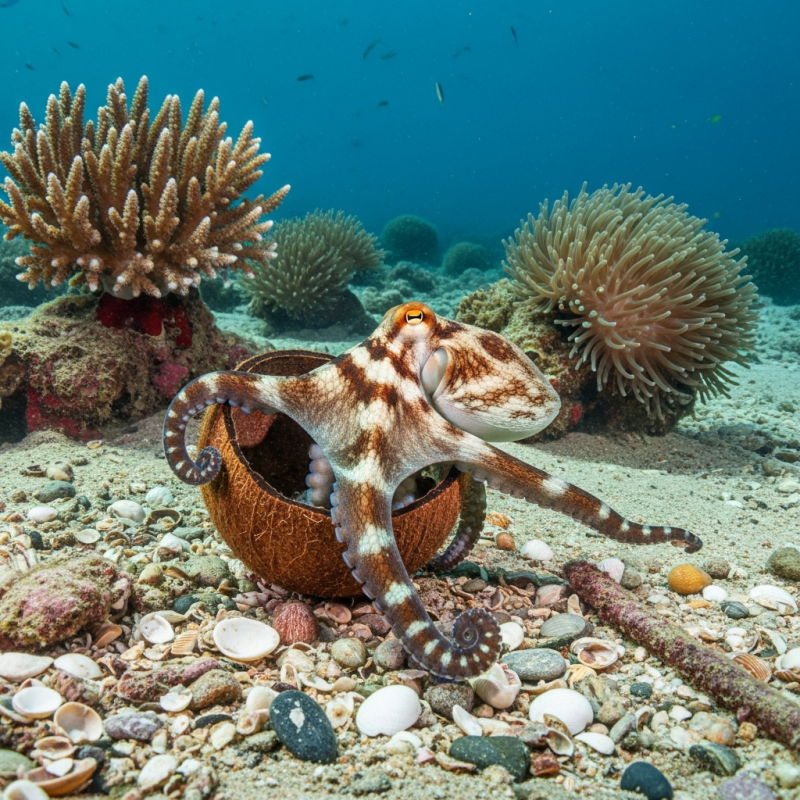
Soft cotton tee, unisex sizes
Buy ShirtWhile not a major commercial species, the Veined Octopus has captured public fascination due to its unique behaviors. It features in ecotourism, public aquaria, and scientific media, where its tool use and intelligence are celebrated, contributing to a growing appreciation of cephalopod cognition and marine biodiversity.
The Veined Octopus is native to the Indo-Pacific, where it dwells primarily on sandy and muddy substrates in shallow waters up to 37 meters deep. It often burrows or seeks shelter under debris, adapting well to benthic environments along tropical and subtropical coastlines.

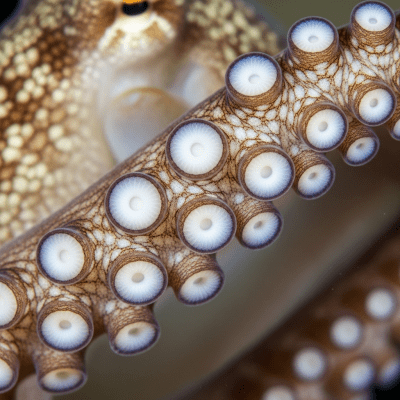

This species demonstrates exceptional intelligence among invertebrates, with documented advanced problem-solving skills. Its ability to use tools—such as carrying coconut shells for shelter—reflects a sophisticated level of cognition rarely seen outside vertebrates, highlighting its adaptability and environmental awareness.
The Veined Octopus employs rapid color and texture changes through chromatophores to blend into its surroundings, effectively avoiding predators. Additionally, its use of coconut shells and seashells as portable shelters provides physical protection, showcasing an innovative defense strategy beyond typical cephalopod ink or camouflage.
Detailed information on the Veined Octopus's reproductive habits and lifecycle remains limited. Like many octopuses, it is presumed to have a relatively short lifespan with a single reproductive event, but specific growth rates and developmental stages have not been comprehensively documented.
The Veined Octopus is not currently assessed by the IUCN Red List and lacks a formal conservation status. It faces typical threats from habitat disturbance and bycatch in artisanal fisheries but is not a major target species. Its cryptic nature and adaptability may offer some resilience, though ongoing monitoring is advisable.