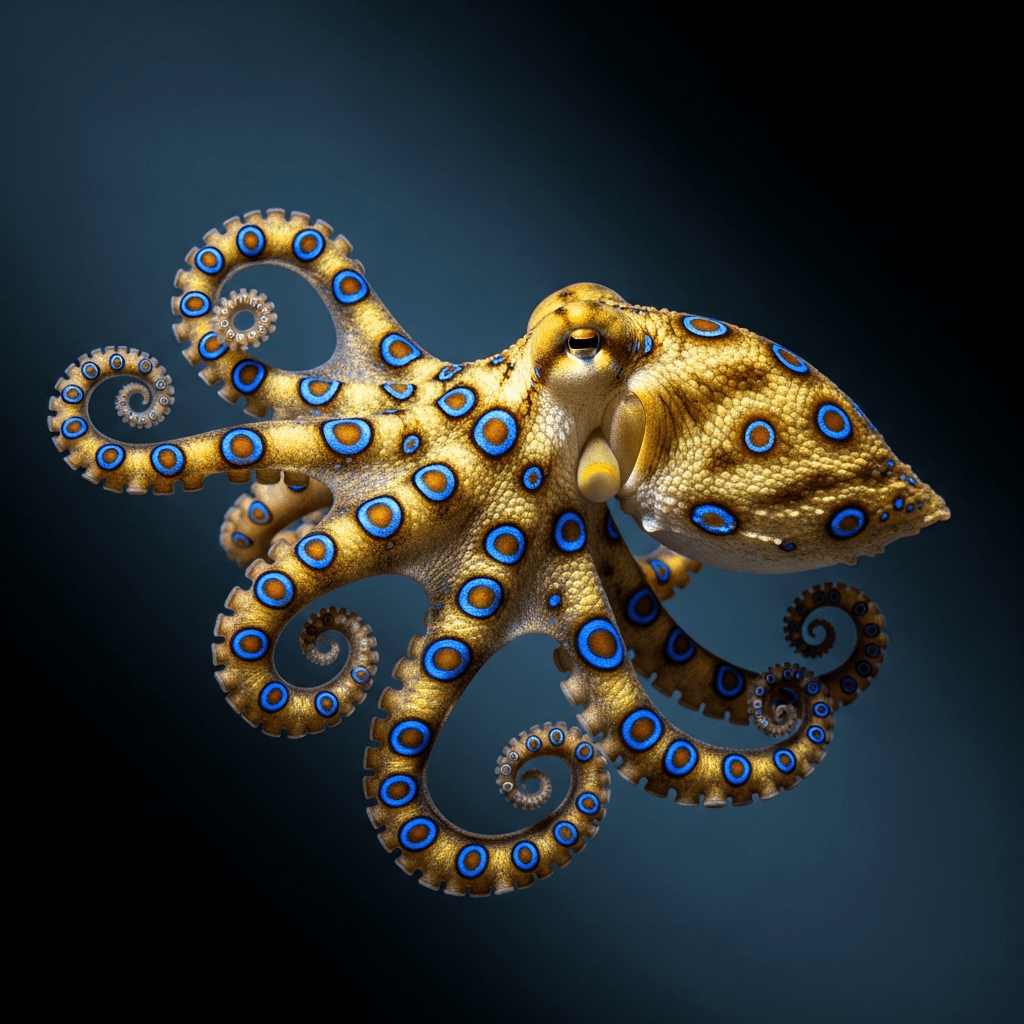
Southern Blue-Ringed Octopus
The Southern Blue-Ringed Octopus (Hapalochlaena maculosa) is a small yet highly venomous marine cephalopod native to southern Australia, instantly recognizable by its vivid blue rings that glow when threatened.
The Southern Blue-Ringed Octopus (Hapalochlaena maculosa) is a small yet highly venomous marine cephalopod native to southern Australia, instantly recognizable by its vivid blue rings that glow when threatened.
First described by Hoyle in 1883, the Southern Blue-Ringed Octopus was identified from specimens collected in the temperate waters of southern Australia, anchoring its origin in this unique marine region.
This species belongs to the order Octopoda, family Octopodidae, genus Hapalochlaena, and is scientifically named Hapalochlaena maculosa. It is part of the broader group of soft-bodied, eight-armed mollusks known as octopuses.
The Southern Blue-Ringed Octopus features a compact body with a mantle length of 4 to 6 centimeters and an arm span around 10 centimeters. Its skin is typically yellow to brown, adorned with striking iridescent blue rings that intensify in brightness when the animal feels threatened. It has eight arms lined with suckers and lacks an internal shell, giving it a soft, flexible form.
This octopus is benthic, inhabiting rocky reefs, tidal pools, and seagrass beds along southern Australian coasts. While not used in fisheries or culinary contexts due to its extreme toxicity, it is occasionally displayed in aquariums and studied for its unique venom and behavior.
Bring this kind into your world illustrated posters, mugs, and shirts.
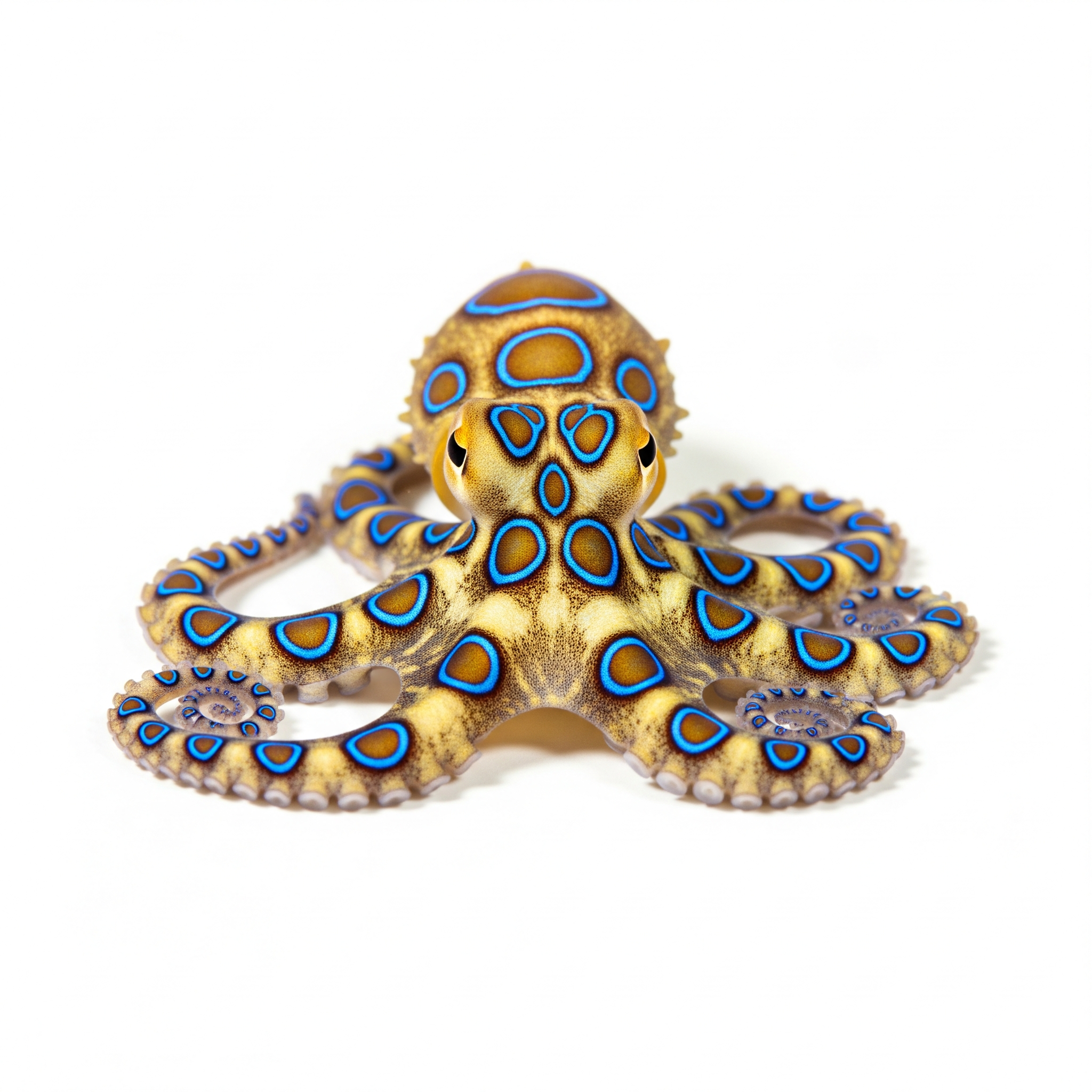
Archival print, museum-grade paper
Buy Poster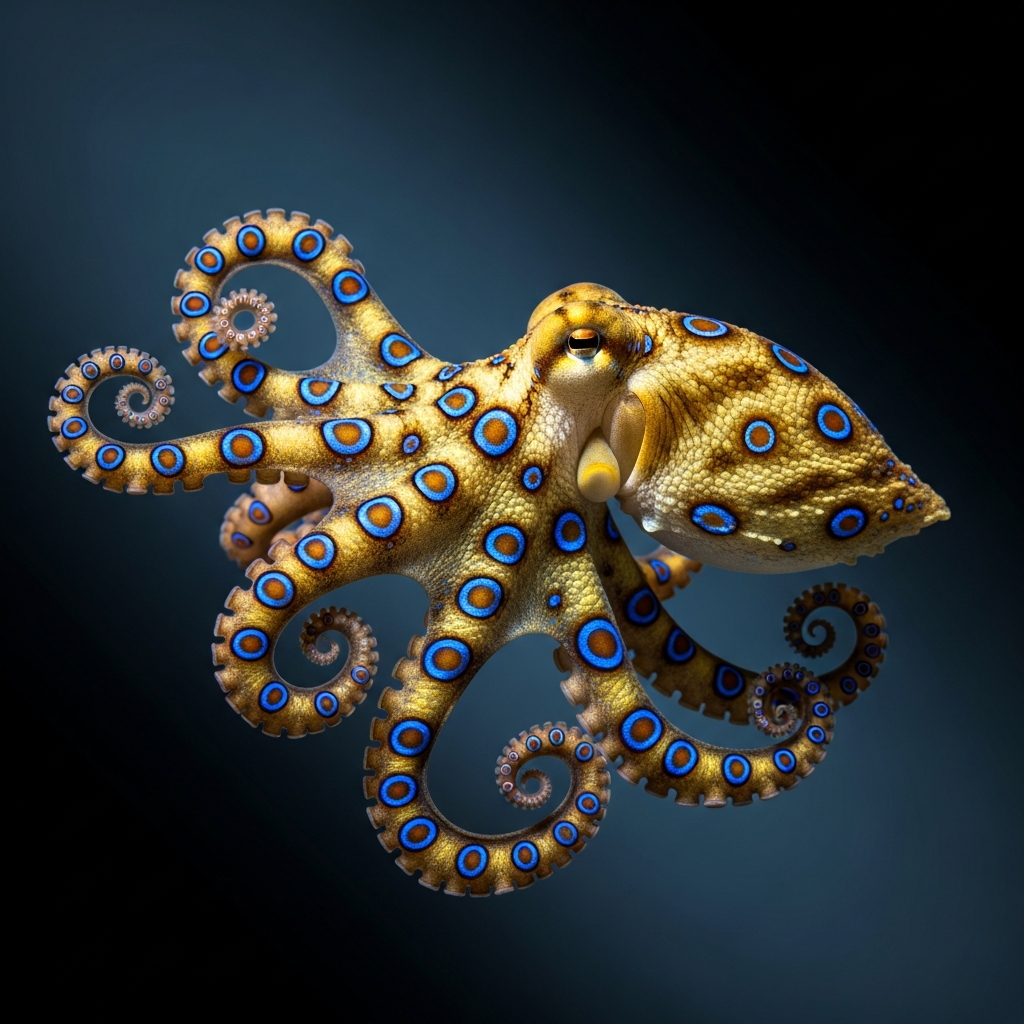
Stoneware mug, dishwasher safe
Buy Mug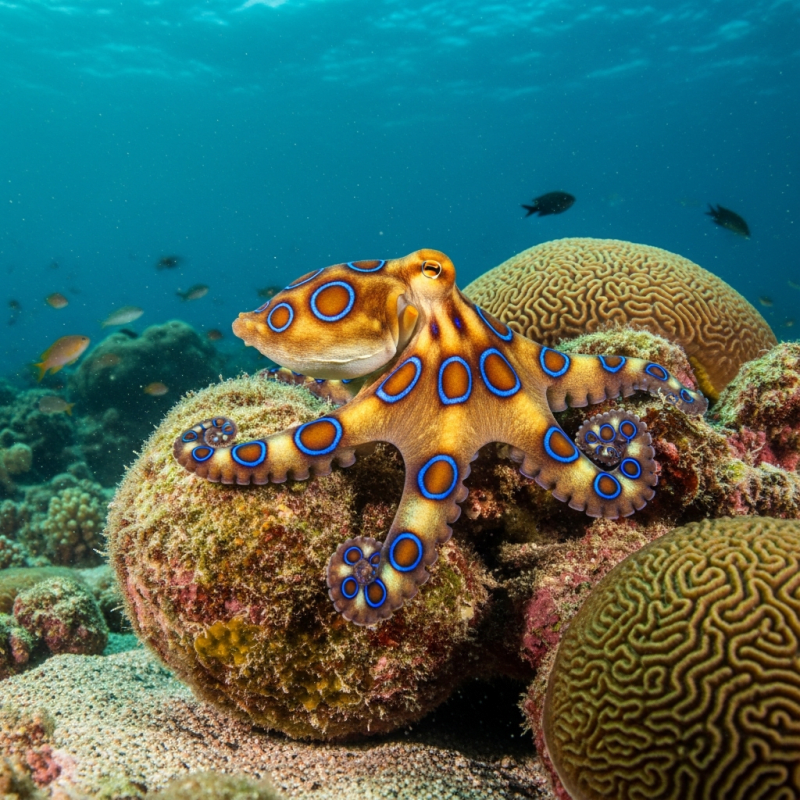
Soft cotton tee, unisex sizes
Buy ShirtIn Australian culture, the Southern Blue-Ringed Octopus serves as a potent symbol of marine danger. It frequently appears in educational materials and public safety campaigns, raising awareness about its venomous nature and the importance of respecting marine wildlife.
The Southern Blue-Ringed Octopus inhabits the coastal waters of southern Australia, favoring environments such as rocky reefs, tidal pools, and seagrass beds. These benthic habitats provide shelter and hunting grounds within temperate marine ecosystems.
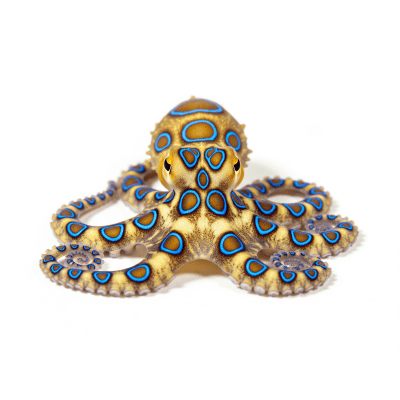
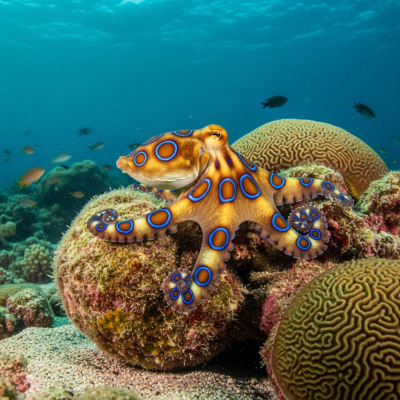

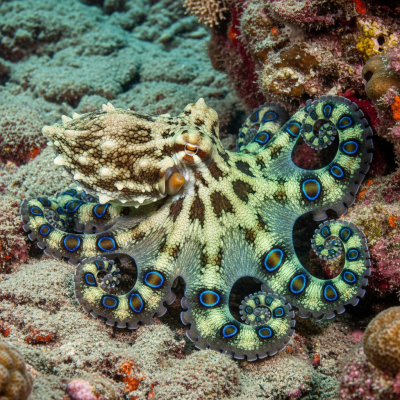
Like other octopuses, this species exhibits notable problem-solving abilities and adaptability, though specific studies on its cognition are limited. Its behavior includes complex camouflage and defensive signaling through its blue rings.
The Southern Blue-Ringed Octopus defends itself primarily through its potent venom containing tetrodotoxin, which can paralyze predators and humans alike. Visually, it warns threats by flashing its iridescent blue rings, a striking display that deters many would-be attackers.
This species has a brief lifespan of about two years. It grows rapidly and reproduces within this period, though detailed reproductive behaviors are not extensively documented. After mating, females lay eggs and tend them until they hatch, after which the adults typically die.
While not currently listed with a formal conservation status, the Southern Blue-Ringed Octopus faces threats from habitat disturbance and pollution in its coastal environments. Protecting its natural habitats is essential to ensure its continued survival.