
Wolfi Octopus
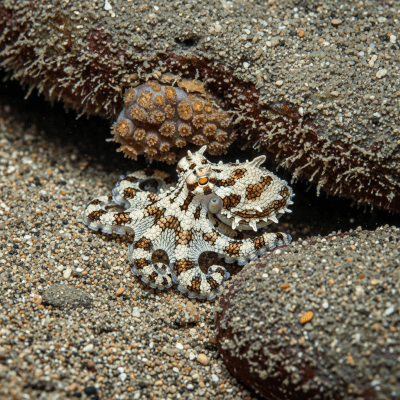
Octopus wolfi is the smallest known species of octopus, remarkable for its tiny size and distinctive webbed arms that create an umbrella-like shape.
Octopus wolfi is the smallest known species of octopus, remarkable for its tiny size and distinctive webbed arms that create an umbrella-like shape.
Octopus wolfi was first described in 1929 by G.C. Robson, based on specimens collected from the shallow tropical waters of the Indo-Pacific region. Though exact collection sites vary in reports, this species has since intrigued scientists for its diminutive stature and unique morphology.
Octopus wolfi belongs to the order Octopoda, family Octopodidae, and genus Octopus. It is part of the broader group of soft-bodied, eight-armed cephalopods known as octopuses, which are widely distributed in marine environments worldwide.
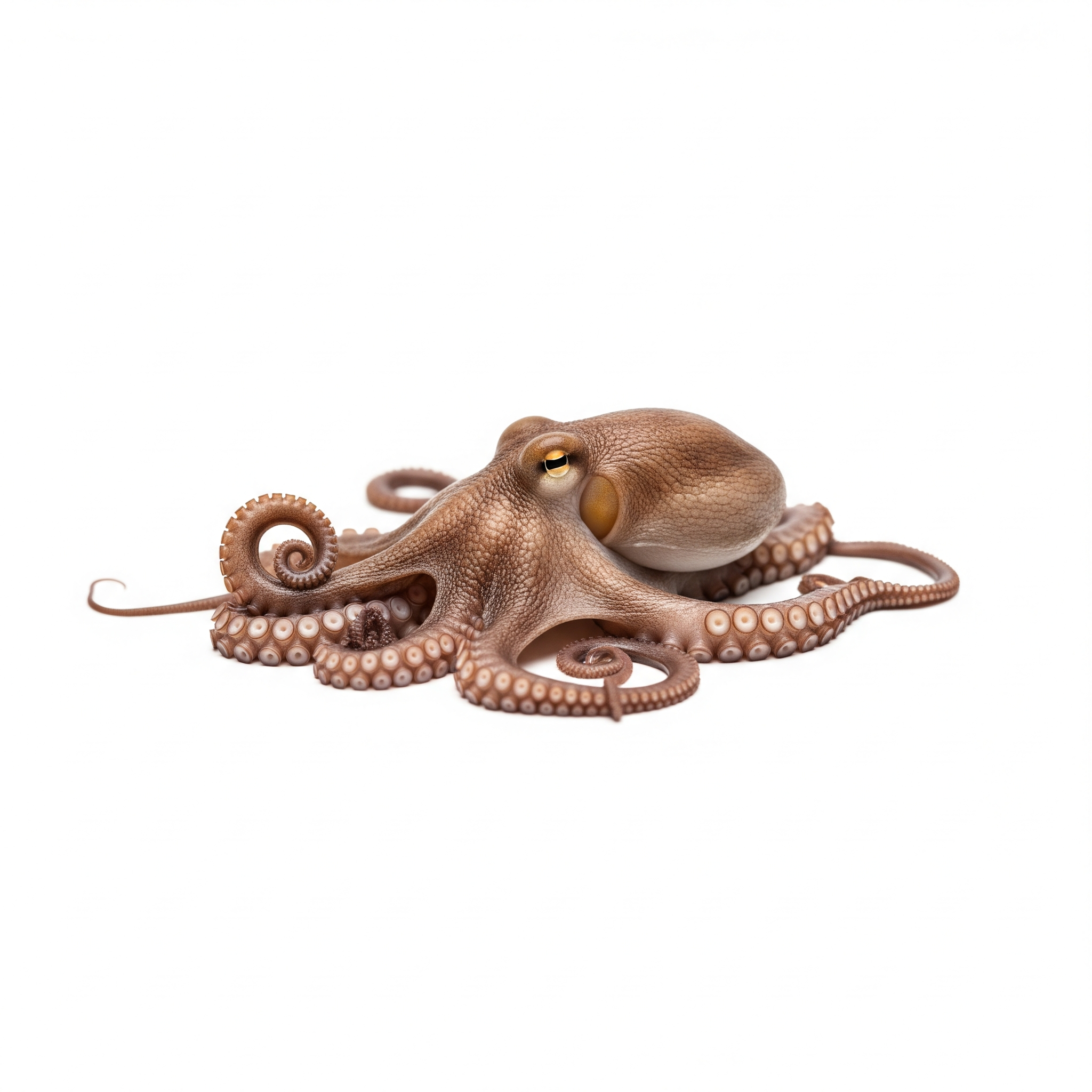
This species is characterized by an extremely small adult size, with a mantle length ranging from about 1 to 1.5 centimeters and an arm span up to 2.5 centimeters. Its arms are connected by prominent webbing, forming a distinctive umbrella shape when spread. The coloration varies from pale to mottled brown, with the ability to shift hues for camouflage. The skin often features small papillae or wart-like textures, adding to its subtle surface detail.
Due to its minute size, Octopus wolfi is not known for direct interaction with humans through fisheries or aquaculture. Its behavior in the wild remains little documented, but like other octopuses, it likely uses its webbed arms for locomotion and capturing prey. Its small stature suggests a rapid growth cycle and vulnerability within its ecosystem.
Bring this kind into your world illustrated posters, mugs, and shirts.
Archival print, museum-grade paper
Buy Poster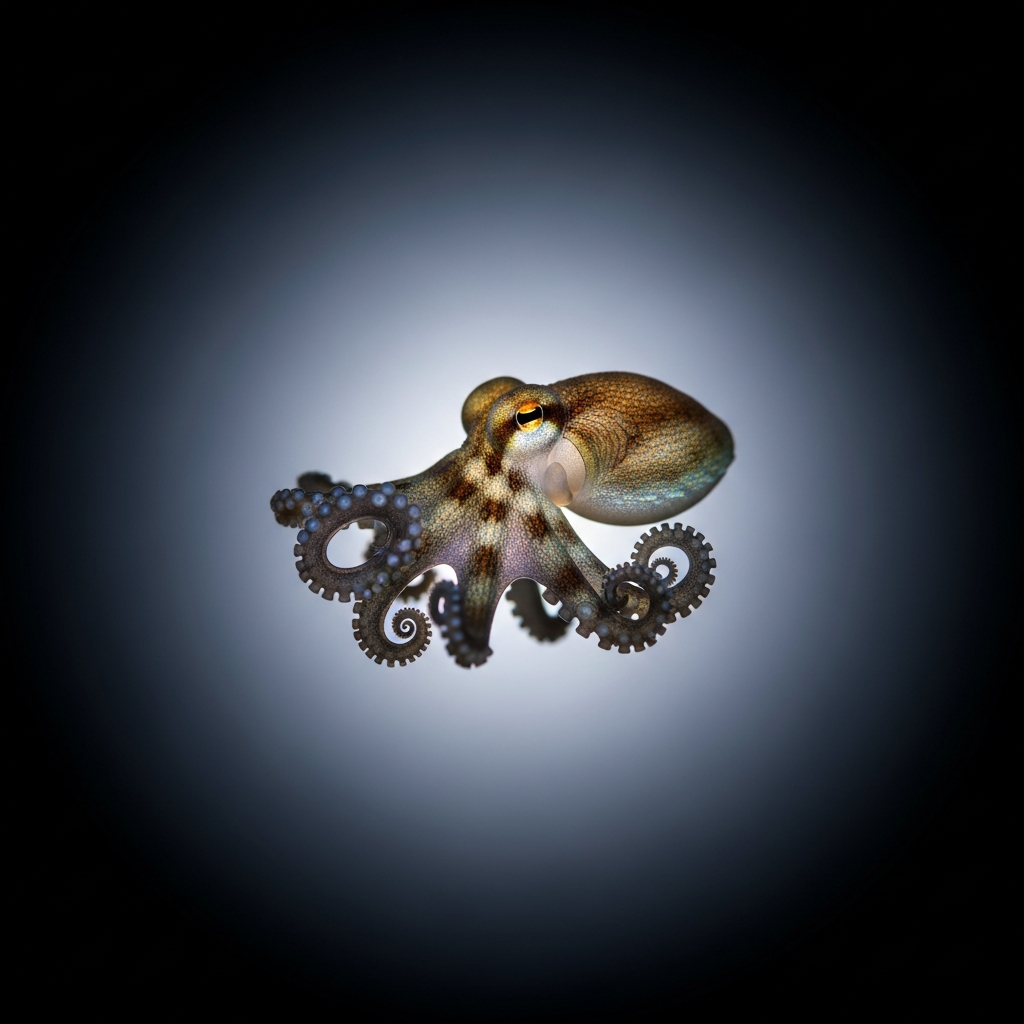
Stoneware mug, dishwasher safe
Buy Mug
Soft cotton tee, unisex sizes
Buy ShirtOctopus wolfi holds no notable place in culinary traditions or popular culture, primarily due to its tiny size and obscurity. While it may occasionally appear in scientific collections or aquarium exhibits, it lacks widespread cultural or symbolic significance.
Octopus wolfi is native to shallow tropical marine environments across the Indo-Pacific region. While specific substrate preferences are not well documented, it likely inhabits coastal waters where its small size allows it to exploit microhabitats and avoid larger predators.

Although detailed studies on Octopus wolfi are limited, octopuses in general are renowned for their intelligence, problem-solving abilities, and complex behaviors. It is reasonable to infer that despite its small size, this species shares many cognitive traits typical of octopods, such as learning capacity and environmental awareness.
Octopus wolfi relies primarily on its small size and camouflage abilities to evade predators. Its color-changing skin helps it blend into surroundings, while the umbrella-like webbing may aid in quick escape movements. However, its diminutive stature makes it vulnerable to a wide range of marine predators.
Specific reproductive details for Octopus wolfi are scarce, but like other small octopuses, it likely has a short lifespan with rapid growth. Reproduction involves laying eggs in protected areas, with hatchlings emerging as miniature adults. The species' life cycle is adapted to its small size and environmental niche.
No formal conservation status has been assigned to Octopus wolfi. Its small size and habitat in shallow tropical waters may expose it to threats such as habitat degradation and predation. However, lack of targeted fisheries or commercial interest reduces direct human pressures. Continued habitat protection in the Indo-Pacific is beneficial to its survival.