
Musky Octopus
The Musky Octopus (Eledone moschata) is a medium-sized Mediterranean cephalopod distinguished by its smooth body, single row of suckers per arm, and a characteristic musky odor.
The Musky Octopus (Eledone moschata) is a medium-sized Mediterranean cephalopod distinguished by its smooth body, single row of suckers per arm, and a characteristic musky odor.
First described in 1798 by Jean-Baptiste Lamarck, the Musky Octopus was identified from specimens originating in the Mediterranean Sea. Though the exact type locality and repository remain unspecified, its discovery marked an important addition to the marine fauna known from this region.
The Musky Octopus belongs to the order Octopoda, family Octopodidae, genus Eledone, and species moschata. This places it among the true octopuses, characterized by their eight arms and soft bodies, within a taxonomic framework that distinguishes it by its unique sucker arrangement and morphology.
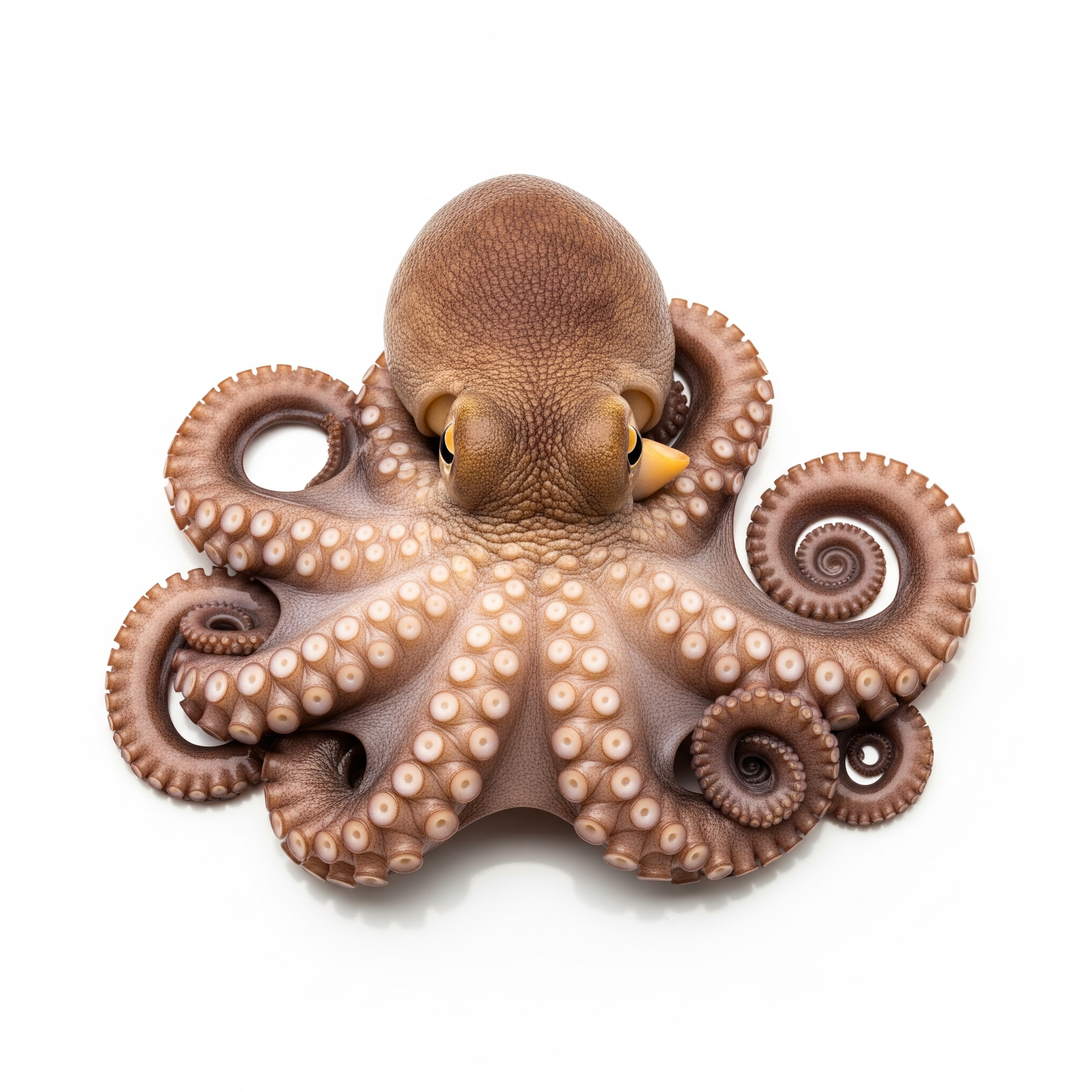
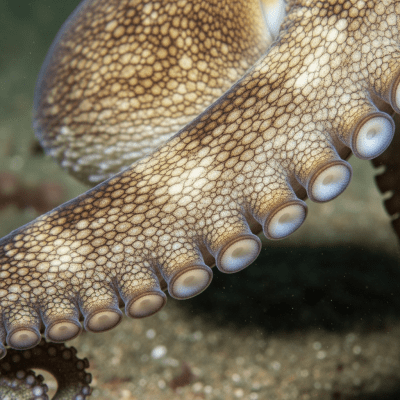
This octopus features a smooth, oval-shaped mantle up to 20 cm long and arms bearing a single row of suckers, a defining trait of the genus Eledone. Its coloration ranges from brownish to reddish, adorned with pale spots. Notably, it emits a strong musky scent, especially when disturbed, setting it apart from other octopus species.
The Musky Octopus is adapted to life on sandy and muddy sea floors, inhabiting depths from shallow coastal waters down to 250 meters. It is valued in Mediterranean fisheries for its tender flesh and is commonly prepared grilled, stewed, or in seafood salads. The distinctive musky odor influences culinary methods, sometimes requiring special preparation to moderate the scent.
Bring this kind into your world illustrated posters, mugs, and shirts.
Archival print, museum-grade paper
Buy Poster
Stoneware mug, dishwasher safe
Buy Mug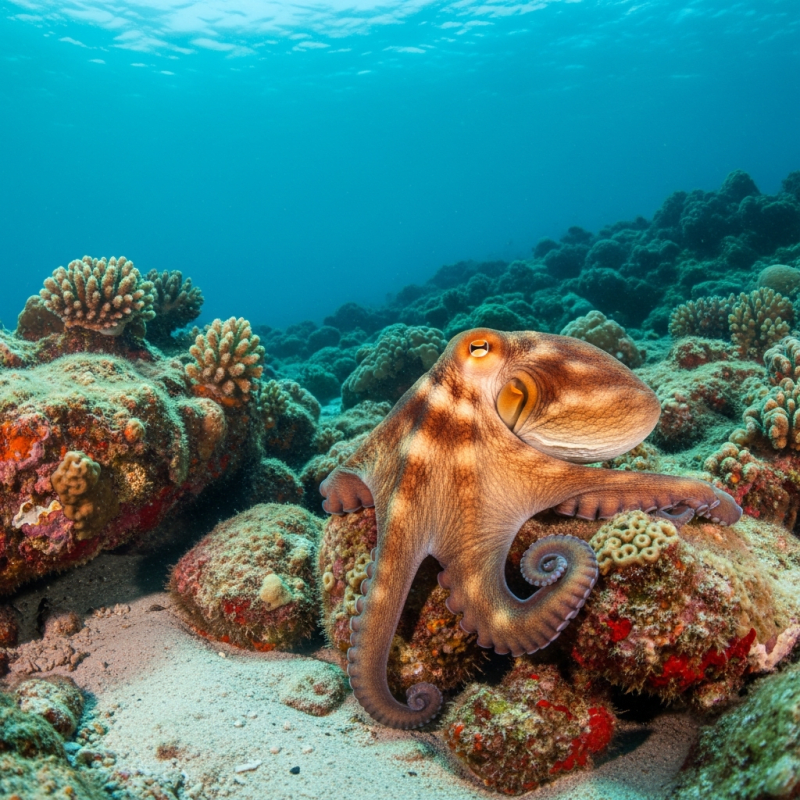
Soft cotton tee, unisex sizes
Buy ShirtWhile not widely prominent in global culture, the Musky Octopus holds regional culinary importance in Mediterranean countries such as Italy, Greece, and Turkey. Its musky aroma is recognized in local dialects and culinary traditions, contributing to its identity in Mediterranean seafood cuisine.
The Musky Octopus is native exclusively to the Mediterranean Sea, where it inhabits sandy and muddy seabeds. It occupies a depth range from the surface down to approximately 250 meters, adapting well to variable salinity and temperature conditions typical of this marine environment.


While specific studies on the Musky Octopus's intelligence are limited, like other octopuses, it likely exhibits notable problem-solving abilities and adaptability. Octopuses are generally recognized for their complex behaviors, including learning and environmental interaction, traits presumed to extend to this species.
The Musky Octopus employs typical cephalopod defenses such as camouflage aided by its coloration and skin texture. Additionally, it releases a strong musky odor when threatened, which may serve to deter predators. Its ability to adapt to varying environmental conditions also supports its survival against habitat disturbances.
Details on the Musky Octopus's reproductive habits are sparse, but it is known to reach maturity within about one year. Like other octopuses, it likely follows a lifecycle involving egg-laying, with females tending to eggs until hatching, after which juveniles begin independent life. Lifespan beyond maturity is not well documented.
The Musky Octopus is listed on the IUCN Red List, though detailed conservation status is unspecified. It faces threats primarily from habitat disturbance and overfishing in the Mediterranean. Its regional commercial importance underscores the need for sustainable management to ensure population stability.