
Greater Blue-Ringed Octopus
The Greater Blue-Ringed Octopus (Hapalochlaena lunulata) is a small but highly venomous marine cephalopod known for its vivid blue rings and potent neurotoxin, native to the tropical and subtropical Indo-Pacific waters.
The Greater Blue-Ringed Octopus (Hapalochlaena lunulata) is a small but highly venomous marine cephalopod known for its vivid blue rings and potent neurotoxin, native to the tropical and subtropical Indo-Pacific waters.
First described by Quoy & Gaimard in 1832, the Greater Blue-Ringed Octopus was identified from specimens collected in the Indo-Pacific region. Since then, its presence has been confirmed across a wide range of tropical and subtropical marine habitats in this vast oceanic zone.
This species belongs to the order Octopoda, family Octopodidae, and genus Hapalochlaena. It is one of several blue-ringed octopuses, a group distinguished by their small size and striking iridescent markings, placing it firmly within the true octopuses known for their intelligence and complex behaviors.
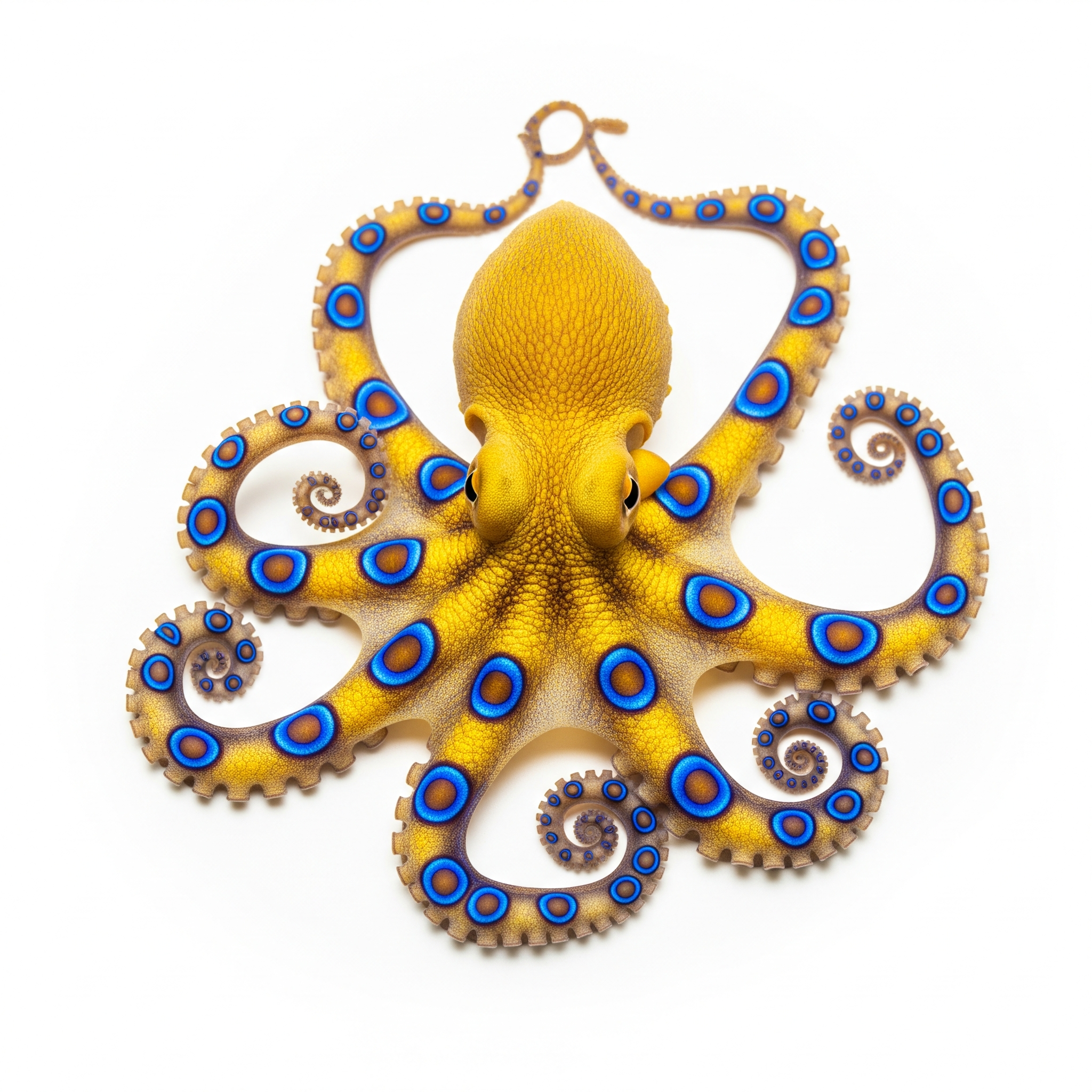
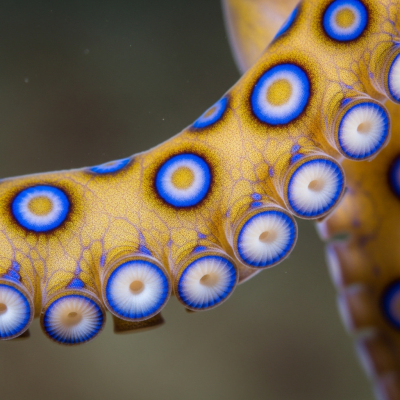
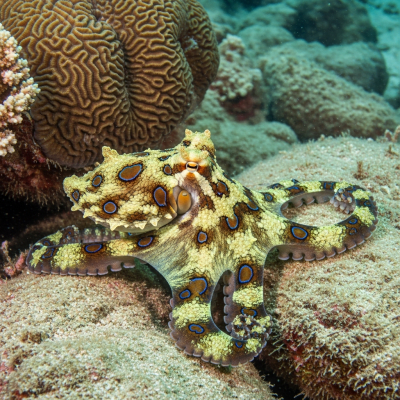
The Greater Blue-Ringed Octopus features a yellow to brown base coloration adorned with vivid, bright blue rings that intensify in brightness when the animal feels threatened. It typically has a mantle length between 4 and 6 centimeters, with arms extending about 10 centimeters. Its distinctive bright blue rings and specialized salivary glands producing tetrodotoxin make it instantly recognizable and medically significant.
Despite its small size, this octopus wields a powerful neurotoxin as a defense mechanism. It is not used for food due to its extreme toxicity but is occasionally collected for display in aquaria under strict safety regulations. Its behavior includes rapid growth and a short lifespan, with no known breeding programs or commercial farming due to its venom and ecological role.
Bring this kind into your world illustrated posters, mugs, and shirts.
Archival print, museum-grade paper
Buy Poster
Stoneware mug, dishwasher safe
Buy Mug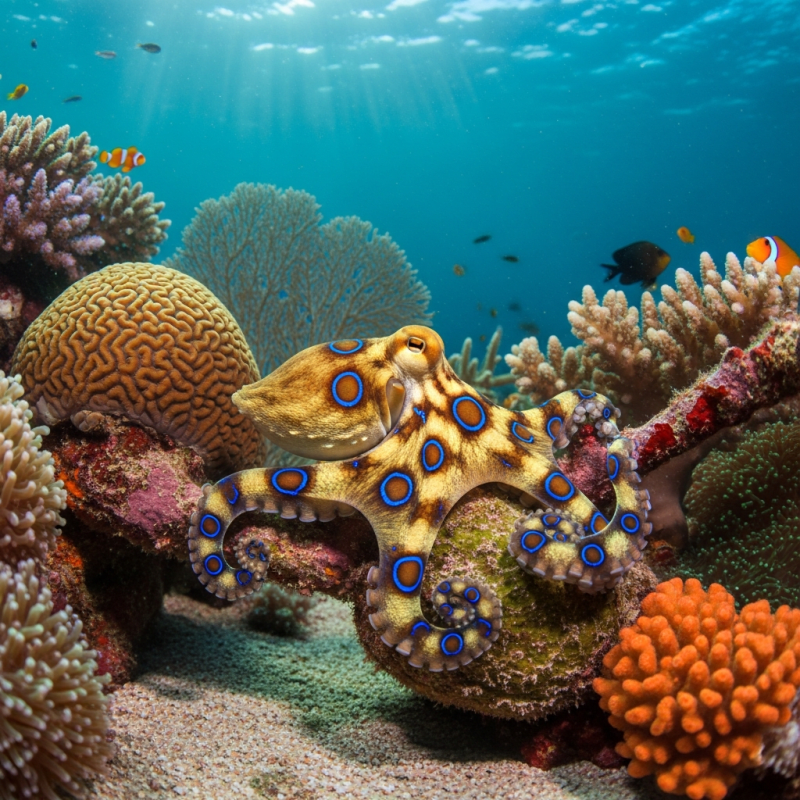
Soft cotton tee, unisex sizes
Buy ShirtThe Greater Blue-Ringed Octopus holds a prominent place as a symbol of marine danger and venomous wildlife. It appears frequently in educational materials highlighting the risks of venomous sea creatures and has medical interest due to its potent tetrodotoxin. Its striking appearance also makes it a notable figure in marine-themed art and popular culture, often evoking fascination and caution.
The Greater Blue-Ringed Octopus inhabits tropical and subtropical waters throughout the Indo-Pacific region. It typically occupies shallow marine environments within this range, though specific substrate preferences and depth ranges are less documented. Its distribution spans a wide geographic area, reflecting adaptability to diverse coastal habitats.
Like other octopuses, the Greater Blue-Ringed Octopus exhibits notable intelligence, including problem-solving abilities and complex behaviors. While specific studies on this species are limited, its family members demonstrate advanced learning, memory, and environmental interaction, traits likely shared by this species.
This octopus employs a potent chemical defense through its specialized salivary glands that produce tetrodotoxin, a neurotoxin lethal to predators and humans alike. Additionally, its bright blue rings serve as a warning signal, becoming more pronounced when threatened to deter potential attackers.
The Greater Blue-Ringed Octopus has a short lifespan of one to two years, with rapid growth from hatchling to adult. Reproductive details are typical of small octopuses, involving mating followed by the female laying eggs that she guards until hatching. No captive breeding programs are known for this species.
Currently, the Greater Blue-Ringed Octopus is not assessed by major conservation bodies like the IUCN. However, it faces threats from habitat degradation and collection for the aquarium trade. Its toxicity and ecological role have limited commercial exploitation, but environmental changes in Indo-Pacific coastal areas could impact populations.