
East Pacific Red Octopus
The East Pacific Red Octopus (Octopus rubescens) is a small to medium-sized octopus native to the northeastern Pacific Ocean, recognized for its vibrant reddish coloration and adaptability to diverse coastal habitats.
The East Pacific Red Octopus (Octopus rubescens) is a small to medium-sized octopus native to the northeastern Pacific Ocean, recognized for its vibrant reddish coloration and adaptability to diverse coastal habitats.
Octopus rubescens was first formally described by Berry in 1953, based on specimens from the Pacific coast of North America. Its lineage is natural and well-established, with no known instances of artificial breeding or hybridization.
This species belongs to the order Octopoda, within the family Octopodidae and genus Octopus. It is part of the benthic octopuses, which are soft-bodied, eight-armed mollusks inhabiting marine environments worldwide.
The East Pacific Red Octopus typically has a mantle length between 5 and 10 centimeters and arms extending about 30 centimeters. Its skin displays a striking red to reddish-brown hue, often mottled with white or iridescent spots. This species can rapidly change color through chromatophores, aiding in camouflage and communication. Notable physical traits include a robust beak and well-developed suckers.
This octopus is known for its intelligence and problem-solving skills, exhibiting nocturnal foraging behavior. It interacts actively with its environment, using camouflage and exploration to hunt and avoid predators. Regionally, it is harvested in small-scale fisheries and valued for its tender flesh, commonly prepared grilled, boiled, or in seafood stews.
Bring this kind into your world illustrated posters, mugs, and shirts.

Archival print, museum-grade paper
Buy Poster
Stoneware mug, dishwasher safe
Buy Mug
Soft cotton tee, unisex sizes
Buy ShirtWhile not widely prominent in global culture, the East Pacific Red Octopus holds regional importance in coastal communities along the Pacific Northwest. It features in local artisanal fisheries and culinary traditions, appreciated for its flavor and role in coastal marine ecosystems.
Found along the northeastern Pacific coast, the East Pacific Red Octopus inhabits rocky substrates, kelp forests, and intertidal zones. It thrives in variable coastal environments from California to British Columbia, demonstrating tolerance to different salinity and temperature levels.



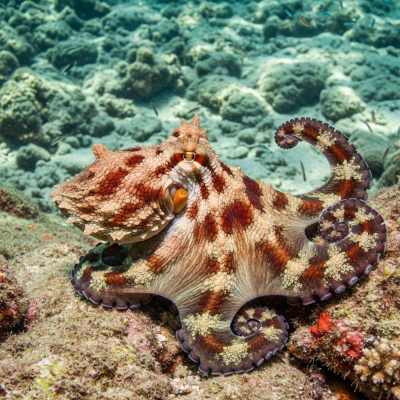
This species is noted for its intelligence, showing problem-solving abilities and adaptability. It uses complex behaviors such as camouflage, exploration, and nocturnal foraging to survive and thrive in its environment.
To evade predators, the East Pacific Red Octopus employs rapid color changes through chromatophores, blending seamlessly with its surroundings. Its robust beak and agility also aid in defense, while its nocturnal habits reduce exposure to daytime threats.
The species has a short lifespan of about 1 to 2 years, with rapid growth and early maturity. Juveniles develop quickly, reaching adulthood within months. Specific reproductive behaviors are typical of benthic octopuses, involving egg-laying and maternal care until hatching.
Though not currently listed with a formal conservation status, the East Pacific Red Octopus faces localized threats from overfishing and predation by marine mammals. Its adaptability to environmental changes offers resilience, but ongoing monitoring is important to ensure sustainable populations.