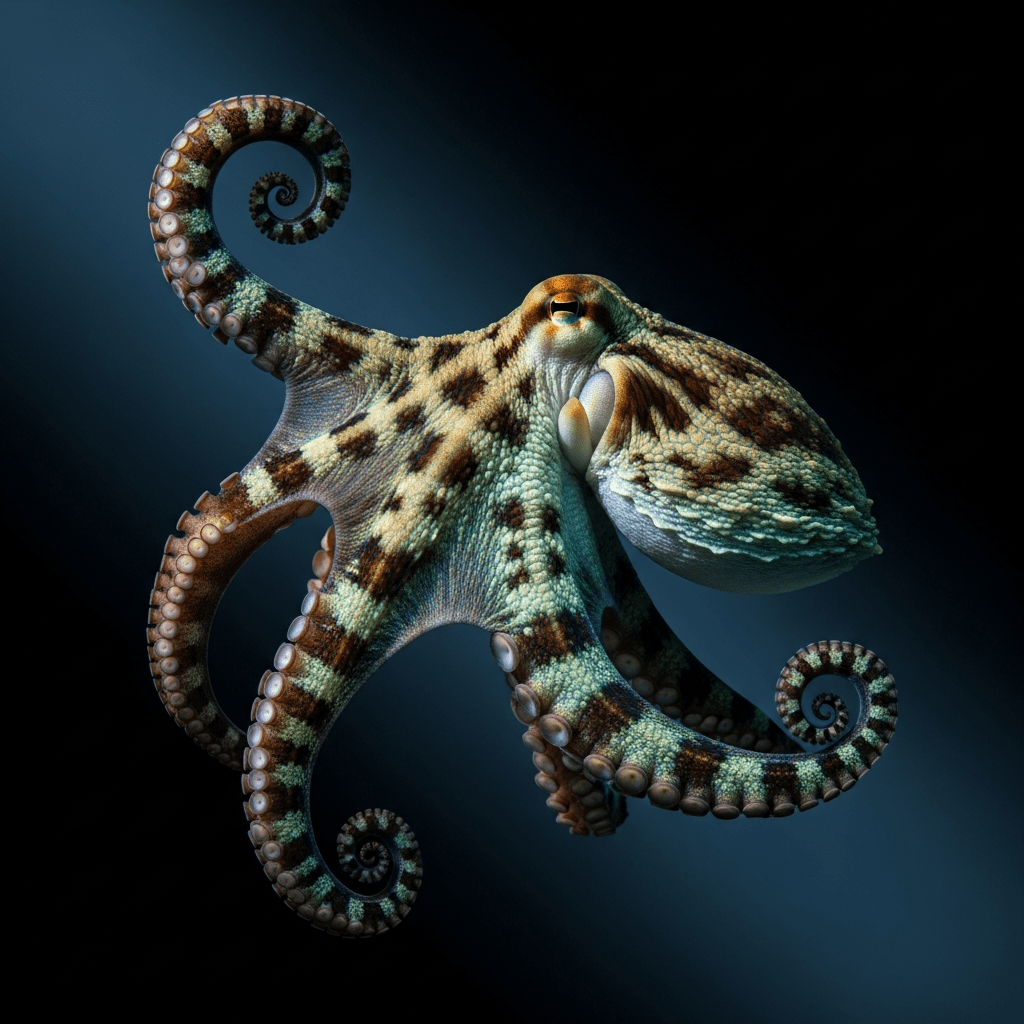
Caribbean Reef Octopus
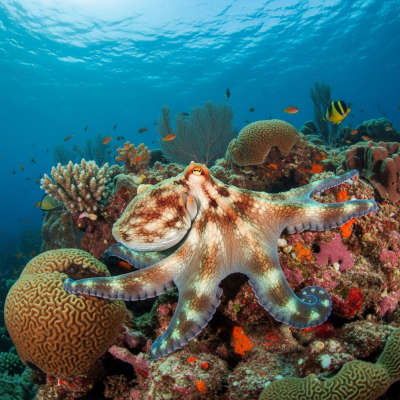
The Caribbean Reef Octopus (Octopus briareus) is a vibrant, medium-sized cephalopod known for its striking blue-green coloration and remarkable ability to change color for camouflage and communication.
The Caribbean Reef Octopus (Octopus briareus) is a vibrant, medium-sized cephalopod known for its striking blue-green coloration and remarkable ability to change color for camouflage and communication.
First described in 1834 by Jean René Constant Quoy and Joseph Paul Gaimard, the Caribbean Reef Octopus originates from the warm, shallow waters of the Caribbean Sea, where it thrives among coral reefs and rocky substrates.
This species belongs to the order Octopoda, within the family Octopodidae. It is classified under the genus Octopus, making it a true octopus distinguished by its eight arms and soft body.
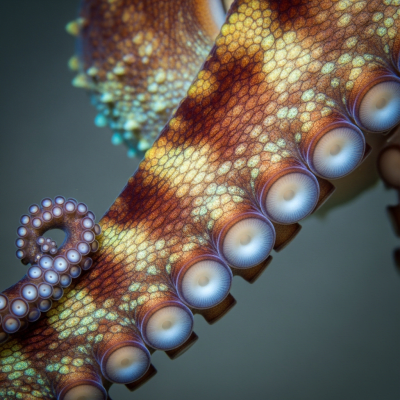
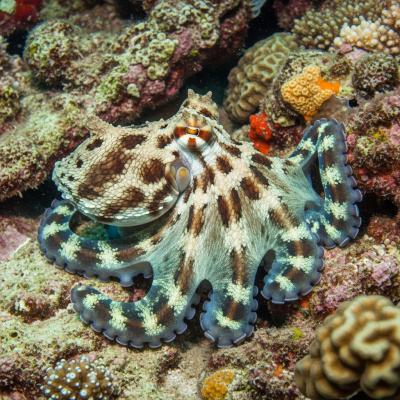
The Caribbean Reef Octopus typically has a mantle length between 5 and 12 centimeters, with arms extending up to 60 centimeters in span. Its body is soft and flexible, covered with chromatophores that allow it to shift from iridescent blue-green to brown, red, or mottled patterns. It features long, slender arms equipped with prominent suckers, aiding in movement and prey capture.
Primarily solitary and nocturnal, this octopus exhibits advanced intelligence, employing complex problem-solving and hunting tactics. It interacts with its environment through dynamic camouflage and quick escapes, making it a fascinating subject for ecotourism and underwater photography.
Bring this kind into your world illustrated posters, mugs, and shirts.
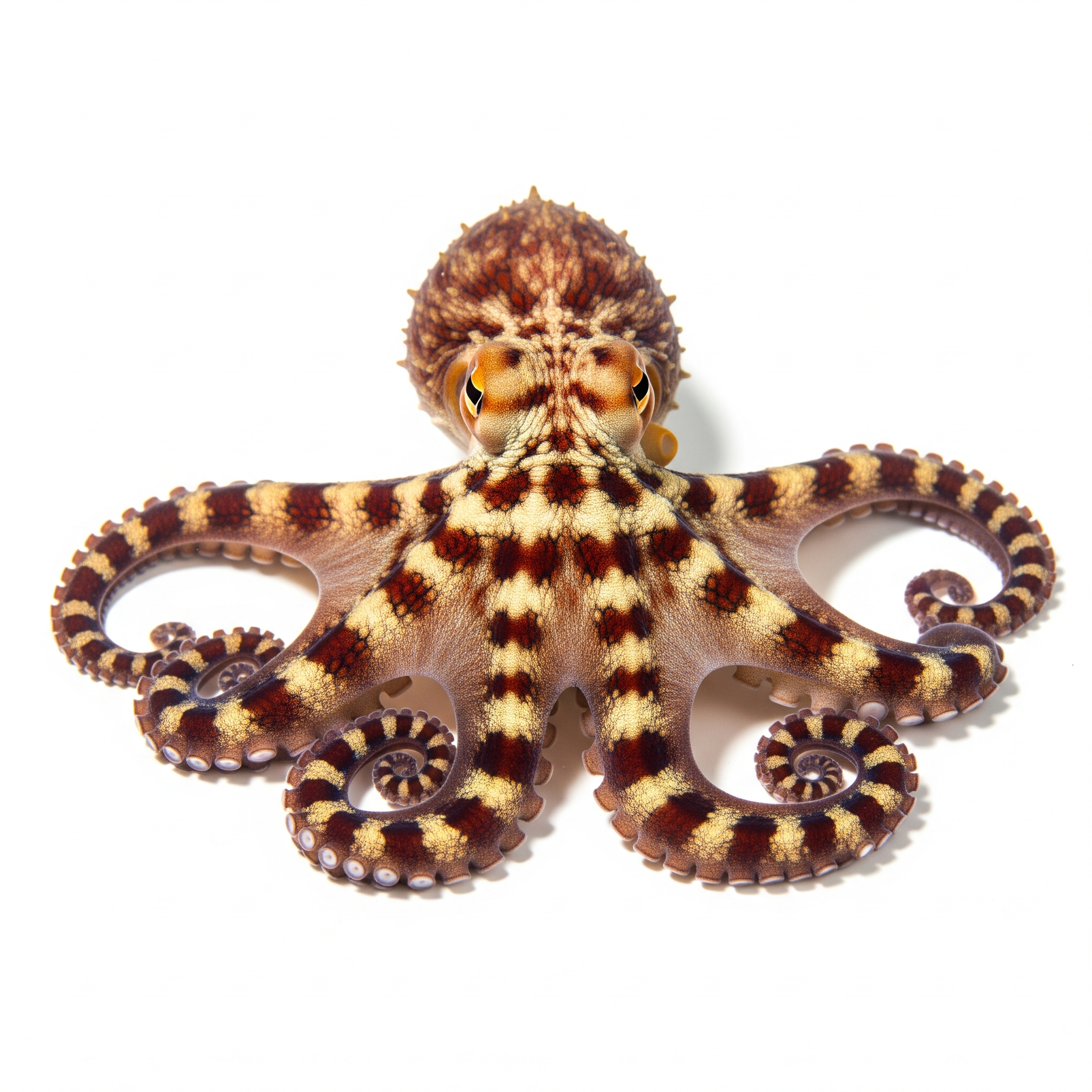
Archival print, museum-grade paper
Buy Poster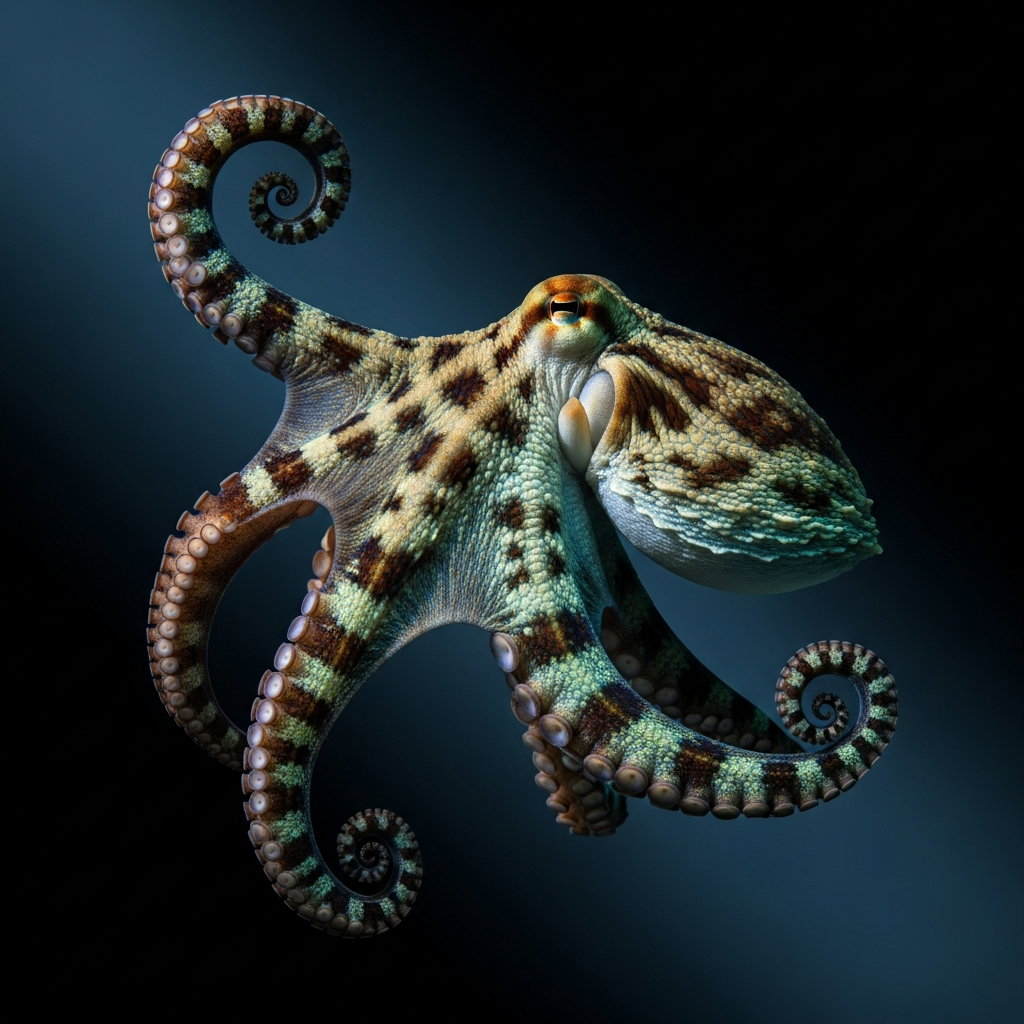
Stoneware mug, dishwasher safe
Buy Mug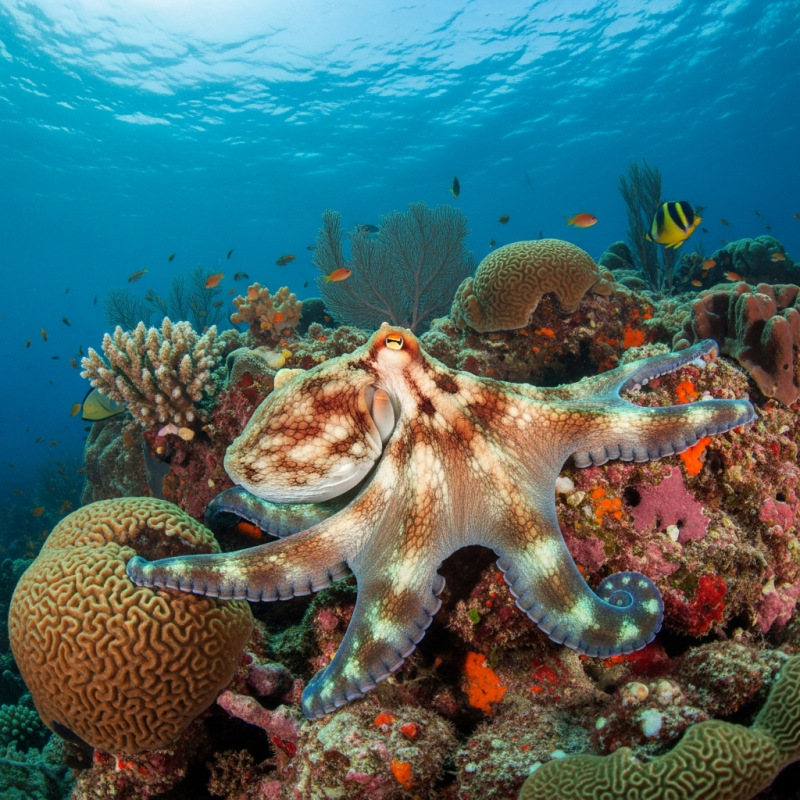
Soft cotton tee, unisex sizes
Buy ShirtThe Caribbean Reef Octopus holds cultural value in Caribbean coastal communities, where it is occasionally harvested for local culinary dishes such as grilled preparations, stews, and ceviche. It also features prominently in ecotourism, admired for its vivid appearance and behavior in natural reef settings.
The Caribbean Reef Octopus is native to the Caribbean Sea and nearby western Atlantic regions, favoring shallow reef environments. It typically inhabits coral and rocky substrates where it can hide and hunt effectively.

Known for its high intelligence, this octopus demonstrates sophisticated problem-solving skills and hunting strategies. Its ability to manipulate objects and adapt behaviorally to complex environments highlights its cognitive prowess among marine invertebrates.
To evade predators, the Caribbean Reef Octopus relies on rapid chromatophore-driven color changes for camouflage, blending seamlessly with its surroundings. It also employs swift jet-propelled escapes and can contort its flexible body to slip into narrow crevices.
This species grows rapidly, reaching sexual maturity within 12 to 18 months. While specific reproductive behaviors are not well documented, like other octopuses, it likely lays eggs in protected dens, with a relatively short lifespan typical of octopods.
The Caribbean Reef Octopus is not currently targeted by large-scale fisheries and lacks a formal conservation status. Its main threats include predation by larger marine animals and habitat degradation in coral reef ecosystems.