
Blue-Ringed Octopus
The blue-ringed octopus is a small but highly venomous marine cephalopod known for its vivid iridescent blue rings that flash as a warning signal.
The blue-ringed octopus is a small but highly venomous marine cephalopod known for its vivid iridescent blue rings that flash as a warning signal.
The genus Hapalochlaena was first described by Robson in 1929, with type specimens originating from the coastal waters of Australia and the Indo-Pacific region. This lineage belongs to the family Octopodidae within the order Octopoda.
Blue-ringed octopuses belong to the genus Hapalochlaena, within the family Octopodidae and order Octopoda. This genus includes several closely related species such as Hapalochlaena maculosa, Hapalochlaena lunulata, and Hapalochlaena fasciata, all recognized for their distinctive blue-ring patterns and potent venom.
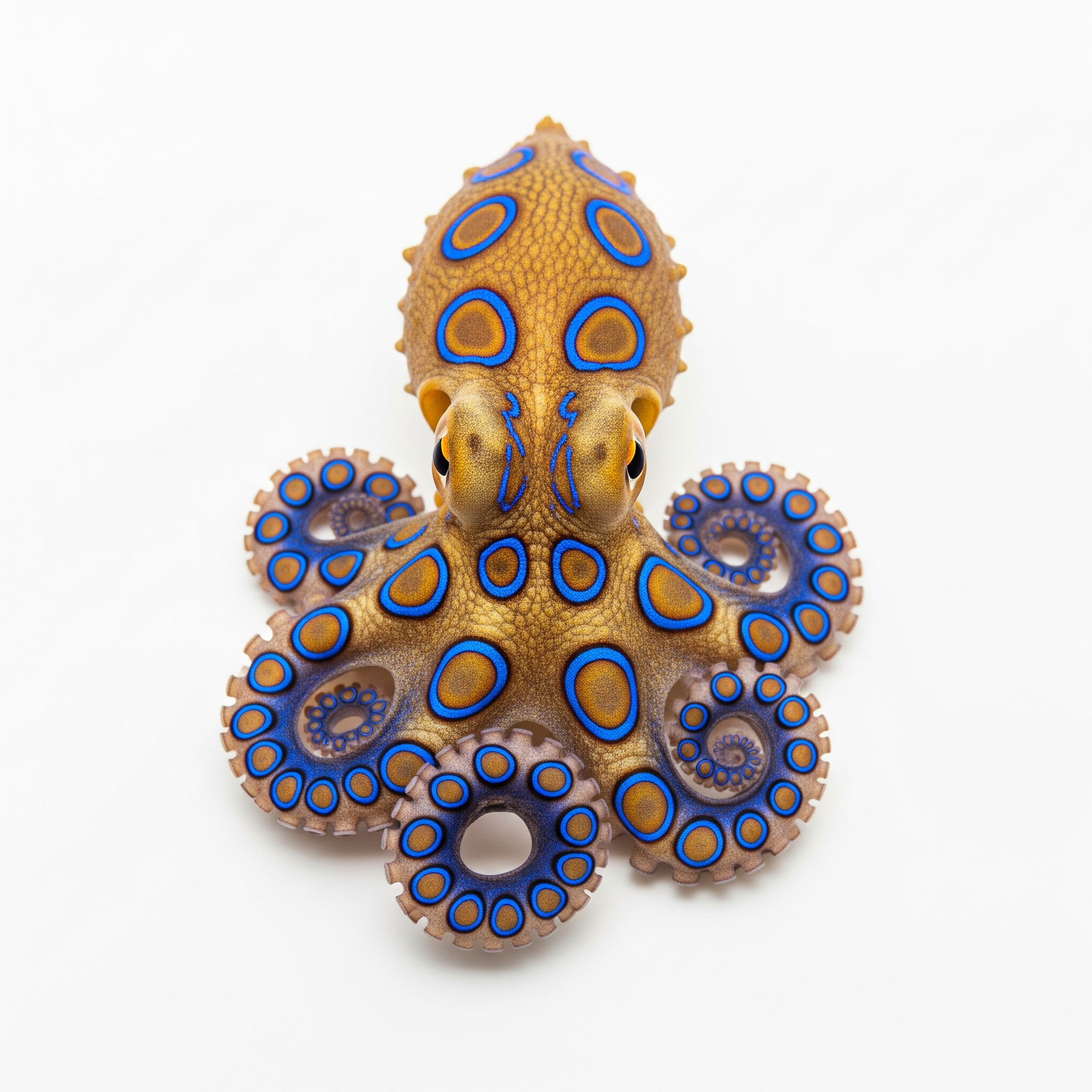
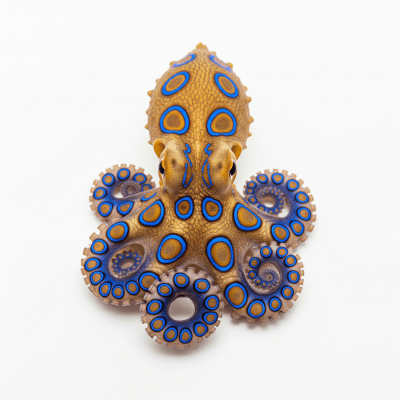
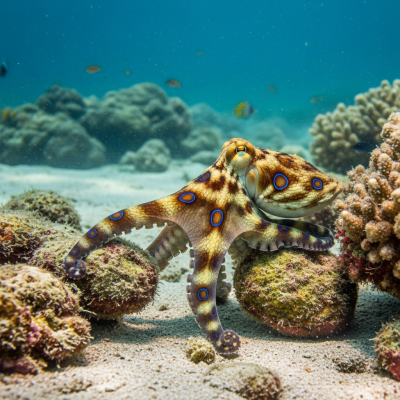
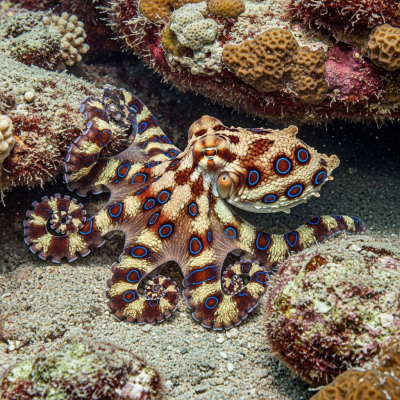
These octopuses are small, with mantle lengths ranging from 4 to 7 centimeters. Their bodies range in color from yellowish to brown, adorned with striking iridescent blue and black rings that become vividly prominent when the animal is threatened. They have eight arms equipped with suckers and a soft mantle, lacking any internal shell.
Blue-ringed octopuses use their venomous bite both for hunting prey and defending against predators. When agitated, they display their bright blue rings as a warning signal. Their venom contains tetrodotoxin, a powerful neurotoxin capable of causing paralysis and even death in humans. Due to their toxicity, they are handled with extreme caution and are not used commercially.
Bring this kind into your world illustrated posters, mugs, and shirts.
Archival print, museum-grade paper
Buy Poster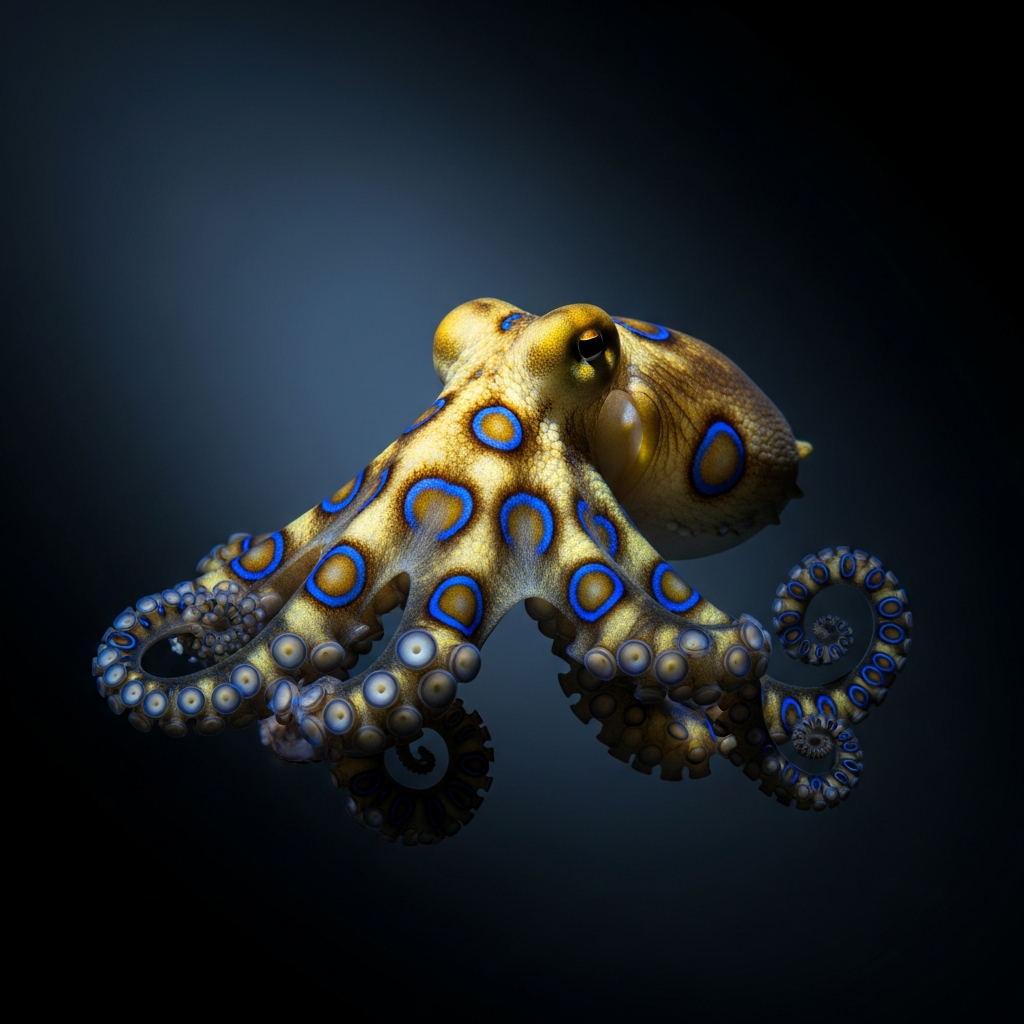
Stoneware mug, dishwasher safe
Buy Mug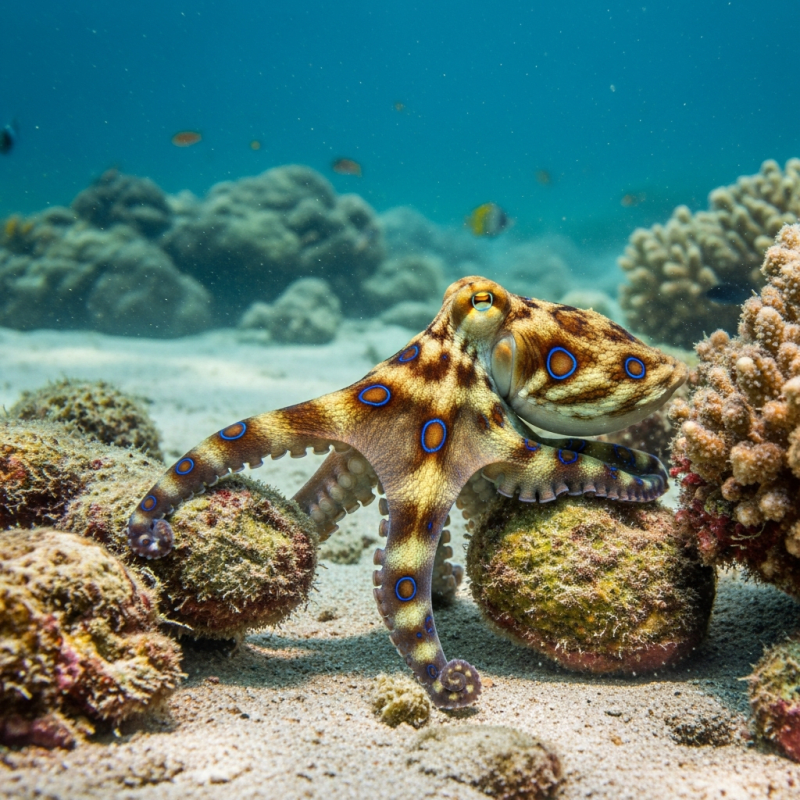
Soft cotton tee, unisex sizes
Buy ShirtThese octopuses have gained notoriety as some of the most venomous marine animals, featuring prominently in educational materials and warning campaigns in regions where they are found. Their striking appearance and danger have also made them symbols of caution and fascination in popular culture.
Blue-ringed octopuses inhabit coastal waters across Australia and the broader Indo-Pacific region. They prefer benthic environments such as rocky reefs, sandy bottoms, and crevices where they can hide and hunt. Their presence is typically limited to shallow marine habitats where they find shelter and prey.
Like other octopuses, blue-ringed octopuses exhibit notable intelligence, including problem-solving abilities and complex behaviors. Their use of venom and warning displays reflects evolved survival strategies, though specific studies on their cognition remain limited compared to larger octopus species.
The primary defense of blue-ringed octopuses is their potent venom, delivered through a bite that can paralyze predators and threats. They also use their bright blue rings as a visual warning signal to deter potential attackers. Their small size and ability to hide in crevices further aid in avoiding danger.
Blue-ringed octopuses have a short lifespan of about two years. While specific reproductive behaviors vary among species, they generally engage in typical octopus mating rituals, with females laying eggs that they guard until hatching. After reproduction, adults often die shortly thereafter, completing their lifecycle within a brief period.
Currently, blue-ringed octopuses are not known to be targeted by fisheries and have no significant commercial exploitation. Their conservation status is not well-documented, but habitat degradation and pollution in coastal areas may pose risks. Their venomous nature and small size generally protect them from human predation.