
Big Blue Octopus
The Big Blue Octopus (Octopus cyanea) is a large, vibrant octopus species native to the tropical Indo-Pacific, known for its striking coloration and adaptability across coral reefs and rocky habitats.
The Big Blue Octopus (Octopus cyanea) is a large, vibrant octopus species native to the tropical Indo-Pacific, known for its striking coloration and adaptability across coral reefs and rocky habitats.
Octopus cyanea was first formally described by Gray in 1849, with its type specimen originating from the Indian Ocean region. While precise collection details remain unclear, this species has since been recognized for its widespread presence in tropical marine environments.
The Big Blue Octopus belongs to the order Octopoda, within the family Octopodidae. It is classified under the genus Octopus and species cyanea, distinguishing it as a true octopus among the diverse cephalopod group.
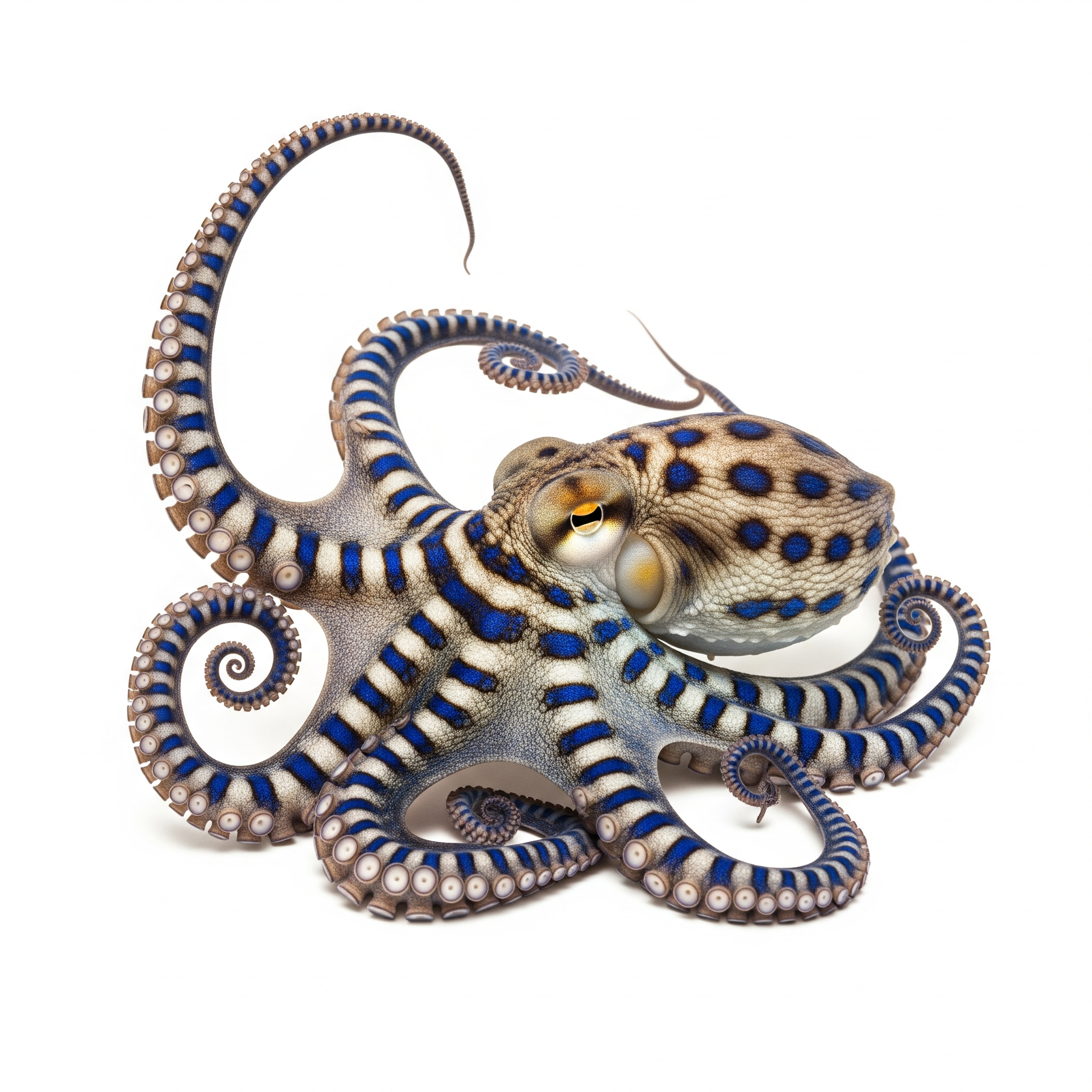
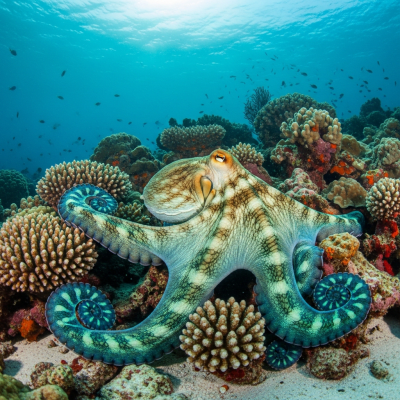
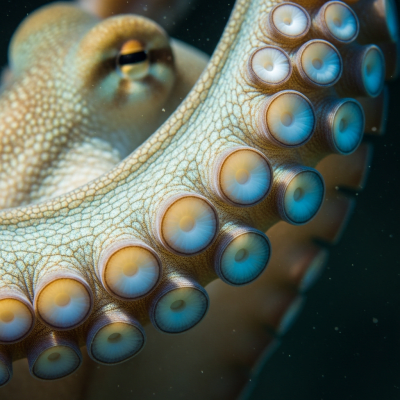
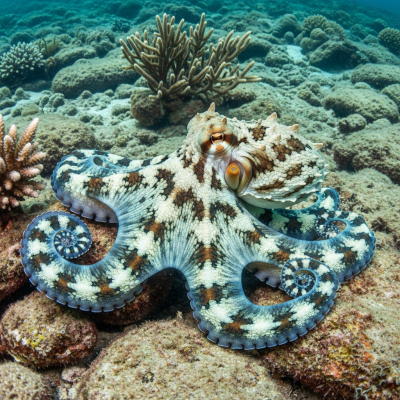
This octopus features a robust, muscular mantle reaching up to 16 cm in length and arms extending nearly 80 cm. Its coloration varies widely, displaying shades of blue, brown, and green, with an impressive ability to rapidly change color and texture for camouflage and communication. Prominent papillae texture its skin, and it has large, expressive eyes that enhance its sensory perception.
The Big Blue Octopus is an intelligent predator exhibiting complex hunting strategies and primarily nocturnal activity. It preys on crustaceans, fish, and mollusks, adapting well to its environment. This species is also significant to local fisheries, where it is harvested for food and sold fresh or dried in markets.
Bring this kind into your world illustrated posters, mugs, and shirts.
Archival print, museum-grade paper
Buy Poster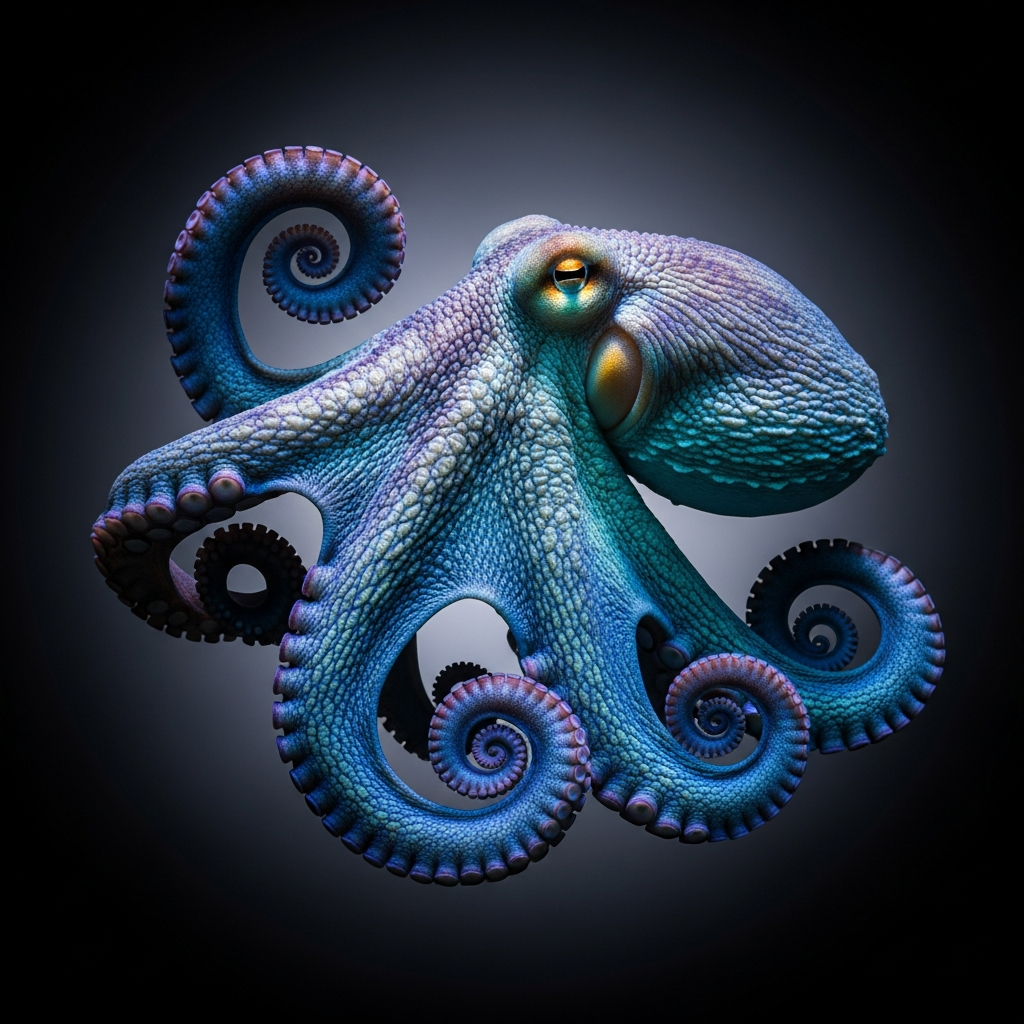
Stoneware mug, dishwasher safe
Buy Mug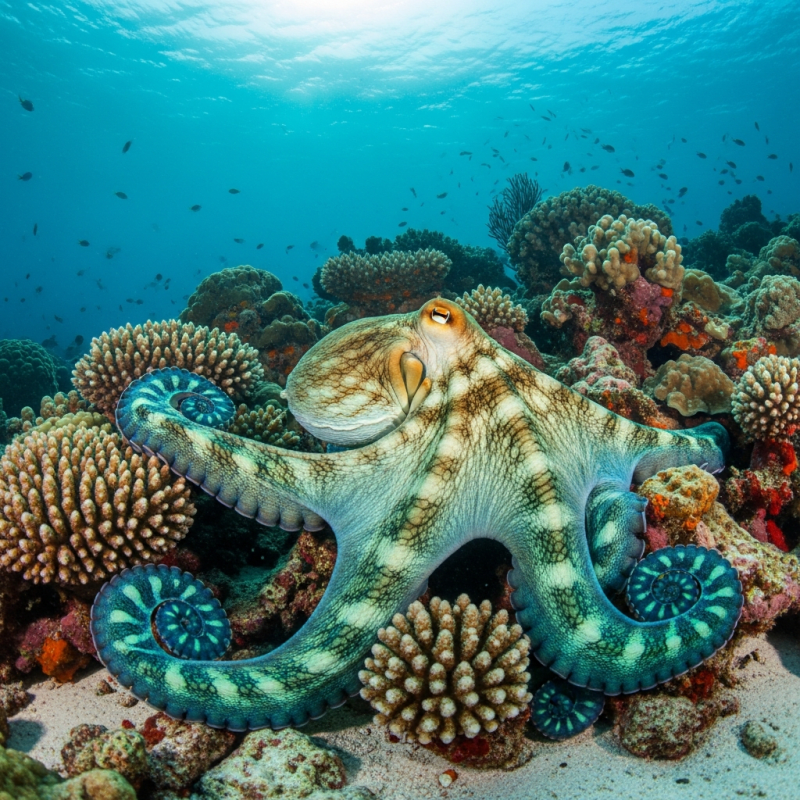
Soft cotton tee, unisex sizes
Buy ShirtWhile the Big Blue Octopus holds considerable culinary importance in regions like East Africa, Southeast Asia, and Pacific islands, there are no widely documented symbolic or cultural uses beyond its role in local diets and artisanal fisheries.
The Big Blue Octopus thrives throughout the tropical Indo-Pacific region, favoring coral reefs and rocky substrates. It occupies diverse shallow marine habitats where it can hunt and hide effectively, contributing to the ecological balance of these vibrant ecosystems.
Renowned for its intelligence, Octopus cyanea demonstrates complex problem-solving abilities and sophisticated hunting tactics. Its nocturnal behavior and adaptability highlight advanced cognitive skills uncommon among many marine invertebrates.
The Big Blue Octopus employs rapid color and texture changes to blend seamlessly with its surroundings, evading predators. Its prominent papillae enhance this camouflage, while its agility and ability to squeeze into crevices provide additional protection.
This species has a relatively short lifespan of about 12 to 18 months. While specific reproductive details are limited, like other octopuses, it likely engages in a single reproductive event before senescence, with females guarding eggs until they hatch.
The Big Blue Octopus is listed on the IUCN Red List, though its precise conservation status is not detailed. It faces challenges from fishing pressure due to its importance in local fisheries, but its resilience to environmental changes helps sustain populations across its range.