Wollastonite
Wollastonite is a naturally occurring calcium silicate mineral prized for its fibrous habit, moderate hardness, and exceptional resistance to heat and chemicals, making it a vital industrial resource.
Wollastonite is a naturally occurring calcium silicate mineral prized for its fibrous habit, moderate hardness, and exceptional resistance to heat and chemicals, making it a vital industrial resource.
First described in 1793 by J. Léman, wollastonite was named in honor of the distinguished English chemist and mineralogist William Hyde Wollaston. Its initial discovery took place in the skarn deposits of Monte Somma, near Vesuvius, Italy, where silica-rich fluids transformed impure limestones, giving rise to this unique mineral. Today, its formal status as a mineral species is recognized by the International Mineralogical Association (IMA).
Wollastonite belongs to the inosilicate class, specifically within the Wollastonite Group. It is classified as a single-chain silicate under both the Dana (65.2.1.1) and Strunz (9.DA.10) systems, reflecting its distinctive structural arrangement of silicon-oxygen chains. This places it alongside other chain silicates, but its composition and crystal habit set it apart as a unique mineral species.
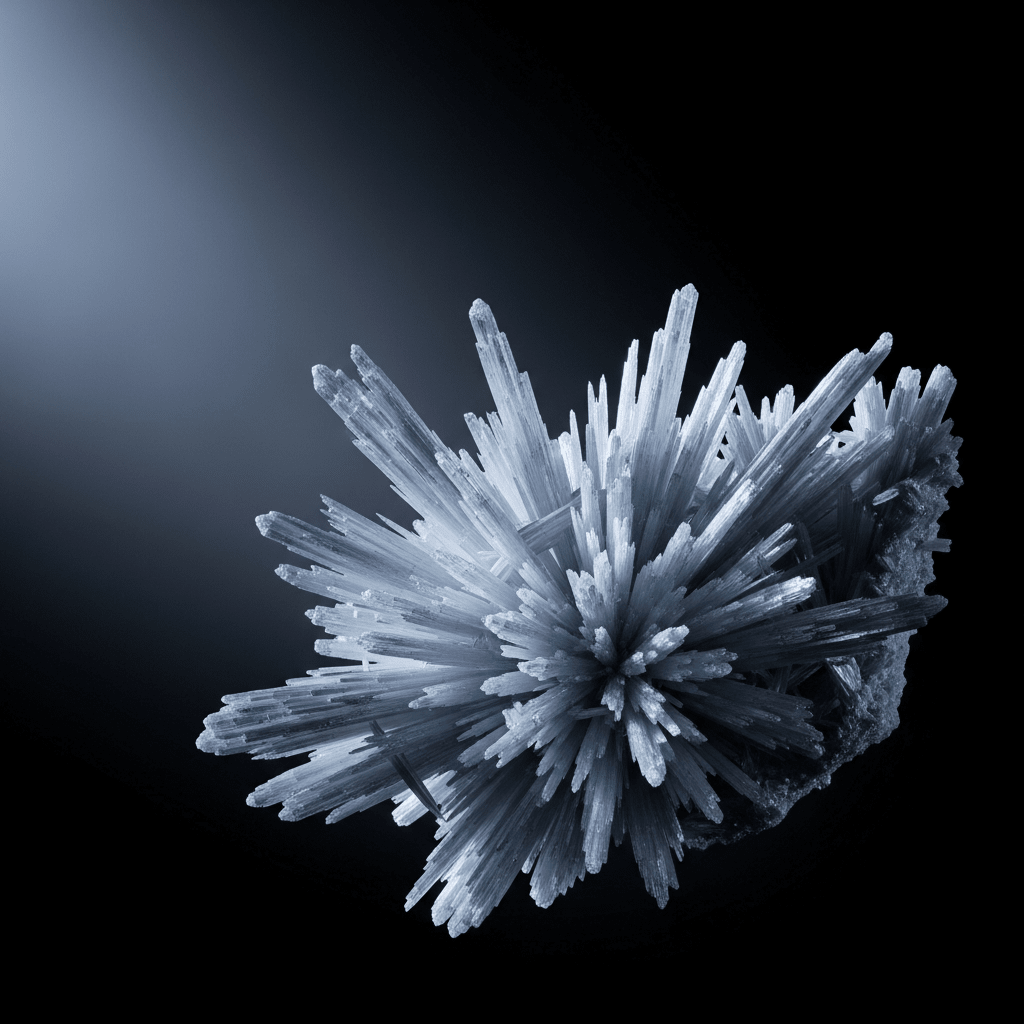
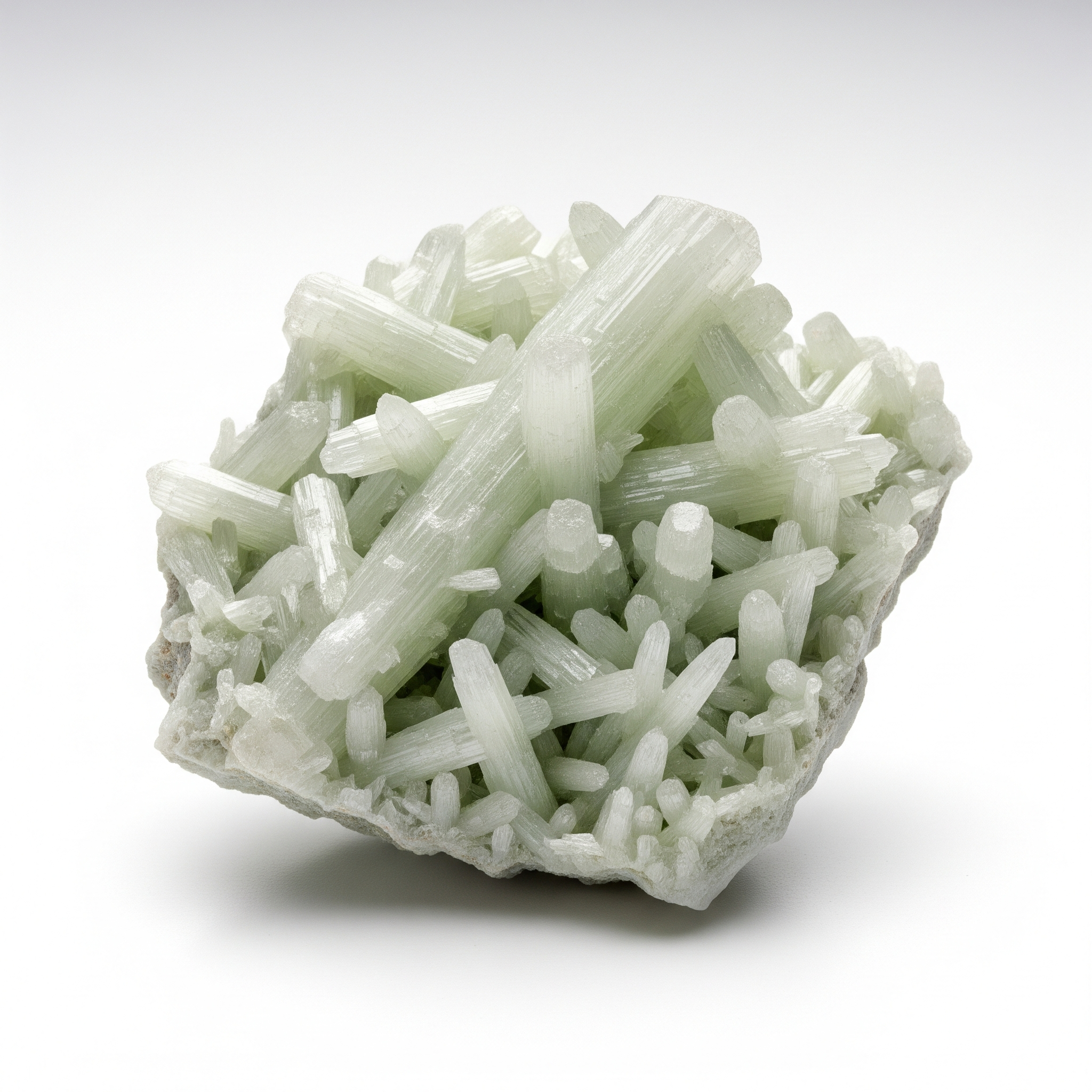
Wollastonite typically appears as elongated, bladed, or fibrous crystals with a striking white, gray, or pale green coloration. Its surface often exhibits a vitreous to pearly luster, and specimens may be translucent to opaque. The mineral’s habit can range from radiating aggregates to compact masses, with a splintery fracture and perfect cleavage on [100], imparting a tactile sense of fragility despite its industrial robustness.
Renowned for its low thermal expansion, high aspect ratio, and resistance to chemical attack, wollastonite is widely used as a filler and reinforcement in ceramics, paints, plastics, and rubber. Its stability at elevated temperatures makes it an ideal flux in metallurgy and a preferred material for high-temperature applications. The mineral’s unique properties enable it to enhance durability, reduce shrinkage, and improve mechanical strength in manufactured products.
Bring this kind into your world illustrated posters, mugs, and shirts.
Archival print, museum-grade paper
Buy Poster
Stoneware mug, dishwasher safe
Buy Mug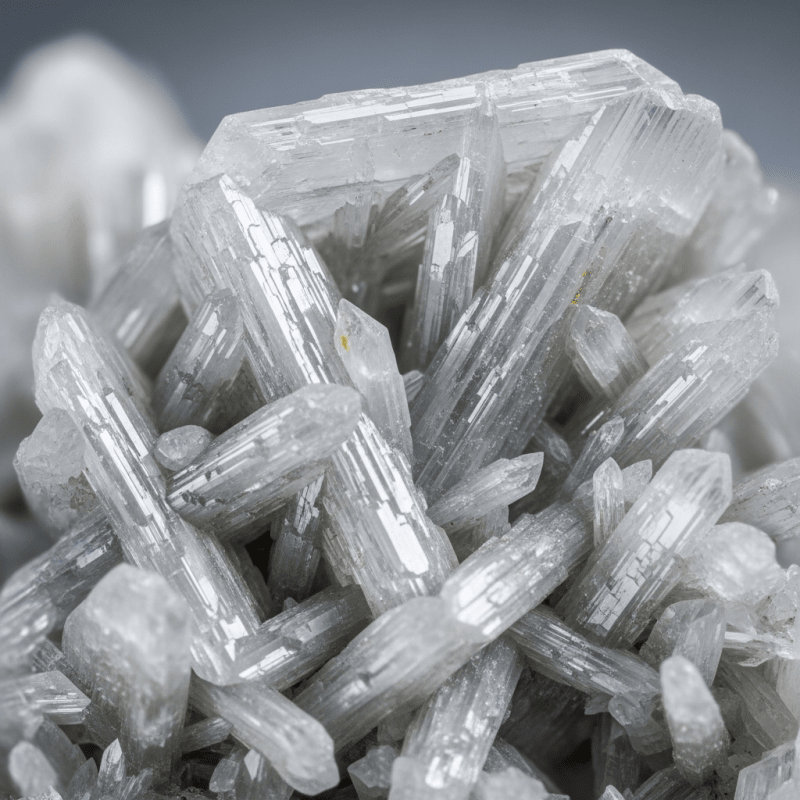
Soft cotton tee, unisex sizes
Buy ShirtWollastonite’s primary significance lies in its industrial utility; it does not feature prominently in art, mythology, or cultural traditions. Its name commemorates William Hyde Wollaston, reflecting a legacy of scientific discovery rather than cultural symbolism.
CaSiO₃ is the chemical formula for wollastonite, indicating it is composed of calcium, silicon, and oxygen. This pure calcium silicate structure is central to its mineralogical identity and industrial performance.

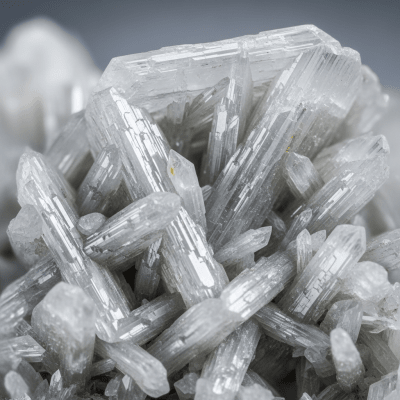
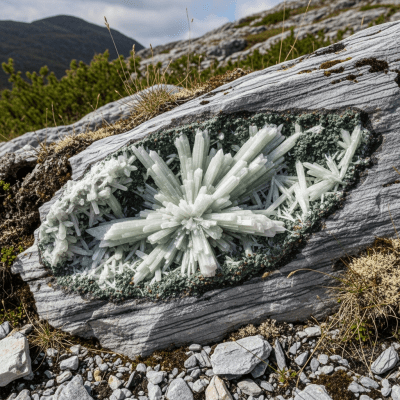


Wollastonite crystallizes in the triclinic system, forming single chains of silicon-oxygen tetrahedra. Its elongated, bladed, and fibrous crystals reflect this atomic arrangement, and the perfect cleavage on [100] is a direct result of its structural geometry.
Wollastonite is typically found in contact metamorphic rocks, especially skarns formed by the alteration of impure limestones or dolomites through silica-rich fluids. Major deposits are located in New York and California (USA), Finland, India, China, and Italy. It is commonly associated with minerals such as garnet, diopside, vesuvianite, and calcite, reflecting its formation in high-temperature, chemically active environments.
Wollastonite’s combination of low thermal expansion, chemical resistance, and fibrous structure makes it invaluable as a filler and reinforcement in ceramics, paints, plastics, and rubber. It is used as a flux in metallurgy to lower melting points and improve product quality. Its stability at high temperatures allows for applications in refractory materials and specialized industrial processes where durability and dimensional stability are critical.
Wollastonite specimens should be handled gently due to their splintery fracture and perfect cleavage, which can make them prone to breaking. Store in padded containers away from moisture and corrosive chemicals. Clean with a soft brush or cloth; avoid harsh acids or bases, although the mineral itself is resistant to chemical attack. Displaying fibrous aggregates may require extra support to prevent fragmentation.
Notable wollastonite specimens originate from the Monte Somma, Vesuvius, Italy—its type locality—and from large deposits in New York, USA, which have supplied industrial-grade material for decades. While not famed for museum-quality crystals, these localities are celebrated for their historical and economic importance in mineralogy and industry.