
Tourmaline
Tourmaline is a complex group of borosilicate minerals renowned for its extraordinary color diversity, distinctive prismatic crystals, and important roles as both a gemstone and geological indicator.
Tourmaline is a complex group of borosilicate minerals renowned for its extraordinary color diversity, distinctive prismatic crystals, and important roles as both a gemstone and geological indicator.
The name "tourmaline" originates from the Sinhalese word "turmali," meaning "mixed gems," reflecting its historical confusion with other stones in early gem trading. Formally recognized as a mineral group in the 18th century, tourmaline was described by pioneering mineralogists such as Carl Linnaeus. Its scientific classification evolved through the 19th and 20th centuries, culminating in the International Mineralogical Association's approval of the tourmaline group and its species. Today, tourmaline is celebrated for both its mineralogical complexity and its storied history in global gem markets.
Tourmaline belongs to the tourmaline group within the cyclosilicate class of minerals. It is classified under Dana code 61.1.5 and Strunz code 9.CK.05, denoting its structure as a ring silicate. The group encompasses several species—such as schorl, elbaite, dravite, and uvite—each defined by unique chemical compositions and subtle structural differences. The International Mineralogical Association (IMA) recognizes tourmaline as a mineral group, with its species further subdivided based on dominant cations and trace elements.
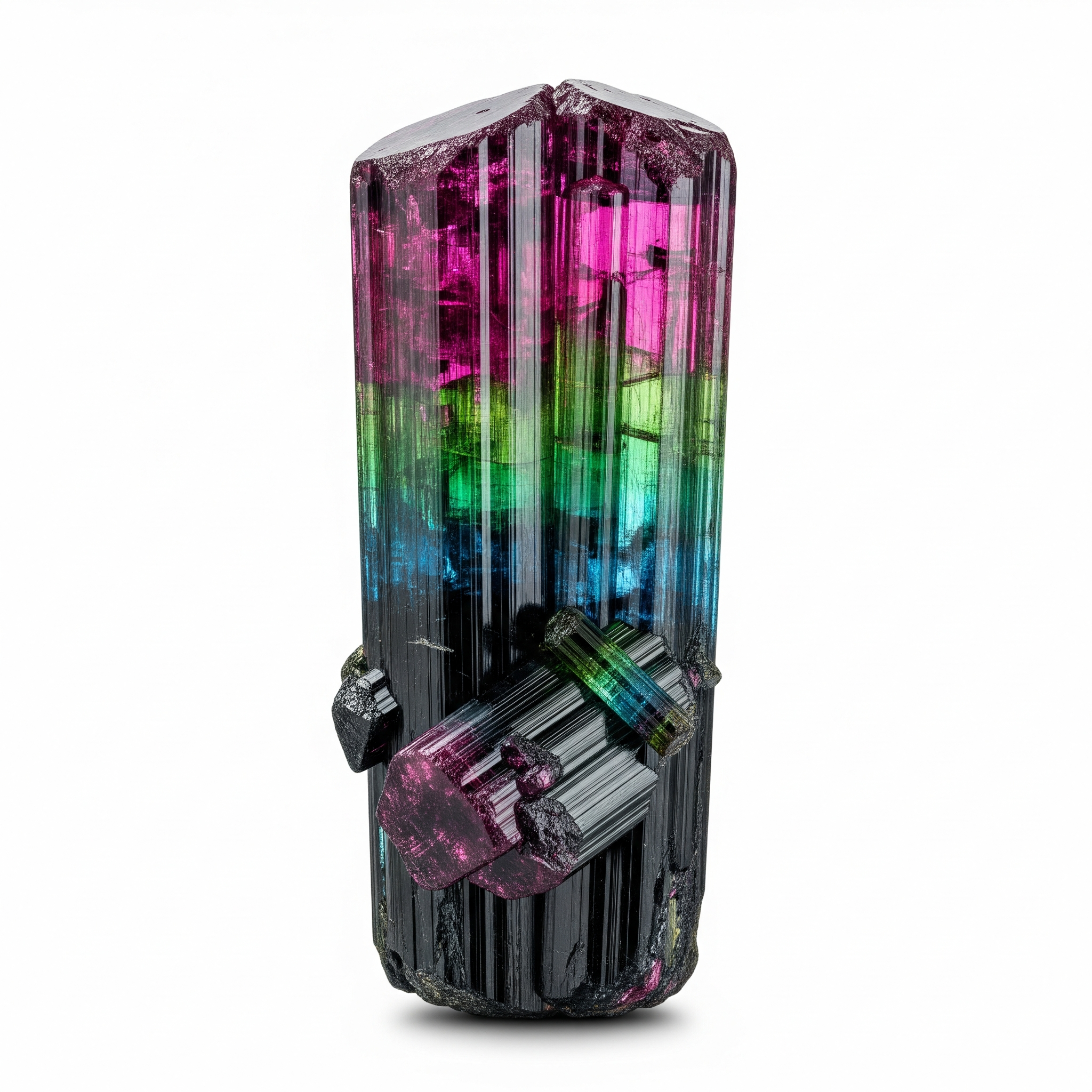
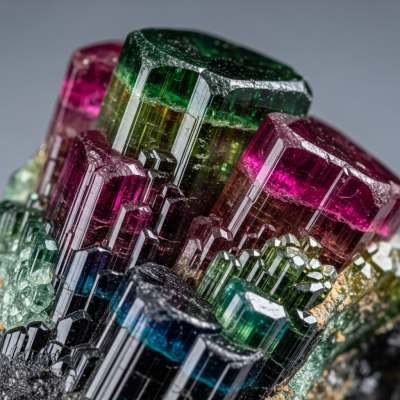
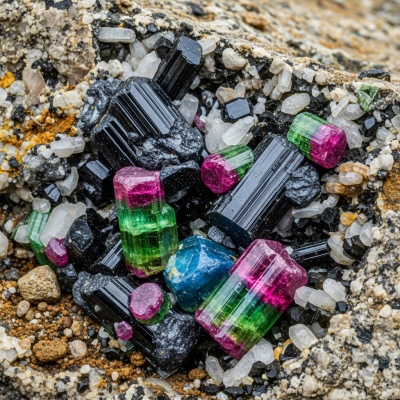
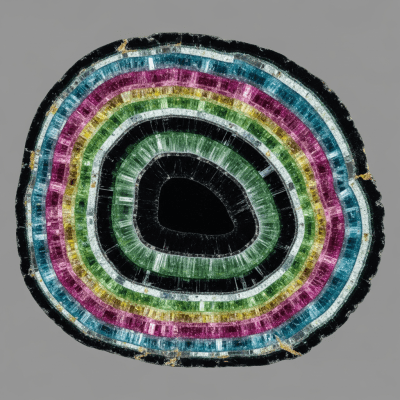
Tourmaline typically forms elongated, vertically striated prismatic crystals with a glassy (vitreous) luster. Its color palette is among the most varied in the mineral world: specimens may be black (schorl), green (verdelite), pink or red (rubellite), blue (indicolite), brown (dravite), colorless (achroite), or even multicolored, as in watermelon tourmaline (pink core with green rim). Transparency ranges from opaque to transparent, and strong pleochroism means the color intensity can shift with viewing angle. Cleavage is indistinct, and fractures are uneven to conchoidal, giving crystals a rugged yet elegant appearance.
Tourmaline is highly valued in jewelry, especially its vividly colored elbaite varieties. Its piezoelectric properties make it useful in scientific instruments and pressure gauges, where it converts mechanical stress into electrical signals. In geology, tourmaline serves as an indicator mineral for boron and lithium deposits, aiding exploration. Its chemical stability ensures persistence in various geological environments, while its aesthetic appeal drives demand among collectors and designers.
Bring this kind into your world illustrated posters, mugs, and shirts.
Archival print, museum-grade paper
Buy Poster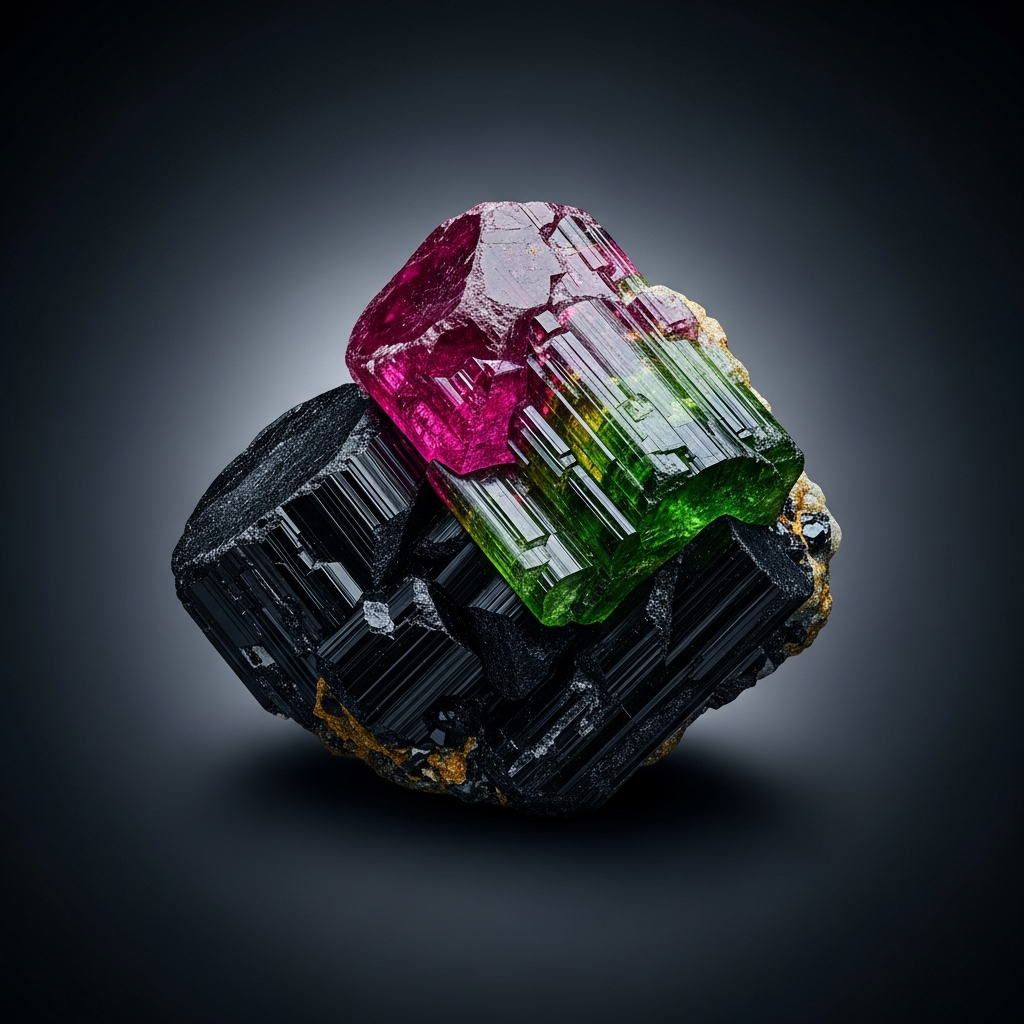
Stoneware mug, dishwasher safe
Buy Mug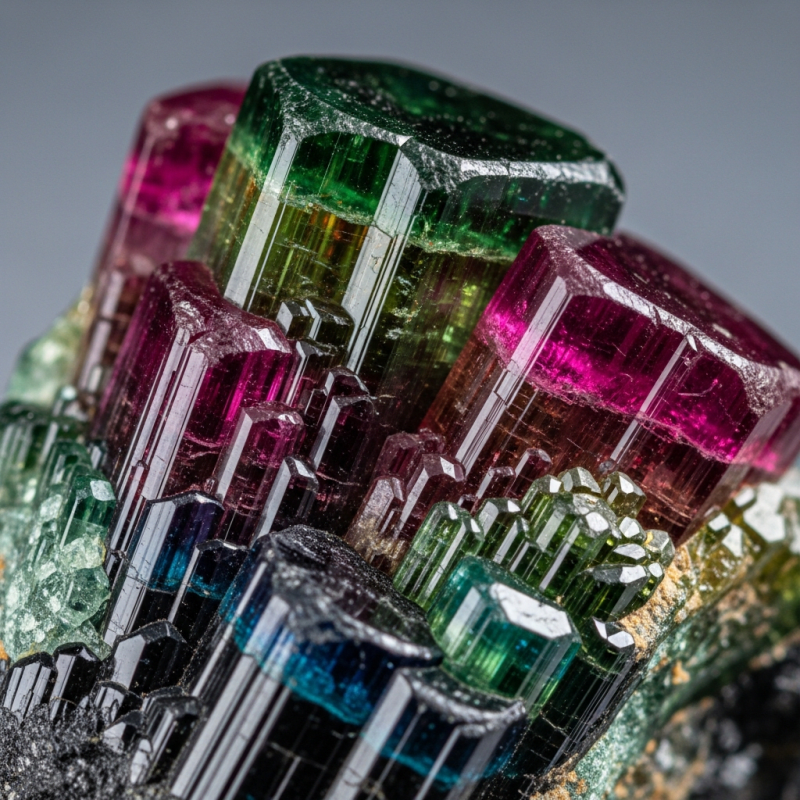
Soft cotton tee, unisex sizes
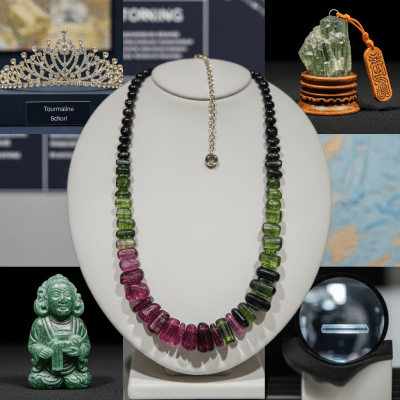
Buy ShirtTourmaline has captivated cultures for centuries, prized for its rainbow of colors and believed metaphysical properties. In ancient and modern lore, it is associated with protection, creativity, and emotional healing. Watermelon tourmaline, in particular, is celebrated for its vibrant color zoning and symbolic resonance. The mineral's presence in royal jewelry, art, and spiritual practices underscores its enduring allure across continents and eras.
Tourmaline's general chemical formula is XY₃Z₆(T₆O₁₈)(BO₃)₃V₃W, reflecting its status as a complex borosilicate. The X, Y, Z, T, V, and W positions are occupied by a variety of cations and anions, resulting in a rich diversity of species. Common endmembers include schorl (NaFe₃Al₆...), elbaite (Na(Li₁.₅Al₁.₅)Al₆...), and dravite (NaMg₃Al₆...). Boron, silicon, and aluminum are always present, with sodium, iron, lithium, magnesium, and other elements varying by species.
Tourmaline crystallizes in the hexagonal (trigonal subsystem) crystal system, specifically space group R3m. Its structure features six-membered silicate rings (cyclosilicate), which contribute to the mineral's prismatic habit and vertical striations. The arrangement of cations and anions within these rings allows for extensive chemical substitution, underpinning the group's compositional diversity and color range.
Tourmaline is primarily found in granitic pegmatites, metamorphic rocks such as schists and marbles, and in alluvial deposits. It often occurs alongside quartz, feldspar, mica, and other boron-rich minerals. Notable localities include Minas Gerais in Brazil, Afghanistan, Madagascar, California and Maine in the United States, and Sri Lanka. Its presence is a key indicator in geological exploration for boron and lithium-rich environments.