Sylvite
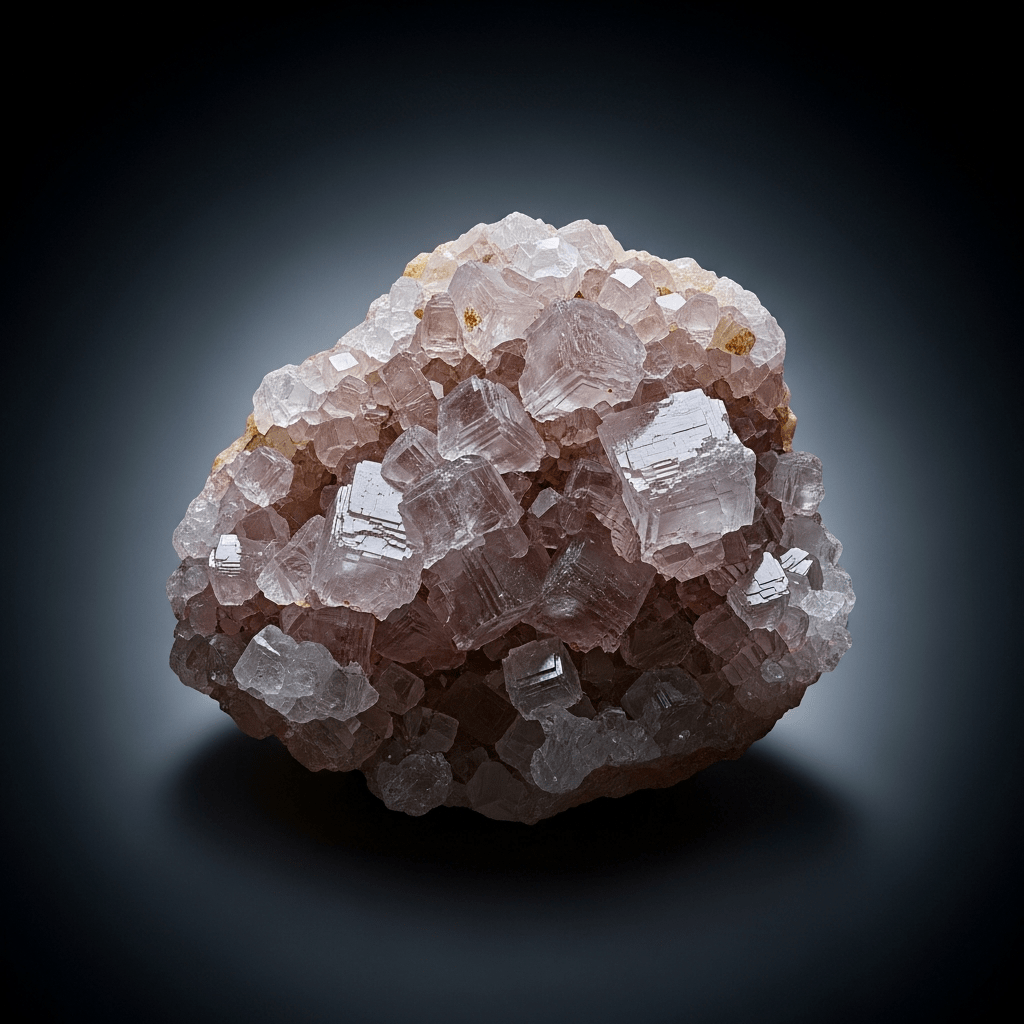
Sylvite is a naturally occurring mineral composed of potassium chloride (KCl), renowned as the primary source of potash and distinguished by its cubic crystals and salty taste.
Sylvite is a naturally occurring mineral composed of potassium chloride (KCl), renowned as the primary source of potash and distinguished by its cubic crystals and salty taste.
Sylvite was first described in 1832 by German chemist Franz von Kobell, with its name derived from "Sylvia," an early synonym for potassium. Its discovery is closely tied to the potash mining regions of Stassfurt, Germany, where vast evaporite deposits revealed the mineral's significance. Officially recognized by the International Mineralogical Association (IMA), sylvite's historical roots are firmly planted in European industrial and scientific advancement.
Sylvite belongs to the halite group within the broader class of simple halide minerals. Its chemical composition and cubic crystal structure place it alongside halite (sodium chloride) and other evaporite minerals. Both the Dana (03.01.02.02) and Strunz (03.AA.20) classification systems group sylvite as a simple halide, emphasizing its role as a key potassium mineral in sedimentary environments.
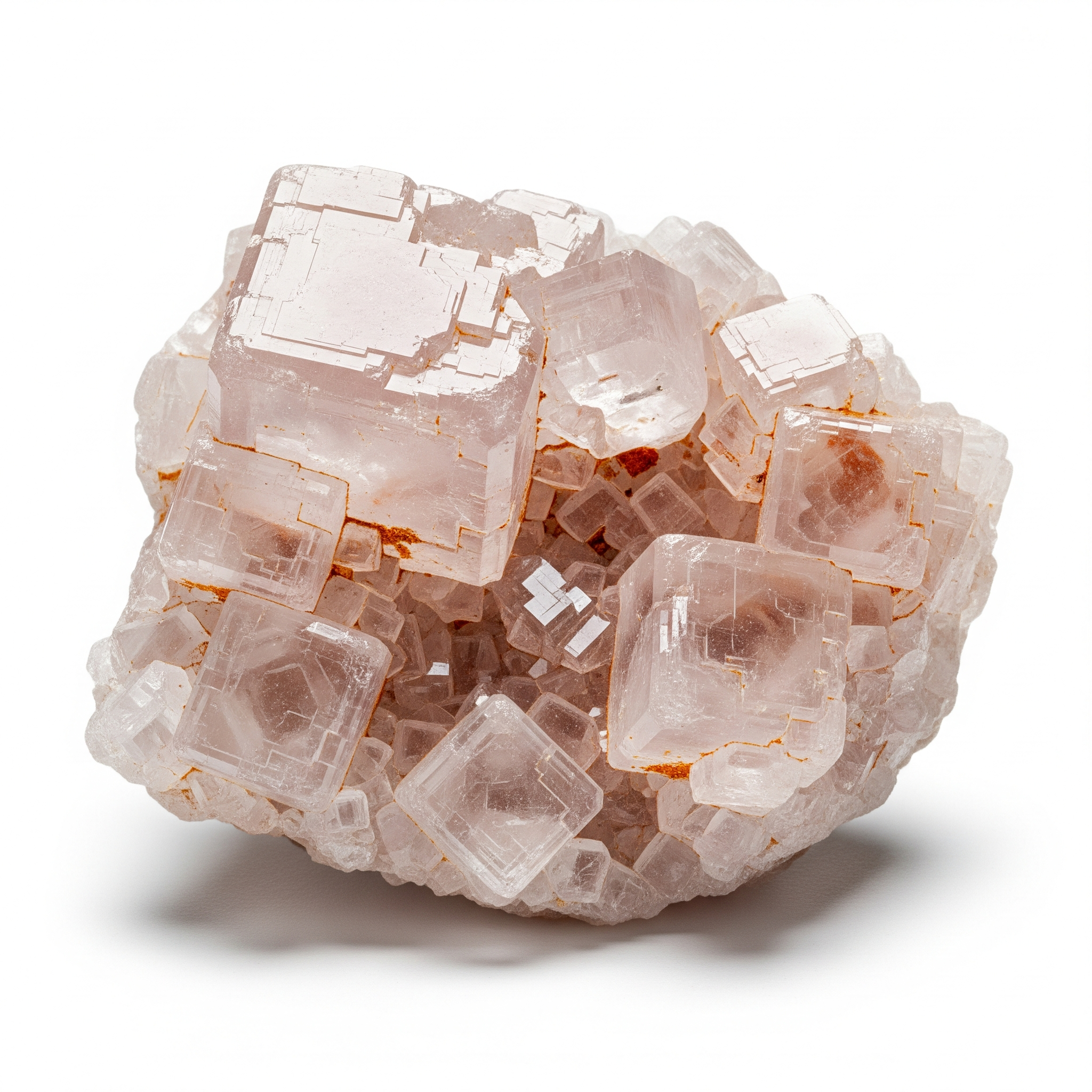
Sylvite typically forms as colorless to white cubic crystals, though impurities may lend shades of yellow, red, or blue. Its surfaces display a vitreous to greasy luster, and specimens are transparent to translucent. The mineral is granular or massive in habit, with perfect cleavage on {100} planes, and is notably brittle. A distinctive feature is its bitter-salty taste, which immediately sets it apart from similar minerals.
Sylvite is highly soluble in water and sensitive to moisture, readily dissolving even at the Earth's surface. Its most important function is as the principal source of potash, a vital ingredient in fertilizers that sustains global agriculture. Additionally, sylvite is used in the chemical industry to manufacture various potassium compounds, making it indispensable for food production and industrial processes.
Bring this kind into your world illustrated posters, mugs, and shirts.
Archival print, museum-grade paper
Buy Poster
Stoneware mug, dishwasher safe
Buy Mug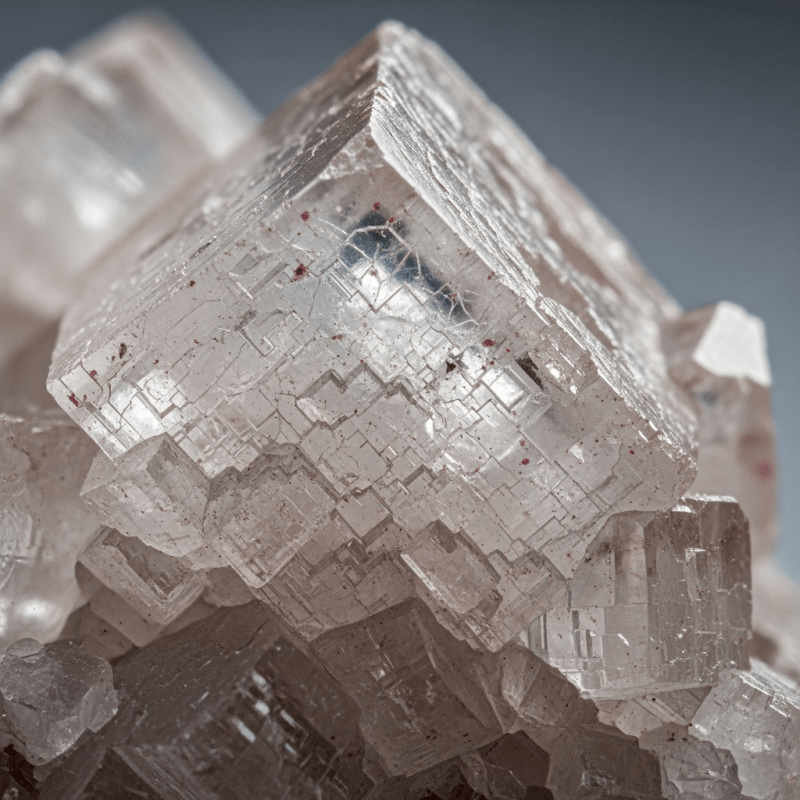
Soft cotton tee, unisex sizes
Buy ShirtWhile sylvite itself holds limited direct cultural significance, its economic impact is profound. As the backbone of potash fertilizer production, sylvite has shaped agricultural practices and food security worldwide. Its discovery and exploitation have influenced mining communities and industrial development, particularly in regions with large evaporite deposits. However, it is rarely featured in art, myth, or popular culture.
Sylvite's chemical formula is KCl, indicating it is composed of potassium and chlorine in a 1:1 ratio. This simple composition makes it a key mineral for potassium extraction.
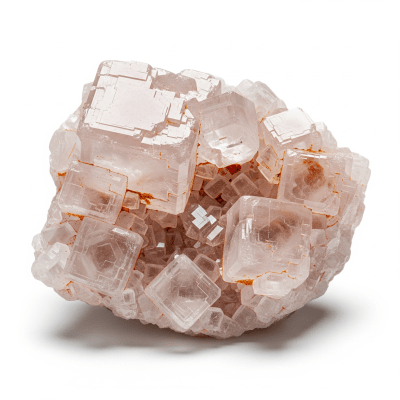
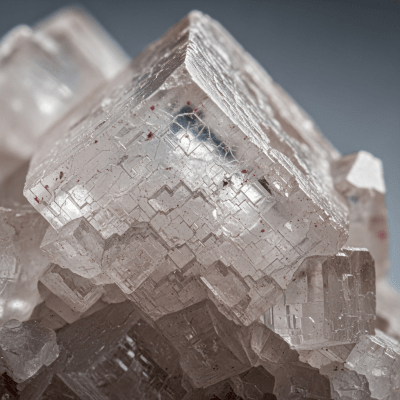
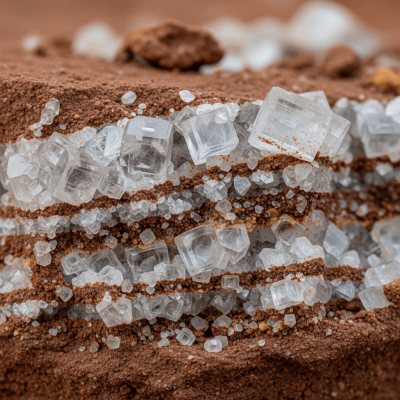
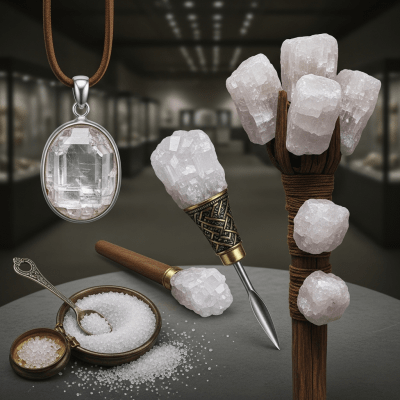
Sylvite crystallizes in the isometric (cubic) crystal system, typically forming cubes and granular masses. Its atomic arrangement mirrors that of halite, with each potassium ion surrounded symmetrically by chloride ions, resulting in perfect cubic symmetry and cleavage.
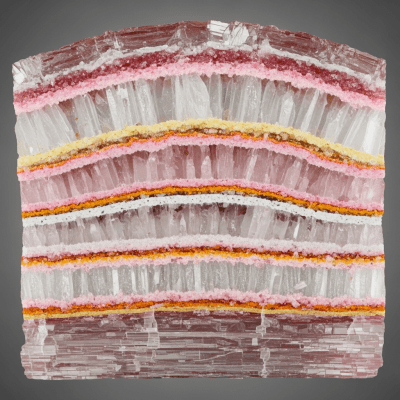
Sylvite is typically found in evaporite deposits, formed by the evaporation of saline waters in arid environments such as ancient inland seas and salt lakes. It is commonly associated with minerals like halite and carnallite. Major localities include Stassfurt (Germany), Saskatchewan (Canada), Russia, and the southwestern United States (New Mexico, Utah).
Sylvite is the principal source of potash, a critical fertilizer ingredient used to promote plant growth and increase crop yields. It is also a raw material in the chemical industry, where it is processed to manufacture potassium compounds for use in glass production, pharmaceuticals, and other industrial applications.
Notable sylvite specimens have been recovered from the classic Stassfurt mines in Germany and the vast evaporite beds of Saskatchewan, Canada. These localities are celebrated in mineralogical collections for yielding exceptionally pure and well-formed cubic crystals, often showcased in museums and reference collections worldwide.