Staurolite
Staurolite is a silicate mineral renowned for its distinctive cross-shaped twinned crystals, serving as a key indicator in metamorphic geology and prized by collectors for its unique form.
Staurolite is a silicate mineral renowned for its distinctive cross-shaped twinned crystals, serving as a key indicator in metamorphic geology and prized by collectors for its unique form.
Staurolite was first formally described in 1792 by French mineralogist Jean-Claude Delamétherie. Its name is derived from the Greek words stauros (cross) and lithos (stone), a direct reference to its signature cruciform twinned crystals. The mineral’s recognition as a distinct species is longstanding, with approval by the International Mineralogical Association, and its discovery is closely tied to metamorphic terrains in Europe and North America.
Staurolite belongs to the silicate mineral class, specifically within the monoclinic crystal system. It is categorized under Dana classification 58.3.1.1 and Strunz classification 9.BG.05. As a metamorphic index mineral, staurolite is vital for identifying metamorphic grade in rocks such as schist and gneiss.
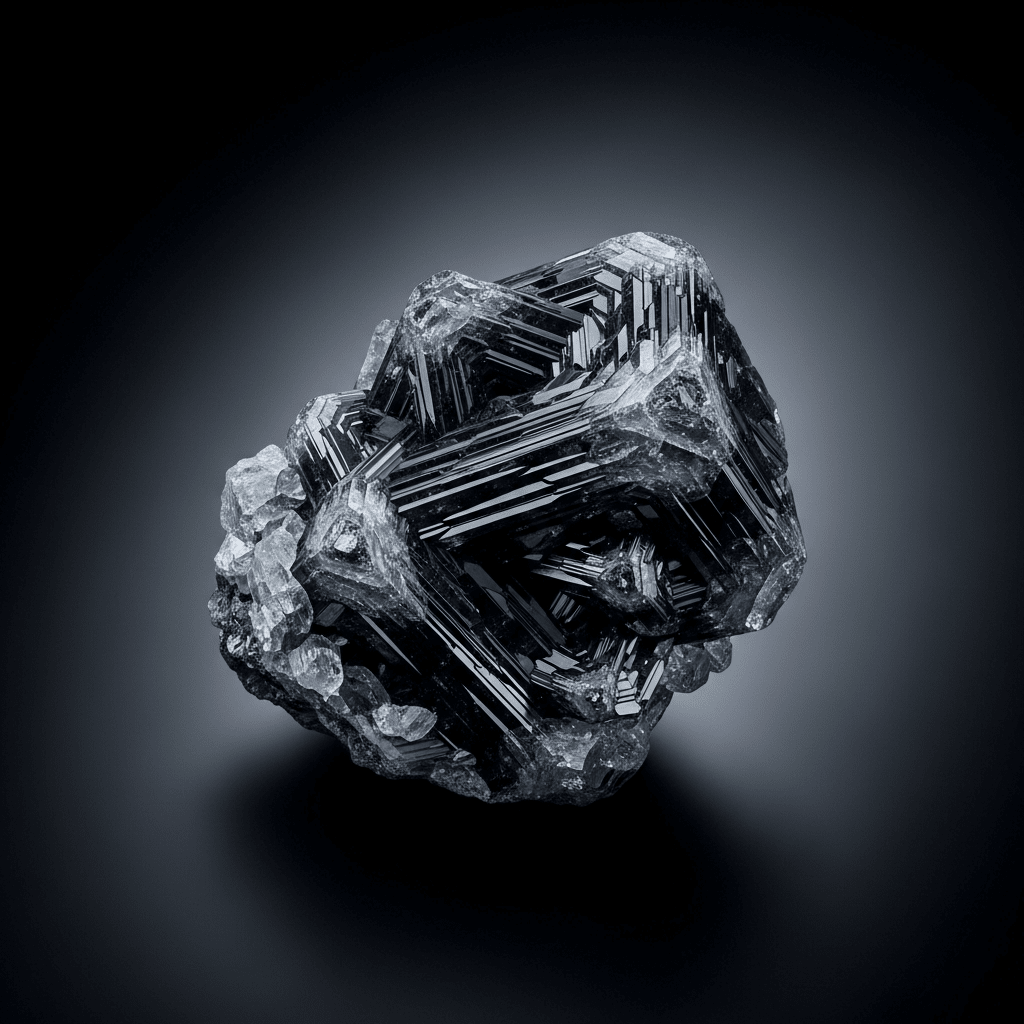
Staurolite typically appears as prismatic or tabular crystals with a reddish-brown to brownish-black color and a vitreous to resinous luster. Its most striking visual trait is the frequent occurrence of penetration twins, forming natural crosses at 60° or, less commonly, at 90°. The mineral’s streak is white to gray, and its crystals often display poor cleavage and uneven to subconchoidal fracture, contributing to a robust, earthy feel.
Staurolite is highly valued in geology as an indicator of metamorphic conditions, helping scientists determine the pressure and temperature history of rocks. Its hardness makes it suitable for use as an abrasive in sandblasting and waterjet cutting, though its industrial role is limited compared to other minerals. Collectors and jewelers prize staurolite for its twinned "cross" crystals, which are often fashioned into charms and pendants.
Bring this kind into your world illustrated posters, mugs, and shirts.
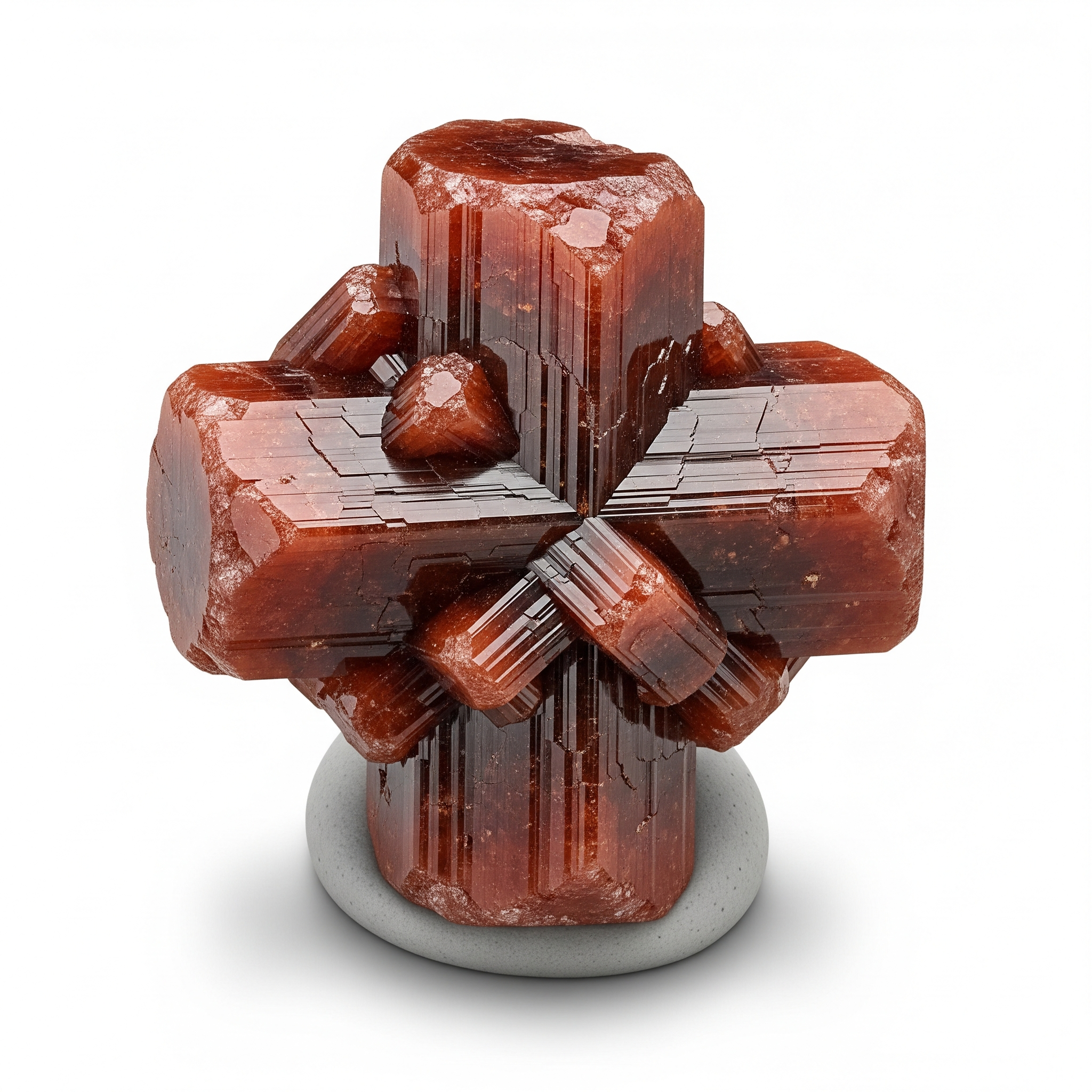
Archival print, museum-grade paper
Buy Poster
Stoneware mug, dishwasher safe
Buy Mug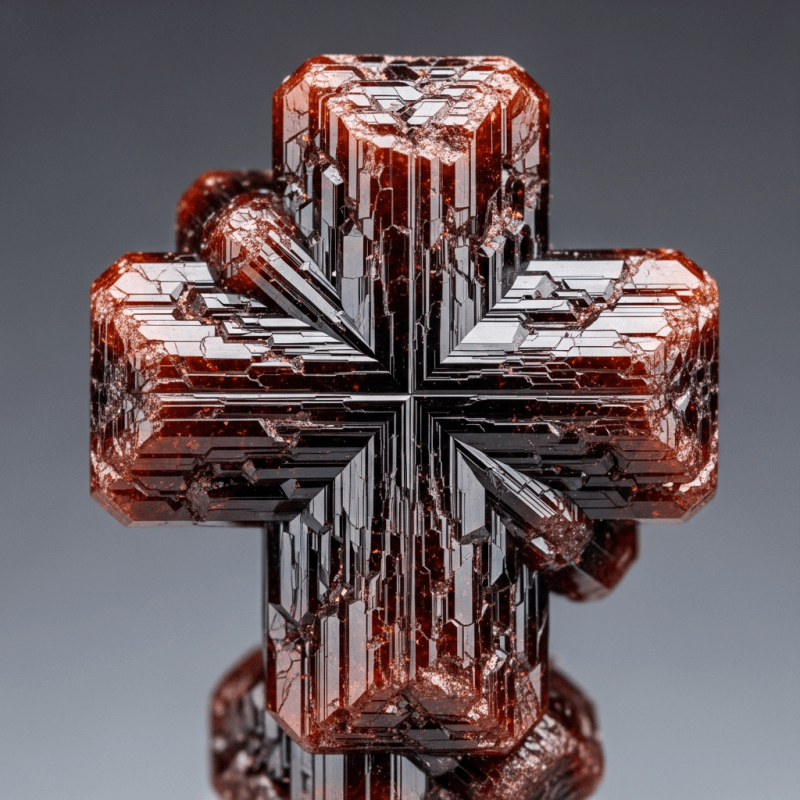
Soft cotton tee, unisex sizes
Buy ShirtStaurolite’s cross-shaped twins have inspired legends and folklore, especially in regions where they are abundant. Known as "cross stones," "fairy stones," or "fairy crosses," these crystals have been regarded as good luck charms and protective talismans. They are sometimes incorporated into jewelry and gifted as tokens of fortune, blending natural wonder with cultural symbolism.
Staurolite’s chemical formula is (Fe²⁺,Mg)2Al9Si4O23(OH), with iron as the dominant cation, though magnesium and zinc may substitute in minor amounts. This composition places it firmly within the silicate mineral family.

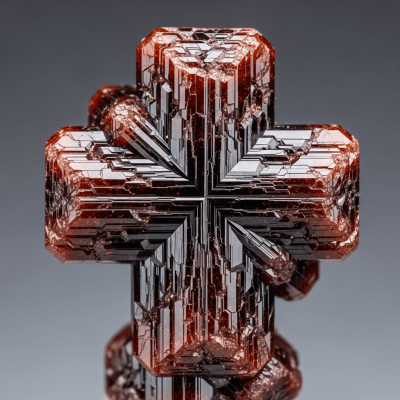
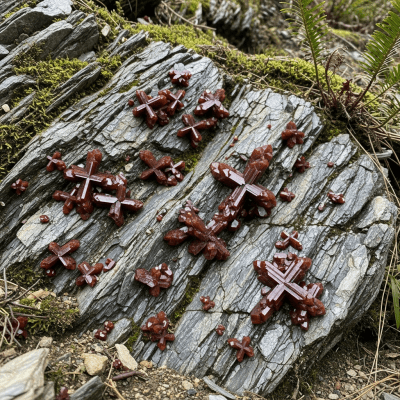


Staurolite crystallizes in the monoclinic system, space group C2/m. Its structure is notable for supporting penetration twinning, most commonly at 60°, resulting in the mineral’s iconic cross-shaped crystals.
Staurolite is typically found in medium-grade metamorphic rocks such as schist and gneiss, forming during the regional metamorphism of aluminous sediments. Major localities include the United States (notably Georgia, Virginia, and New Hampshire), Switzerland, France (Brittany), and Russia. It is commonly associated with minerals like garnet, kyanite, and mica.
Staurolite’s hardness makes it suitable as an abrasive for sandblasting and waterjet cutting, though its industrial use is limited compared to more abundant minerals. Its primary value lies in geological research and as a collectible mineral specimen.
Notable staurolite specimens include the abundant "fairy crosses" from Georgia and Virginia, USA, which have become local icons and are often displayed in museums and collections. Brittany, France, is also celebrated for its striking staurolite twins, prized by mineralogists and collectors worldwide.