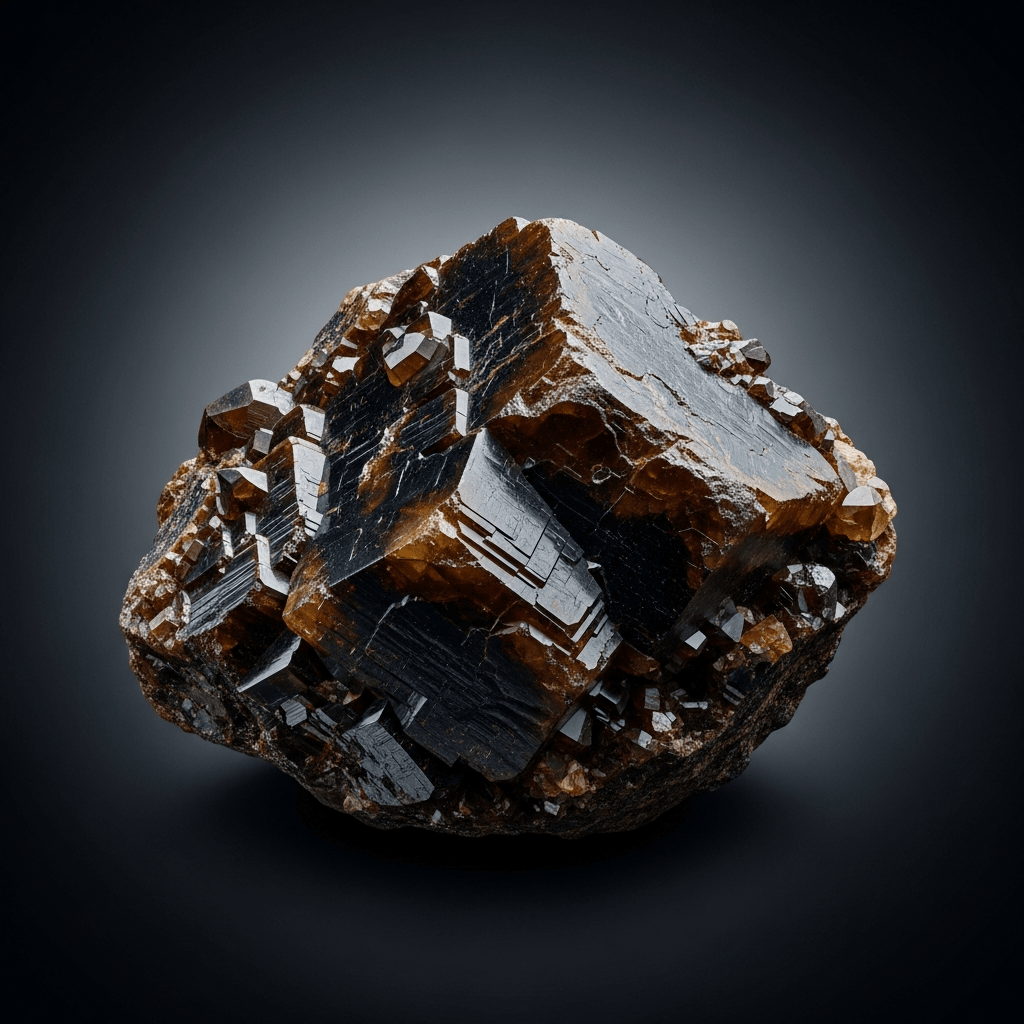
Sphalerite
Sphalerite is the principal mineral species of zinc sulfide (ZnS) and the world's most important ore of zinc, recognized for its variable color, high refractive index, and distinctive resinous to adamantine luster.
Sphalerite is the principal mineral species of zinc sulfide (ZnS) and the world's most important ore of zinc, recognized for its variable color, high refractive index, and distinctive resinous to adamantine luster.
Sphalerite was formally described in 1847 by Ernst Friedrich Glocker, who drew its name from the Greek word sphaleros, meaning "treacherous"—a nod to its frequent confusion with galena in mining. Earlier, miners referred to it as "blende" or "zinc blende," terms that date back to the 18th century. Its nomenclature and mineral status are recognized by the International Mineralogical Association (IMA), marking its transition from regional mining jargon to a globally standardized mineral species.
Sphalerite belongs to the sulfide mineral group and is classified as zinc sulfide. Its Dana classification is 2.8.2.1, and its Strunz code is 2.CB.05. As a canonical mineral species, it sits within the broader context of minerals defined by their chemical composition and crystalline structure, specifically as the main representative of zinc sulfide minerals.
Sphalerite displays a remarkable range of colors—from colorless and yellow to deep brown, red, green, and black—primarily influenced by its iron content. Its crystals typically form in tetrahedral or dodecahedral shapes, but massive, granular, and botryoidal habits are also common. The mineral's luster is resinous to adamantine, giving specimens a striking, glossy appearance. Transparent varieties, known as cleiophane, can exhibit gemstone-like brilliance, while most samples are translucent to opaque.
Sphalerite's primary function is as the world's leading source of zinc, a metal vital for galvanization, alloys, batteries, and chemical production. It also serves as a minor gemstone in its transparent forms and provides cadmium when present as an impurity. In nature, sphalerite commonly occurs alongside galena, pyrite, and chalcopyrite, playing a key role in the formation and identification of hydrothermal and sedimentary ore deposits.
Bring this kind into your world illustrated posters, mugs, and shirts.
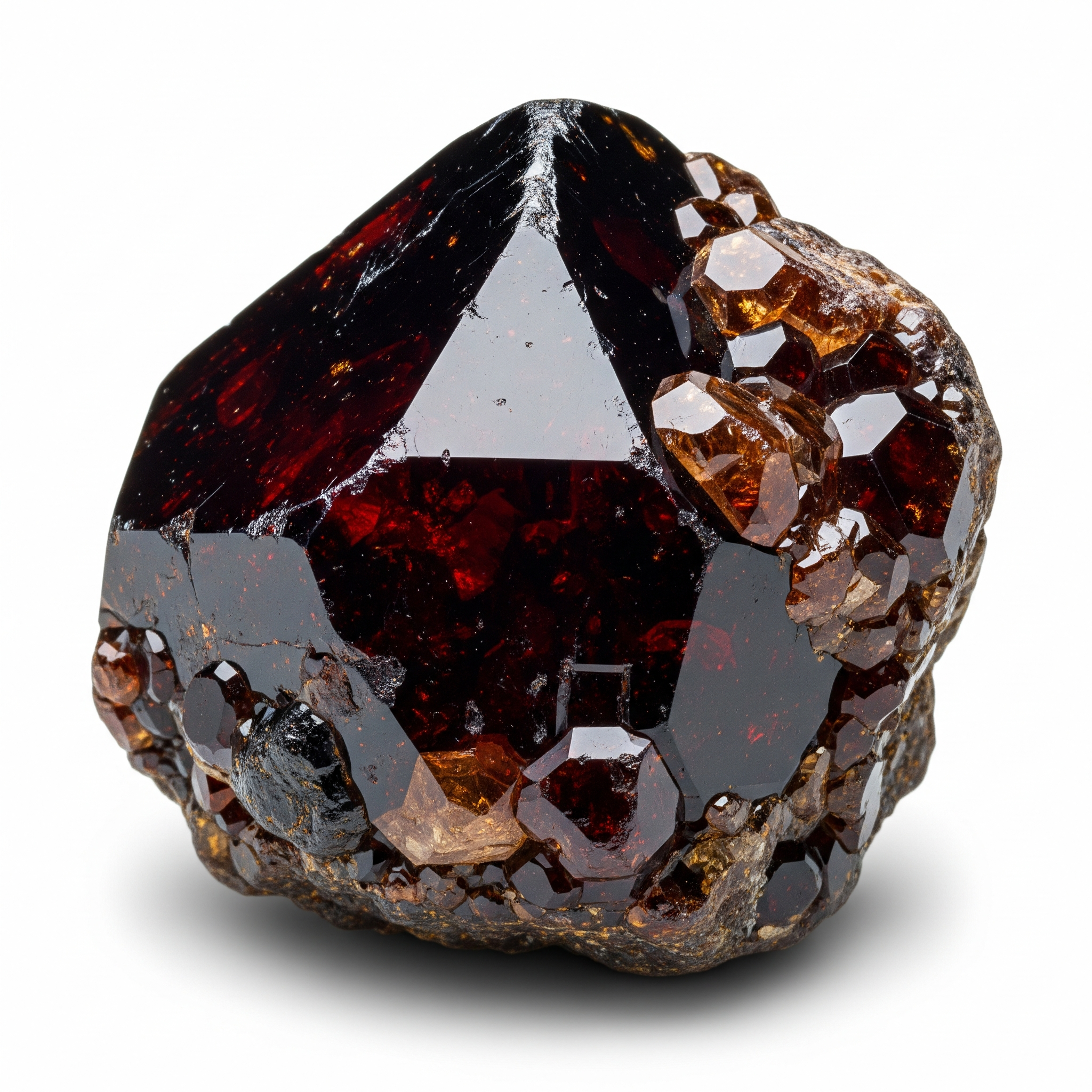
Archival print, museum-grade paper
Buy Poster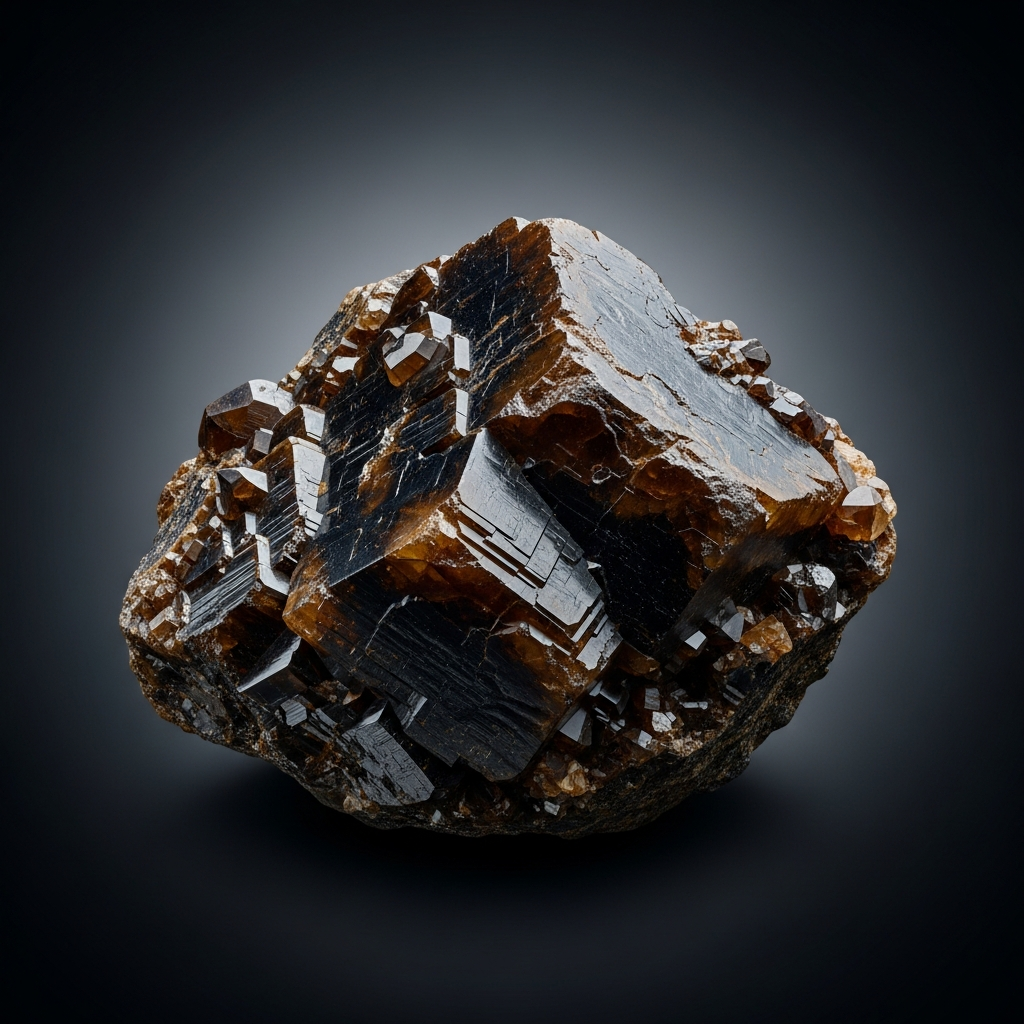
Stoneware mug, dishwasher safe
Buy Mug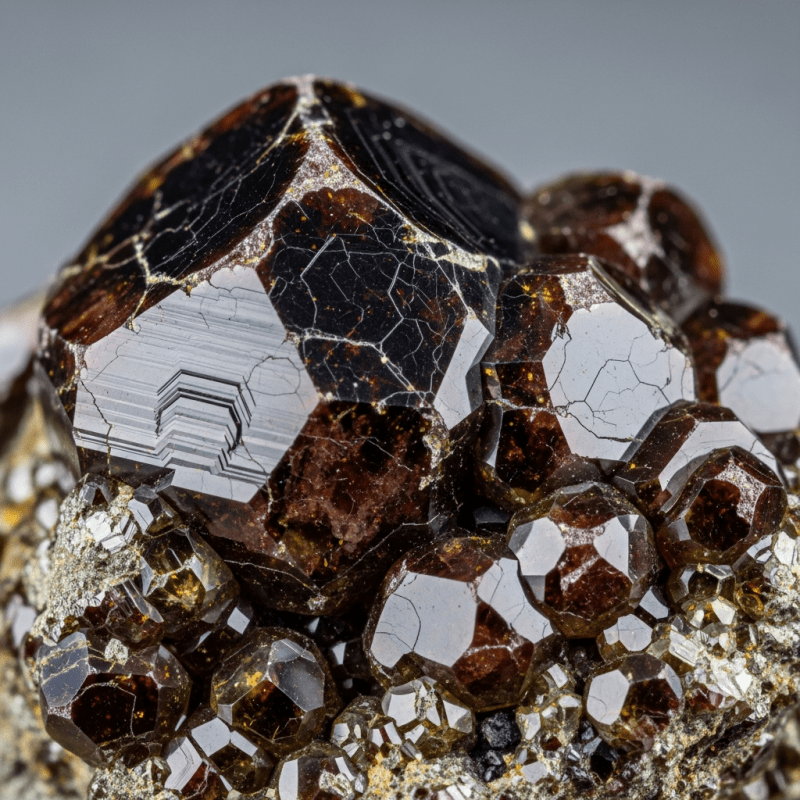
Soft cotton tee, unisex sizes
Buy ShirtWhile sphalerite holds limited cultural prominence, its high dispersion and brilliance have led to occasional use as a faceted collector's gem. Historically, its confusing similarity to galena influenced mining lore and terminology, with miners coining names like "black-jack" and "blende." Today, sphalerite is valued more for its industrial importance than for artistic or mythological associations.
Sphalerite's chemical formula is ZnS, representing zinc sulfide. The mineral consists of zinc and sulfur atoms in a 1:1 ratio, with occasional trace elements such as iron and cadmium substituting within the crystal lattice.
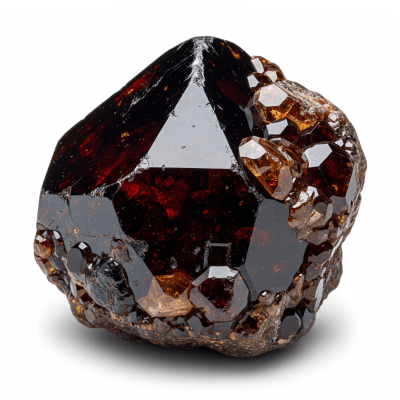
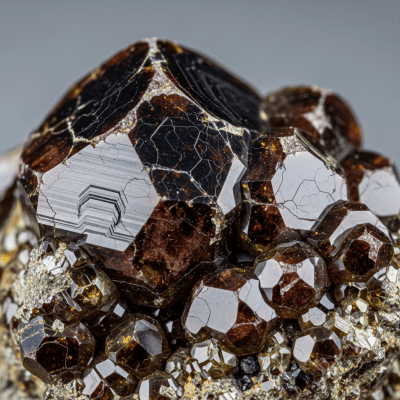
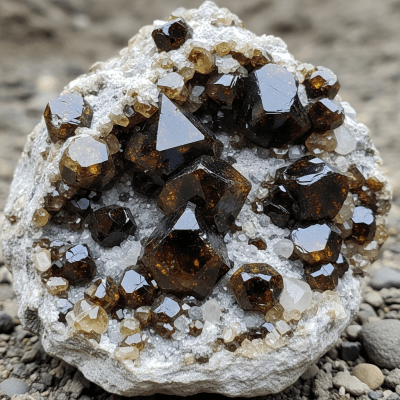

Sphalerite crystallizes in the isometric (cubic) crystal system. Its typical crystal forms are tetrahedral and dodecahedral, and the structure is characterized by a highly symmetrical arrangement of zinc and sulfur atoms. The mineral exhibits perfect dodecahedral cleavage, a hallmark of its internal symmetry.
Sphalerite is most commonly found in hydrothermal vein deposits, sedimentary exhalative deposits, and metamorphosed carbonate rocks. It frequently occurs alongside minerals such as galena, pyrite, chalcopyrite, and fluorite. Major localities include the Tri-State District in the USA, Broken Hill in Australia, and the Santander region in Spain, making sphalerite a globally distributed and economically significant mineral.
Sphalerite is the primary ore of zinc, a metal essential for galvanization, alloy production, batteries, and numerous chemical applications. It also serves as a minor gemstone (cleiophane) and can be a source of cadmium when present as an impurity. The mineral's role in zinc extraction underpins industries from construction to electronics.
Notable sphalerite specimens have been recovered from the Tri-State District (USA), Broken Hill (Australia), and Santander (Spain), often displaying large, lustrous crystals. Transparent cleiophane crystals from Spain and Mexico are especially prized by collectors for their gem-like appearance and high dispersion.