Sillimanite
Sillimanite is a high-temperature alumino-silicate mineral valued for its role as a metamorphic indicator and its industrial use in refractory ceramics.
Sillimanite is a high-temperature alumino-silicate mineral valued for its role as a metamorphic indicator and its industrial use in refractory ceramics.
First described in 1824, sillimanite was named to honor Benjamin Silliman, a pioneering American chemist and mineralogist at Yale University. Its formal recognition as a distinct mineral species is longstanding, and it remains an important reference in mineralogical literature. Sillimanite’s discovery highlighted the diversity of alumino-silicate minerals and contributed to the understanding of metamorphic processes.
Sillimanite belongs to the alumino-silicate group and is one of three polymorphs of Al₂SiO₅, alongside kyanite and andalusite. It is classified under the Dana system (52.04.01.01) and the Strunz system (9.AF.10), both of which emphasize its chemical composition and crystal structure. Its orthorhombic symmetry distinguishes it from its polymorphic relatives, and it is a key species in metamorphic petrology.
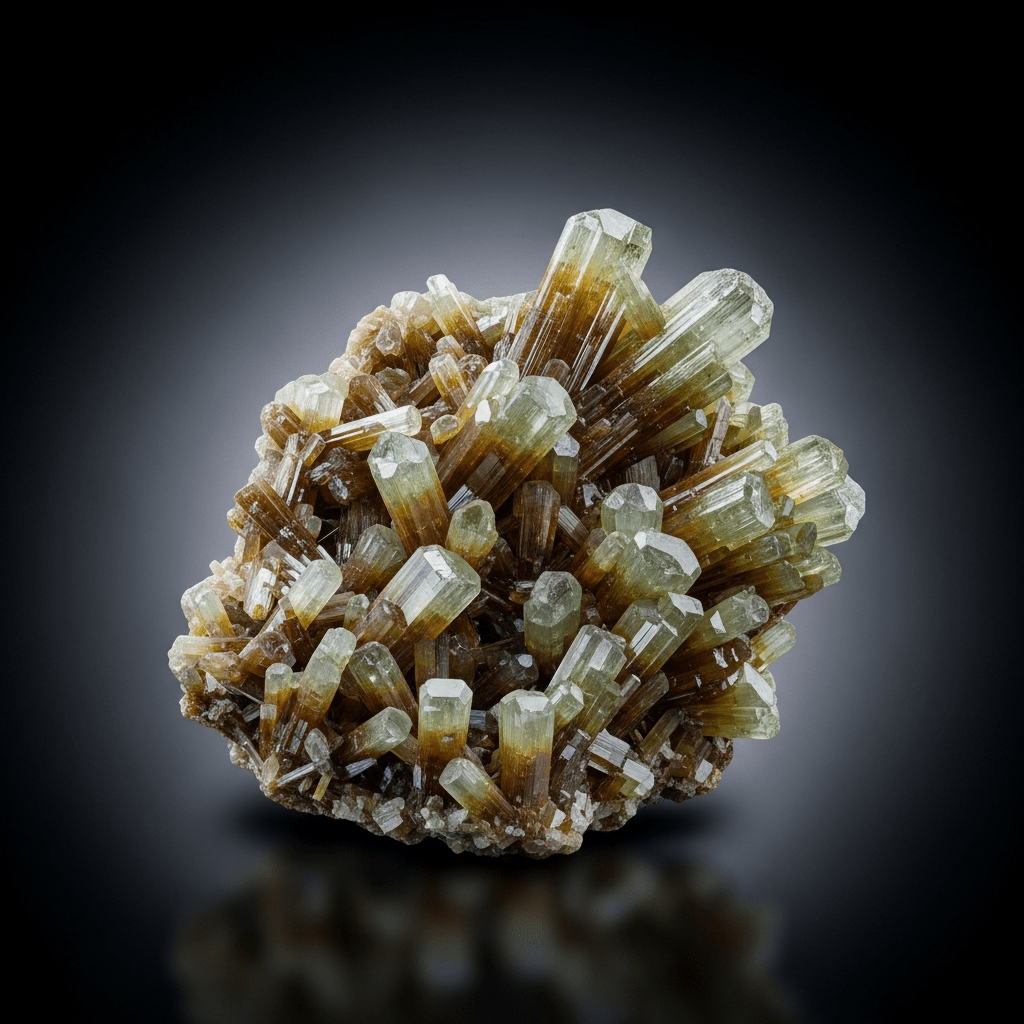
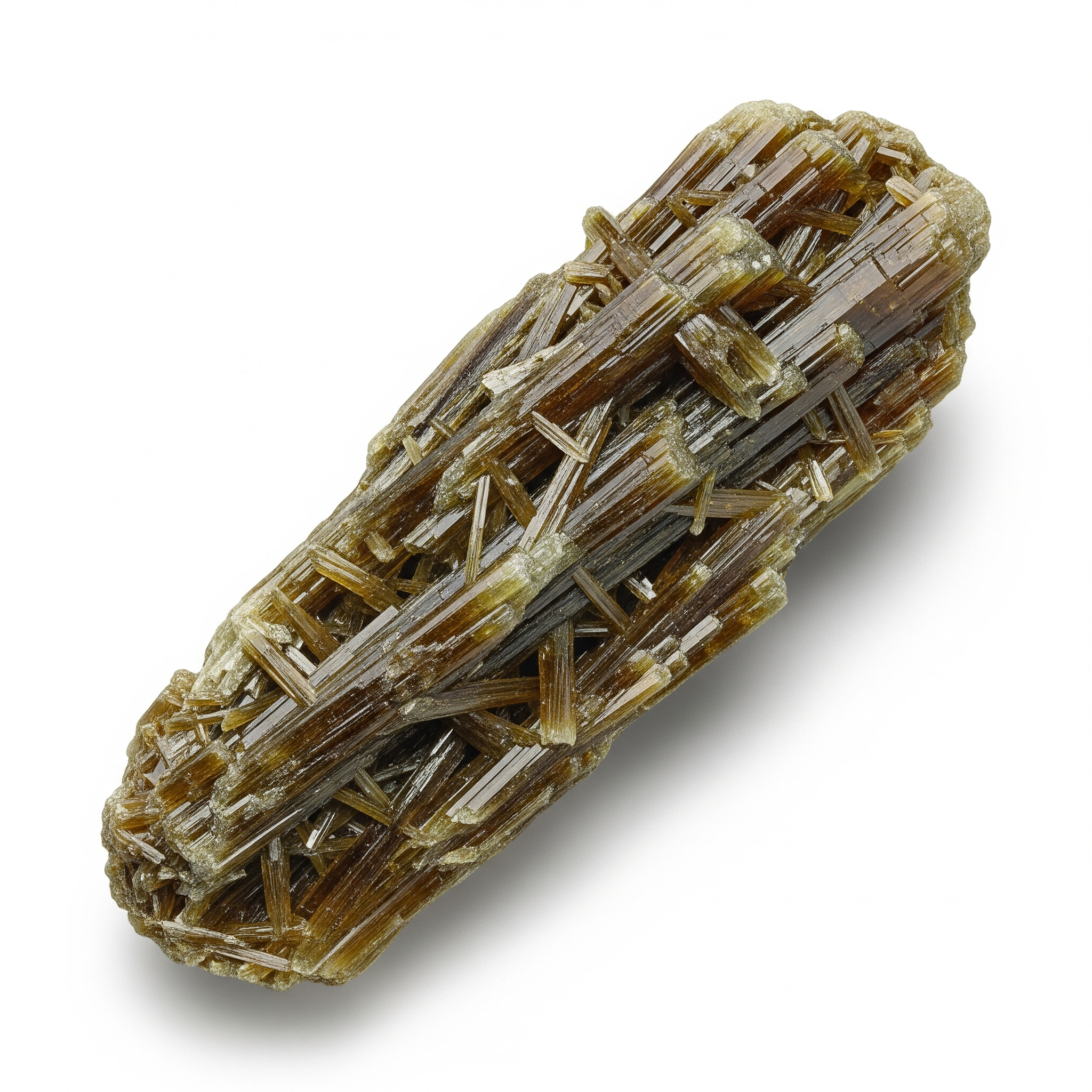
Sillimanite typically appears as slender, prismatic, fibrous, or columnar crystals. Its colors range from colorless and white to gray, brown, and pale green, with rare blue varieties. The mineral’s luster is vitreous to silky, and specimens may be transparent or translucent. Fibrous aggregates, historically called "fibrolite," are especially notable for their silky sheen and splintery texture.
Renowned for its resistance to high temperatures and chemical attack, sillimanite is extensively used in the manufacture of high-alumina refractories and ceramics. In geology, its presence signals high-grade metamorphic conditions, making it a valuable indicator mineral for petrologists. Occasionally, gem-quality sillimanite is faceted for collectors, though such specimens are rare.
Bring this kind into your world illustrated posters, mugs, and shirts.
Archival print, museum-grade paper
Buy Poster
Stoneware mug, dishwasher safe
Buy Mug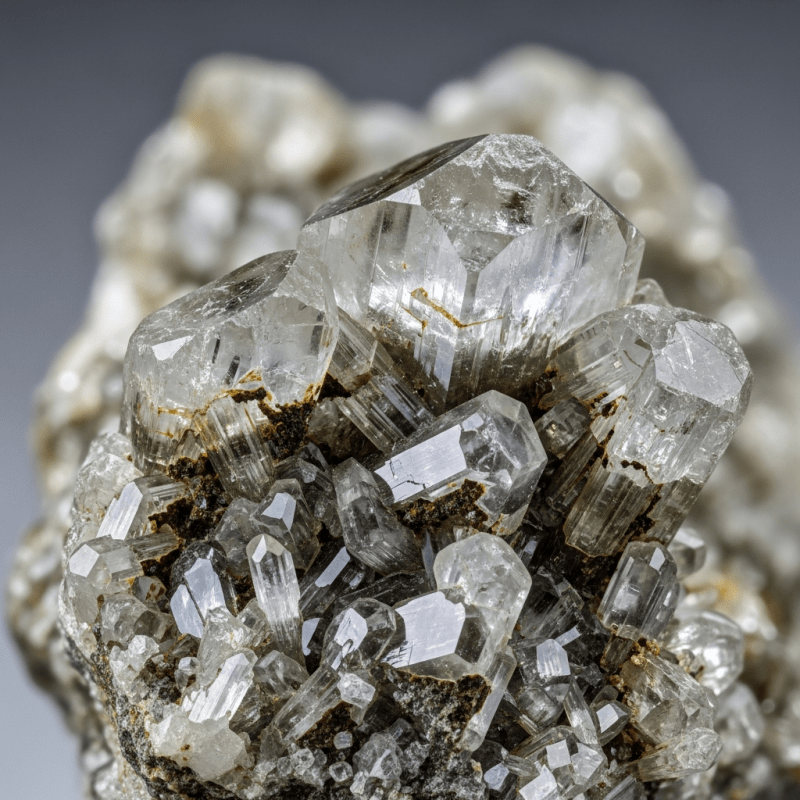
Soft cotton tee, unisex sizes
Buy ShirtWhile sillimanite does not have a prominent role in myth or art, its naming after Benjamin Silliman links it to the history of American science and mineralogy. Its use in high-performance ceramics and refractories indirectly supports industries foundational to modern infrastructure and technology.
Sillimanite has the chemical formula Al₂SiO₅, consisting of aluminum, silicon, and oxygen. It is chemically identical to kyanite and andalusite, with differences arising from crystal structure.
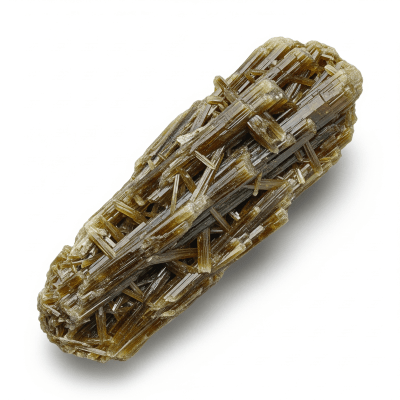
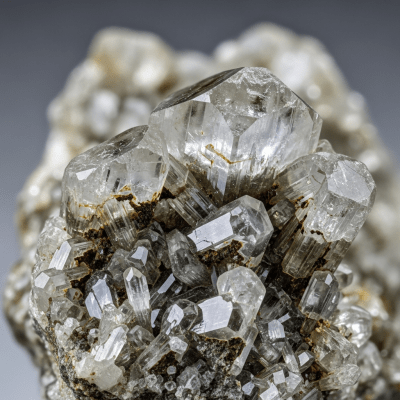
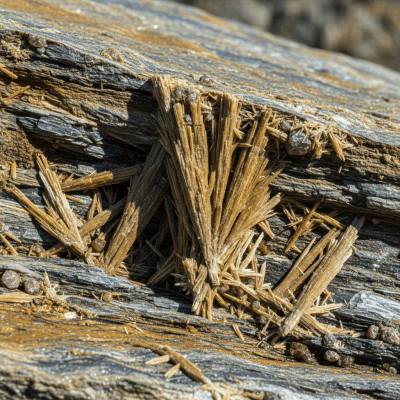
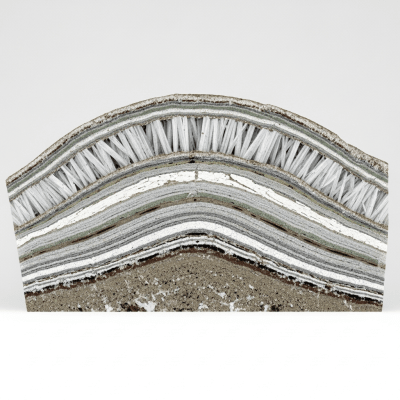
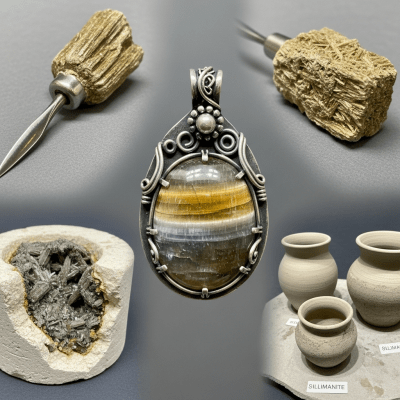
Sillimanite crystallizes in the orthorhombic system, forming elongated prismatic or fibrous crystals. Its atomic arrangement sets it apart from its polymorphs and imparts distinct physical properties.
Sillimanite is typically found in high-grade metamorphic rocks such as schist and gneiss, as well as in contact metamorphic zones and some granites. Major localities include India (Andhra Pradesh, Orissa), Sri Lanka, the United States (North Carolina, Massachusetts), Myanmar, and Brazil. It often occurs with quartz, feldspar, garnet, and other alumino-silicate minerals.
Sillimanite’s exceptional thermal stability makes it a vital raw material in the manufacture of high-temperature ceramics, refractories, and spark plugs. It is also used for mullite production, which is essential in advanced ceramics. Rarely, transparent sillimanite is cut as a gemstone for collectors.
Handle sillimanite specimens gently due to their brittle and splintery nature. Store in padded containers to prevent breakage. Clean with soft brushes and avoid harsh chemicals; water and mild soap are sufficient for most specimens. Avoid dropping or striking, as the mineral fractures easily.
Notable sillimanite specimens include large fibrous aggregates from India and Sri Lanka, which are prized by collectors for their size and silky appearance. Historically, "fibrolite" samples described in 19th-century European mineralogy are significant for their role in the early study of alumino-silicate polymorphs.