Realgar
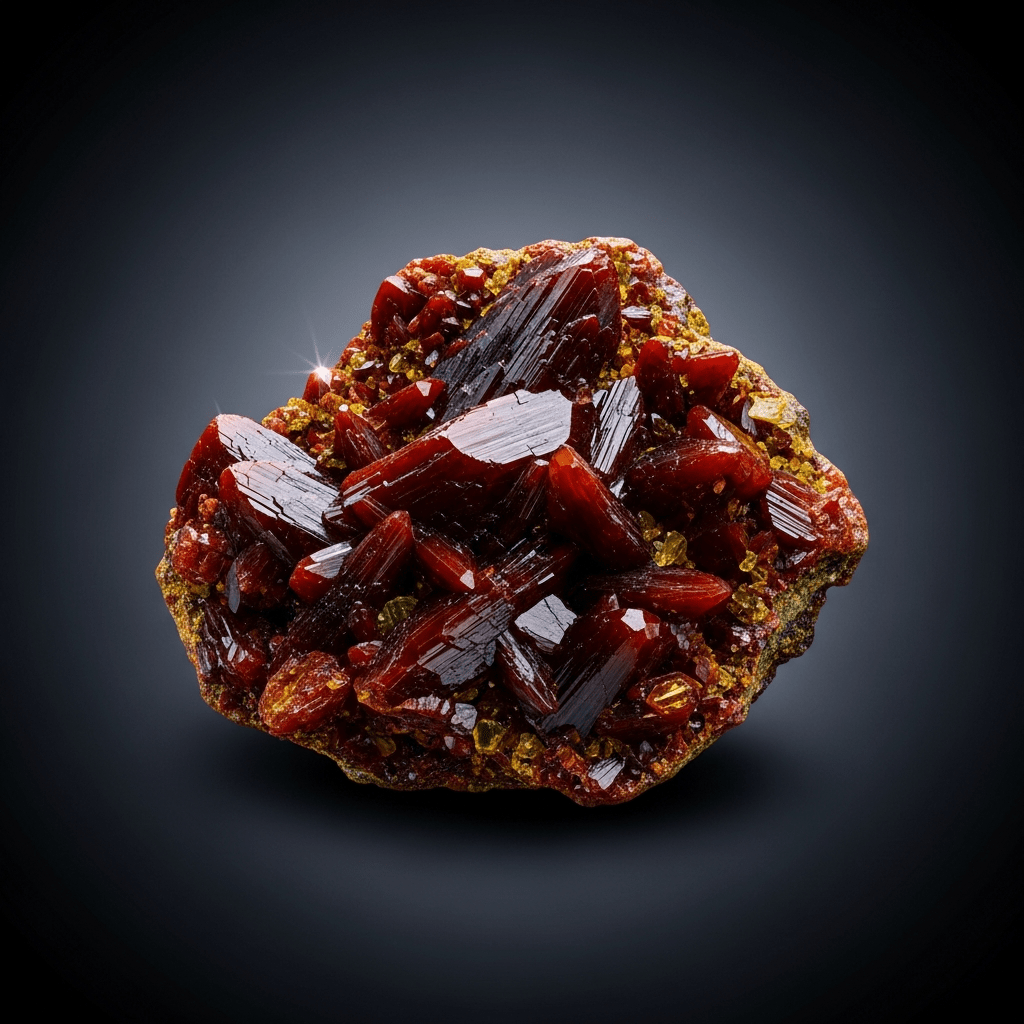
Realgar is a vividly colored arsenic sulfide mineral, instantly recognizable for its fiery red to orange hues and historical role as a pigment and source of arsenic.
Realgar is a vividly colored arsenic sulfide mineral, instantly recognizable for its fiery red to orange hues and historical role as a pigment and source of arsenic.
Realgar has been known and utilized since antiquity, with its earliest uses traced to ancient China, Egypt, and Rome. Its name derives from the Arabic phrase “rahj al-gahr,” meaning “powder of the mine.” While the mineral’s formal scientific description dates to the 16th century by Georgius Agricola, its recognition as a distinct mineral species predates modern mineralogical standards. Today, realgar is officially recognized by the International Mineralogical Association (IMA).
Realgar belongs to the arsenic sulfide mineral group and is classified under the monoclinic crystal system. Its Dana classification is 02.CA.30.01, and Strunz code is 2.FA.10. As a mineral species, realgar is defined by its unique chemical formula (AsS) and crystalline structure, distinguishing it from related minerals such as orpiment and pararealgar.
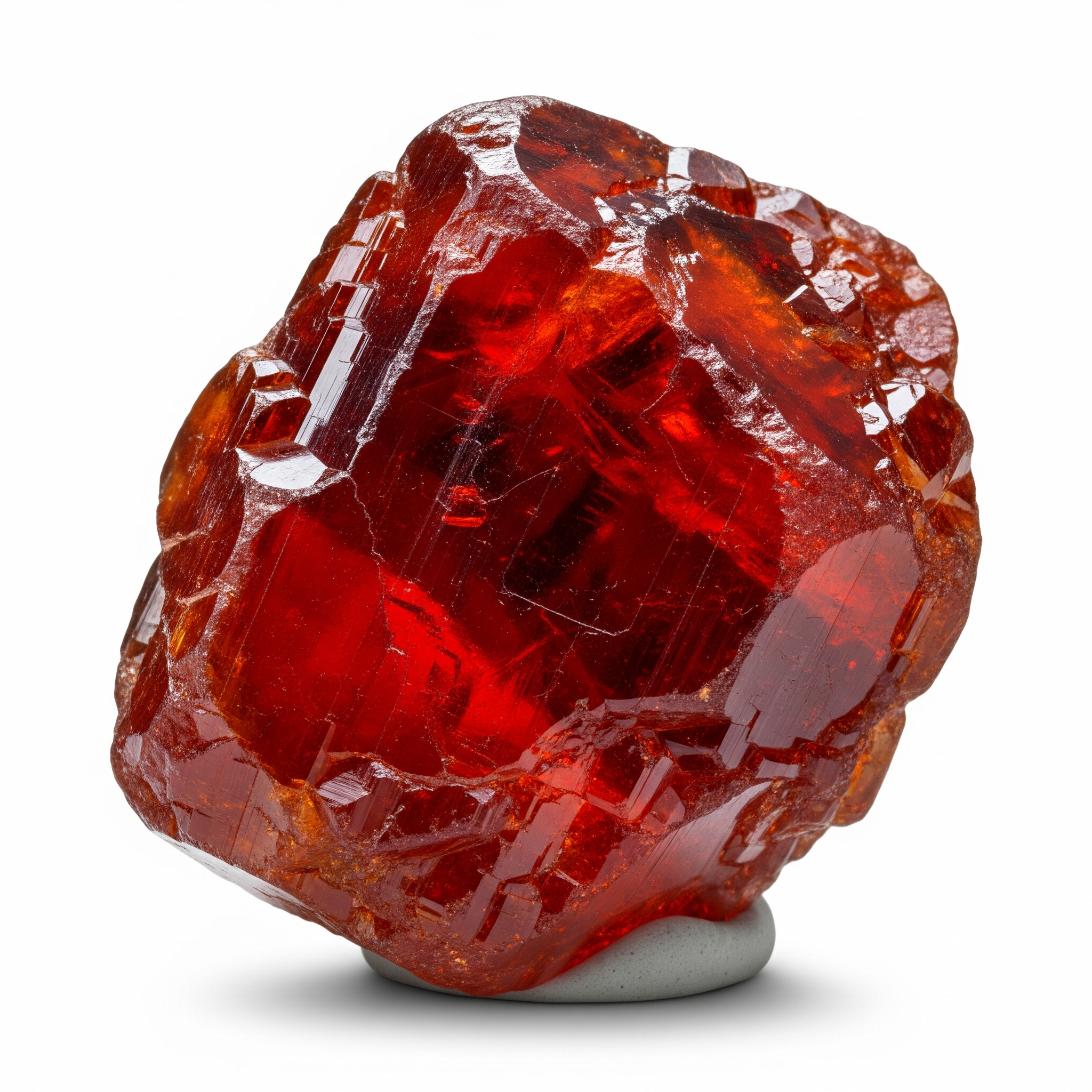
Realgar presents a striking visual impression, typically forming as prismatic crystals, granular masses, or compact aggregates. Its color ranges from intense red to orange, with a resinous to greasy luster that can appear almost glowing in favorable light. The mineral is translucent to transparent, and its streak is orange-yellow. Realgar is notably soft and brittle, often found in delicate, easily fractured specimens.
Realgar’s most distinctive behavioral trait is its photosensitivity: exposure to light causes it to gradually alter, turning into a yellow-orange powder known as pararealgar or orpiment. Historically, realgar was valued as a pigment (“ruby sulphur”), used in fireworks, and employed in traditional medicine and rodent control. Due to its toxicity and instability, modern uses are limited, though it remains a source of arsenic for certain industrial processes.
Bring this kind into your world illustrated posters, mugs, and shirts.
Archival print, museum-grade paper
Buy Poster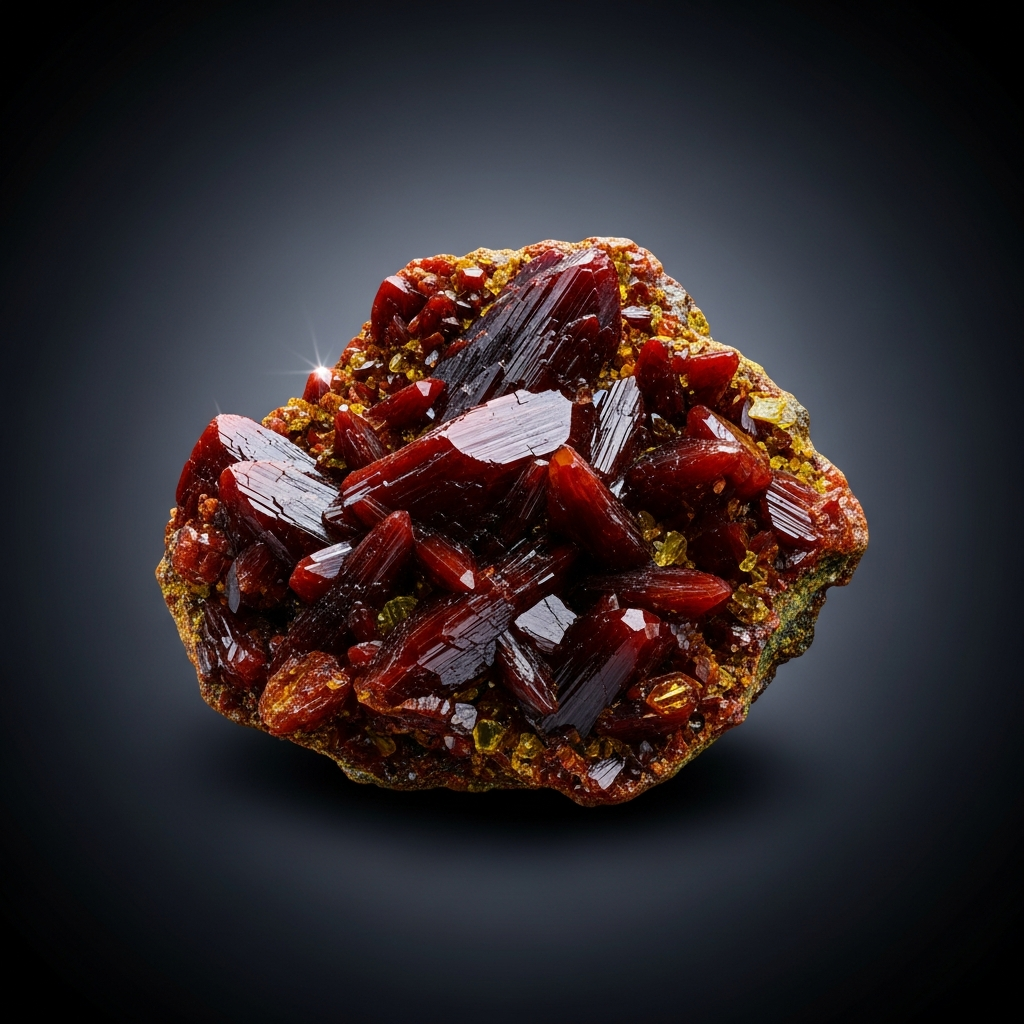
Stoneware mug, dishwasher safe
Buy Mug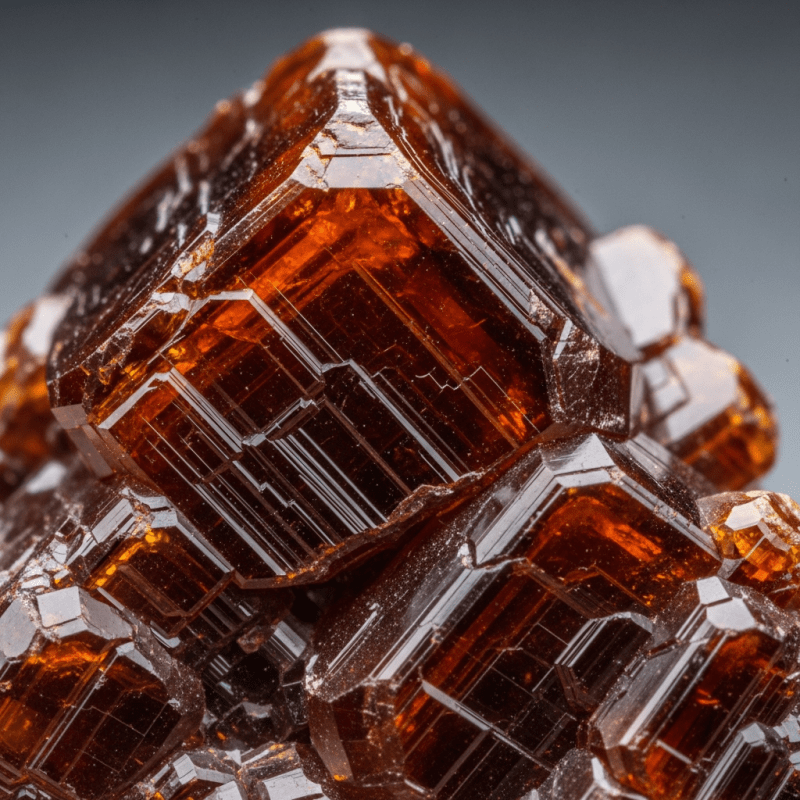
Soft cotton tee, unisex sizes
Buy ShirtRealgar holds deep cultural resonance, especially in East Asia. In China, it is famously associated with the Dragon Boat Festival, where realgar wine was believed to ward off evil spirits. Ancient civilizations such as Egypt and Greece used realgar as a pigment in art and as a medicinal substance, despite its toxic nature. Its vivid color and mysterious properties have inspired myth, ritual, and artistic expression across centuries.
Realgar’s chemical formula is AsS, indicating it is composed of arsenic and sulfur in a 1:1 ratio. This simple yet potent combination defines its vivid color and toxic properties.

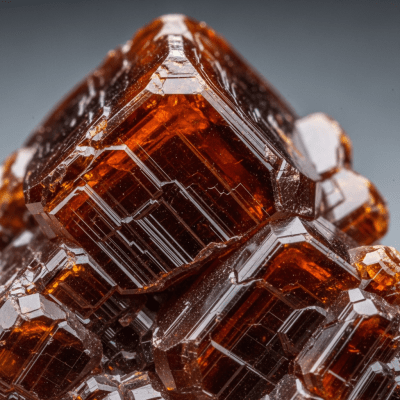
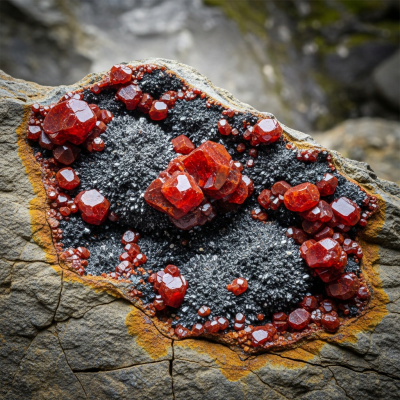


Realgar crystallizes in the monoclinic system, typically forming elongated prismatic crystals. Its atomic arrangement gives rise to distinct cleavage in one direction and contributes to its characteristic softness and brittleness.
Realgar is typically found in low-temperature hydrothermal veins, volcanic fumaroles, and hot spring deposits. It also occurs as an accessory mineral in sedimentary rocks, especially limestone and dolomite. Prominent localities include Hunan Province (China), Baia Sprie (Romania), Sicily (Italy), and Nevada and Utah in the United States. Realgar is often found alongside orpiment, arsenopyrite, and stibnite.
Historically, realgar was used as a pigment in art and manuscripts, in fireworks for its vivid color, and as a rodenticide. It has served as a traditional medicinal ingredient in various cultures. Today, its industrial application is mainly as a source of arsenic, though its instability and toxicity have greatly restricted modern use.
Exceptional realgar crystals have been found in Hunan Province, China, and Baia Sprie, Romania, often featured in major mineral museums and collections. Specimens from Sicily are renowned for their size and color. Realgar’s presence in ancient pigments and artifacts adds to its historical significance.