Pyroxene
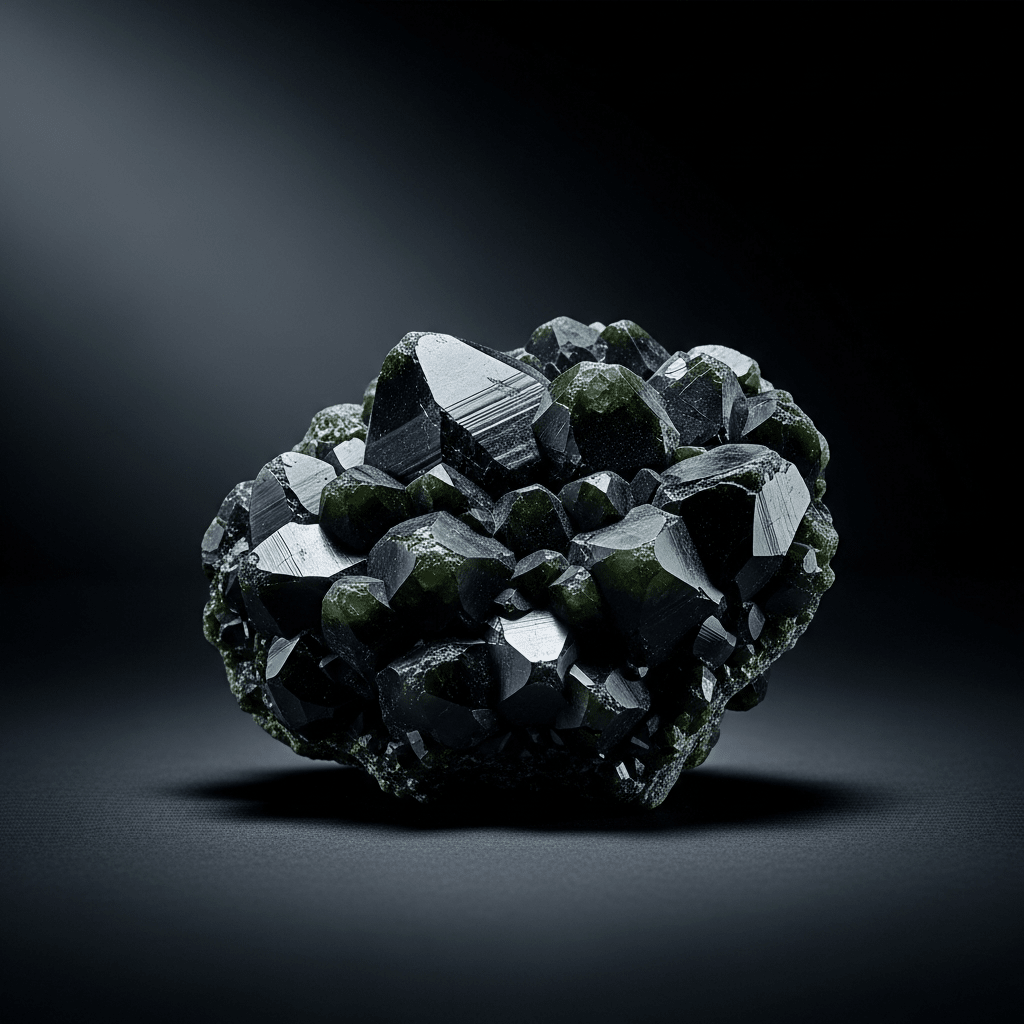
Pyroxene is a major group of rock-forming minerals defined by its distinctive chain silicate structure and prevalence in igneous and metamorphic rocks.
Pyroxene is a major group of rock-forming minerals defined by its distinctive chain silicate structure and prevalence in igneous and metamorphic rocks.
The name "pyroxene" originates from the Greek words pyro (fire) and xenos (stranger), reflecting its early misidentification as an impurity in volcanic rocks. First described in the early 19th century, pyroxene was systematically classified by René Just Haüy and later refined by the International Mineralogical Association (IMA). Its species, such as augite and jadeite, have their own unique discovery stories, with augite notably described by Abraham Gottlob Werner in 1792.
Pyroxene belongs to the inosilicate class, characterized by single chains of silicate tetrahedra. The group is divided into two main subgroups: orthopyroxenes (orthorhombic crystal system) and clinopyroxenes (monoclinic crystal system). Its classification path includes Dana code 65.1 and Strunz code 9.DA, placing pyroxene among minerals with chain silicate structures.
Pyroxenes typically appear as short, stubby prismatic crystals with a vitreous to dull luster. Their colors range from dark green, brown, and black to pale green or white, depending on species. Cleavage is a key trait, occurring in two directions at nearly 90°, and their streak is usually white to gray. The overall habit gives pyroxenes a robust, angular look in hand specimens.
Pyroxene minerals are essential constituents of the Earth’s crust and upper mantle, influencing the formation and classification of igneous and metamorphic rocks. While not widely used directly in industry, their presence is vital for petrological studies, geothermobarometry, and as geological indicators. Select species, such as jadeite, are valued as gemstones in jewelry and art.
Bring this kind into your world illustrated posters, mugs, and shirts.
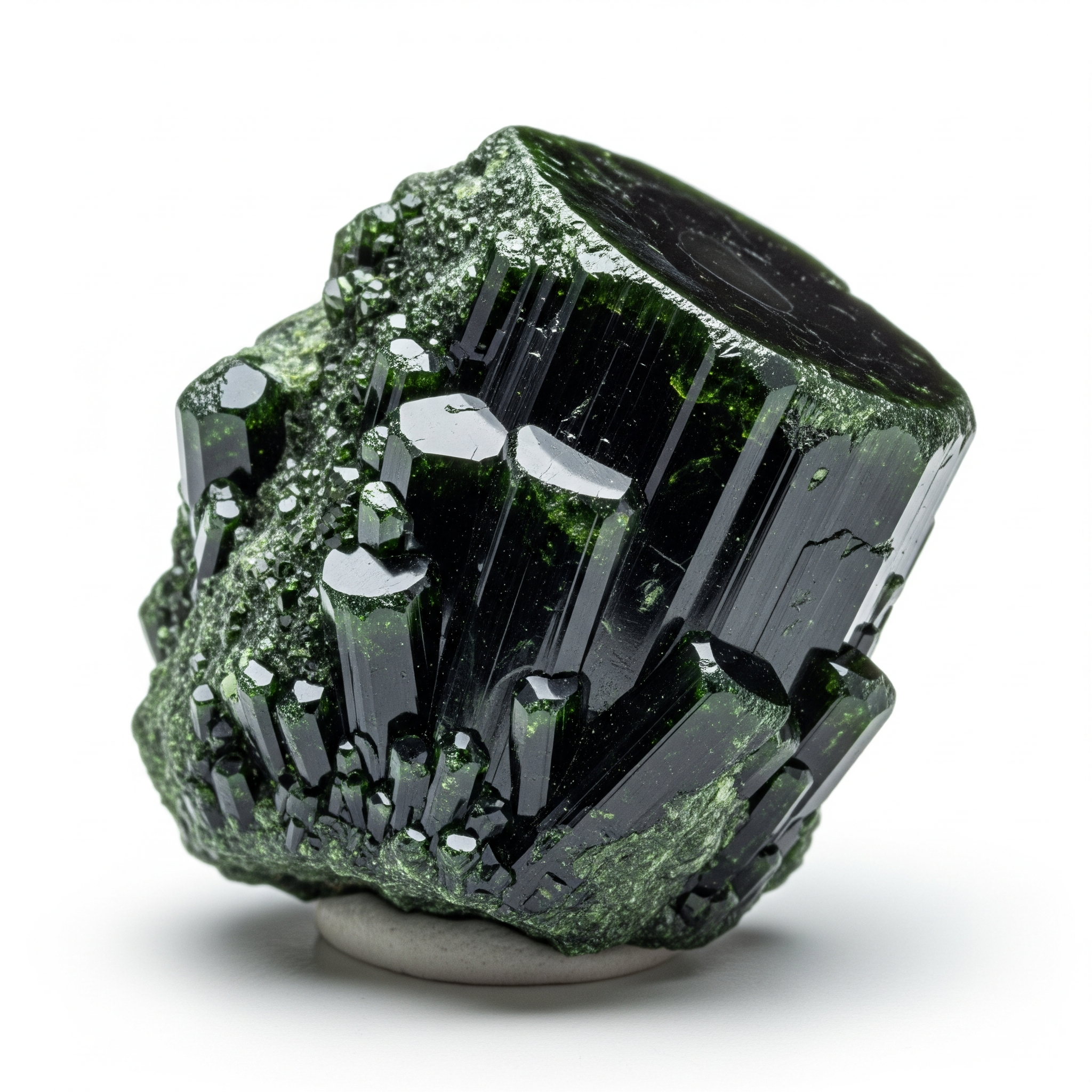
Archival print, museum-grade paper
Buy Poster
Stoneware mug, dishwasher safe
Buy Mug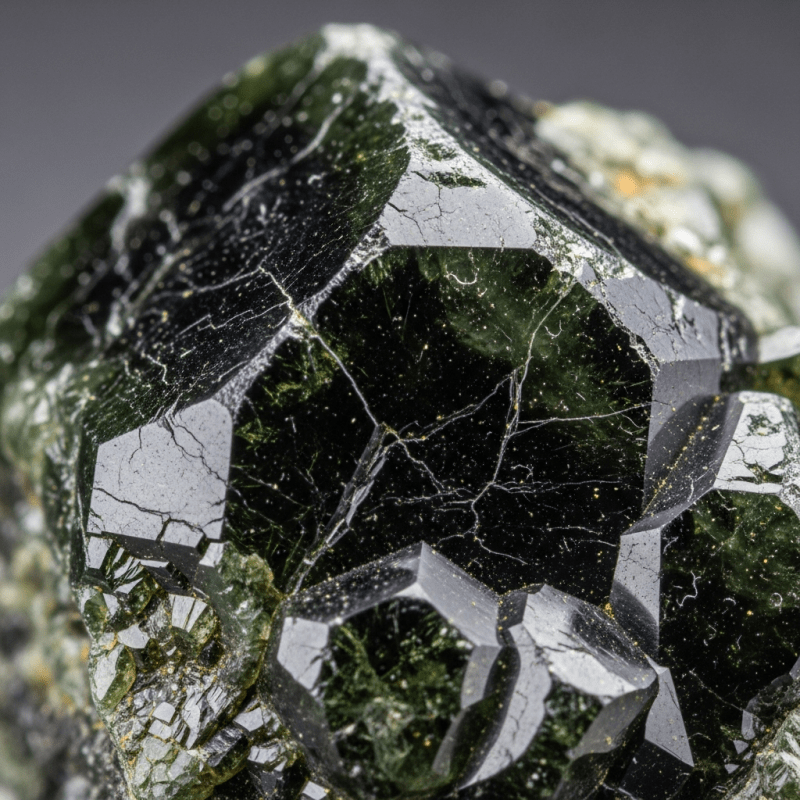
Soft cotton tee, unisex sizes
Buy ShirtThough pyroxene itself is not a cultural icon, its species have made notable impacts. Jadeite, a pyroxene variety, is revered in East Asian art and culture as "jade," symbolizing purity and status. In scientific circles, pyroxene is a cornerstone for understanding planetary geology, including studies of meteorites and the Earth’s mantle.
Pyroxenes have the general chemical formula XY(Si,Al)2O6, where X and Y are commonly calcium, magnesium, iron, or aluminum. This flexible composition allows for a wide range of species within the group.
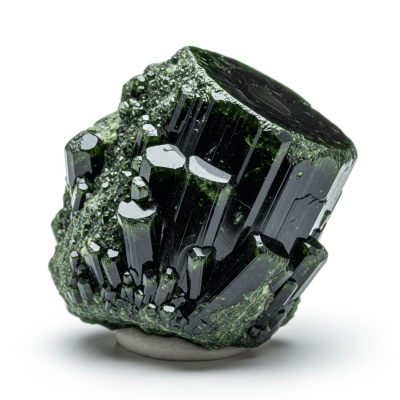
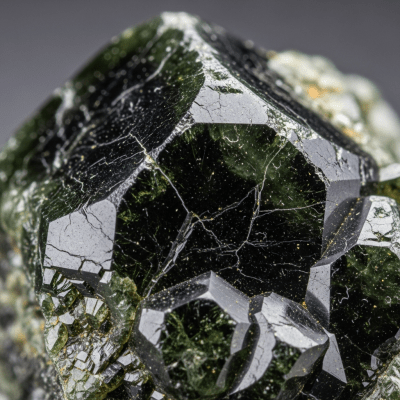
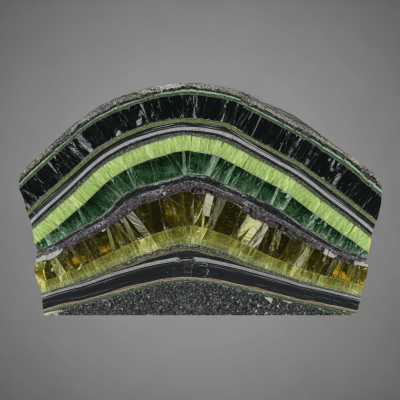

Pyroxene minerals crystallize in either the monoclinic (clinopyroxenes) or orthorhombic (orthopyroxenes) systems. Their defining feature is a single chain of silicate tetrahedra, which imparts the mineral's characteristic cleavage and prismatic habit.
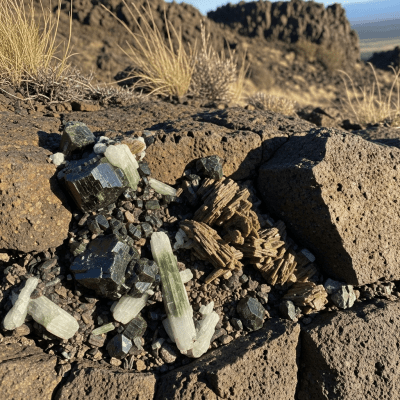
Pyroxenes are ubiquitous in igneous rocks such as basalt, gabbro, and peridotite, and also occur in high-grade metamorphic rocks. They are essential constituents of the Earth’s upper mantle and have been identified in meteorites, highlighting their planetary significance.
Pyroxenes are not widely exploited for direct industrial purposes, but their presence is crucial for geological mapping, petrological classification, and geothermobarometry. Jadeite, a pyroxene, is highly valued as a gemstone. Their mineralogical properties also help in identifying geological processes and rock origins.
Store pyroxene specimens in a dry environment to prevent alteration to clay minerals. Clean gently with a soft brush and avoid harsh chemicals. Handle with care to preserve crystal edges and cleavage surfaces, especially for gem-quality varieties like jadeite.
Notable pyroxene specimens include jadeite carvings from Myanmar, prized for their rich green color and cultural significance. Large crystals of augite and diopside from volcanic regions are featured in mineral collections worldwide. Pyroxenes found in meteorites provide invaluable insights into planetary geology.