Olivine
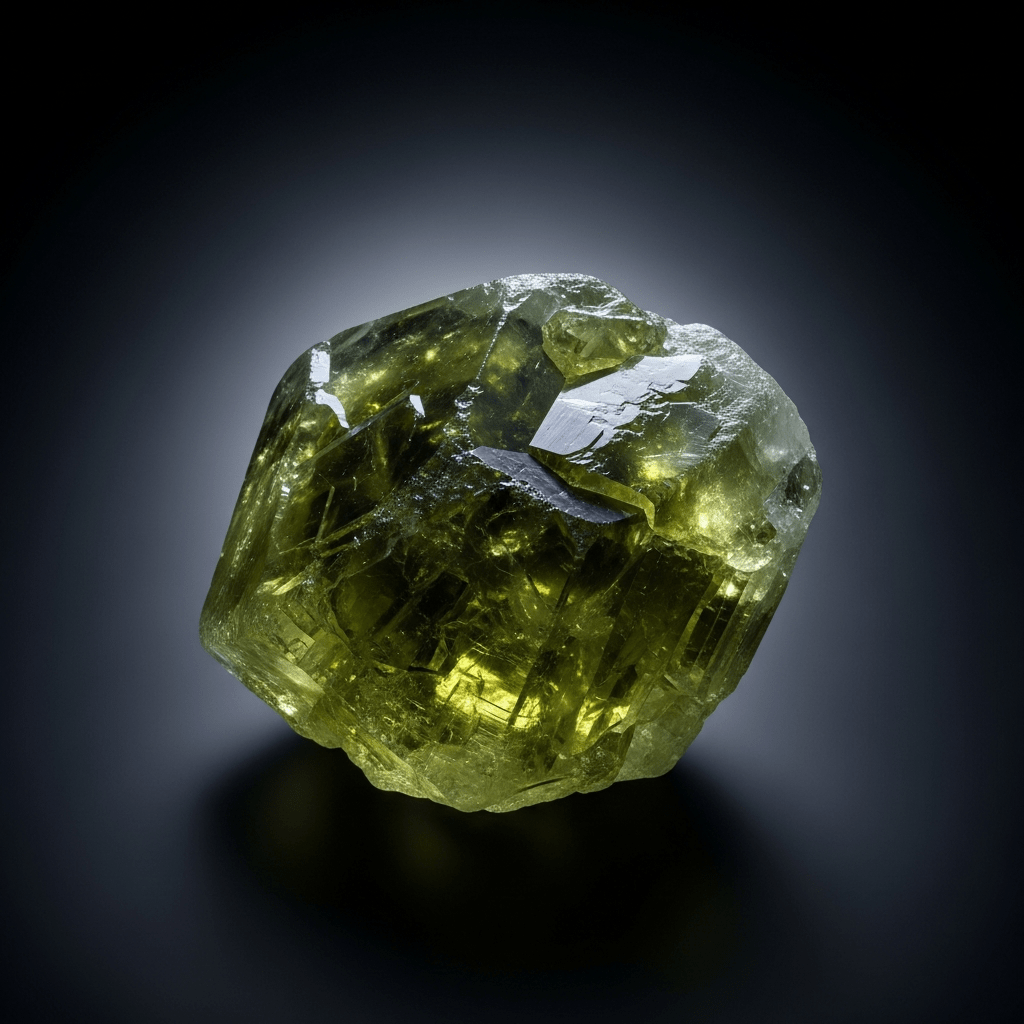
Olivine is a group of magnesium iron silicate minerals, instantly recognized for its olive-green color and its crucial role as a major constituent of Earth's upper mantle.
Olivine is a group of magnesium iron silicate minerals, instantly recognized for its olive-green color and its crucial role as a major constituent of Earth's upper mantle.
First described by A.G. Werner in 1790, olivine’s name is inspired by its distinctive olive-green hue. Its mineral group has been studied since the 19th century, with the magnesium-rich forsterite and iron-rich fayalite endmembers identified in the early 1800s. The species was formally approved by the International Mineralogical Association, cementing olivine’s place in mineralogical history as a key indicator of mantle composition and geological processes.
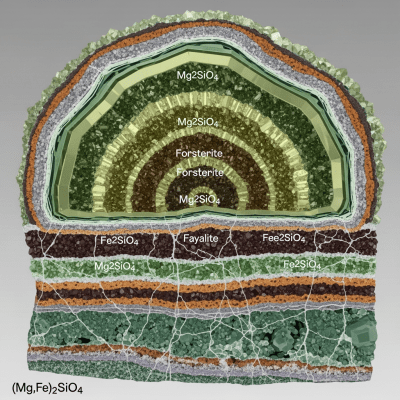
Olivine belongs to the nesosilicate group and is classified as a solid solution series between forsterite (Mg₂SiO₄) and fayalite (Fe₂SiO₄). It is grouped under Dana classification 9.2.1.1 and Strunz code 9.AC.05. As a member of the silicate class, olivine is fundamental to the study of igneous and metamorphic rocks, bridging mineralogical and petrological disciplines.
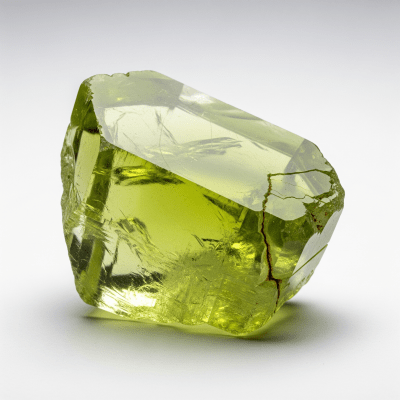
Olivine typically appears as granular crystals or masses with a striking olive-green to yellow-green coloration. Iron-rich varieties may display brownish tones. Its luster is vitreous, and the mineral often exhibits a conchoidal fracture and poor cleavage, giving specimens a glassy, sometimes uneven surface. The tactile feel is robust, reflecting its notable hardness.
Olivine is highly resistant to high temperatures, making it valuable in industrial applications such as refractory materials and foundry sands. However, it weathers rapidly at the Earth's surface, transforming into minerals like serpentine or iddingsite. Gem-quality olivine, known as peridot, is prized in jewelry, while the mineral’s rapid alteration is significant in soil formation and carbon sequestration studies.
Bring this kind into your world illustrated posters, mugs, and shirts.
Archival print, museum-grade paper
Buy Poster
Stoneware mug, dishwasher safe
Buy Mug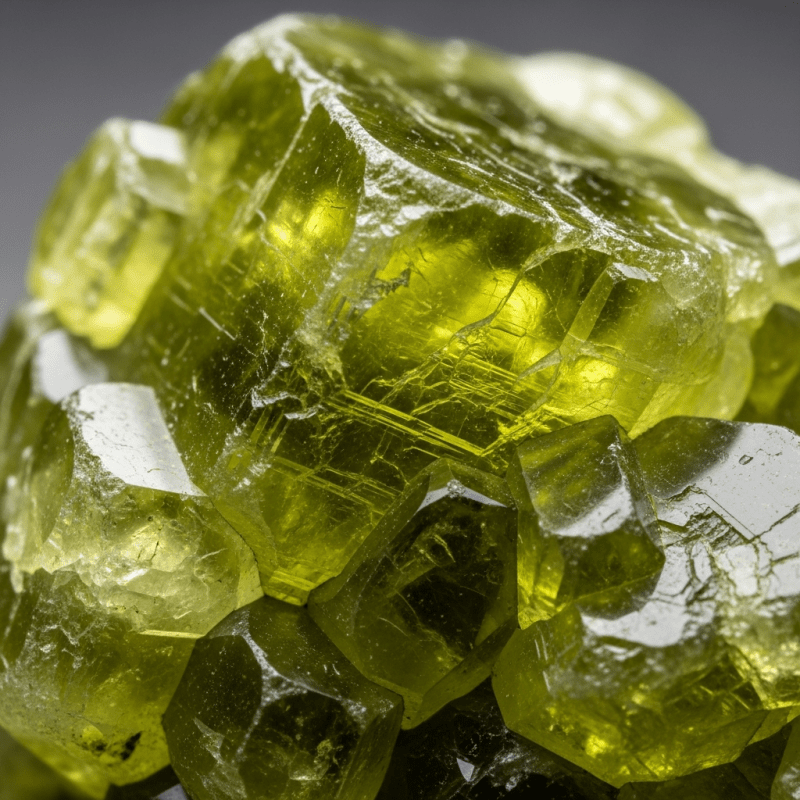
Soft cotton tee, unisex sizes
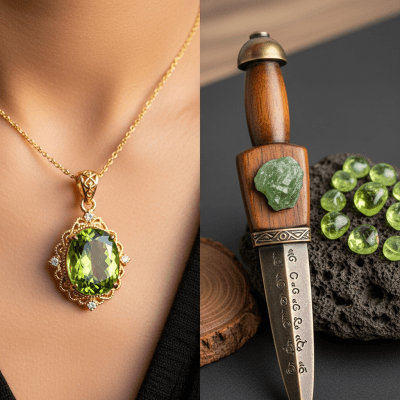
Buy ShirtGem-quality olivine, called peridot, has been treasured as a gemstone for centuries, often associated with light and prosperity in various cultures. Historically, peridot was believed to ward off evil spirits and was used in ancient jewelry and talismans. The mineral’s vibrant green color has made it a symbol of renewal and vitality in art and mythology.
Olivine’s chemical formula is (Mg,Fe)2SiO4, representing a solid solution between magnesium-rich forsterite and iron-rich fayalite. Its structure is built from isolated silica tetrahedra linked by magnesium and iron cations.
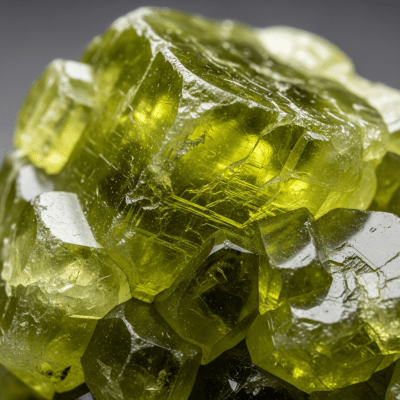
Olivine crystallizes in the orthorhombic crystal system (space group Pbnm), forming granular or stubby prismatic crystals. Its atomic arrangement features isolated silica tetrahedra, giving it distinctive physical and optical properties.
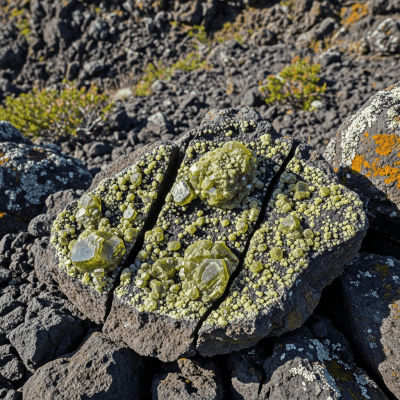
Olivine is a major mineral in mafic and ultramafic igneous rocks such as basalt, peridotite, and gabbro, and also occurs in some metamorphic rocks. Notable occurrences include mantle xenoliths, the San Carlos volcanic field in Arizona, and Dun Mountain in New Zealand. Its presence is a hallmark of mantle-derived rocks and volcanic regions.
Olivine is widely used as a refractory material in high-temperature industrial processes, as foundry sand for casting metals, and as a source of magnesium. Its rapid weathering is being studied for carbon sequestration, and gem-quality peridot is highly valued in jewelry. Olivine also plays a role in soil formation and environmental remediation research.
Notable olivine specimens include mantle xenoliths containing large olivine crystals, gem-quality peridot from the San Carlos volcanic field in Arizona, and historic samples from Dun Mountain, New Zealand. Peridot from Zabargad Island (Egypt) is renowned for its clarity and color, prized in royal and ancient jewelry collections.