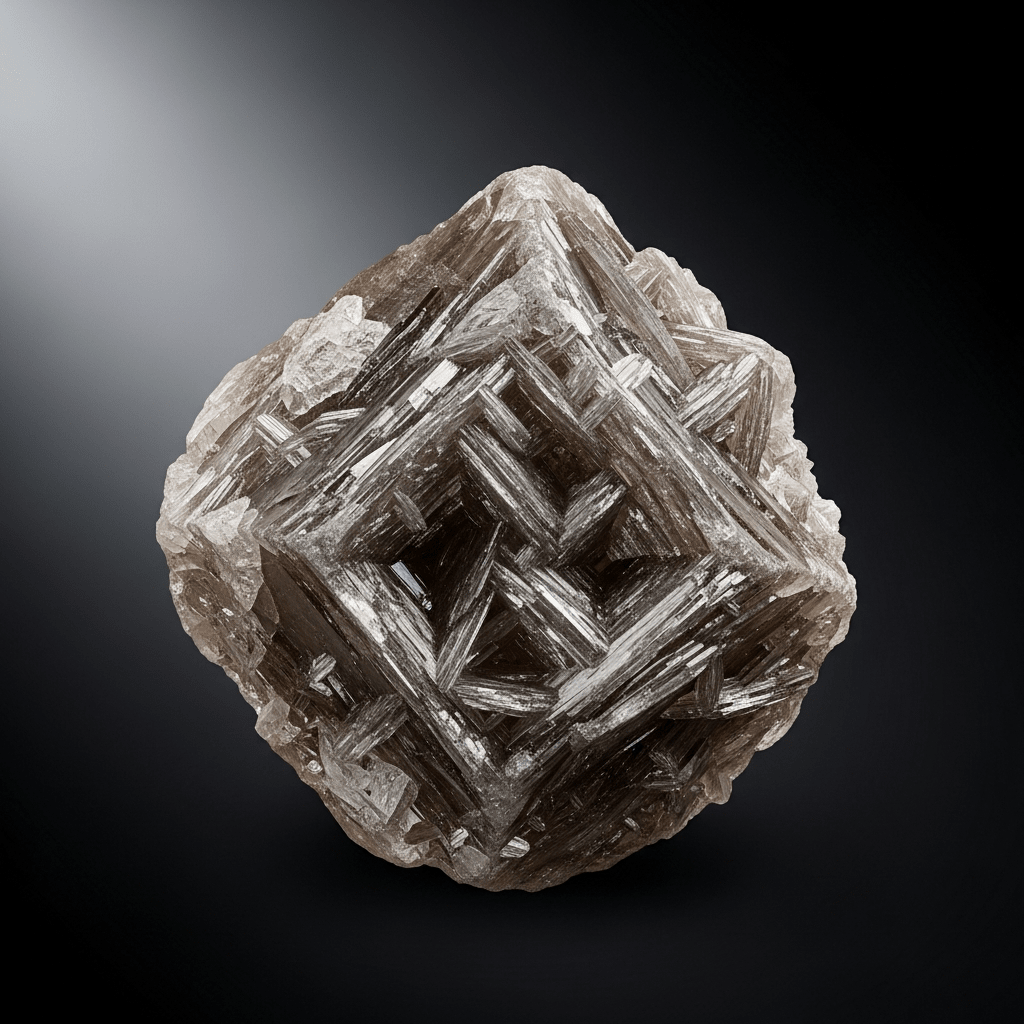
Muscovite
Muscovite is a common silicate mineral of the mica group, renowned for its silvery, flexible sheets and exceptional insulating properties.
Muscovite is a common silicate mineral of the mica group, renowned for its silvery, flexible sheets and exceptional insulating properties.
Muscovite's name traces back to "Muscovy glass," referencing its historical use as window glass in the Muscovy region of Russia during the 16th and 17th centuries. First formally described in Russia, muscovite was recognized by mineralogists in the late 18th century, though its practical use predates scientific classification. The mineral's enduring presence in mineralogy was cemented by its approval from the International Mineralogical Association (IMA).
Muscovite belongs to the mica group within the phyllosilicate class of minerals. It is classified under the Dana system as 71.02.01.02 and the Strunz system as 9.EC.15. As a phyllosilicate, muscovite's structure features sheets of silicate tetrahedra, a hallmark of the mica family, which includes other notable minerals like biotite and phlogopite.
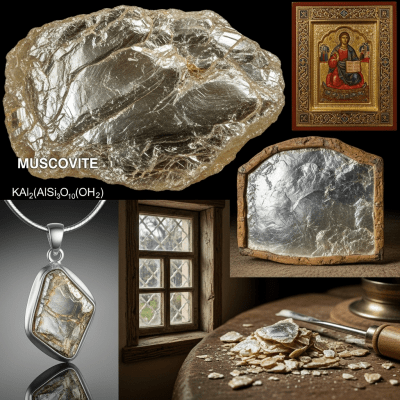
Muscovite typically appears as thin, silvery or pale-colored sheets with a pearly to vitreous luster. Its perfect basal cleavage allows it to split into flexible, transparent or translucent layers, often forming tabular crystals, foliated masses, or scaly aggregates. The mineral may display hues ranging from colorless and pale green to gray, yellow, brown, or rose, with a signature shimmering surface.
Thanks to its elasticity, transparency, and resistance to heat and electricity, muscovite serves as an excellent electrical and thermal insulator. Historically, it was used as a glass substitute in windows, and today it finds utility as a filler in paints, plastics, and rubber, as well as a shimmer agent in cosmetics. Its ability to split into thin sheets makes it easy to handle and process for industrial applications.
Bring this kind into your world illustrated posters, mugs, and shirts.
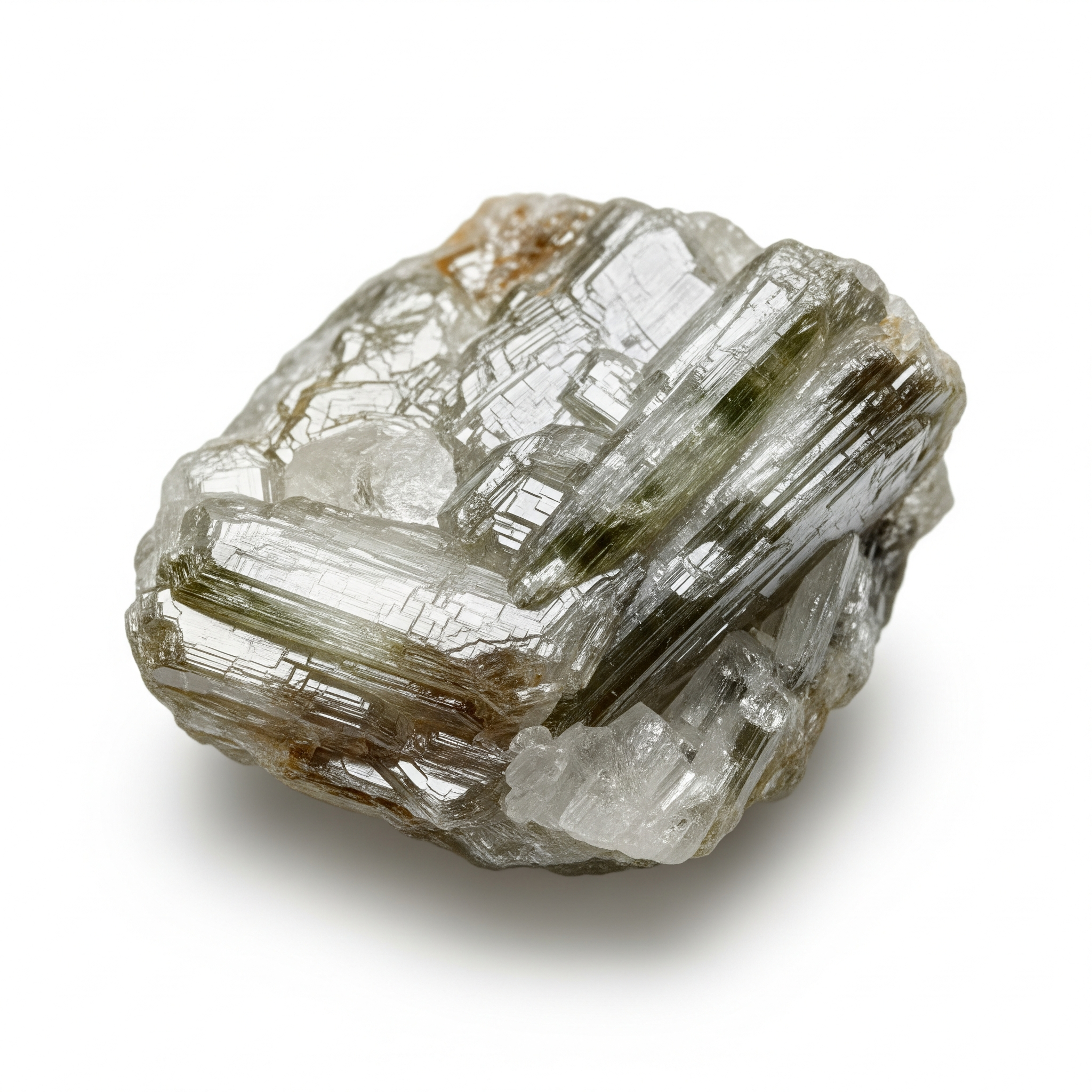
Archival print, museum-grade paper
Buy Poster
Stoneware mug, dishwasher safe
Buy Mug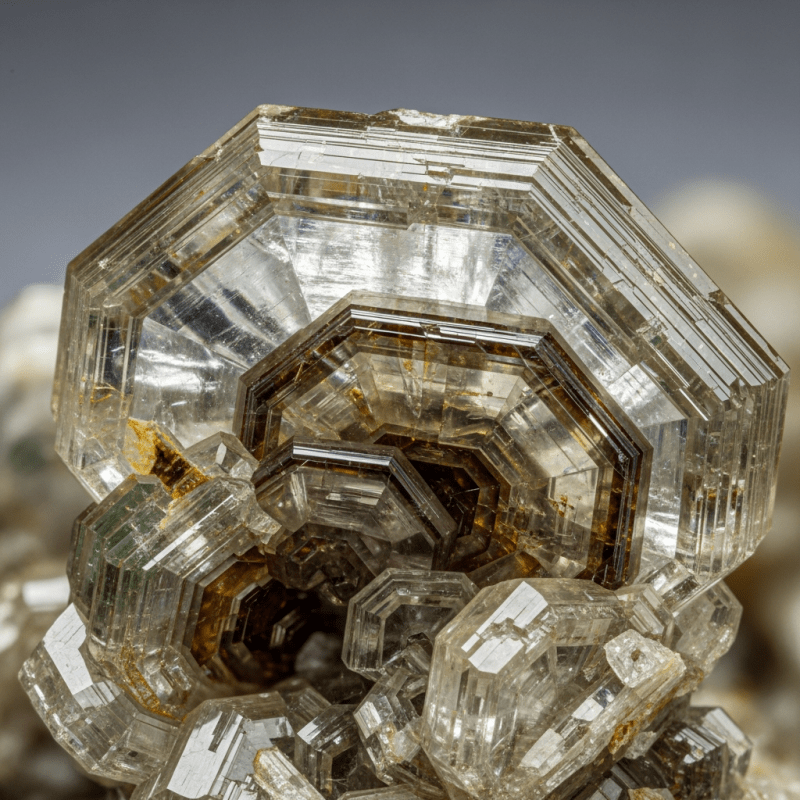
Soft cotton tee, unisex sizes
Buy ShirtMuscovite holds a unique place in cultural history, especially in Russia and Europe, where it was prized as "Muscovy glass" for window panes before the widespread availability of true glass. Its lustrous appearance has also made it a decorative mineral, featured in art, architecture, and ornamental objects. The mineral's legacy persists in its role as a symbol of ingenuity and resourcefulness in historical craftsmanship.
Muscovite's chemical formula is KAl₂(AlSi₃O₁₀)(OH)₂, making it a potassium aluminum silicate hydroxide. Its composition includes potassium (K), aluminum (Al), silicon (Si), oxygen (O), and hydroxide (OH).
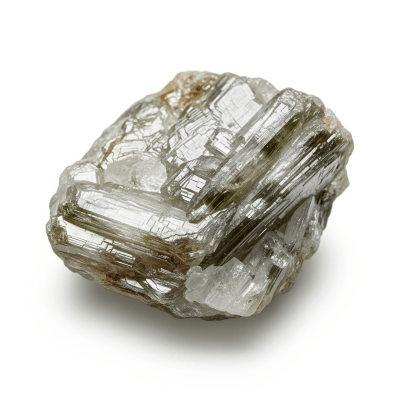
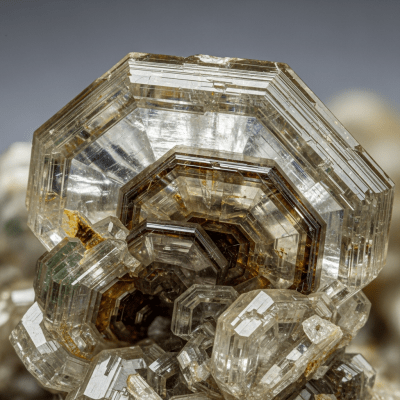
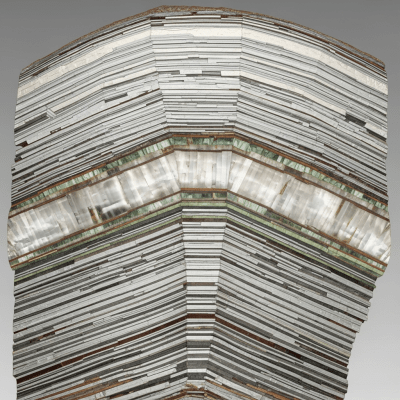
Muscovite crystallizes in the monoclinic crystal system. Its structure is characterized by sheets of silicate tetrahedra, which stack to form flexible layers—a defining trait of the mica group. This arrangement enables muscovite's perfect basal cleavage and its ability to split into thin, elastic sheets.
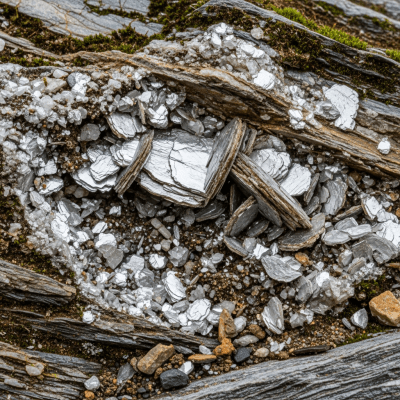
Muscovite is widespread in granites, pegmatites, schists, and gneisses, and also occurs as detrital grains in sedimentary rocks. Major localities include the Ural Mountains of Russia, Brazil, India, the United States (notably North Carolina and South Dakota), and Madagascar. It is commonly associated with granitic and metamorphic rocks, especially mica schists and gneisses.