Malachite
Malachite is a vibrant green copper carbonate mineral, celebrated for its striking banded patterns and historical role as both pigment and ornamental stone.
Malachite is a vibrant green copper carbonate mineral, celebrated for its striking banded patterns and historical role as both pigment and ornamental stone.
Malachite’s story stretches back to ancient civilizations, with its use documented in Egypt, Greece, and Rome for pigments and decoration. Its formal scientific description emerged in the late 18th century, but its discovery predates written history. The mineral forms as a secondary product in the oxidation zones of copper deposits, often marking the transformation of copper ores over time. Today, malachite is recognized as an approved mineral species by the International Mineralogical Association, though its true origins are lost to antiquity.
Malachite belongs to the copper carbonate hydroxide group, classified scientifically under Dana 16a.02.03.01 and Strunz 5.DA.10. It is a secondary mineral, typically forming in the oxidized zones of copper ore deposits. Within mineral taxonomy, malachite is distinct for its chemical composition and monoclinic crystal system, and is closely associated with minerals like azurite and cuprite.
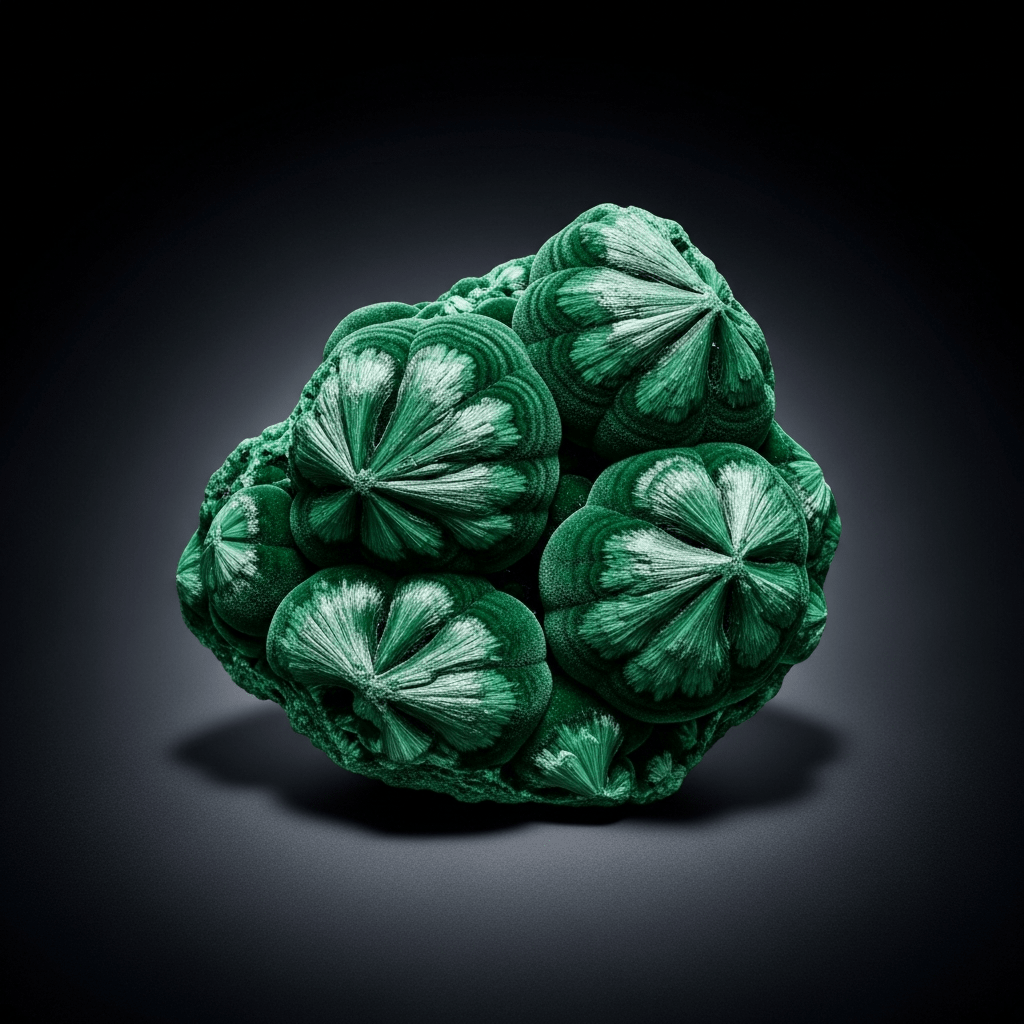
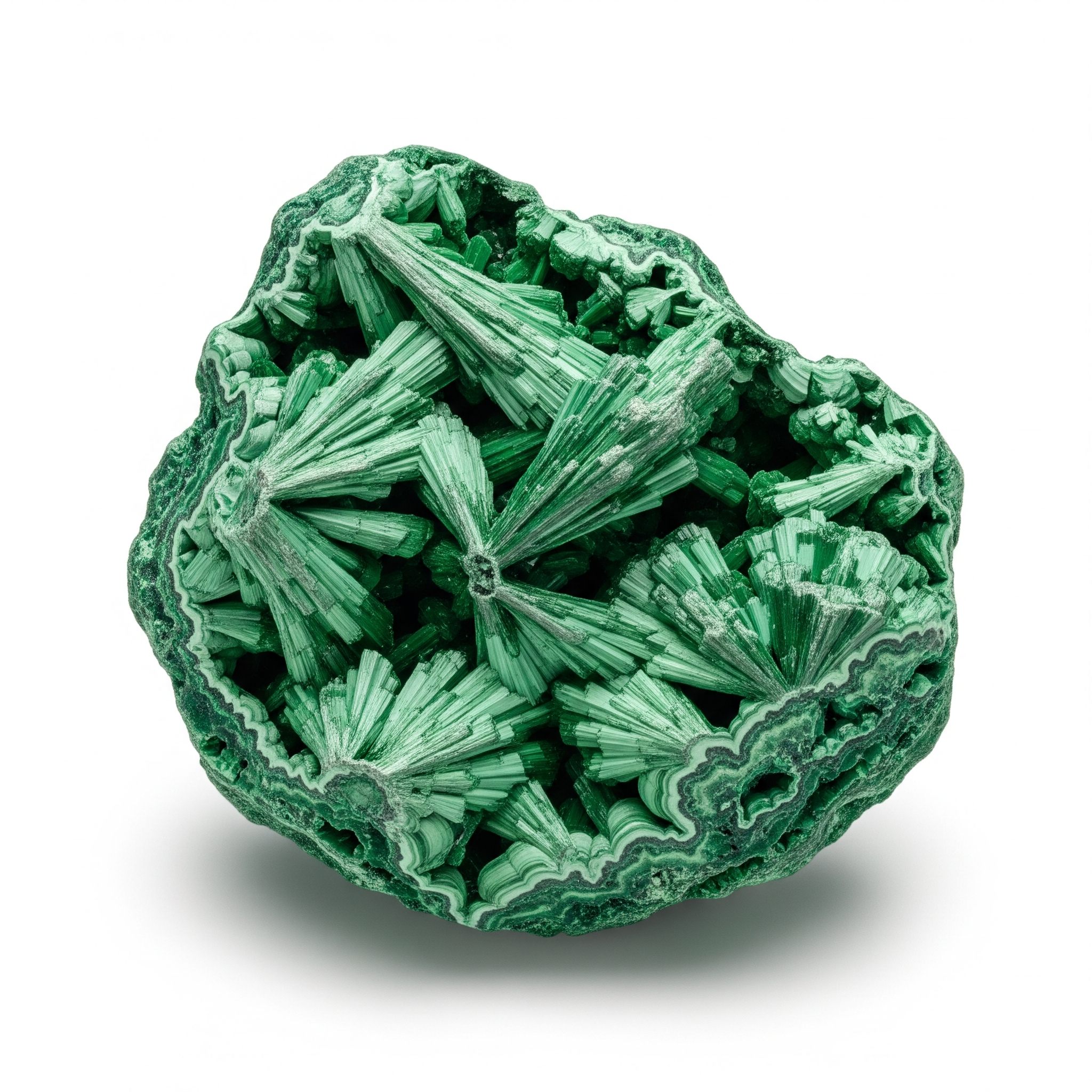
Malachite is instantly recognizable by its vivid green color, which ranges from light to dark and often displays dramatic banding or concentric patterns. Specimens typically exhibit botryoidal (grape-like), stalactitic, fibrous, or massive forms, with surfaces that can appear silky or vitreous. The mineral’s pale green streak and perfect cleavage in one direction add to its distinctive look, while its translucent to opaque nature gives depth to its ornamental appeal.
Malachite interacts with its environment as a secondary copper mineral, forming through the weathering and oxidation of copper ores. For humans, its primary utility lies in ornamentation—fashioned into cabochons, beads, vases, and inlay work. Historically, malachite was ground into powder for green pigments in art and decoration. Though it is a minor copper ore, its softness and sensitivity to acids and heat limit industrial extraction, favoring its use in jewelry and decorative arts.
Bring this kind into your world illustrated posters, mugs, and shirts.
Archival print, museum-grade paper
Buy Poster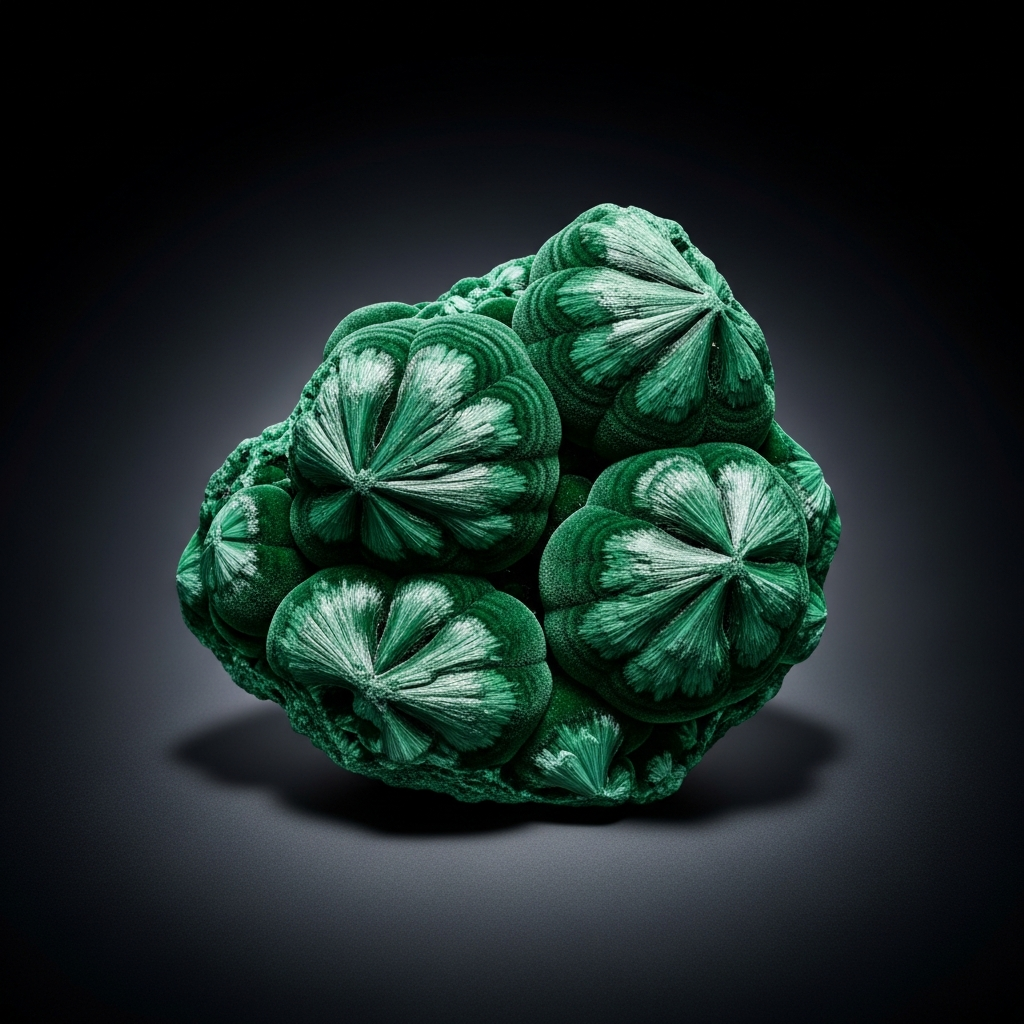
Stoneware mug, dishwasher safe
Buy Mug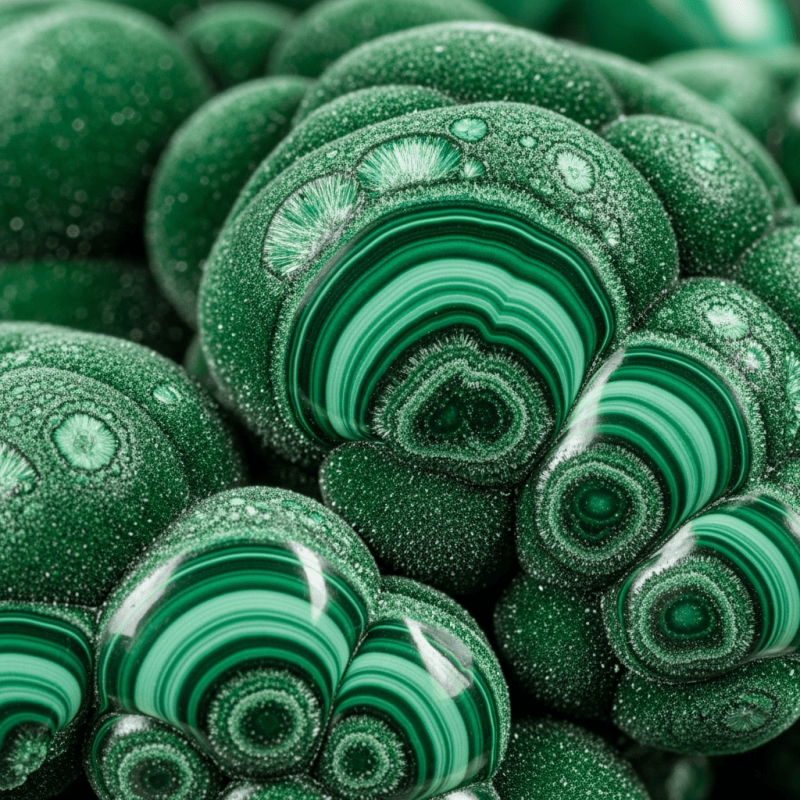
Soft cotton tee, unisex sizes
Buy ShirtMalachite’s rich green hues have made it a symbol of beauty and luxury across cultures. Ancient Egyptians used it in jewelry and amulets, believing it offered protection. In Russia, malachite adorned palaces and cathedrals, most famously in the Malachite Room of the Winter Palace. Its presence in art, architecture, and artifacts has cemented malachite as a mineral of cultural and historical importance, often associated with transformation and healing in folklore.
Malachite’s chemical formula is Cu₂CO₃(OH)₂, making it a copper carbonate hydroxide mineral. Its vivid green color is due to the presence of copper ions within its structure.
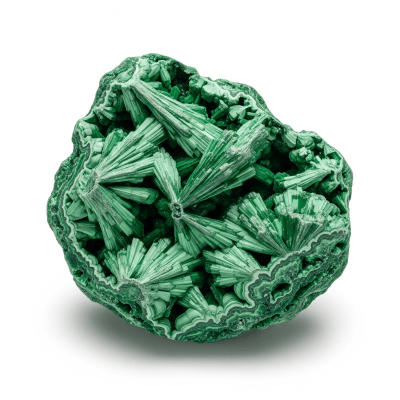
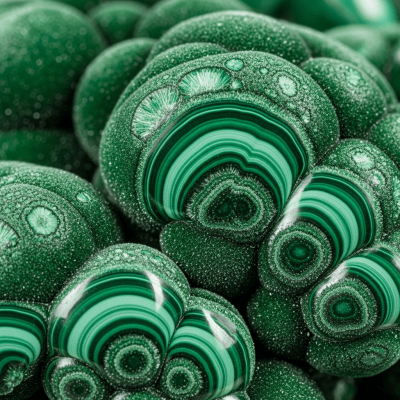
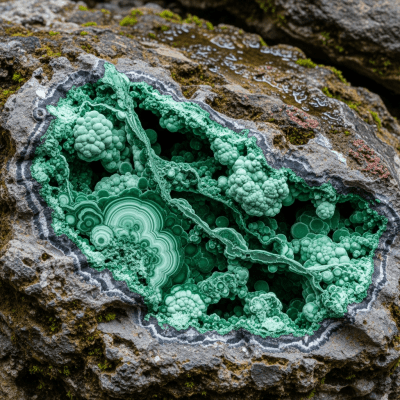
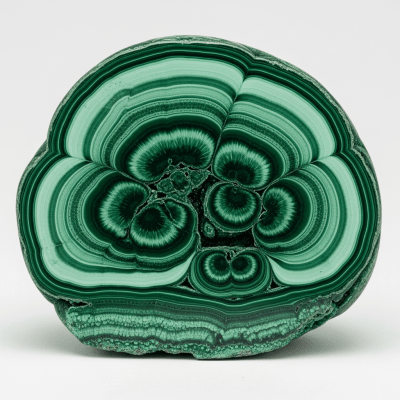
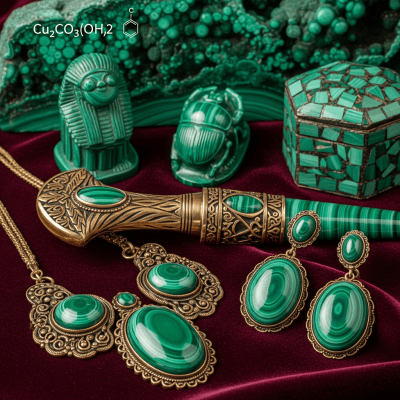
Malachite crystallizes in the monoclinic crystal system. While well-formed crystals are rare, it typically appears in botryoidal, fibrous, or stalactitic aggregates, with internal structures that reveal concentric banding and radiating fibers.
Malachite is relatively soft, with a Mohs hardness of 3.5–4. Its color is a vivid, often banded green, and it displays a vitreous to silky luster. The mineral is translucent to opaque, has perfect cleavage in one direction, uneven fracture, and leaves a pale green streak. It is sensitive to acids, heat, and ammonia, requiring gentle handling.
Malachite forms as a secondary mineral in the oxidized zones of copper ore deposits. It is commonly found in limestone and sandstone, as well as in sedimentary, metamorphic, and igneous rocks. Notable localities include the Ural Mountains, Democratic Republic of Congo, Namibia, Australia, and Arizona, where it often occurs alongside other copper minerals like azurite and cuprite.
Malachite is also known as green copper carbonate, mountain green, and malachit (German). While no formally recognized mineral varieties exist, malachite is sometimes distinguished by locality, such as “Ural malachite.” Marketing names may appear in gem and ornamental contexts, but these do not denote scientific differences.
Malachite’s industrial role is limited; it is a minor copper ore but not a primary source. Its main applications are ornamental—carved into jewelry, beads, vases, and decorative inlays. Historically, it was ground for use as a green pigment in paints and frescoes. Today, malachite is prized in lapidary arts and interior design, with its unique patterns making it a favorite for collectors and artisans.
Among the most celebrated malachite specimens are the massive blocks from the Ural Mountains, used in the columns and vases of Russian palaces such as the Winter Palace’s Malachite Room. Ancient Egyptian artifacts and Roman frescoes also feature malachite as pigment and decoration, highlighting its enduring appeal across centuries and cultures.