Magnetite
Magnetite is a naturally occurring iron oxide mineral famed for its intense magnetism and vital role as a principal iron ore in geology and industry.
Magnetite is a naturally occurring iron oxide mineral famed for its intense magnetism and vital role as a principal iron ore in geology and industry.
Magnetite’s story begins in antiquity, with its magnetic properties recognized by ancient Greek and Chinese civilizations. Its name is rooted in Magnesia, a region of Thessaly, Greece, historically associated with magnetic stones. Used for navigation and scientific curiosity, magnetite’s formal mineralogical description predates modern institutions, yet it remains an IMA-approved mineral species with a legacy that stretches across centuries and continents.
Magnetite belongs to the iron oxide mineral group and is classified as Fe₃O₄. In the Dana system, it is listed as 7.2.1.1, and in the Strunz system as 4.BB.05. Its isometric (cubic) crystal system and ferrimagnetic properties distinguish it within the broader taxonomy of minerals, making it a key species for both scientific and industrial contexts.
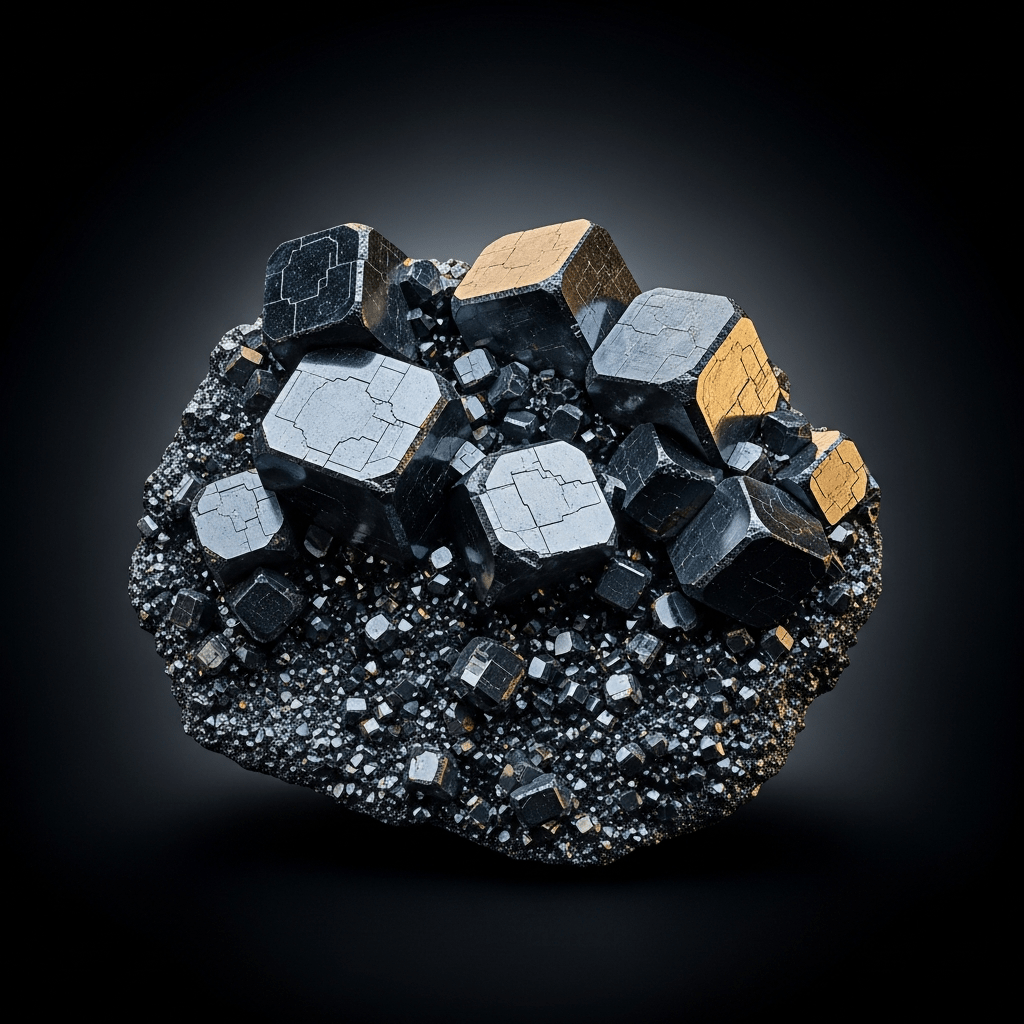
Magnetite is instantly recognizable by its black to brownish-black color and metallic to submetallic luster. It often forms octahedral or dodecahedral crystals, but massive and granular habits are also common. The mineral is opaque, with a black streak and a notably high density, giving specimens a substantial heft in hand.
Magnetite’s defining trait is its strong magnetism, making it unique among common minerals. This property underpins its use in magnetic separation processes, early compasses, and modern recording media. As the world’s most important iron ore, magnetite is extensively mined for steel production and also serves as a catalyst in chemical reactions.
Bring this kind into your world illustrated posters, mugs, and shirts.

Archival print, museum-grade paper
Buy Poster
Stoneware mug, dishwasher safe
Buy Mug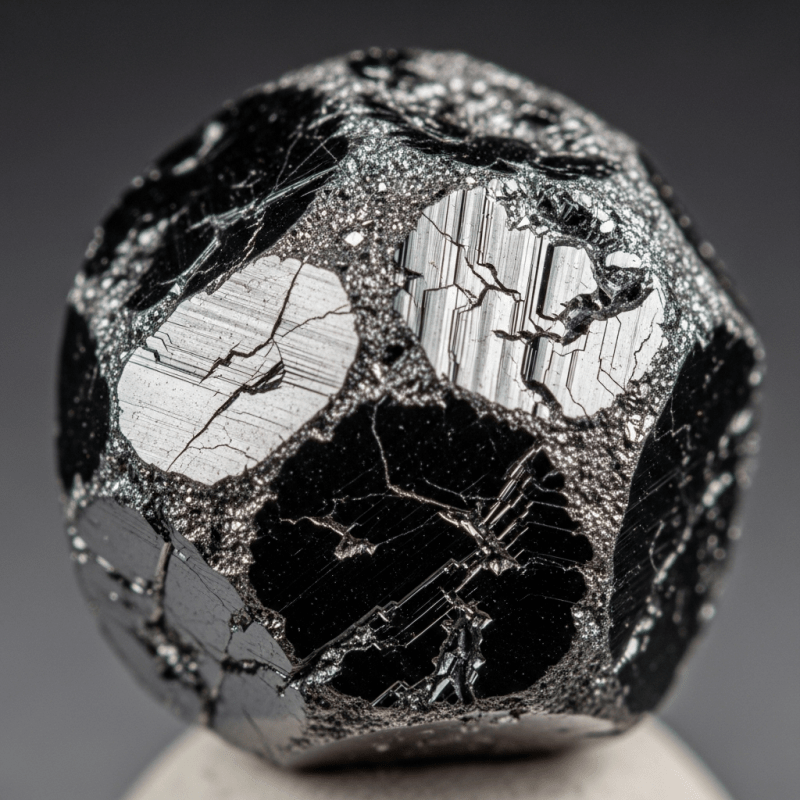
Soft cotton tee, unisex sizes
Buy ShirtMagnetite’s magnetic allure has woven it into the fabric of history and culture. Known as "lodestone" when naturally magnetized, it was pivotal in ancient navigation, guiding explorers and traders across seas. Its presence in Greek and Chinese societies is reflected in early scientific writings and folklore, symbolizing discovery and direction.
Magnetite’s chemical formula is Fe₃O₄, representing an iron(II,III) oxide composed of both ferrous and ferric iron ions bonded with oxygen.
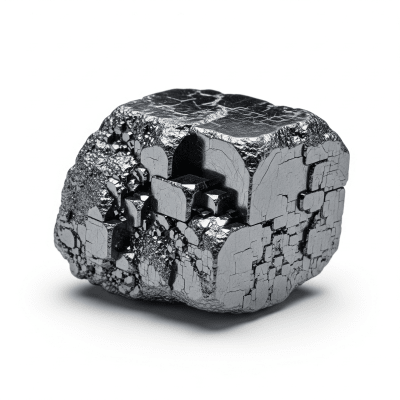
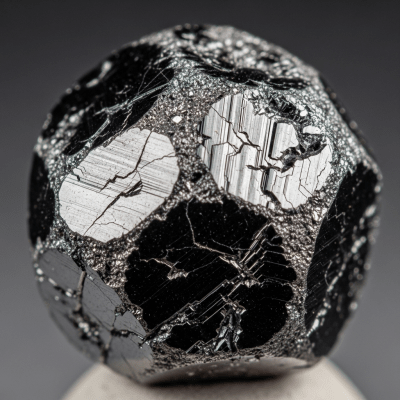
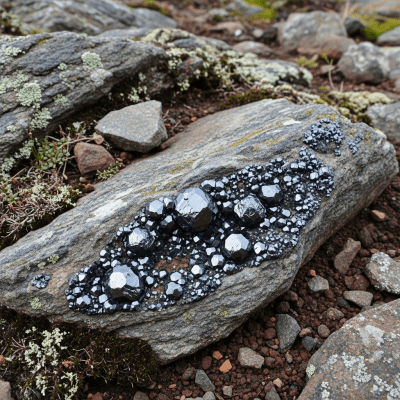

Magnetite crystallizes in the isometric (cubic) crystal system, most often forming octahedral or dodecahedral crystals. This ordered atomic arrangement is fundamental to its magnetic properties and physical stability.
Magnetite is widespread in nature, appearing in igneous rocks such as gabbro and diorite, metamorphic rocks like schist and banded iron formations, and as detrital grains in sedimentary deposits. It is commonly associated with hematite, ilmenite, and pyrite, and plays a crucial role in the formation and evolution of iron-rich geological environments.
Magnetite is the world’s principal iron ore, essential for steel production. Its magnetic properties enable its use in magnetic separation processes, data recording media, and as a catalyst in chemical manufacturing. Historically, magnetite’s natural magnetism made it invaluable for early compasses and navigation tools.
Historically significant lodestones—naturally magnetized magnetite—were treasured in ancient Greece and China for navigation. Notable museum specimens include large octahedral crystals from Sweden and massive magnetite deposits from the Kiruna mine, which have shaped both scientific understanding and industrial development.