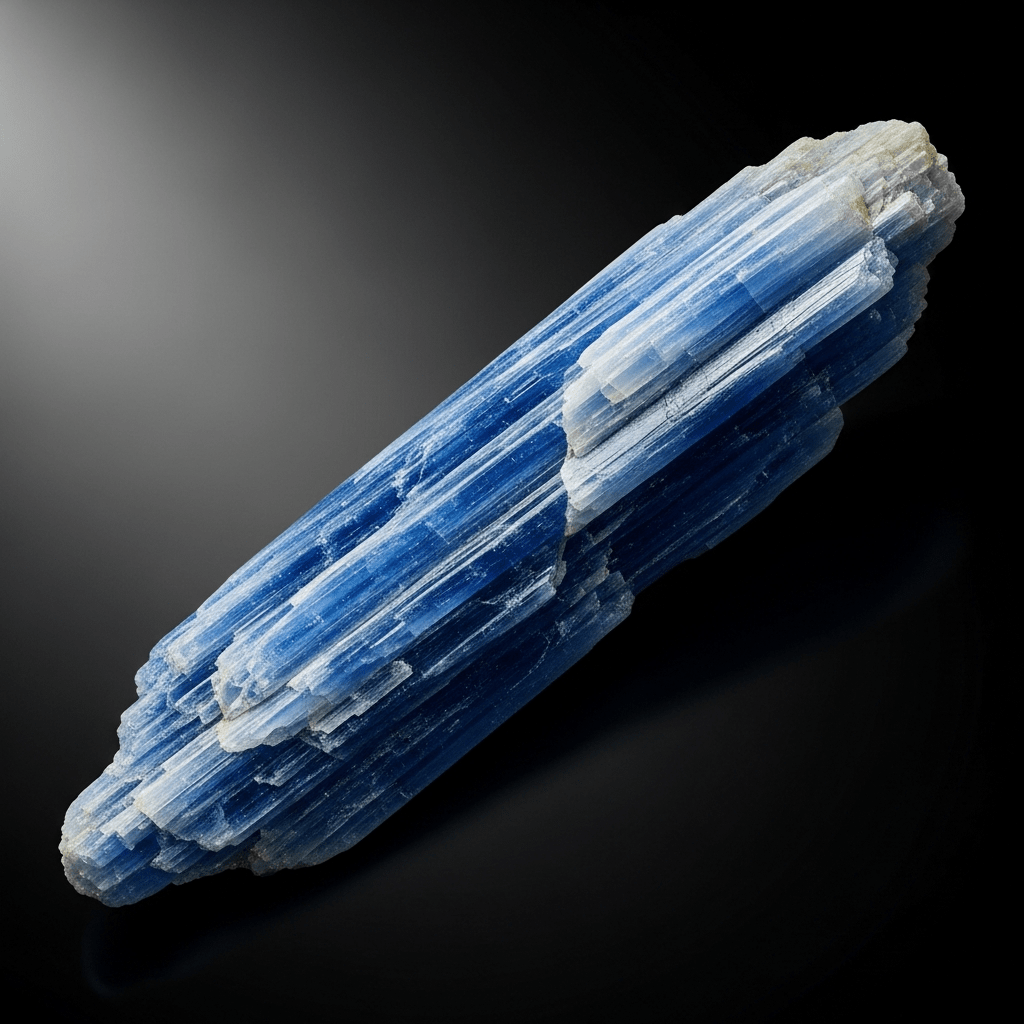
Kyanite
Kyanite is a striking blue aluminosilicate mineral renowned for its unique anisotropic hardness and its role as an indicator of metamorphic geological processes.
Kyanite is a striking blue aluminosilicate mineral renowned for its unique anisotropic hardness and its role as an indicator of metamorphic geological processes.
Kyanite was first described in 1789 by Abraham Gottlob Werner, who named it after the Greek word kyanos, meaning "deep blue." Its discovery is rooted in European mineralogical studies of the late 18th century, and its recognition has evolved through the work of leading authorities such as the International Mineralogical Association. The mineral's historical pedigree is closely tied to the advancement of metamorphic petrology and mineral classification in Europe.
Kyanite belongs to the aluminosilicate group, with the chemical formula Al2SiO5. It is classified under the Dana system as 52.03.01.01 and the Strunz system as 9.AF.15. As a polymorph, kyanite shares its composition with andalusite and sillimanite, but differs in crystal structure and formation conditions. Its status as an index mineral makes it essential for identifying metamorphic grade and pressure in geological studies.
Kyanite typically forms elongated, bladed crystals that are most often a vivid blue, ranging from pale to deep shades. It can also appear in gray, green, or white hues. The mineral exhibits a vitreous to pearly luster and is generally translucent to transparent. Its perfect cleavage in one direction and white streak are diagnostic, while its crystals often display a distinctive, striated texture along their length.
Kyanite is valued for its resistance to heat and chemical weathering, making it an important material in industrial applications such as ceramics, porcelain, and foundry molds. Its unique hardness—varying depending on crystal orientation—also lends itself to use in abrasives. In geology, kyanite's presence is a key indicator of high-pressure, low-temperature metamorphic environments, aiding in the interpretation of rock formation histories.
Bring this kind into your world illustrated posters, mugs, and shirts.
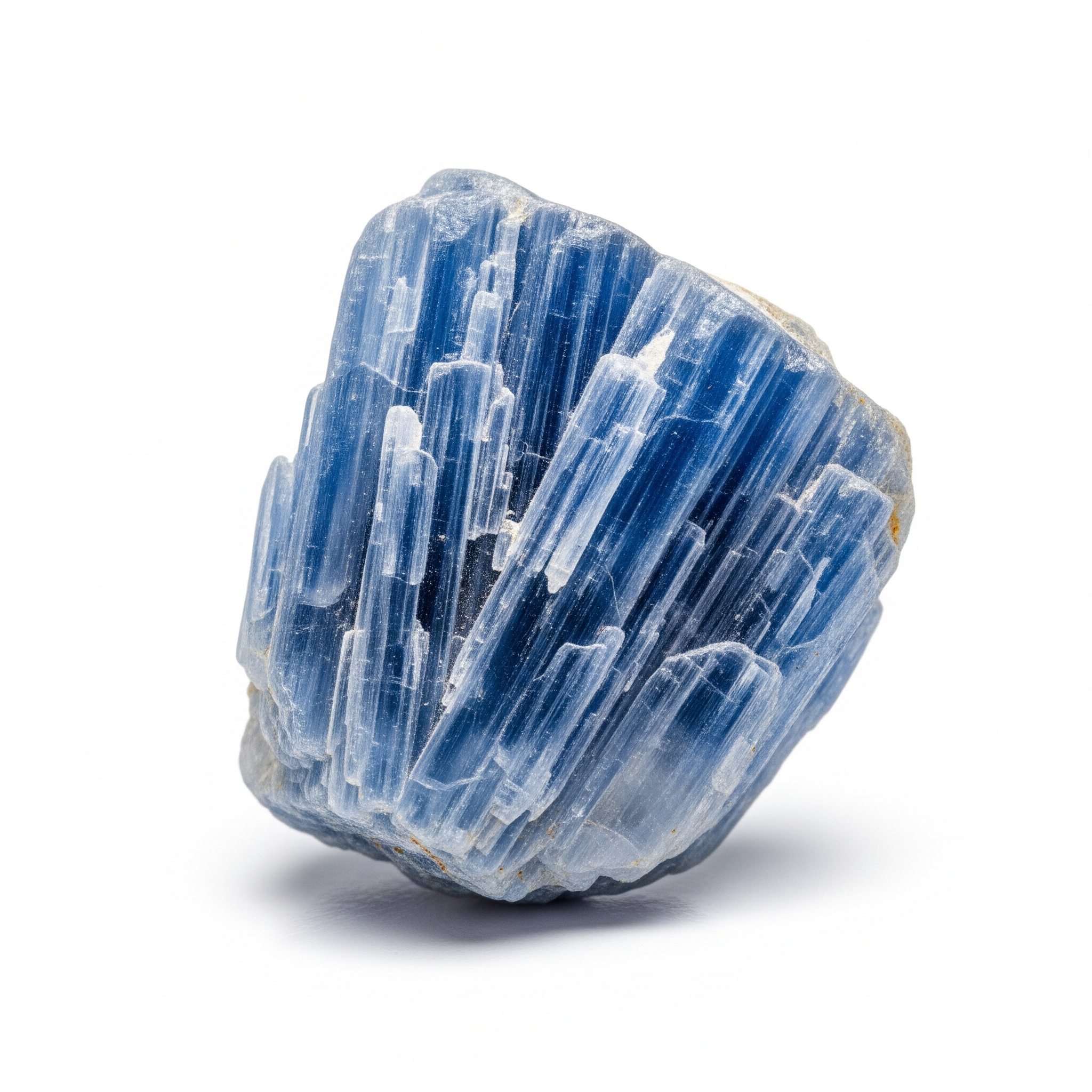
Archival print, museum-grade paper
Buy Poster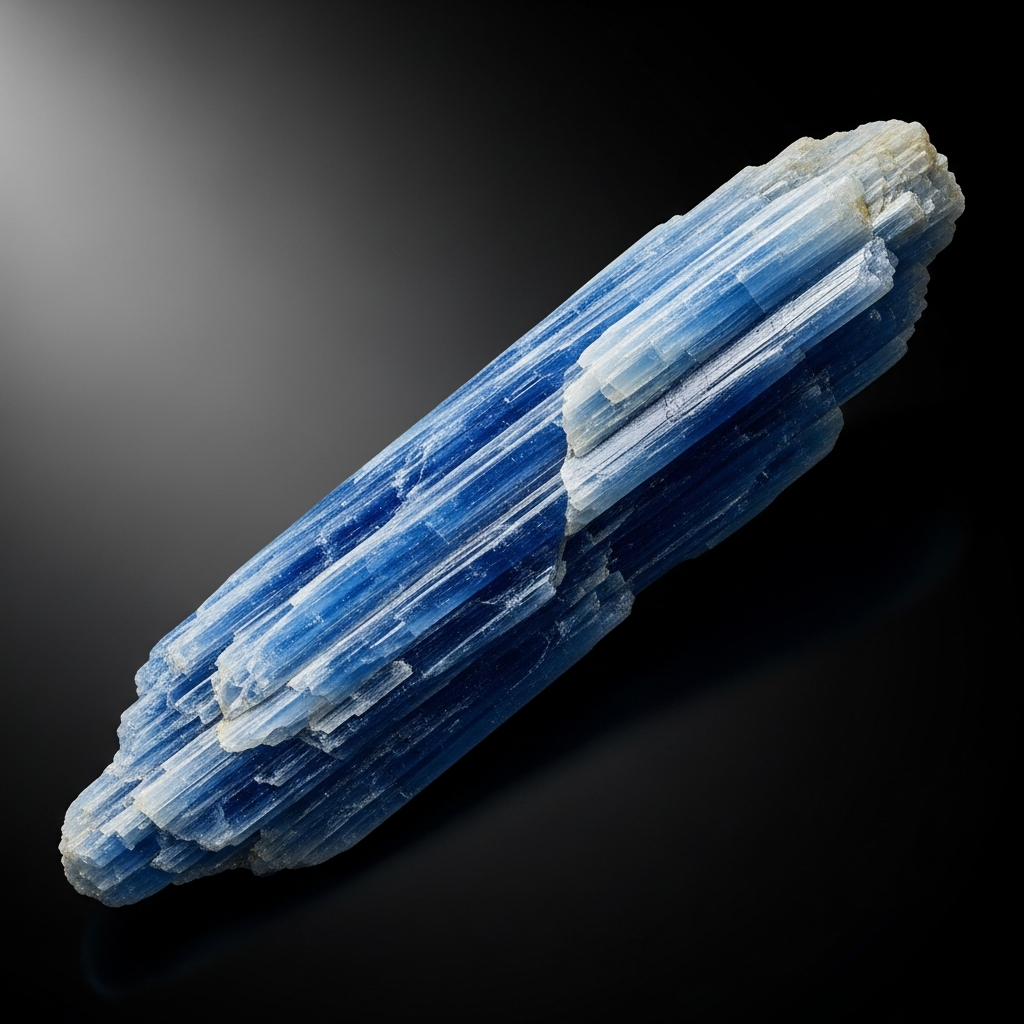
Stoneware mug, dishwasher safe
Buy Mug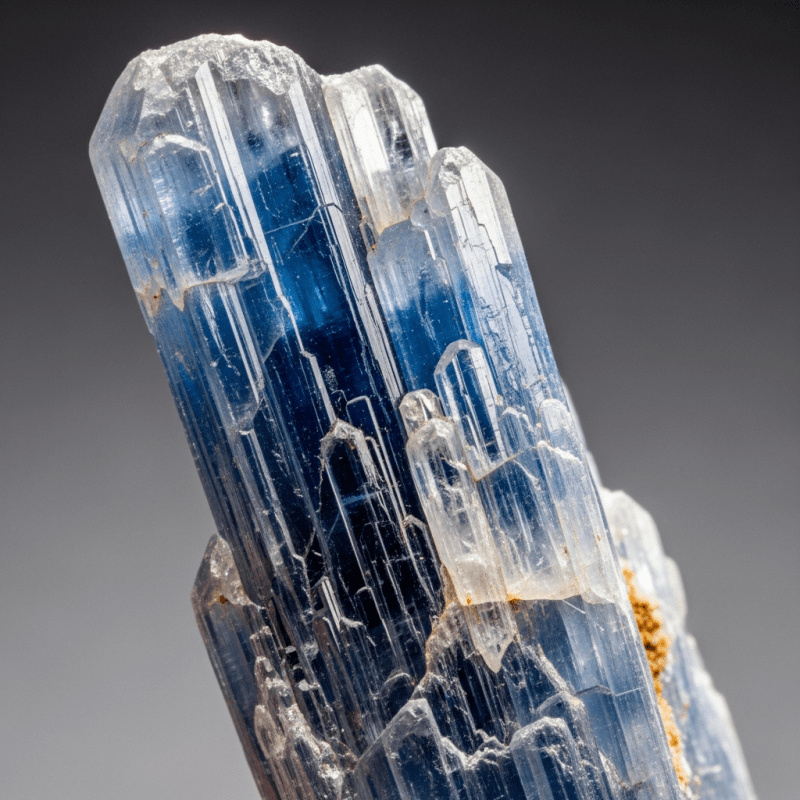
Soft cotton tee, unisex sizes
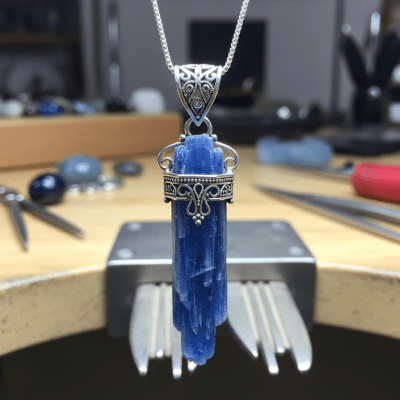
Buy ShirtWhile kyanite is primarily recognized for its scientific and industrial importance, it has found minor roles in jewelry and as a collector's gemstone due to its captivating blue color. The mineral's name, derived from ancient Greek, reflects its deep connection to human appreciation of color and form. In metaphysical circles, kyanite is sometimes associated with tranquility and alignment, though such uses remain niche compared to its geological significance.
Kyanite's chemical formula is Al2SiO5, classifying it as an aluminosilicate mineral composed of aluminum, silicon, and oxygen.
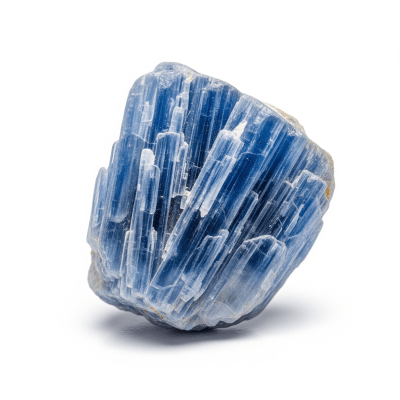
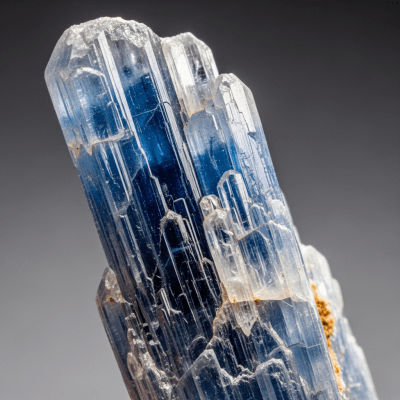
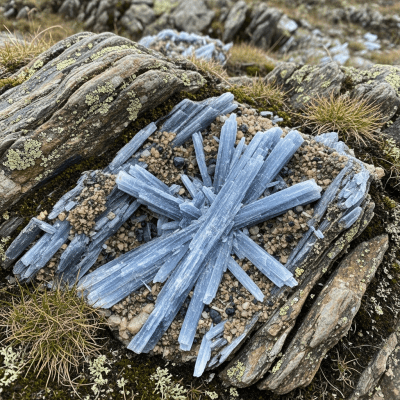
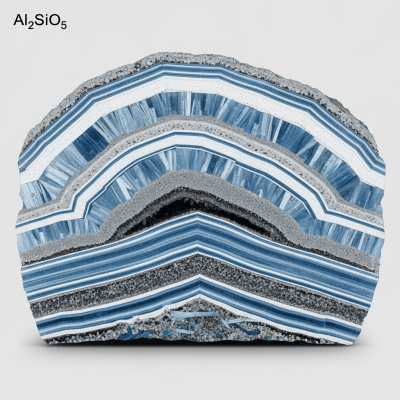
Kyanite crystallizes in the triclinic crystal system, forming elongated, bladed crystals. Its atomic arrangement is distinct from its polymorphs and contributes to its pronounced directional hardness.
Kyanite is notable for its anisotropic hardness: 4.5–5 on the Mohs scale along the length of the crystal, and 6.5–7 across it. It typically appears blue, but may also be gray, green, or white. The mineral has a vitreous to pearly luster, is translucent to transparent, and leaves a white streak. It exhibits perfect cleavage in one direction and is brittle, fracturing easily.
Kyanite is most commonly found in high-pressure, low-temperature metamorphic rocks such as schists and gneisses. It often occurs alongside minerals like quartz, staurolite, garnet, and mica. Major deposits are located in regions including Virginia and Georgia (USA), Brazil, Switzerland, Nepal, and India, making it a global mineral of geological significance.
These historical synonyms reflect kyanite's dual hardness and blue coloration, though they are largely obsolete in modern mineralogy.
Kyanite is prized in industry for its high resistance to heat and chemical attack. It is used in the manufacture of refractory products, ceramics, porcelain, and foundry molds. Its hardness and stability at elevated temperatures make it valuable in the production of kiln furniture and as a component in abrasives. Minor uses include its application as a gemstone and in specialty glass formulations.
Kyanite specimens should be handled with care due to their brittleness and perfect cleavage, which make them prone to breaking. Store in padded containers, avoid exposure to strong acids or bases, and clean gently with lukewarm water and a soft brush. Avoid ultrasonic cleaners and harsh chemicals, as these may damage the crystal structure.
Notable kyanite specimens have been collected from the United States, Brazil, and Nepal, with large, vividly colored crystals prized by collectors and museums. While individual specimens may not have specific names, their presence in major mineralogical collections highlights kyanite's importance and aesthetic appeal.