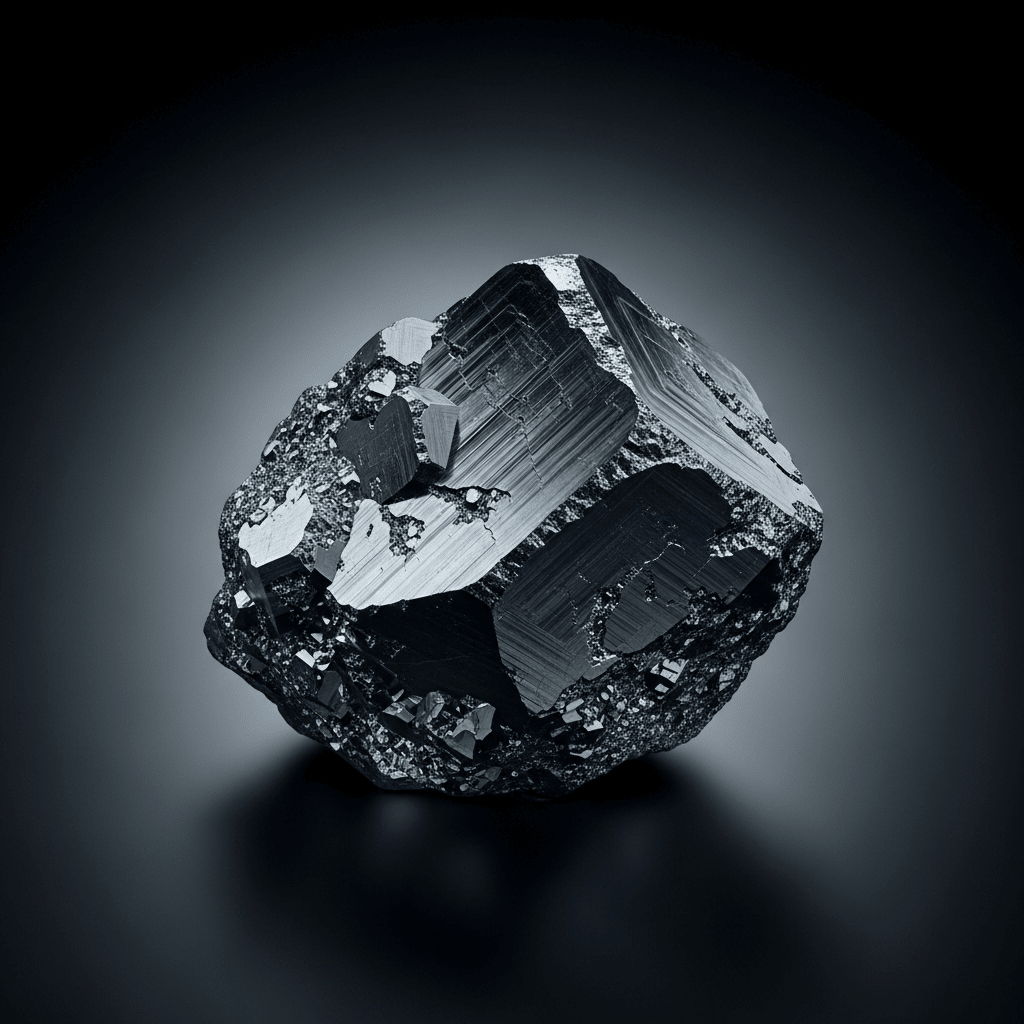
Ilmenite
Ilmenite is a black to steel-gray titanium-iron oxide mineral, renowned as the world’s principal source of titanium.
Ilmenite is a black to steel-gray titanium-iron oxide mineral, renowned as the world’s principal source of titanium.
Ilmenite was first described in 1827 by Gustav Rose, who named it after the Ilmen Mountains in the Southern Urals of Russia, where the mineral was originally discovered. Since its identification, ilmenite has been recognized as a distinct mineral species and approved by the International Mineralogical Association (IMA), with its name reflecting its historical roots in one of Russia’s notable geological regions.
Ilmenite belongs to the oxide mineral group, specifically as an iron titanium oxide. It is classified under the Dana system as 4.3.5.1 and the Strunz system as 4.CB.05, placing it among minerals defined by their oxygen content and metallic elements. Its crystalline structure and chemical composition distinguish it within the broader family of titanium-bearing minerals.
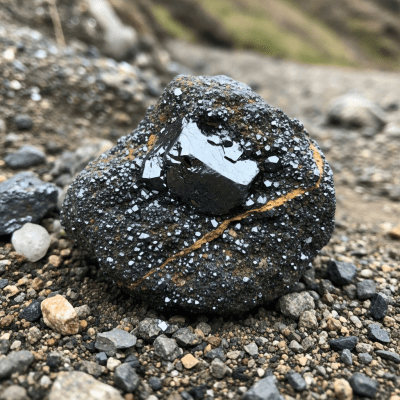
Ilmenite typically appears as massive, granular, or tabular crystals, with a striking black to steel-gray color and a submetallic to metallic luster. The mineral is opaque, and its surfaces may show a subtle sheen. Its streak ranges from black to brownish-red, and its physical form is often robust and heavy, reflecting its relatively high density.
Ilmenite is weakly magnetic and highly resistant to weathering, though it can alter to leucoxene or rutile under certain geological conditions. Its primary function is as the leading ore for titanium extraction, serving as a cornerstone in the production of titanium dioxide pigments, aerospace alloys, and other industrial materials. Occasionally, it is also mined for its iron content.
Bring this kind into your world illustrated posters, mugs, and shirts.

Archival print, museum-grade paper
Buy Poster
Stoneware mug, dishwasher safe
Buy Mug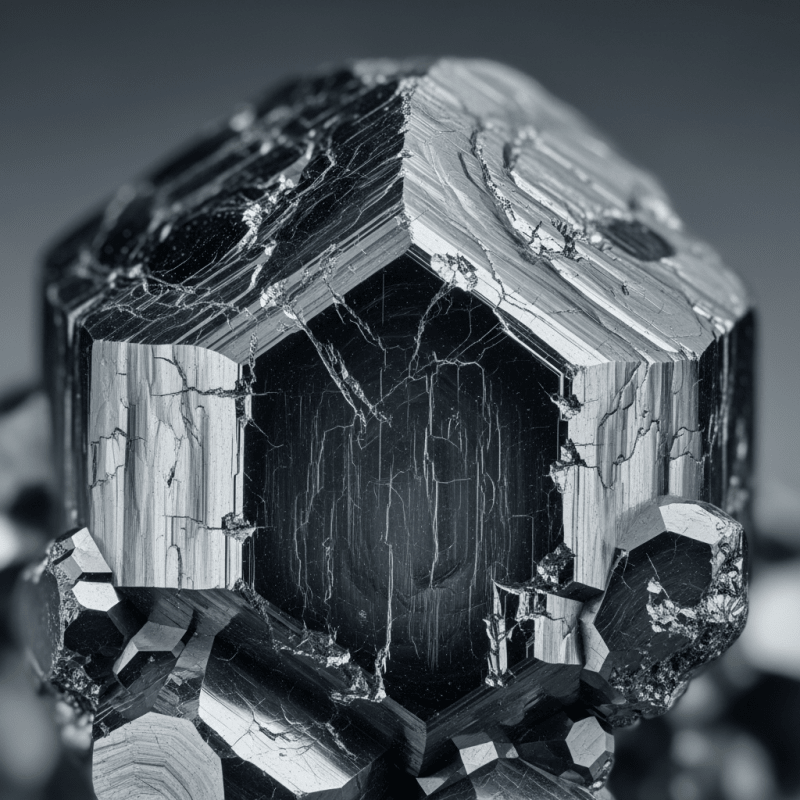
Soft cotton tee, unisex sizes
Buy ShirtWhile ilmenite itself is not widely referenced in art or mythology, its industrial importance has shaped modern technology and manufacturing. The mineral’s role as a source of titanium—a metal crucial for aerospace, medical, and pigment industries—gives it indirect cultural significance through its impact on innovation and everyday products.
Ilmenite’s chemical formula is FeTiO3, indicating it is composed of iron (Fe), titanium (Ti), and oxygen (O). This simple oxide structure is key to its role as a titanium ore.
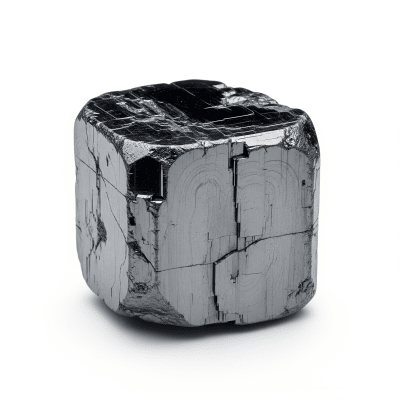
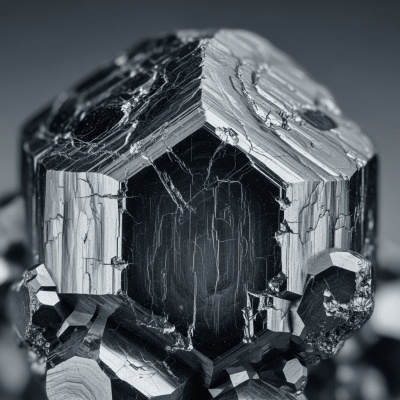
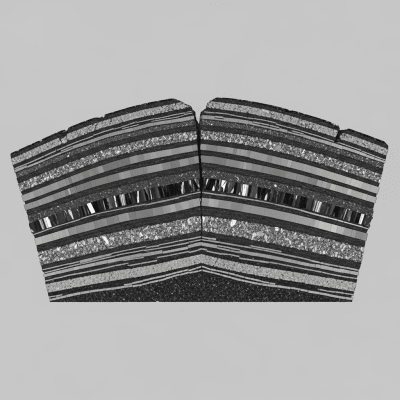

Ilmenite crystallizes in the trigonal system, specifically in the space group R-3. Its atomic arrangement is characteristic of oxide minerals, with iron and titanium atoms alternating within a layered structure.
Ilmenite is abundant in igneous rocks such as gabbro, norite, and anorthosite, and also found in metamorphic rocks and placer deposits formed by erosion. Major localities include the Ilmen Mountains in Russia, Allard Lake in Quebec, Canada, and the Bushveld Complex in South Africa, making it a globally significant mineral for both geology and industry.
Ilmenite is the world’s leading source of titanium, which is refined for use in titanium dioxide pigments—essential for paints, plastics, and paper. Titanium metal derived from ilmenite is vital for aerospace alloys, medical implants, and high-performance engineering. The mineral is also occasionally mined for iron, though this is a secondary use.
Ilmenite specimens should be stored in a dry environment to prevent alteration to leucoxene or rutile. Clean gently with a soft brush and avoid harsh chemicals, as weathering may affect surface integrity over time. Handle with care to preserve crystal faces and avoid abrasion.
Notable specimens of ilmenite include those from its type locality in the Ilmen Mountains, Russia, and large crystals from Allard Lake, Quebec, Canada. The Bushveld Complex in South Africa also yields significant deposits, some of which have contributed to major industrial advancements in titanium production.