Hematite
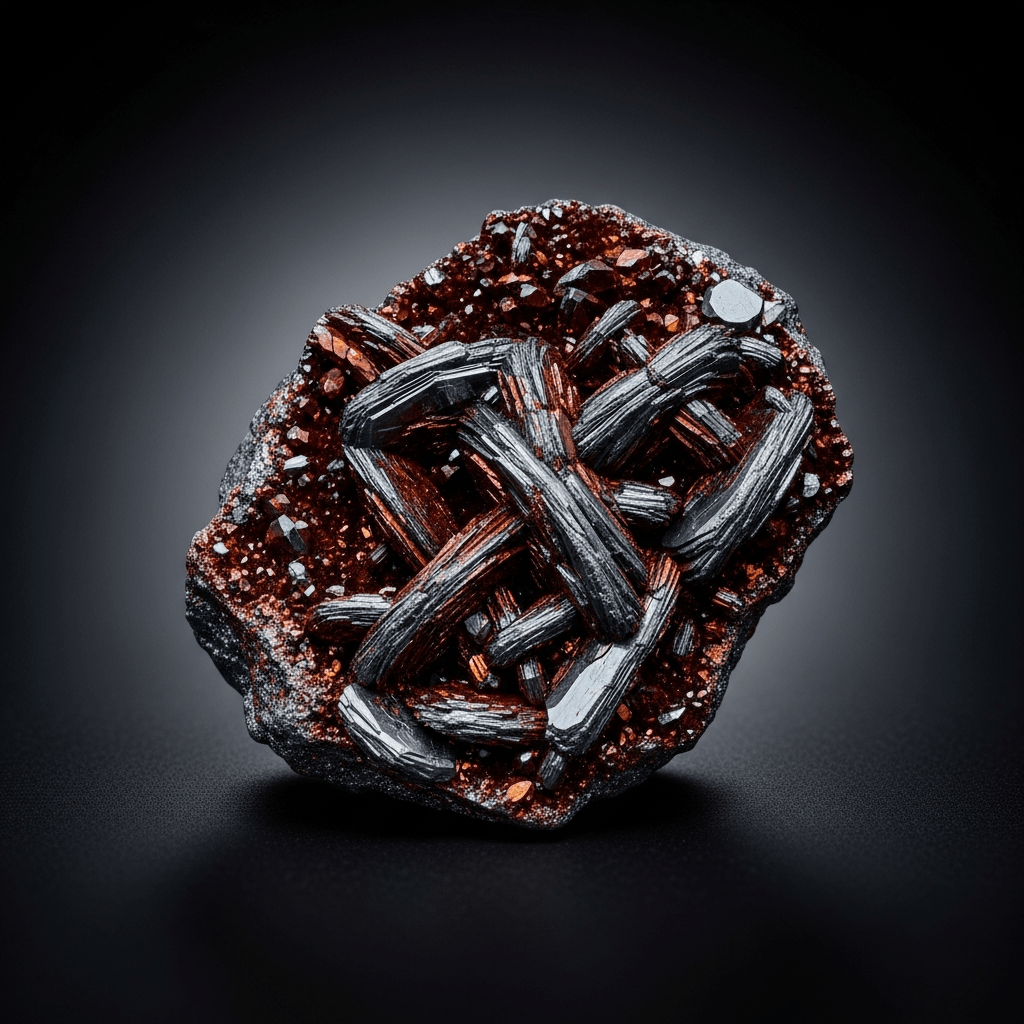
Hematite is a naturally occurring iron oxide mineral, renowned as the principal source of iron and easily recognized by its metallic to earthy luster and deep red to steel-gray coloration.
Hematite is a naturally occurring iron oxide mineral, renowned as the principal source of iron and easily recognized by its metallic to earthy luster and deep red to steel-gray coloration.
Hematite’s story stretches back to prehistory, when its rich red pigment was used in cave art by early humans. Formally described in the 18th century, hematite has been recognized and utilized for thousands of years, both as a pigment and as a vital ore for iron extraction. Its name derives from the Greek word for blood, reflecting its characteristic red streak. Today, hematite is classified as an IMA-approved mineral species, with a legacy rooted in both art and industry.
Hematite belongs to the iron oxide mineral group and is classified under the Dana system as 04.03.05.01 and the Strunz system as 04.CB.05. Its chemical formula, Fe₂O₃, places it among oxide minerals, and it is a key member of the broader family of minerals that contain oxygen bonded to metallic elements. Hematite’s trigonal crystal system further distinguishes it within mineralogical taxonomy.
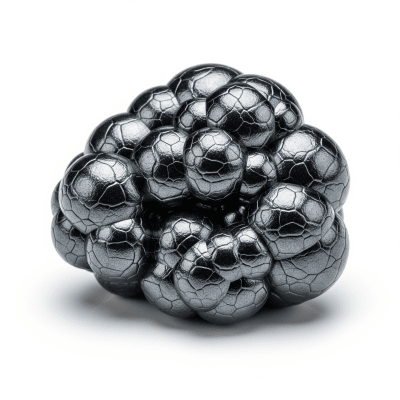
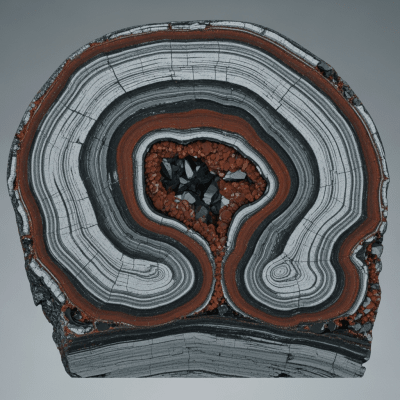
Hematite displays a striking range of appearances, from steel-gray, black, or silver crystalline forms with a metallic sheen, to earthy, reddish-brown masses. Its surface may be sparkling (“specularite”), rounded (“kidney ore”), or arranged in rosette-like aggregates (“iron rose”). Regardless of form, hematite is opaque and leaves a vivid red to reddish-brown streak when scratched across a surface—a hallmark trait for identification.
As the principal ore of iron, hematite is indispensable to steel production and global industry. Its dense, opaque nature also makes it valuable for radiation shielding. In addition, hematite’s red pigment, known as “red ochre,” has been used for millennia in art and decoration. Weakly magnetic only after heating, hematite is resistant to weathering and oxidation, ensuring its stability in a variety of geological environments.
Bring this kind into your world illustrated posters, mugs, and shirts.

Archival print, museum-grade paper
Buy Poster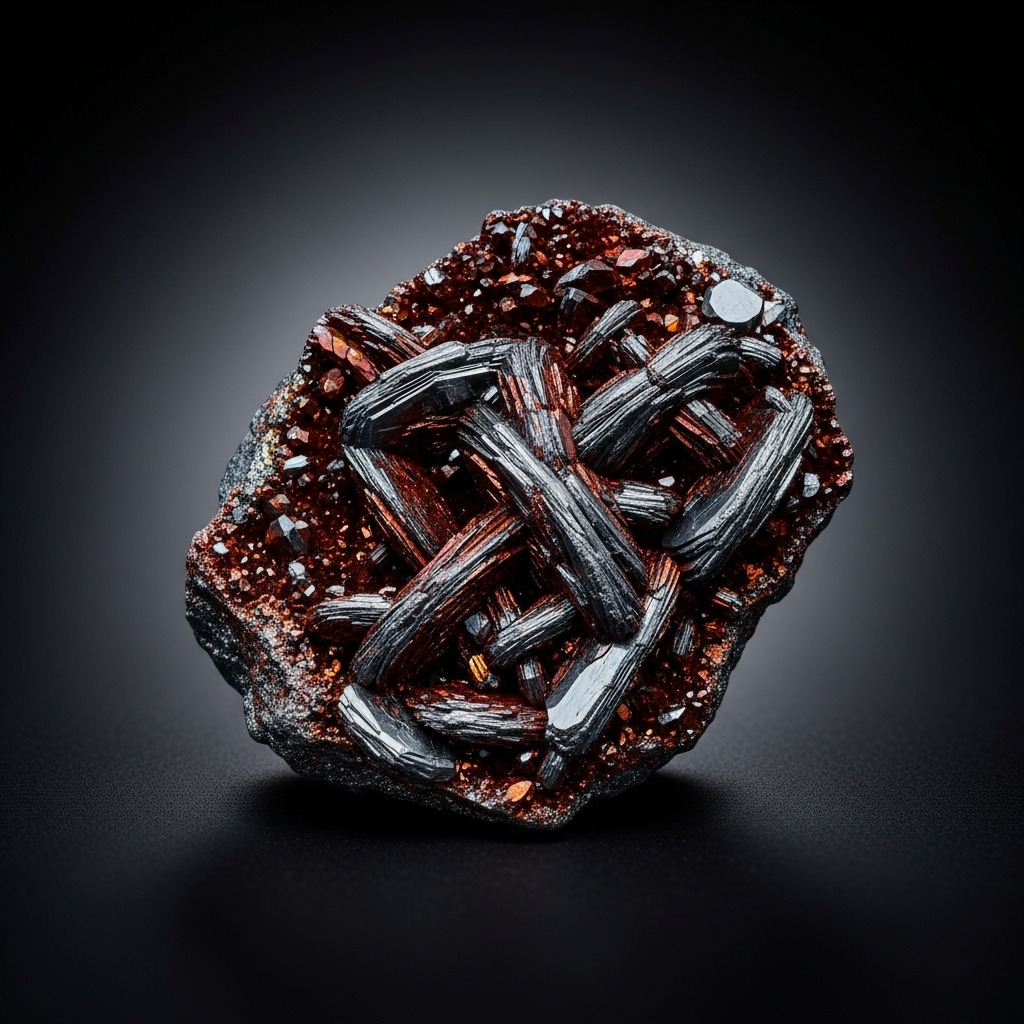
Stoneware mug, dishwasher safe
Buy Mug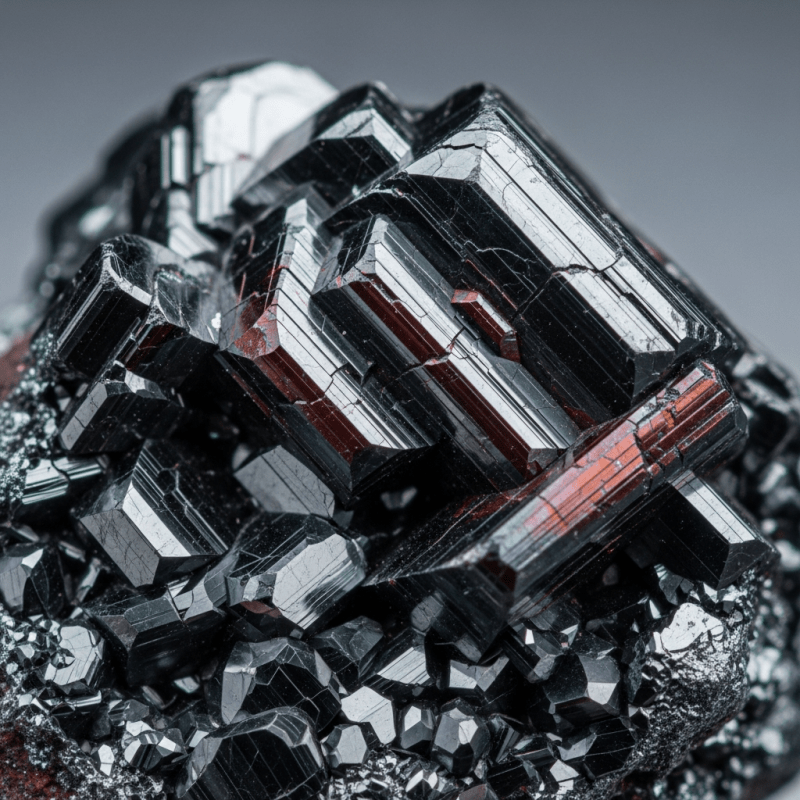
Soft cotton tee, unisex sizes
Buy ShirtHematite’s deep red pigment has marked human history, appearing in prehistoric cave art and ancient burial sites as “red ochre.” Revered for its color and symbolism, hematite has been fashioned into jewelry and amulets, believed to offer protection or healing. Its enduring role as both pigment and gemstone highlights its cultural resonance across civilizations.
Hematite’s chemical formula is Fe₂O₃, representing iron(III) oxide. Each molecule contains two iron atoms and three oxygen atoms, making it a pure iron oxide mineral.
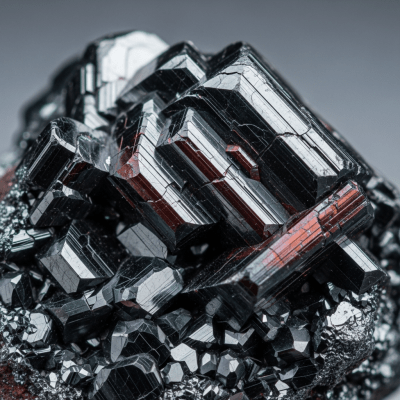
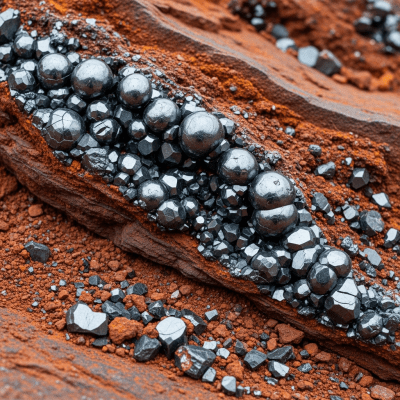

Hematite crystallizes in the trigonal system, specifically within the hexagonal scalenohedral class. Its atomic arrangement produces distinctive crystal habits, including tabular, platy, or rosette-like aggregates known as “iron rose.”
Hematite is globally abundant, with major deposits in Brazil, Australia, Russia, China, India, and the United States. It forms in sedimentary banded iron formations, hydrothermal veins, metamorphic rocks, and as a weathering product of other iron minerals. Associated rocks include sandstones, volcanic rocks, and especially banded iron formations, where hematite is a dominant component.
Hematite is the world’s principal ore of iron, essential for steel manufacturing. Its dense, opaque nature makes it valuable for radiation shielding in medical and industrial contexts. As “red ochre,” hematite has served as a pigment in paints and cosmetics since ancient times. It is also fashioned into jewelry and decorative objects for its metallic sheen and rich color.
Notable hematite specimens include massive “kidney ore” from Cumbria, England, sparkling “specularite” crystals from Minas Gerais, Brazil, and banded iron formations from Western Australia. Hematite found on Mars has also gained fame for its implications regarding the planet’s geological history and past water activity.