Halite
Halite is the naturally occurring mineral form of sodium chloride (NaCl), best known as rock salt and essential to both Earth’s geology and human civilization.
Halite is the naturally occurring mineral form of sodium chloride (NaCl), best known as rock salt and essential to both Earth’s geology and human civilization.
Halite’s origins trace back to the evaporation of ancient seas and saline lakes, where concentrated brines crystallized into vast deposits over geological time. Its name is rooted in the Greek word halos, meaning salt, and its formal recognition as a mineral species dates to the systematic studies of the 18th and 19th centuries. The International Mineralogical Association (IMA) now classifies halite as a canonical mineral, with notable historical contributions from early mineralogists such as Abraham Gottlob Werner.
Halite belongs to the evaporite group of minerals, formed through the evaporation of saline waters. It is classified under the Dana code 03.01.02.01 and Strunz code 03.AA.20, reflecting its simple chemical composition and cubic crystal structure. As a member of the halide class, halite is distinguished by its sodium and chloride ions arranged in a highly ordered lattice.
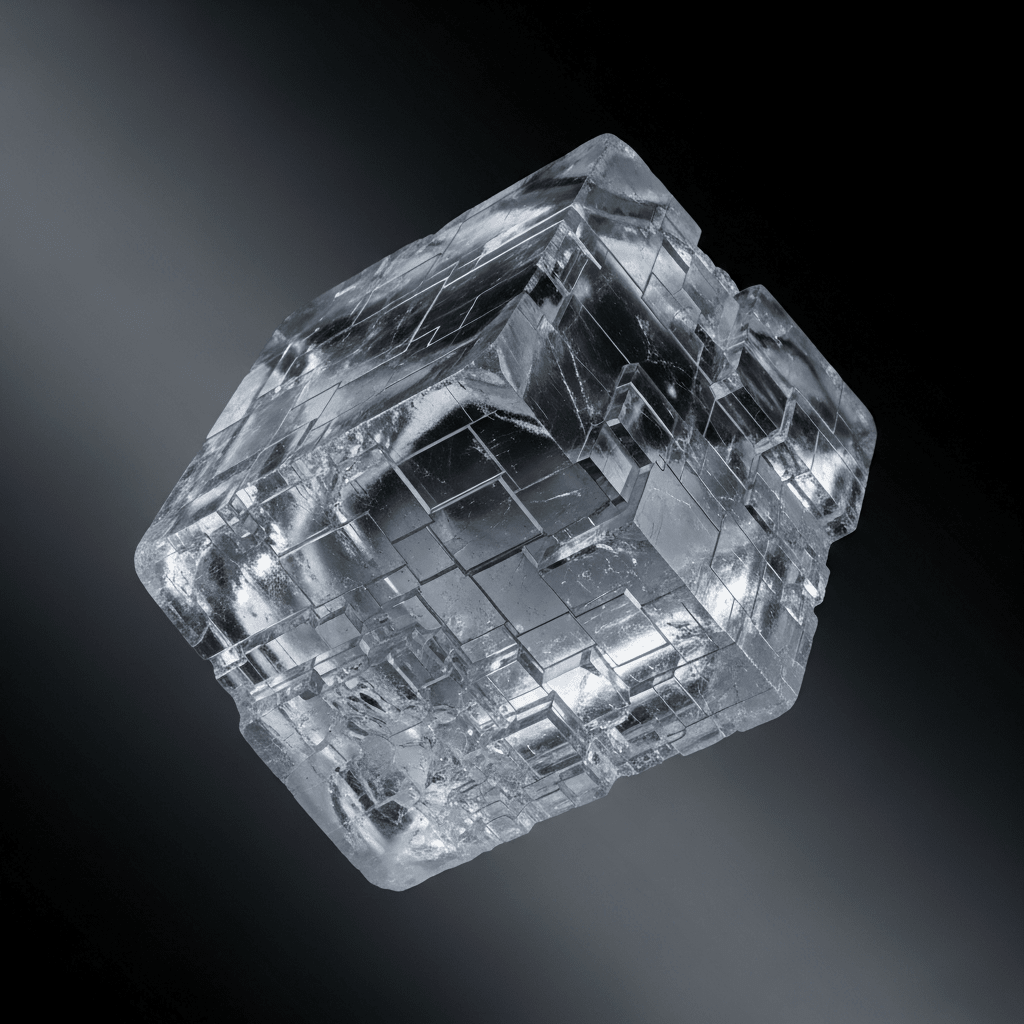
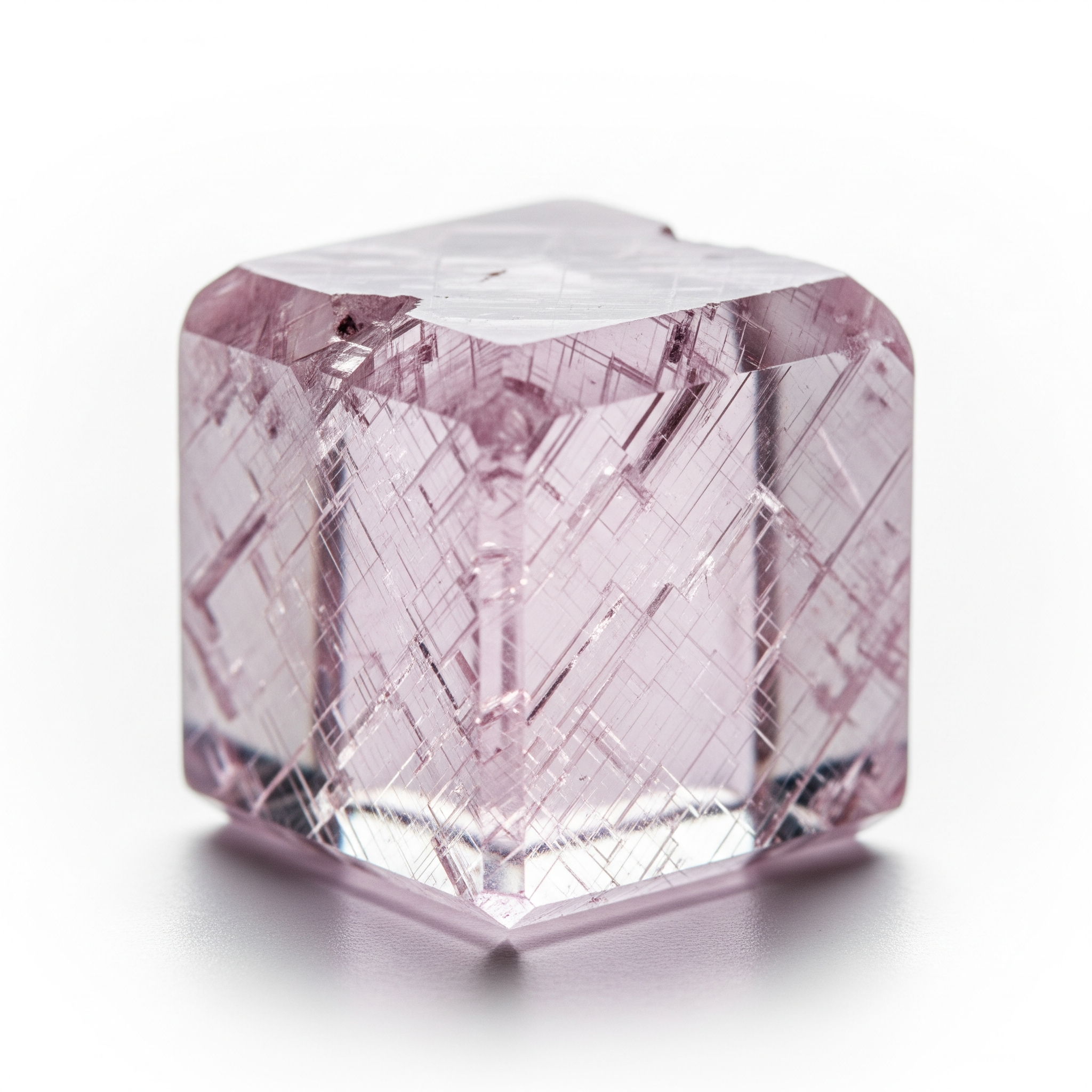
Halite typically forms transparent to translucent cubic crystals, often appearing colorless or white. However, trace impurities can lend shades of blue, pink, yellow, or gray. Its surfaces are glassy (vitreous) and smooth, and it is renowned for its perfect cubic cleavage, which allows it to break into neat, blocky fragments. The mineral is soft, fragile, and dissolves easily in water, with a distinctive salty taste if sampled.
Halite’s most familiar role is as table salt, a staple in human diet and food preservation. Beyond culinary use, it is vital in chemical manufacturing, water softening, and de-icing roads. In nature, halite influences groundwater salinity and the formation of unique geological structures. Its solubility and softness make it easy to mine and process, but also limit its durability in humid environments.
Bring this kind into your world illustrated posters, mugs, and shirts.
Archival print, museum-grade paper
Buy Poster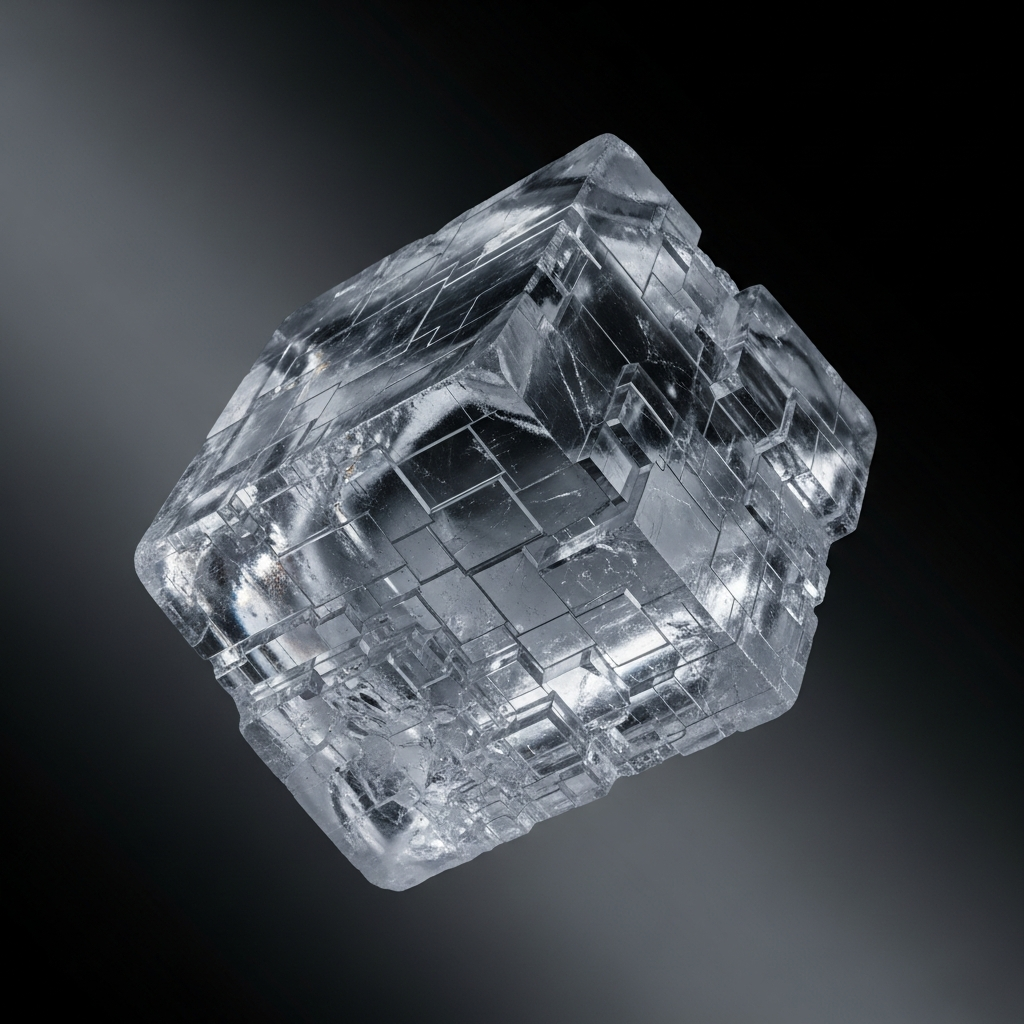
Stoneware mug, dishwasher safe
Buy Mug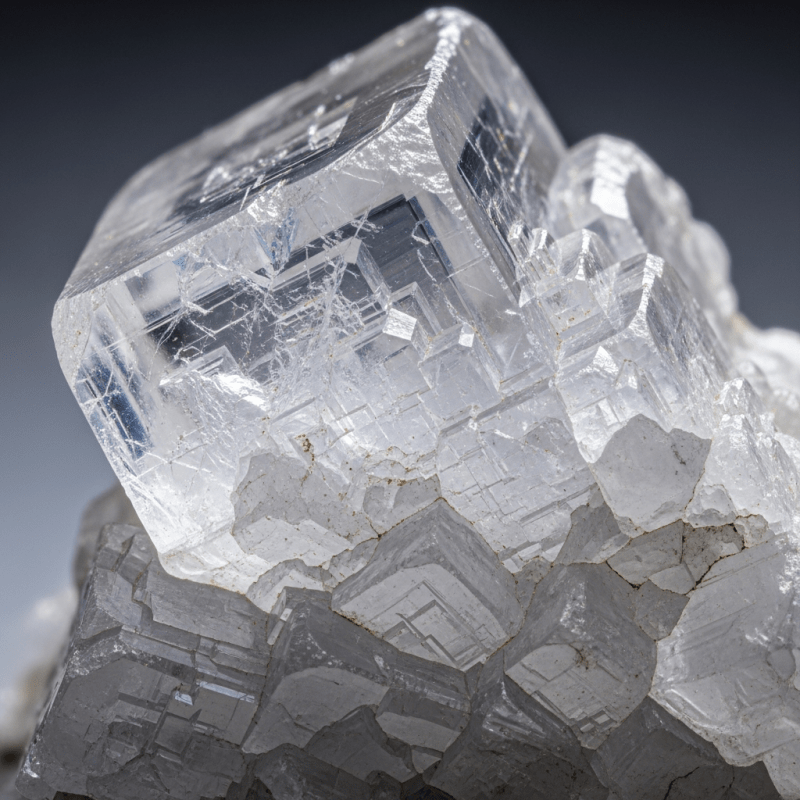
Soft cotton tee, unisex sizes
Buy ShirtSalt has shaped economies, cultures, and histories worldwide. Halite, as the mineral source of salt, has driven trade routes, sparked wars, and underpinned rituals and traditions. From ancient salt roads and taxes to its symbolic role in hospitality and preservation, halite’s impact reaches far beyond the mineral itself, marking it as a cornerstone of human civilization.
Halite’s chemical formula is NaCl, composed of sodium (Na) and chlorine (Cl) atoms in a 1:1 ratio. This simple composition underlies its widespread occurrence and essential role in biology and industry.
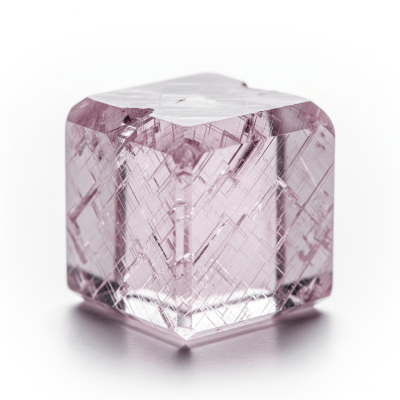
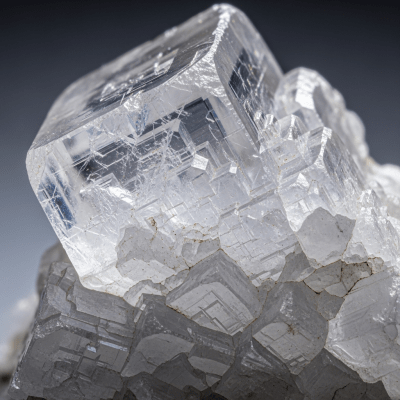
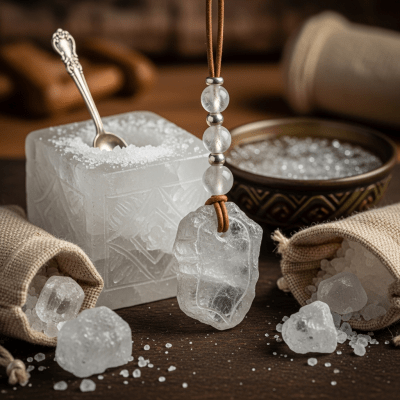
Halite crystallizes in the isometric (cubic) system, forming highly symmetrical cubes. Its atomic arrangement features each sodium ion surrounded by six chloride ions, and vice versa, resulting in a robust, repeating lattice that defines its perfect cleavage and blocky form.
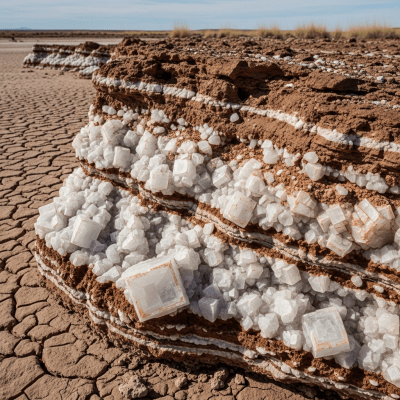
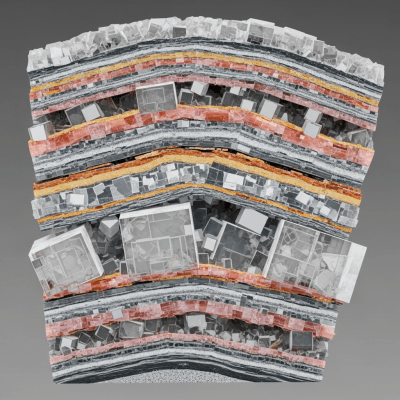
Halite is most commonly found in evaporite deposits, formed by the evaporation of saline waters in arid climates. These deposits can be extensive, occurring in salt lakes, playas, and marine basins. Famous localities include the Wieliczka Salt Mine (Poland), Khewra Salt Mine (Pakistan), and the Great Salt Lake (Utah, USA). Halite is often associated with other evaporite minerals such as gypsum, sylvite, and anhydrite.
Halite is also known as rock salt, common salt, and table salt. Regional names include sal gema (Spanish), Steinsalz (German), and sel gemme (French). While no formal mineralogical varieties are recognized, color variations may occur due to trace impurities.
Halite is indispensable in industry, serving as the principal source of sodium chloride for food seasoning and preservation. It is used extensively in chemical manufacturing, water softening systems, and as a de-icing agent for roads and walkways. Its ease of extraction and processing make it a cornerstone of global commerce and infrastructure.
Halite specimens should be stored in dry, low-humidity environments to prevent dissolution. Avoid handling with wet hands or exposing to moisture. Clean gently with a dry brush; never immerse in water. Fragile crystals may chip or break easily, so handle with care and consider protective display cases for prized samples.
The Wieliczka Salt Mine in Poland and the Khewra Salt Mine in Pakistan are renowned for their vast halite deposits and spectacular underground chambers. Large, transparent halite crystals from these and other sites have been displayed in museums worldwide, celebrated for their clarity and geometric perfection.