Garnet
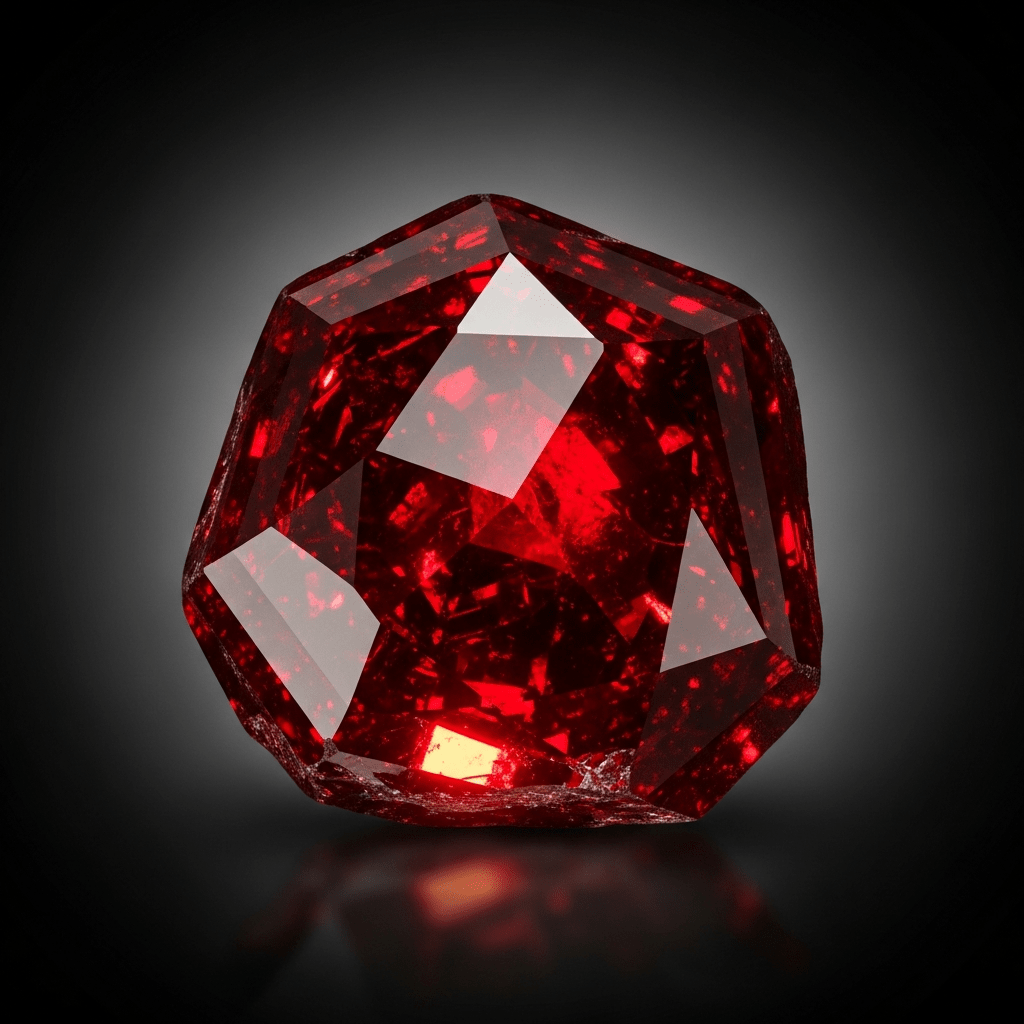
Garnet is a group of silicate minerals renowned for their vibrant colors, durable nature, and widespread use as both gemstones and industrial abrasives.
Garnet is a group of silicate minerals renowned for their vibrant colors, durable nature, and widespread use as both gemstones and industrial abrasives.
Garnet has been cherished since antiquity, with its earliest known uses dating back to Ancient Greece and Rome, where it adorned jewelry and signet rings. The mineral group’s formal scientific classification emerged in the 19th century, and today the International Mineralogical Association (IMA) recognizes several distinct garnet species. Its ancient legacy and global presence mean no single discoverer is credited—garnet’s story is woven through centuries of human history.
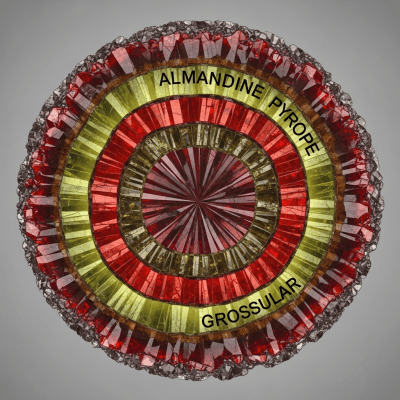
Garnet belongs to the nesosilicate class of minerals, specifically the garnet group. It is classified under Dana code 52.04.01 and Strunz code 9.AD.25. The group encompasses several species, including almandine, pyrope, grossular, spessartine, and andradite, each defined by variations in their chemical composition. Garnet’s isometric crystal system and shared structural features unify these species within a single mineralogical family.
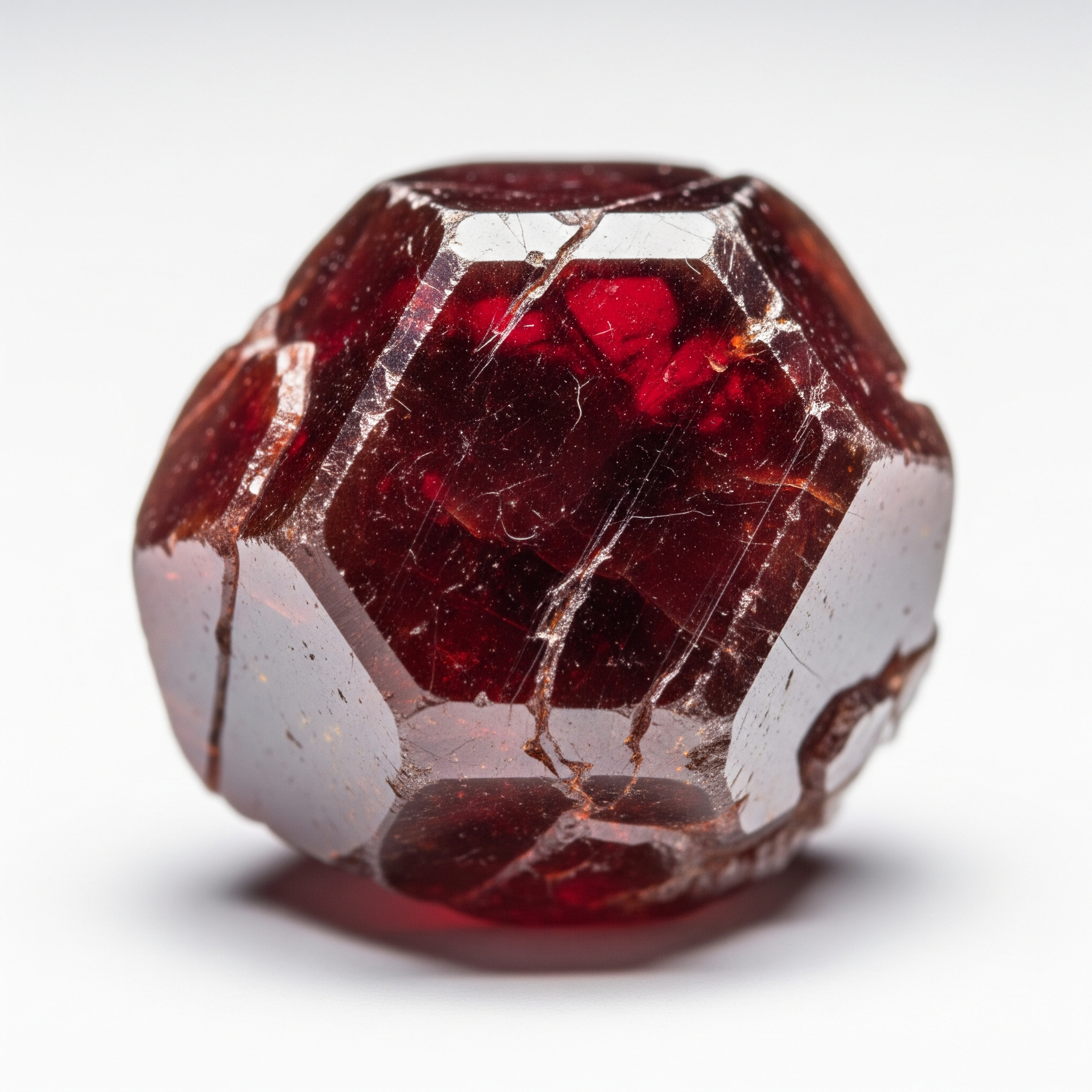
Garnets typically display rich red, brown, orange, green, yellow, and—rarely—blue hues, with color determined by species and trace elements. Their crystals often form as dodecahedrons or trapezohedrons, and they possess a glassy (vitreous) to resinous luster. Specimens range from transparent to opaque and lack cleavage, breaking instead with a conchoidal or uneven fracture. The overall impression is one of striking brilliance and geometric symmetry.
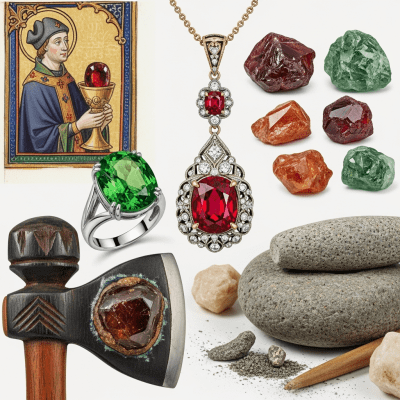
Garnet’s robust hardness and resistance to abrasion make it invaluable as an industrial abrasive, used in sandblasting, waterjet cutting, and filtration. Gem-quality garnets are highly sought after for jewelry, with certain varieties—such as demantoid and tsavorite—commanding premium status. In nature, garnet’s durability allows it to persist in sedimentary deposits, and its presence in metamorphic rocks often signals geological transformations.
Bring this kind into your world illustrated posters, mugs, and shirts.
Archival print, museum-grade paper
Buy Poster
Stoneware mug, dishwasher safe
Buy Mug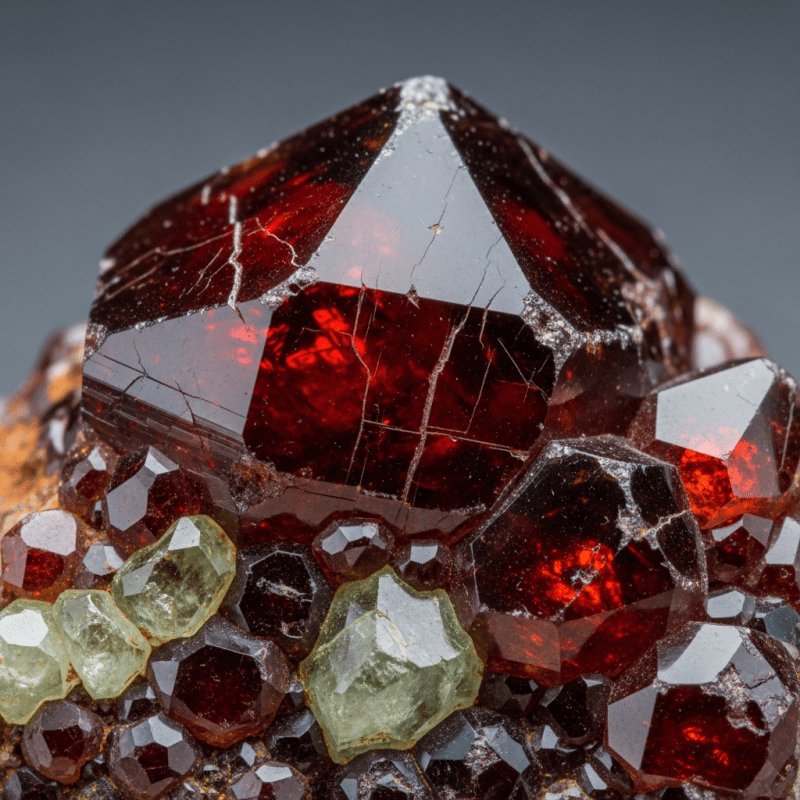
Soft cotton tee, unisex sizes
Buy ShirtThroughout history, garnet has symbolized protection, vitality, and love. It is the traditional birthstone for January and has adorned crowns, rings, and amulets across cultures. The stone’s deep red varieties, once called "carbuncle," were believed to ward off harm and illuminate the night. Today, garnet continues to inspire artists, jewelers, and collectors worldwide.
Garnet minerals share a general chemical formula: X₃Y₂(SiO₄)₃, where X and Y are metal cations such as Fe, Mg, Ca, Mn, or Al. Each species is defined by specific cation substitutions, resulting in variations like almandine (Fe₃Al₂(SiO₄)₃) and pyrope (Mg₃Al₂(SiO₄)₃).
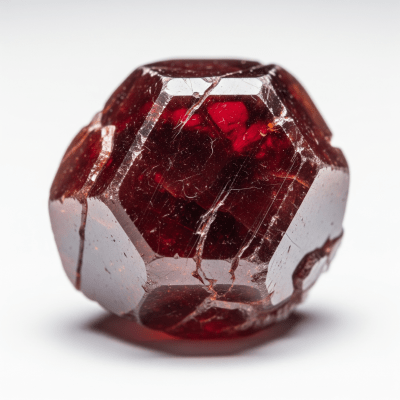
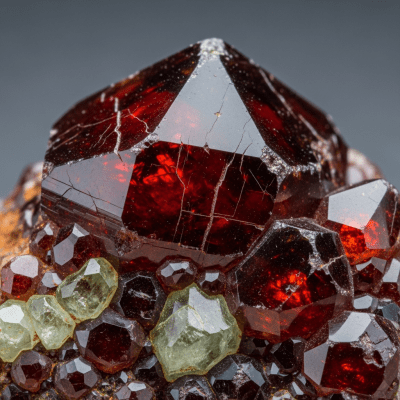
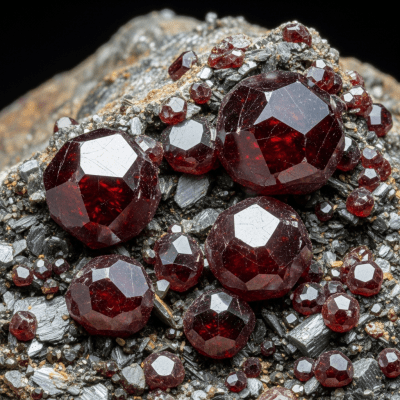
Garnet crystallizes in the isometric (cubic) crystal system, typically forming dodecahedral or trapezohedral crystals. This symmetry gives garnet its distinctive geometric shapes and contributes to its physical robustness.
Garnets are widespread in metamorphic rocks such as schist and gneiss, and also occur in igneous rocks like granite and basalt. They are persistent in sedimentary deposits due to their resistance to weathering. Major localities include the Alps, Sri Lanka, Madagascar, the United States (Arizona, New York), Russia, and Tanzania.
Garnet’s hardness and chemical stability make it ideal for use as an abrasive in sandblasting, waterjet cutting, and filtration media. In addition, gem-quality garnets are fashioned into jewelry, with certain varieties highly valued by collectors and designers.