Galena
Galena is the principal mineral species of lead sulfide (PbS), renowned as the world's most important ore of lead and a key source of silver.
Galena is the principal mineral species of lead sulfide (PbS), renowned as the world's most important ore of lead and a key source of silver.
Galena’s story stretches back to antiquity, with its use documented in civilizations such as Ancient Egypt and Rome. The name "galena" comes from the Latin term for lead ore, reflecting its ancient recognition and utility. Formally described long before the advent of modern mineralogical authorities, galena has been a cornerstone of metallurgy and pigment production for millennia.
Galena belongs to the sulfide mineral group and is classified as lead sulfide (PbS). It is recognized as a distinct mineral species by the International Mineralogical Association (IMA), with Dana classification code 2.8.1.1 and Strunz code 2.CB.10a. Its isometric (cubic) crystal system and well-defined chemical composition distinguish it from related lead minerals such as cerussite and anglesite.
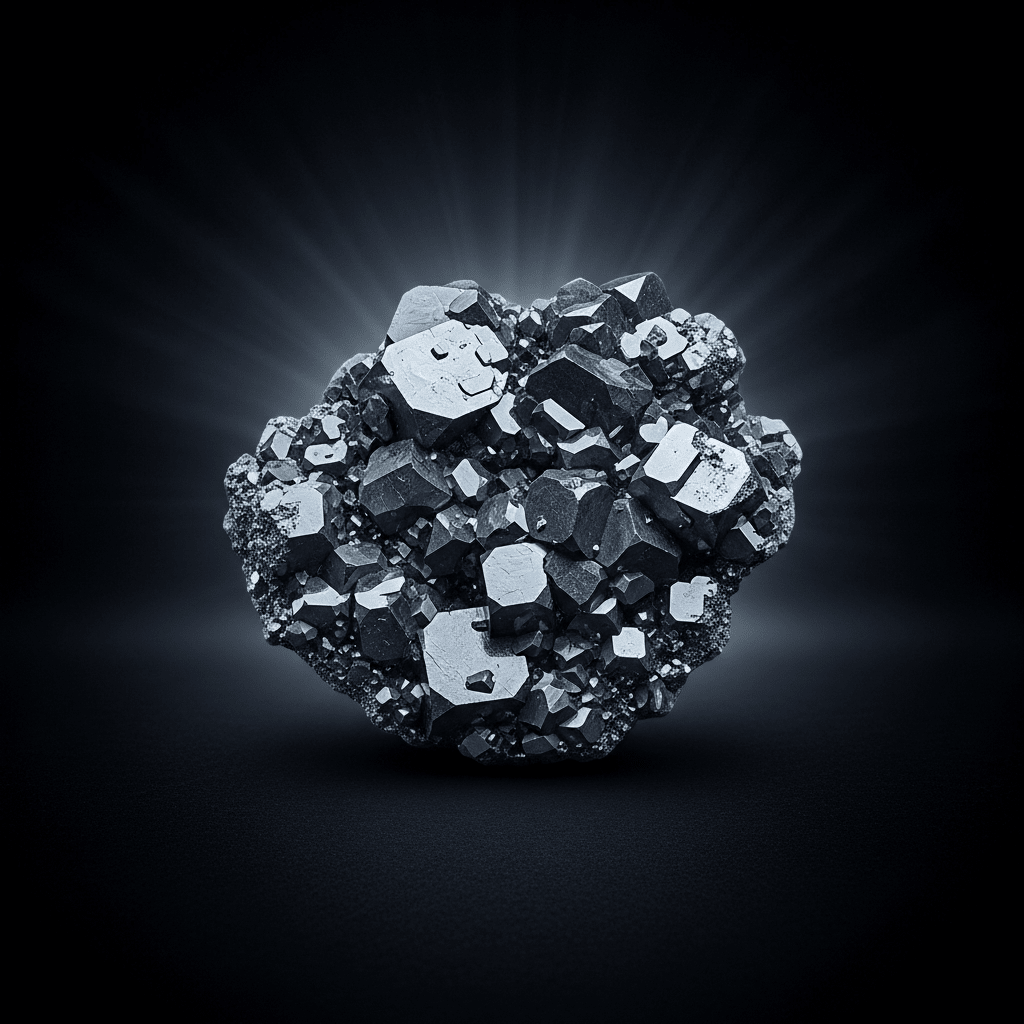
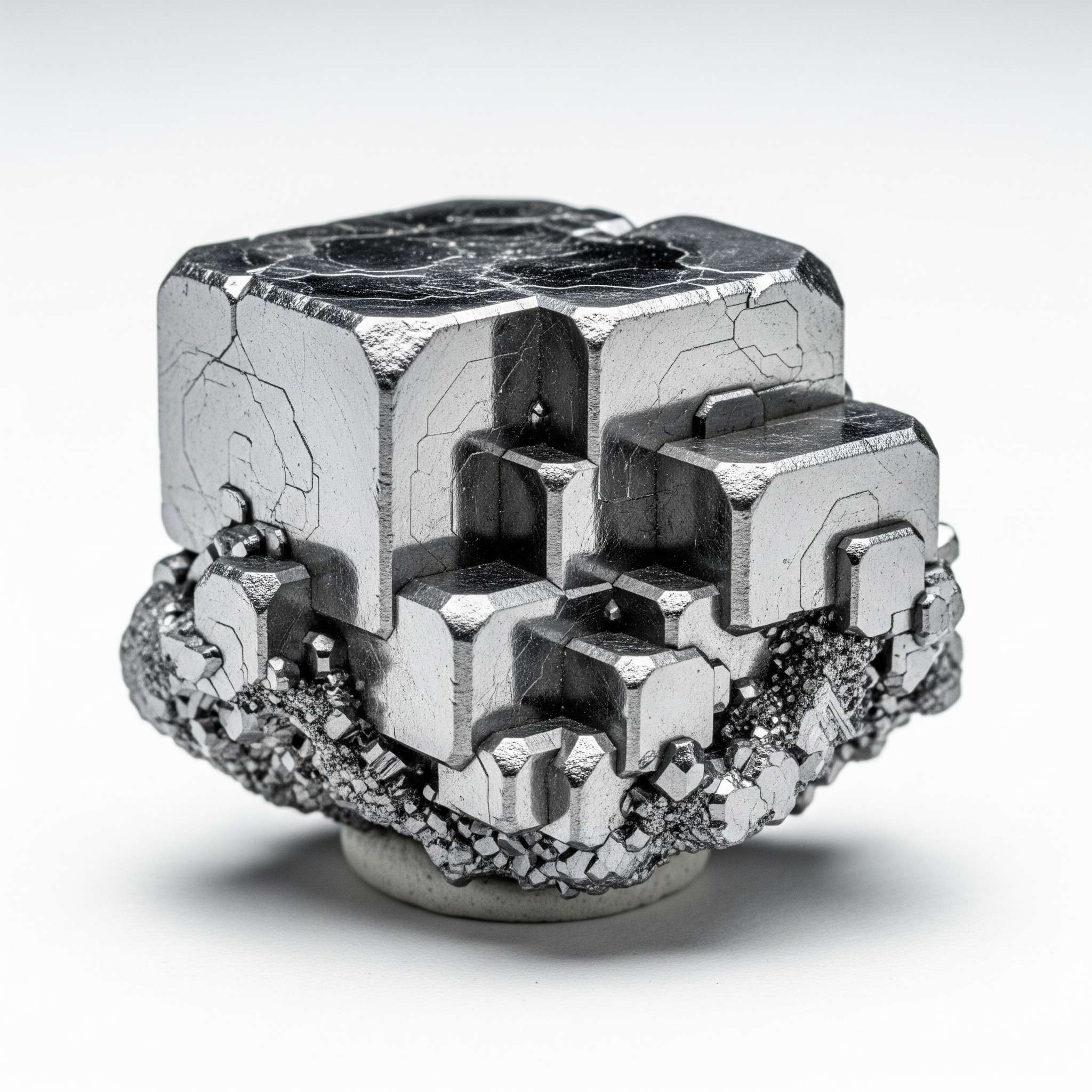
Galena typically forms striking, sharply defined cubic crystals with a metallic luster and a characteristic lead-gray color. Its surfaces are highly reflective, giving specimens a mirror-like sheen. The mineral is opaque and exhibits perfect cubic cleavage, often breaking into smooth, geometric fragments. In hand, galena feels notably heavy due to its high density and is brittle to the touch.
Galena serves as the world’s primary source of lead, which is extracted for use in batteries, radiation shielding, and alloys. Ores of galena frequently contain silver, making it economically vital for both metals. Historically, galena was ground for pigments and cosmetics, though its toxicity is now well understood. In nature, galena is relatively insoluble and resists acids under normal conditions, but it can alter to secondary minerals when exposed to weathering.
Bring this kind into your world illustrated posters, mugs, and shirts.
Archival print, museum-grade paper
Buy Poster
Stoneware mug, dishwasher safe
Buy Mug
Soft cotton tee, unisex sizes
Buy ShirtGalena’s cultural footprint is deep, having been mined and processed by ancient civilizations for lead and silver. In Ancient Egypt, powdered galena was used as kohl, a cosmetic applied around the eyes. Roman metallurgists relied on galena for lead production, influencing plumbing and architecture. Today, its legacy is tempered by awareness of lead’s toxicity, yet galena remains a symbol of mineral wealth and industrial progress.
Galena’s chemical formula is PbS, consisting of lead (Pb) and sulfur (S) in a one-to-one ratio. This simple composition underpins its role as the primary lead ore.

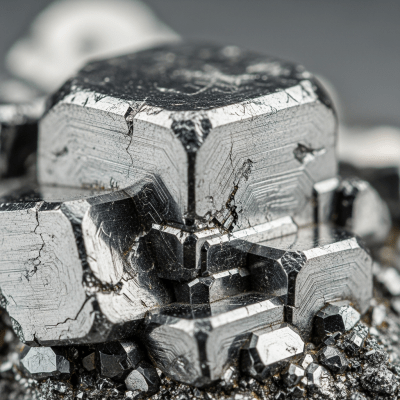
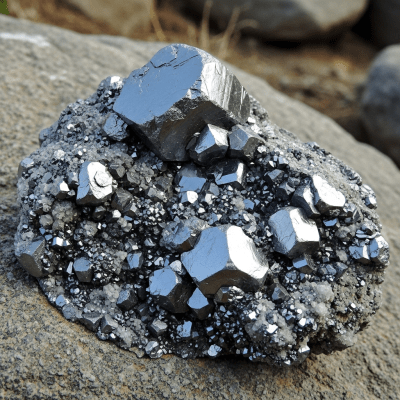
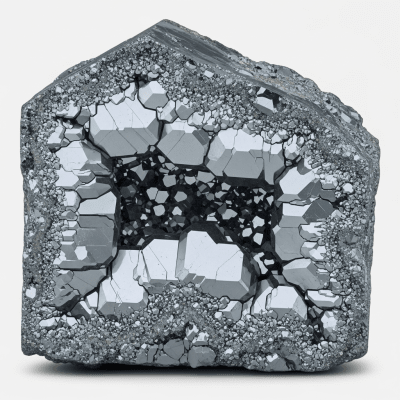

Galena crystallizes in the isometric (cubic) crystal system, most commonly forming cubes and, less frequently, octahedral shapes. Its atomic arrangement is highly ordered, resulting in perfect cubic cleavage and geometric crystal faces.
Galena is widely distributed in hydrothermal vein deposits and sedimentary rocks, especially limestone and dolostone. Major mining regions include Missouri, Illinois, and Colorado in the USA, as well as Australia, Germany, and Peru. It is commonly found alongside minerals such as sphalerite, pyrite, chalcopyrite, and fluorite.
No significant varieties are recognized; galena is distinct from related lead minerals like cerussite and anglesite.
Galena is the principal ore of lead, which is essential for manufacturing batteries (especially lead-acid types), radiation shielding, and various alloys. Silver-rich galena ores are also mined for silver extraction. Historically, galena was used as a pigment and in cosmetics, but modern uses focus on its industrial and technological value.
Notable galena specimens hail from the Tri-State district of the USA, Freiberg in Germany, and Broken Hill in Australia. These localities have produced large, lustrous cubic crystals that are highly prized by collectors and museums worldwide.