Origin Story

Fluorite’s journey in mineralogy began in 1530 when Georgius Agricola described it as "fluorspar." Its name, rooted in the Latin "fluere" (to flow), reflects its historic use as a flux in metal smelting. Over centuries, its chemical and crystallographic identity was refined, culminating in formal recognition by the International Mineralogical Association. Today, fluorite’s legacy is woven into both industrial history and mineral collecting lore.

Classification

Fluorite is classified as a mineral species within the broader taxonomy of naturally occurring inorganic solids. It is recognized by the IMA and placed in the halide class, with Dana code 09.04.01.01 and Strunz code 3.AB.25. Its defining features are its chemical composition (CaF₂) and its isometric (cubic) crystal system, distinguishing it from other mineral groups and varieties.

Appearance or Form

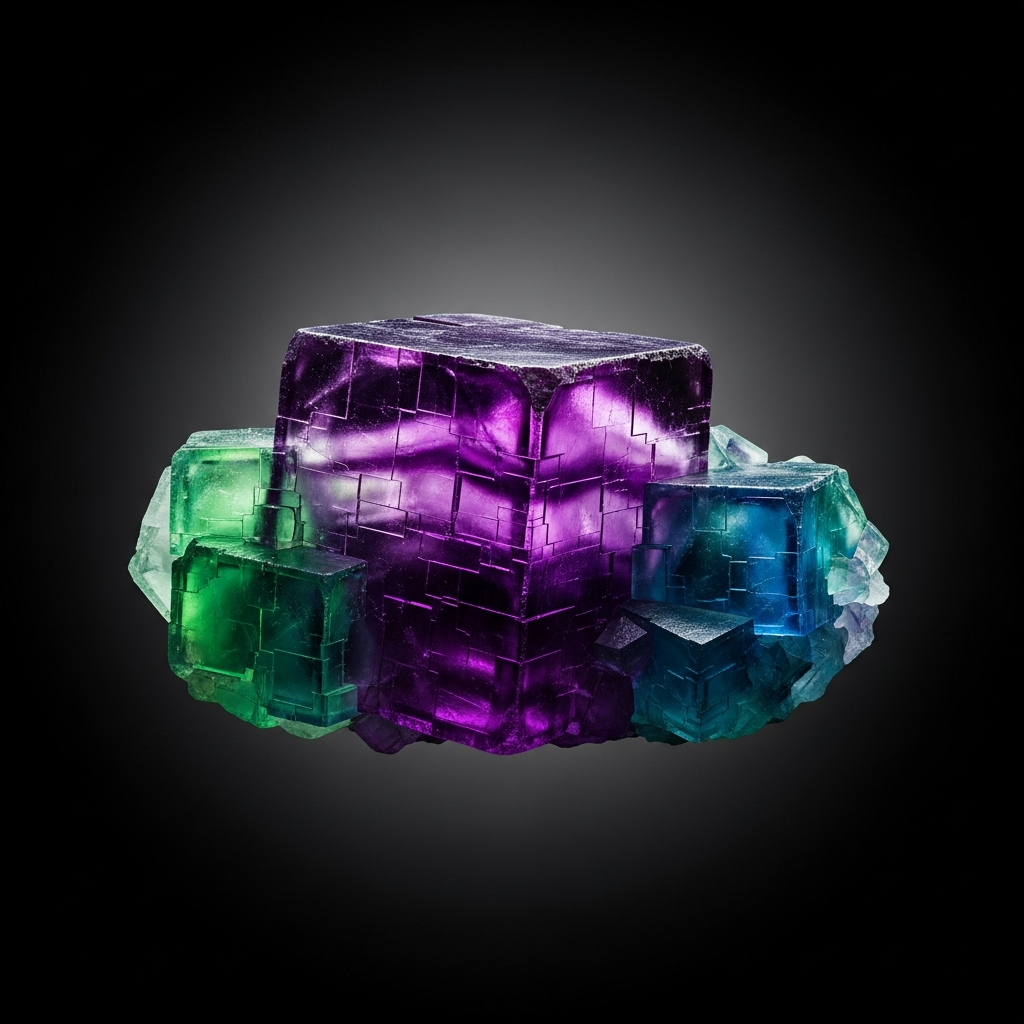
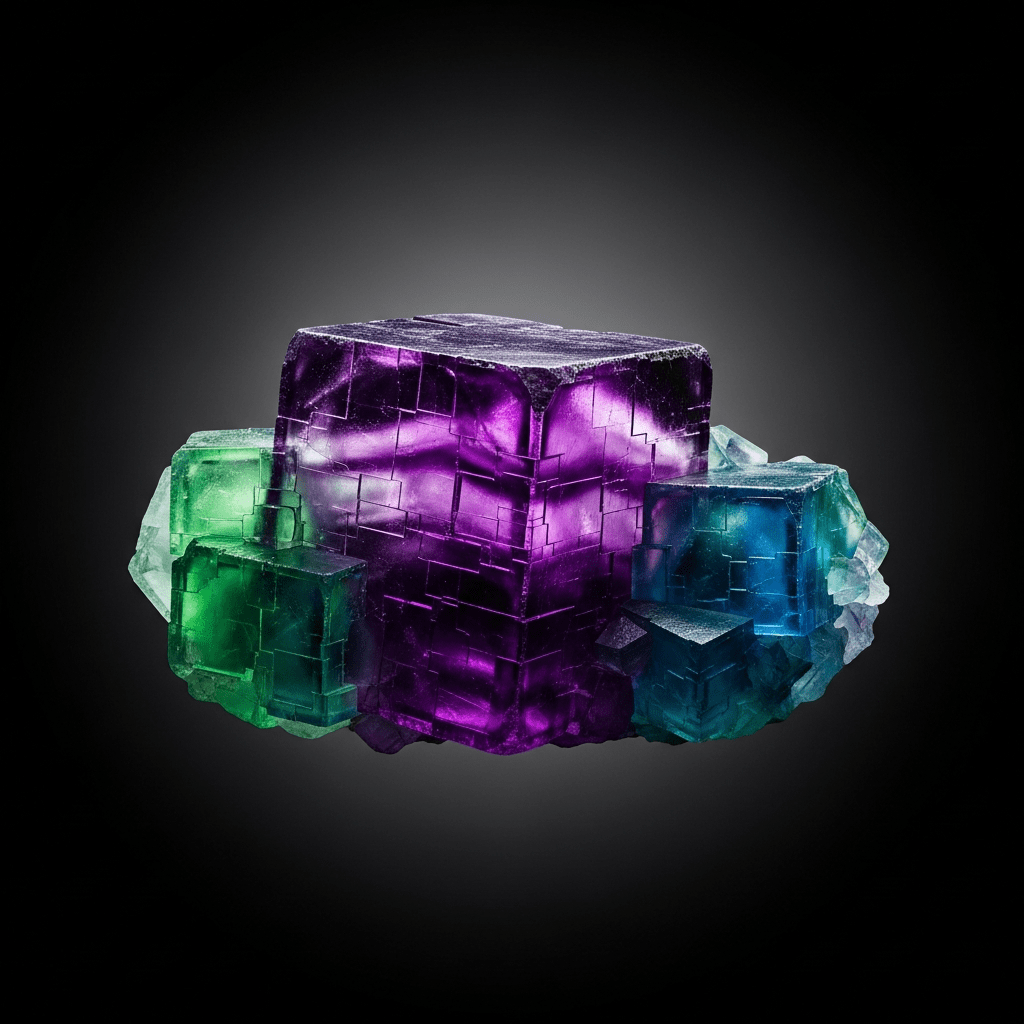
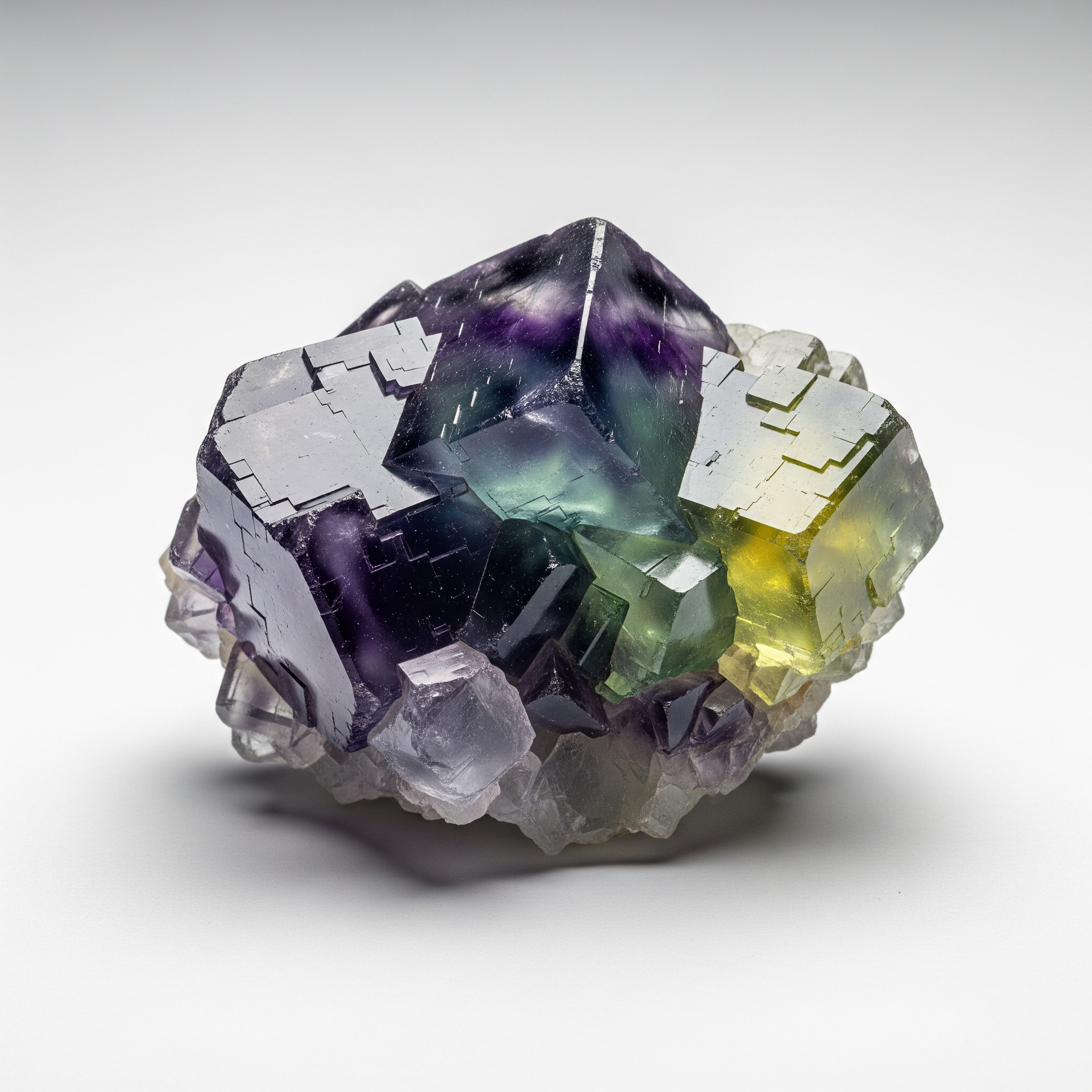
Fluorite typically forms striking cubic or octahedral crystals, often transparent to translucent. Its color palette is exceptionally diverse, ranging from colorless to deep purples, blues, greens, yellows, and even banded varieties. The mineral’s surface gleams with a vitreous luster, and perfect octahedral cleavage produces smooth, mirror-like planes. Specimens may display vivid fluorescence, glowing blue-violet or other hues under UV light.

Behavior or Usage

Fluorite’s physical and chemical properties make it invaluable in both industry and science. It acts as a flux in steelmaking, facilitates the production of hydrofluoric acid, and is used in optical components thanks to its transparency and low refractive index. Its fluorescence is a subject of scientific study and a delight for collectors, while gem-quality crystals are fashioned into ornamental stones.

Merchandise & Prints

Bring this kind into your world � illustrated posters, mugs, and shirts.
Fluorite Fluorite Poster

Fluorite Poster

Archival print, museum-grade paper

Fluorite Fluorite Mug

Fluorite Mug

Stoneware mug, dishwasher safe

Fluorite Fluorite Shirt

Fluorite Shirt

Soft cotton tee, unisex sizes

Attributes & Insights

Taxon-Specific Insights

🌍Cultural Significance

Fluorite has captivated collectors and scientists alike for centuries, largely due to its mesmerizing fluorescence and vivid coloration. The famed "Blue John" variety from Derbyshire, England, has been carved into decorative objects since the 18th century. Its historical role in metallurgy and its prominence in museum collections underscore its enduring cultural and scientific importance.

📌Notable Facts

  • Fluorite is the mineral that gave its name to the phenomenon of fluorescence.
  • Its color range is among the broadest of all minerals, often displaying multiple hues in a single specimen.
  • "Blue John" fluorite is unique to Derbyshire, England, and highly prized for its banded purple-yellow appearance.
  • Fluorite’s perfect cleavage makes it easy to split into geometric shapes, but also renders it fragile.

🧪Chemical Composition

Fluorite’s chemical formula is CaF₂, meaning it is composed of calcium and fluorine atoms in a simple binary structure. This composition makes it the principal natural source of fluorine.
Visual Variations

High resolution studio photograph of a single specimen of Fluorite
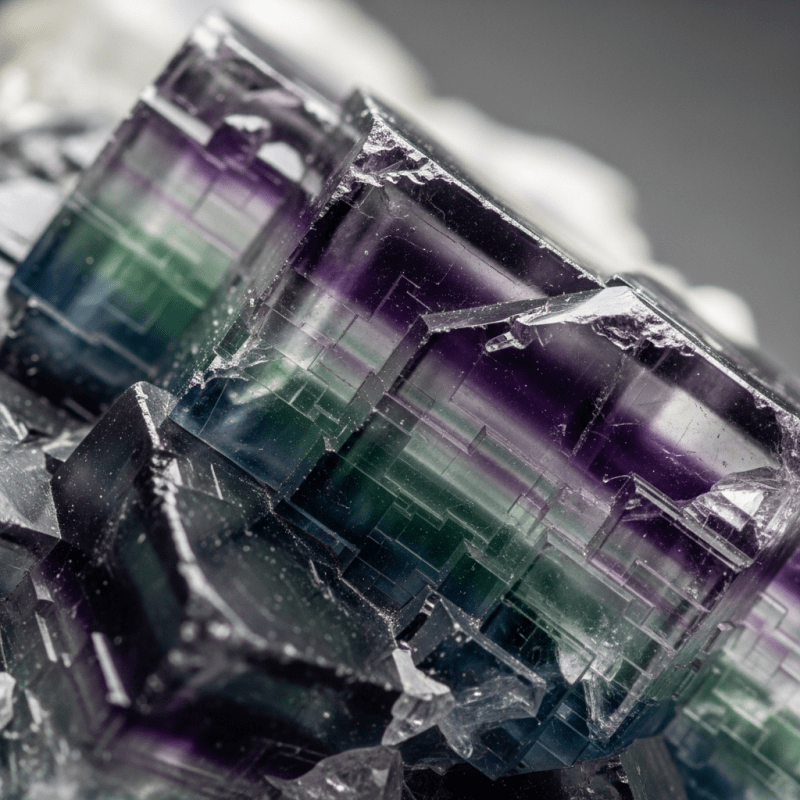
Macro shot of Fluorite, of the taxonomy minerals, showing detailed crystal structure and surface texture
Naturalistic scene featuring Fluorite in its typical geological environment, as categorized by minerals
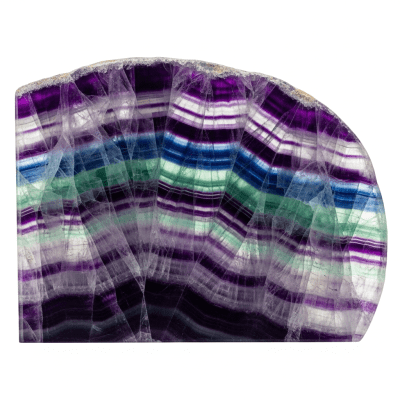
Cross-sectional illustration of Fluorite, of the taxonomy minerals
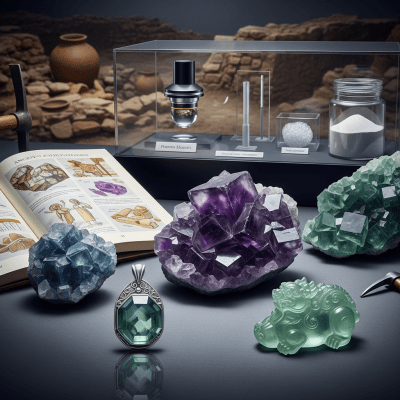
Depiction of Fluorite, as it is used or valued in human culture

Composition & Context

Taxon-Specific Insights

🔷Crystal Structure

Fluorite crystallizes in the isometric (cubic) crystal system, typically forming well-defined cubes and, less commonly, octahedra. Its atomic arrangement features calcium ions surrounded symmetrically by fluorine ions, resulting in perfect cleavage along octahedral planes.

Physical Properties

  • Hardness: 4 on the Mohs scale (relatively soft)
  • Color: Highly variable—colorless, purple, blue, green, yellow, and more
  • Luster: Vitreous (glass-like)
  • Transparency: Transparent to translucent
  • Cleavage: Perfect octahedral
  • Fracture: Brittle
  • Optical: Strong fluorescence under UV light

🌍Geological Occurrence

Fluorite is typically found in hydrothermal veins, often alongside minerals such as quartz, calcite, galena, and sphalerite. It also occurs in sedimentary and metamorphic rocks. Significant deposits are found in China, Mexico, South Africa, Derbyshire (England), and several U.S. states including Illinois, Kentucky, and Colorado.

Varieties And Synonyms

  • Synonyms: Fluorspar (industrial), Blue John (banded Derbyshire variety), Yttrian fluorite (yttrium-rich), Antozonite (ozone-emitting, dark German variety)
  • Varieties: Blue John, Yttrian fluorite, Antozonite

Industrial And Technological Uses

  • Used as a flux in steelmaking to lower melting points and remove impurities
  • Source material for hydrofluoric acid production
  • Essential in optics for lenses and windows due to its low refractive index and high transparency to UV and IR light
  • Employed in ceramics and enamels
  • Valued as a gemstone and collector’s specimen

🔍Identification Tips

  • Look for cubic or octahedral crystals with perfect cleavage and vitreous luster
  • Test for fluorescence under ultraviolet light—most fluorite glows blue-violet
  • Note the wide color range, but beware of confusion with other colorful minerals
  • Relatively soft (Mohs 4), so it can be scratched by harder minerals

Care And Handling

  • Handle gently—fluorite is brittle and prone to chipping along cleavage planes
  • Store specimens separately to avoid scratches and damage
  • Clean with lukewarm water and a soft cloth; avoid harsh chemicals
  • Protect from prolonged sunlight, which may fade colors in some varieties

Famous Specimens

  • Blue John: Banded purple-yellow fluorite from Derbyshire, England, used in historic carvings and ornaments
  • Antozonite: Dark, ozone-emitting fluorite from Germany, notable for its unusual chemical properties
  • Illinois Fluorite: Large, vividly colored crystals from the Cave-in-Rock region, highly sought by collectors

Faq

  • What causes fluorite’s fluorescence?
    Fluorescence in fluorite is due to trace impurities and structural defects that emit light when exposed to ultraviolet radiation.
  • Where is fluorite most commonly found?
    Major deposits are located in China, Mexico, South Africa, England, and the United States.
  • Is fluorite used in jewelry?
    Yes, gem-quality fluorite is fashioned into ornamental stones, though its softness limits its use in everyday jewelry.