
Feldspar
Feldspar is the most abundant group of rock-forming minerals in the Earth's crust, essential for both geological processes and a wide range of industrial applications.
Feldspar is the most abundant group of rock-forming minerals in the Earth's crust, essential for both geological processes and a wide range of industrial applications.
The name "feldspar" comes from the German "Feldspat," meaning "field stone." First described in the late 18th century, feldspar's systematic study was pioneered by mineralogists Abraham Gottlob Werner and René Just Haüy. The group encompasses several mineral species, each formally recognized by the International Mineralogical Association, and its discovery marked a turning point in the scientific understanding of Earth's mineral diversity.
Feldspar belongs to the tectosilicate class of minerals, characterized by a three-dimensional framework of silicon and aluminum atoms. The group is divided into two major series: alkali feldspars (including orthoclase, microcline, sanidine, albite) and plagioclase feldspars (albite, anorthite, oligoclase, andesine, labradorite, bytownite). Its classification is formalized in both the Dana (76.1) and Strunz (9.FA) systems, and feldspar is recognized as a mineral group rather than a single species.
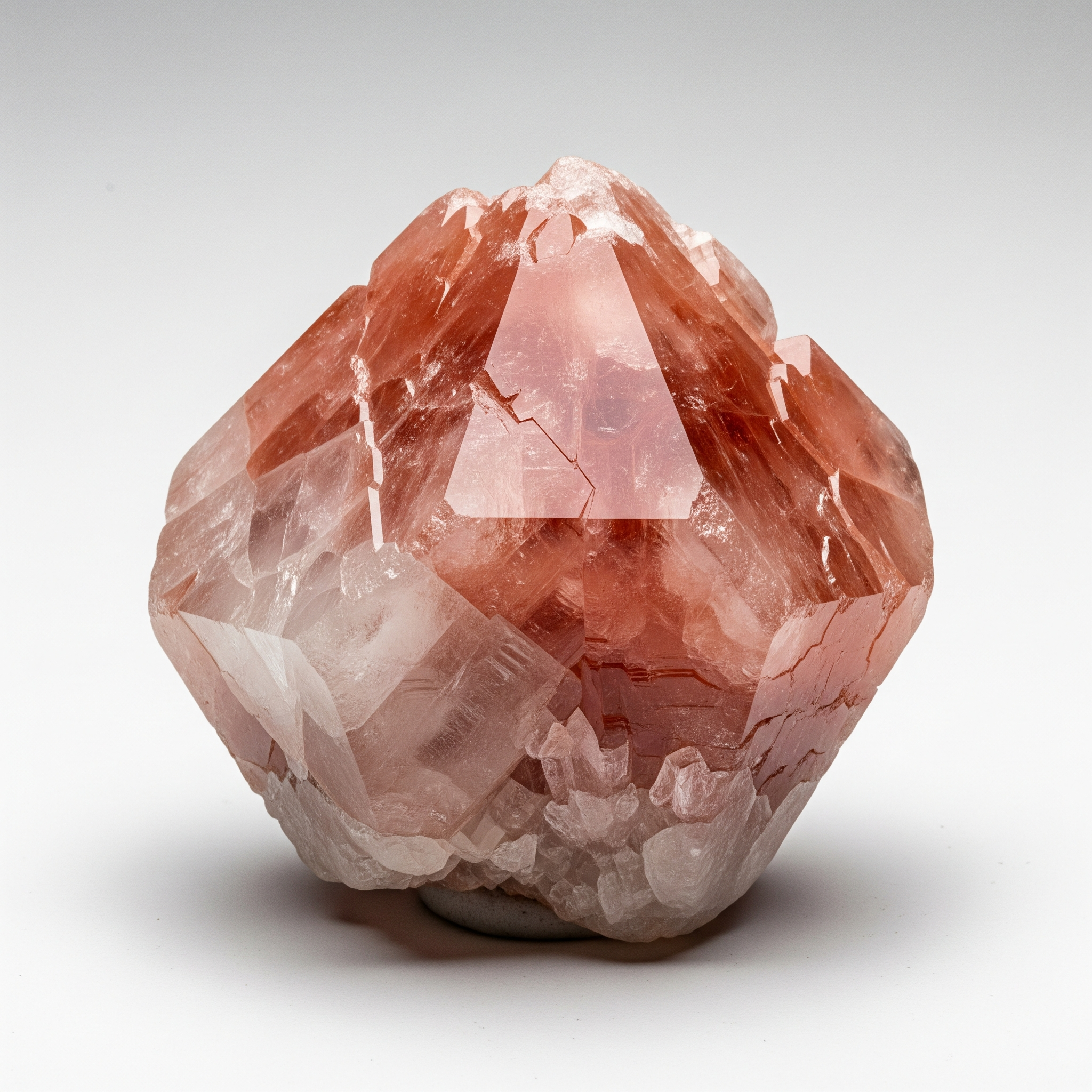
Feldspar minerals typically appear as blocky, prismatic crystals with a vitreous to pearly luster. Their color palette ranges from white, pink, and gray to brown, green, or colorless. Feldspars are often translucent to transparent, and their perfect cleavage in two directions at nearly right angles gives them a distinctive, easily recognizable look. Some varieties, such as moonstone and labradorite, display striking optical effects like adularescence or iridescence.
Feldspar's behavior is defined by its stability in most geological environments and its tendency to weather into clay minerals, which are vital for soil formation. In human use, feldspar is a cornerstone of the ceramics and glass industries, acting as a flux to lower melting temperatures and improve product durability. Select varieties are prized as gemstones, while feldspathic rocks serve as important sources for mineral extraction and construction materials.
Bring this kind into your world illustrated posters, mugs, and shirts.
Archival print, museum-grade paper
Buy Poster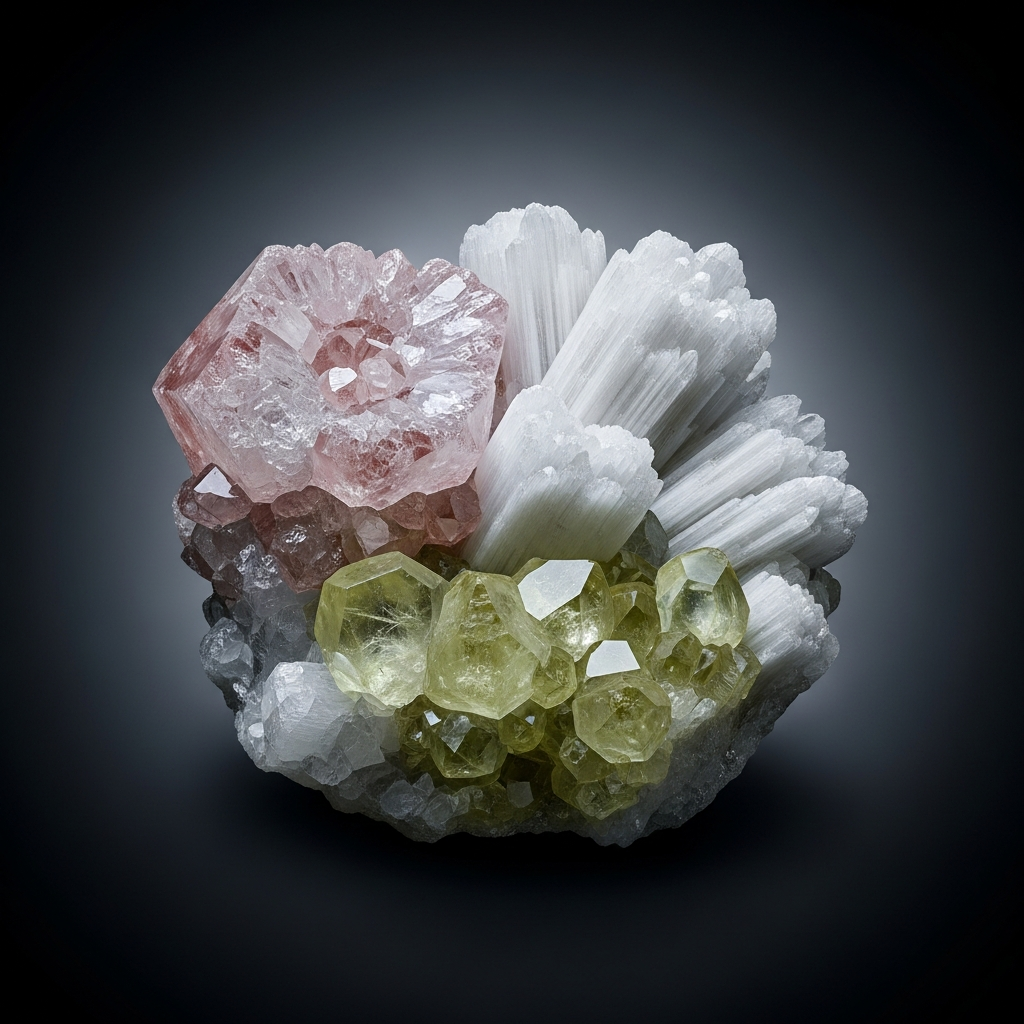
Stoneware mug, dishwasher safe
Buy Mug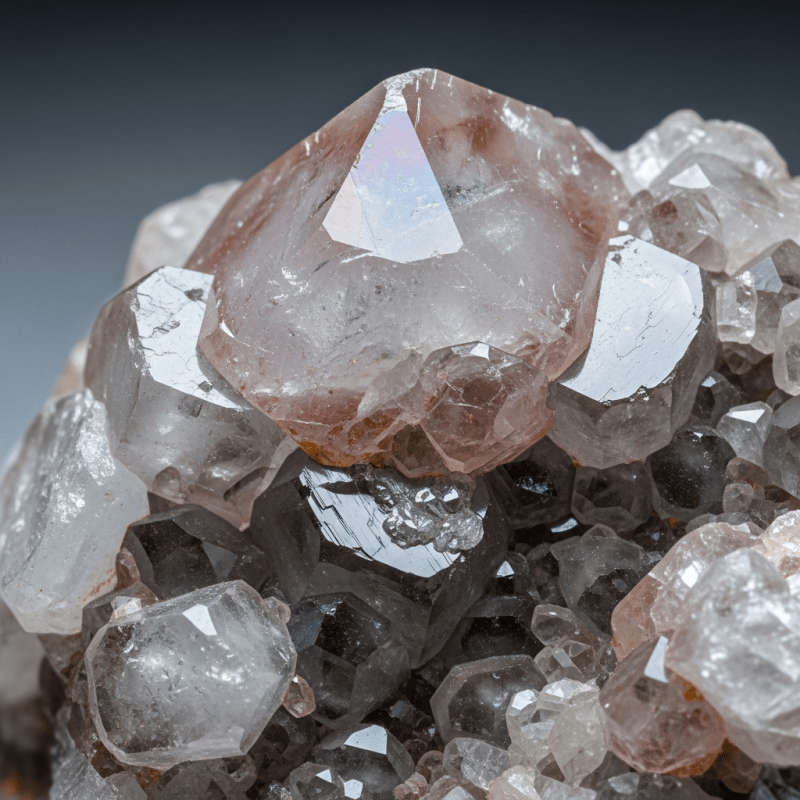
Soft cotton tee, unisex sizes
Buy ShirtWhile feldspar itself is not widely celebrated in myth or art, its gemstone varieties—such as moonstone and sunstone—have held cultural significance for centuries. Moonstone, for example, has been revered in jewelry and folklore for its ethereal glow, symbolizing intuition and feminine energy in various traditions. Feldspar's role in shaping landscapes and soils also underpins agricultural and architectural heritage worldwide.
Feldspar minerals share a general chemical formula of XAlSi3O8, where X represents potassium (K), sodium (Na), or calcium (Ca). This aluminosilicate structure forms the backbone of both alkali and plagioclase feldspars, with subtle variations in elemental content distinguishing individual species.
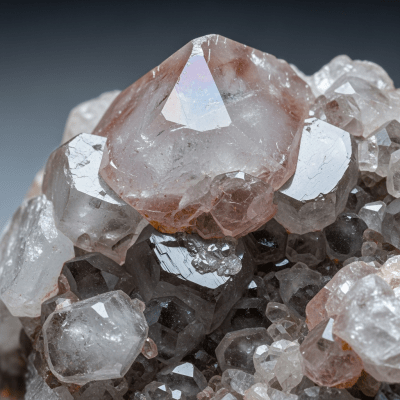
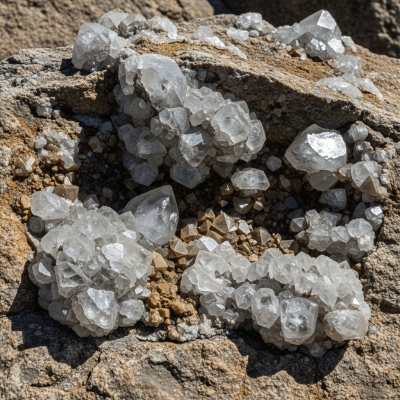
Feldspars crystallize in either the monoclinic or triclinic systems, depending on the species. Their atomic arrangement forms a robust three-dimensional framework of silicon and aluminum tetrahedra, which imparts strength and stability. The perfect cleavage in two directions at nearly right angles is a direct result of this ordered crystal structure.
Feldspar is found in nearly every type of rock—igneous (such as granite and basalt), metamorphic (gneiss, schist), and sedimentary (arkose, sandstone). Major deposits occur in Norway, Italy, Turkey, the United States (notably North Carolina and South Dakota), and India. Its ubiquity makes it a fundamental component in the study of Earth's geology and rock formation.
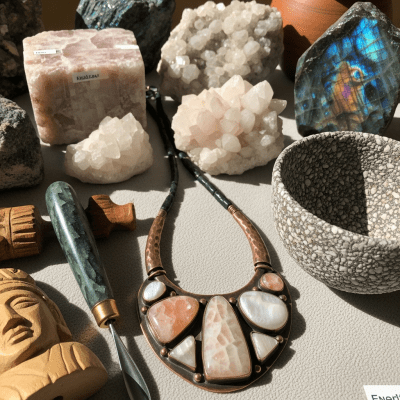
Feldspar is indispensable in glassmaking, where it supplies alumina and silica and acts as a flux to lower melting temperatures. In ceramics, it improves the strength and durability of porcelain and glazes. Feldspar is also used as a filler in paints, plastics, and rubber, and its weathering contributes clay minerals vital for agriculture. Gem varieties like moonstone and labradorite are fashioned into jewelry and decorative objects.
Feldspar specimens should be stored away from acids and harsh chemicals, as prolonged exposure can alter their surface. Clean gently with lukewarm water and a soft brush; avoid abrasive cleaners that may scratch the mineral. Handle gemstone varieties with care to preserve their optical qualities, and keep specimens in padded containers to prevent cleavage-related breakage.
Notable feldspar specimens include large moonstone crystals from Sri Lanka, prized for their shimmering adularescence, and vivid green amazonite from Colorado and Russia. Labradorite from Canada is renowned for its striking iridescent play of colors, and historic adularia from the Swiss Alps has been celebrated in mineral collections for centuries.