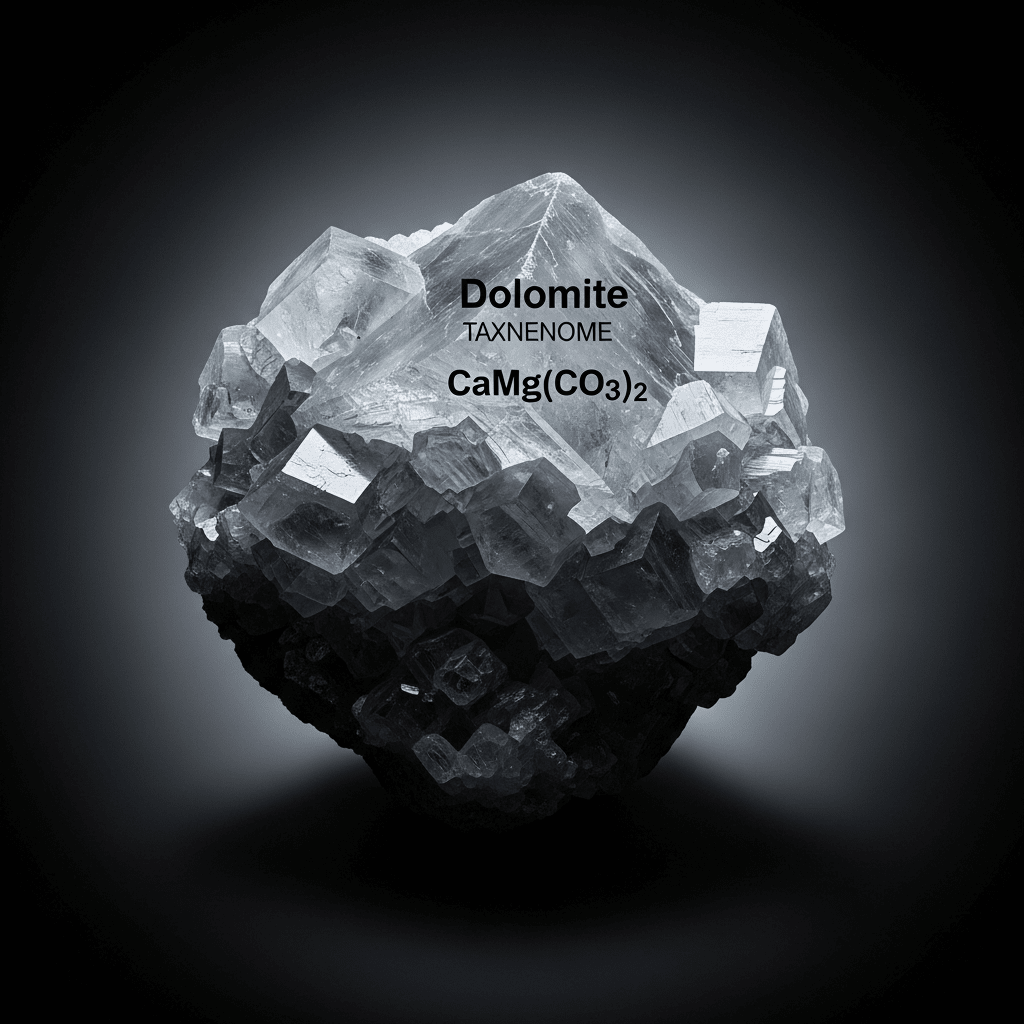
Dolomite
Dolomite is a naturally occurring carbonate mineral composed of calcium magnesium carbonate, recognized for its distinctive rhombohedral crystals and its widespread role as both a mineral and a rock-forming component in sedimentary geology.
Dolomite is a naturally occurring carbonate mineral composed of calcium magnesium carbonate, recognized for its distinctive rhombohedral crystals and its widespread role as both a mineral and a rock-forming component in sedimentary geology.
Dolomite was first described in 1791 by the French mineralogist Déodat Gratet de Dolomieu, whose name graces both the mineral and the Dolomite Alps in Italy. Its identification as a unique mineral species predates the establishment of formal mineralogical authorities, yet today it is fully approved and cataloged by the International Mineralogical Association. Dolomite’s origin story is deeply intertwined with the study of carbonate rocks, especially the distinction between limestone and dolostone, and its discovery helped clarify the processes of sedimentary rock formation.
Dolomite belongs to the carbonate mineral group, specifically classified as a double carbonate of calcium and magnesium. In the Dana system, it is coded as 16a.1.2.1, and in the Strunz classification as 5.AB.10. Its placement within these schemes reflects both its chemical makeup and its trigonal crystal system. Dolomite is a key species within the broader family of carbonate minerals, which also includes calcite and aragonite.
Dolomite typically forms well-developed rhombohedral crystals, often appearing as saddle-shaped or blocky structures. Its color ranges from white and pink to gray and brownish hues. The mineral exhibits a vitreous to pearly luster and is characterized by perfect cleavage in three directions, which gives rise to its distinctive geometric forms. Dolomite’s surface may feel smooth, and its crystals are often transparent to translucent, with a brittle fracture.
Dolomite interacts with dilute hydrochloric acid, producing a slow effervescence—a trait that distinguishes it from more reactive carbonates like calcite. In human use, dolomite serves as a vital industrial mineral: it is a source of magnesium, acts as a flux in steel production, is used in glass manufacturing, and serves as an aggregate in construction. It also finds use as a soil conditioner and, occasionally, as a decorative stone or minor gemstone.
Bring this kind into your world illustrated posters, mugs, and shirts.
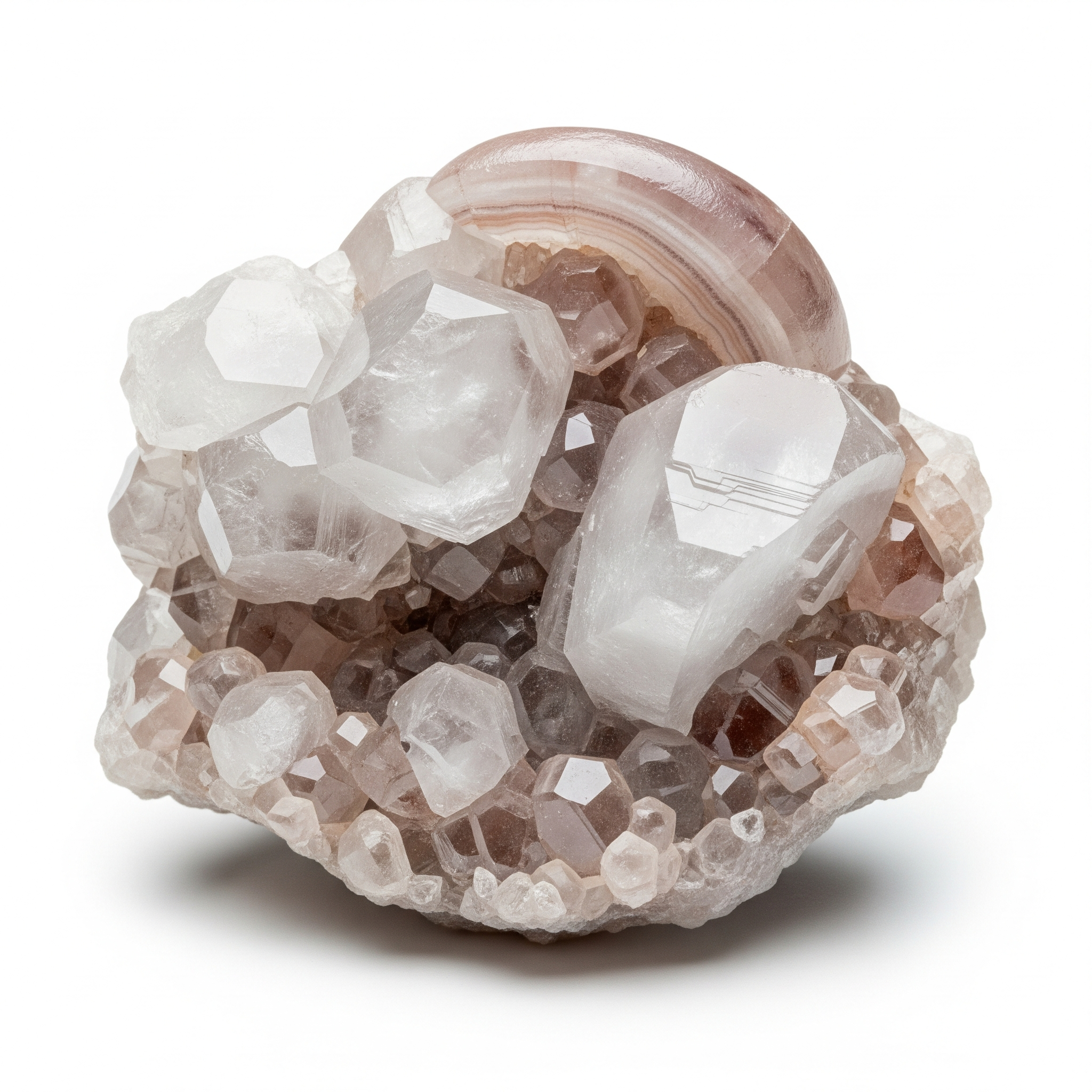
Archival print, museum-grade paper
Buy Poster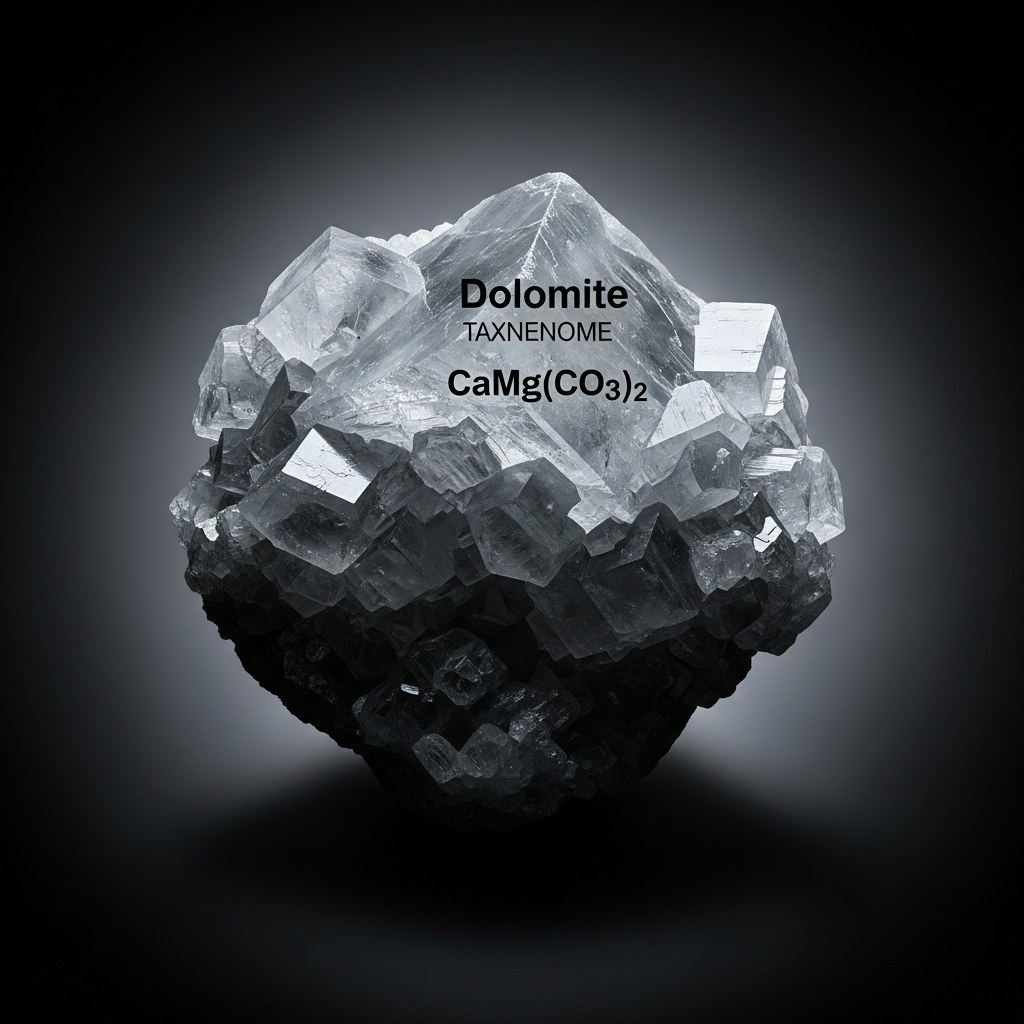
Stoneware mug, dishwasher safe
Buy Mug
Soft cotton tee, unisex sizes
Buy ShirtThe name "Dolomite" is immortalized in the Dolomite Alps, a region celebrated for its dramatic landscapes and geological heritage. The mineral’s discovery marked a turning point in the understanding of carbonate rocks, influencing both scientific thought and regional identity. While dolomite itself is not commonly featured in art or myth, its presence in architecture and its role in shaping iconic mountain ranges lend it a subtle but enduring cultural resonance.
Chemical Formula: CaMg(CO₃)₂. Dolomite is a double carbonate mineral, containing both calcium and magnesium ions bonded with carbonate groups.

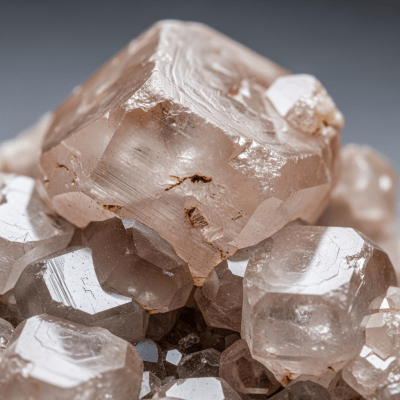
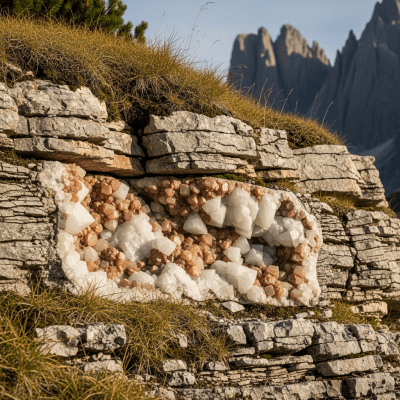


Dolomite crystallizes in the trigonal system, specifically within the rhombohedral class (space group R3̅). Its crystals are typically rhombohedral in shape, with perfect cleavage along three directions, giving rise to its characteristic geometric forms.
Dolomite is abundant in sedimentary rocks, forming vast beds known as dolostone, often through the replacement of limestone during diagenesis. It also occurs in hydrothermal veins, metamorphic rocks, and as a secondary mineral in ore deposits. Notable localities include the Dolomite Alps in Italy, Missouri, and the Tri-State district in the USA. Dolomite is commonly associated with limestone, marble, and other carbonate rocks.
Store dolomite specimens in a dry environment to prevent weathering. Clean gently with a soft brush and avoid harsh chemicals, as the mineral is slightly soluble in acids. Handle with care to prevent chipping, as dolomite is brittle and can fracture easily. Display away from direct sunlight to preserve color in decorative samples.