Corundum
Corundum is an exceptionally hard oxide mineral, celebrated both as a vital industrial abrasive and as the source of the precious gemstones ruby and sapphire.
Corundum is an exceptionally hard oxide mineral, celebrated both as a vital industrial abrasive and as the source of the precious gemstones ruby and sapphire.
Corundum's mineralogical journey began in 1798, when Abraham Gottlob Werner first described it, drawing its name from the Sanskrit "kuruvinda" meaning ruby. Though formally classified by the International Mineralogical Association, its history stretches back centuries, especially through the cultural prominence of rubies and sapphires in ancient trade and adornment. The mineral's recognition and value have evolved alongside discoveries in regions such as Myanmar, Sri Lanka, and India, where gem-quality corundum has been revered for generations.
Corundum belongs to the oxide mineral group, specifically classified as aluminum oxide (Al₂O₃). Within mineralogical systems, it is placed in the Dana classification 4.3.1.1 and Strunz code 04.CB.05, denoting simple oxides with a cation:anion ratio of 2:3. Its species status is approved by the International Mineralogical Association, and it is distinguished from other minerals by its unique chemical and crystalline attributes.
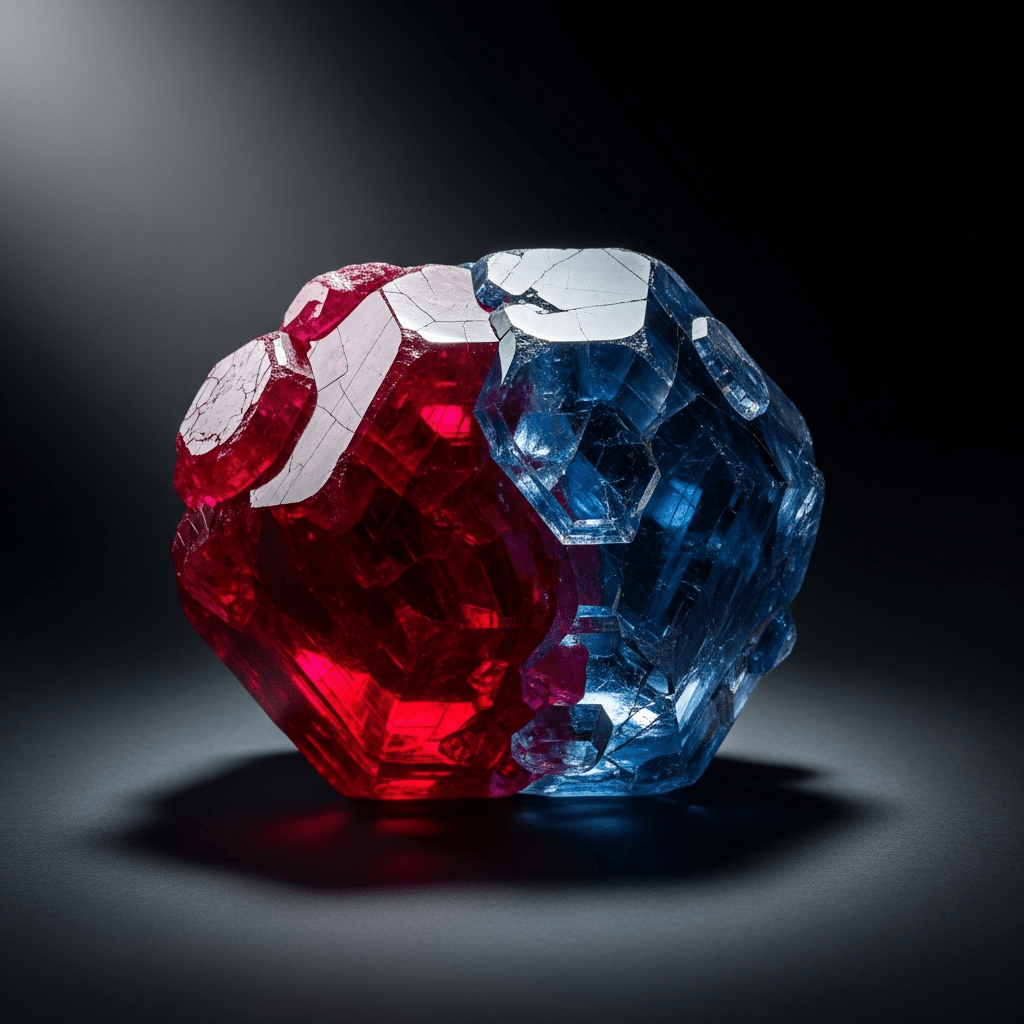
In its purest state, corundum is colorless and transparent to translucent, with a vitreous to adamantine luster that catches the light. However, trace impurities transform it into a spectrum of vivid hues: chromium yields the deep red of ruby, iron and titanium create the blues of sapphire, and other elements produce yellow, green, or purple stones. Corundum crystals typically form hexagonal prisms or tabular shapes, and granular forms like emery appear opaque and dark. Its surfaces are smooth and glassy, with conchoidal fractures and no true cleavage.
Corundum's extraordinary hardness makes it indispensable in industrial applications—used as emery in sandpapers, grinding wheels, and cutting tools. In the realm of jewelry, its gem varieties ruby and sapphire are cut and polished into some of the world's most coveted gemstones. The mineral's durability ensures its survival in alluvial deposits, where it is mined for both industrial and ornamental purposes. Synthetic corundum further extends its utility in technology and manufacturing.
Bring this kind into your world illustrated posters, mugs, and shirts.

Archival print, museum-grade paper
Buy Poster
Stoneware mug, dishwasher safe
Buy Mug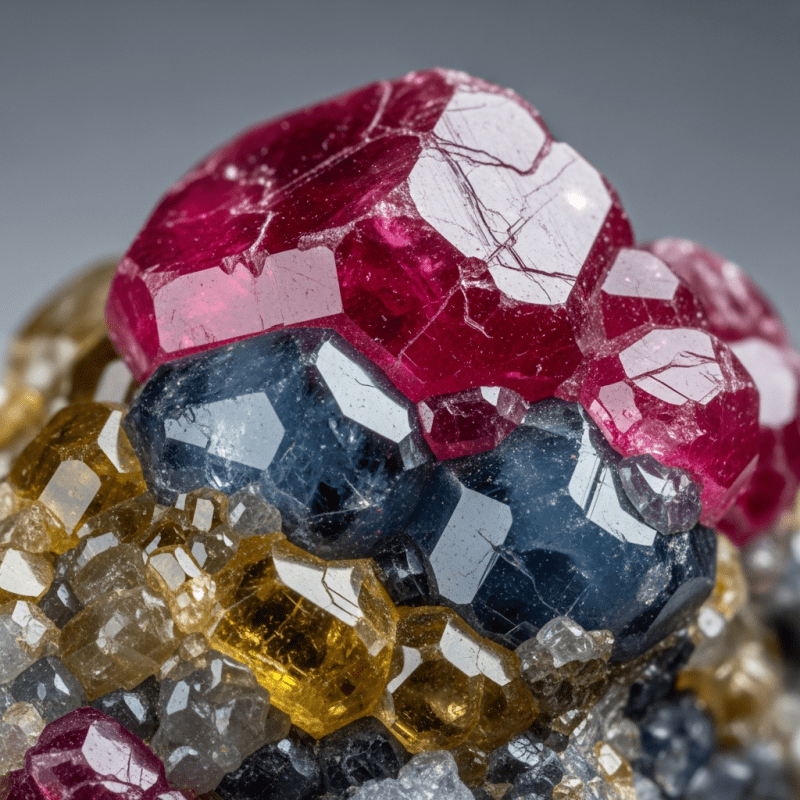
Soft cotton tee, unisex sizes
Buy ShirtFew minerals have shaped cultural history as profoundly as corundum. Rubies and sapphires have adorned royalty and religious artifacts for centuries, symbolizing power, wisdom, and passion in diverse societies. These gems feature in myth, legend, and art, prized not only for their beauty but also for their perceived mystical properties. Today, corundum continues to inspire fascination in both collectors and jewelry lovers worldwide.
Corundum's chemical formula is Al₂O₃, representing pure aluminum oxide. Its elemental makeup consists solely of aluminum and oxygen atoms arranged in a precise ratio, with trace impurities responsible for its diverse gem colors.
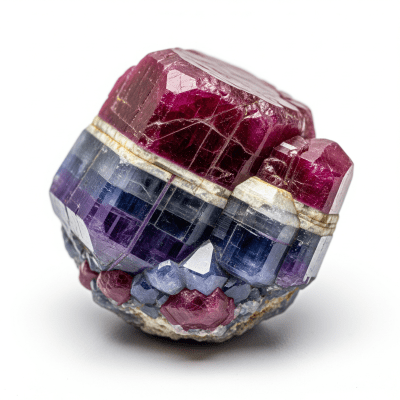
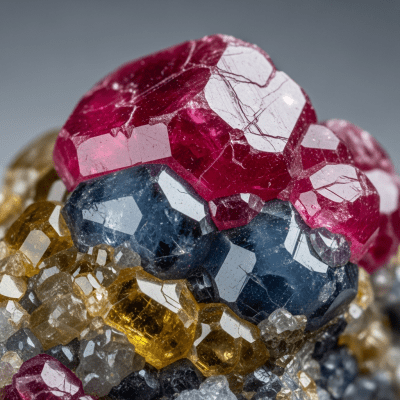
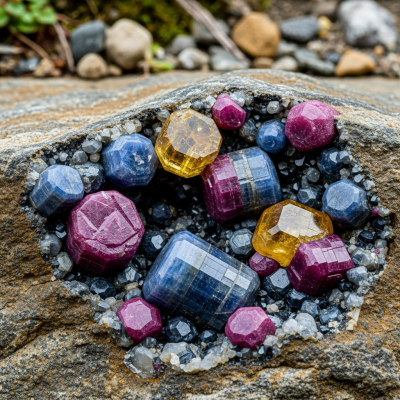
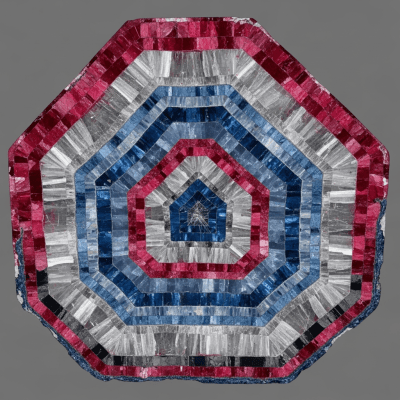

Corundum crystallizes in the trigonal system, specifically within the hexagonal scalenohedral class (space group R-3c). Its atomic arrangement forms robust, tightly packed structures that contribute to its notable hardness and durability.
Corundum is typically found in metamorphic rocks such as schists and marbles, as well as in igneous rocks like syenite and nepheline syenite. Its resistance to weathering allows it to accumulate in alluvial deposits, where gem-quality crystals are often mined. Notable sources include Myanmar, Sri Lanka, India, Madagascar, Thailand, Australia, and the United States (Montana, North Carolina).
Corundum's exceptional hardness makes it invaluable as an abrasive in sandpapers, grinding wheels, and cutting tools. Gem-quality corundum is fashioned into rubies and sapphires for jewelry. Synthetic corundum is widely produced for industrial applications, including watch bearings, lasers, and electronic substrates.
Corundum specimens and gemstones are highly durable but should be stored separately to avoid scratching softer minerals or gems. Clean with mild soap and water; avoid harsh chemicals or molten alkalis. For jewelry, periodic professional inspection ensures secure settings and preserves brilliance.
Legendary corundum specimens include the "Star of India" sapphire, the "Rosser Reeves Star Ruby," and the "Logan Sapphire," each celebrated for their size, color, and historical significance. These gems are housed in world-class museums and have captivated collectors and historians for generations.