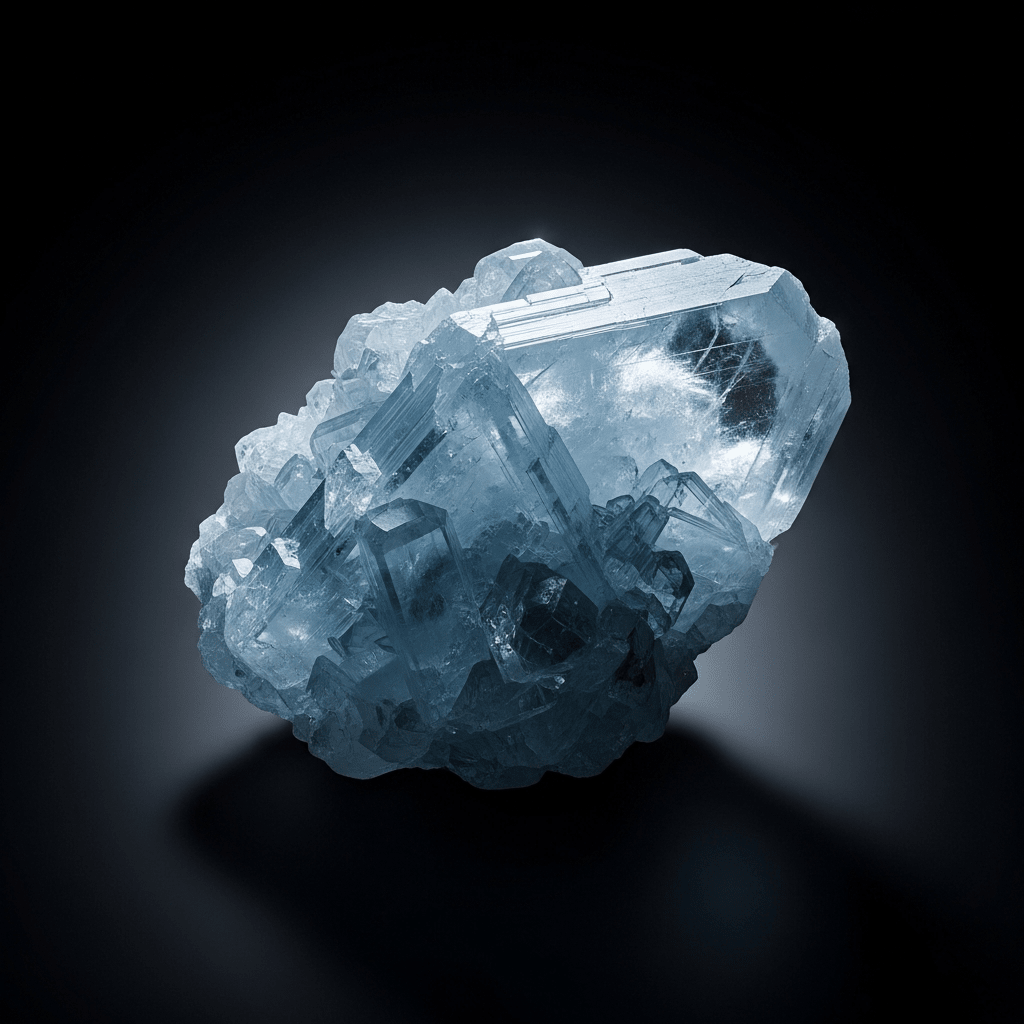
Celestine
Celestine is a naturally occurring strontium sulfate mineral, renowned for its delicate sky-blue crystals and its role as the principal source of strontium.
Celestine is a naturally occurring strontium sulfate mineral, renowned for its delicate sky-blue crystals and its role as the principal source of strontium.
Celestine was first described in 1791 by the German mineralogist Abraham Gottlob Werner. Its name is rooted in the Latin word caelestis, meaning "heavenly," a tribute to its characteristic pale blue hue. Officially recognized as a distinct mineral species by the International Mineralogical Association, celestine’s discovery and naming reflect both its aesthetic appeal and its scientific significance.
Celestine belongs to the sulfate mineral group, specifically classified as strontium sulfate (SrSO₄). In mineralogical systems, it is catalogued under Dana classification 28.3.1.1 and Strunz classification 7.AD.35, placing it among sulfates without additional anions and without water. Its orthorhombic crystal system further distinguishes it within the broader family of inorganic minerals.
Celestine typically forms tabular or prismatic crystals, often displaying a delicate blue coloration that ranges from colorless and white to pale pink, yellow, or gray depending on impurities. Its crystals are translucent to transparent with a vitreous to pearly luster, and larger specimens may exhibit impressive clarity and size. The mineral’s surface may feel smooth yet brittle, and its visual appeal is heightened by its subtle, ethereal tones.
Celestine’s primary function is as the main source of strontium, a metal used extensively in fireworks (for vivid red colors), flares, ceramics, glass production, and zinc refining. While its industrial utility is significant, celestine is also prized by mineral collectors for its aesthetic crystals and occasionally used in ornamental stonework. In nature, it interacts with sedimentary environments, forming through precipitation in strontium-rich solutions.
Bring this kind into your world illustrated posters, mugs, and shirts.
Archival print, museum-grade paper
Buy Poster
Stoneware mug, dishwasher safe
Buy Mug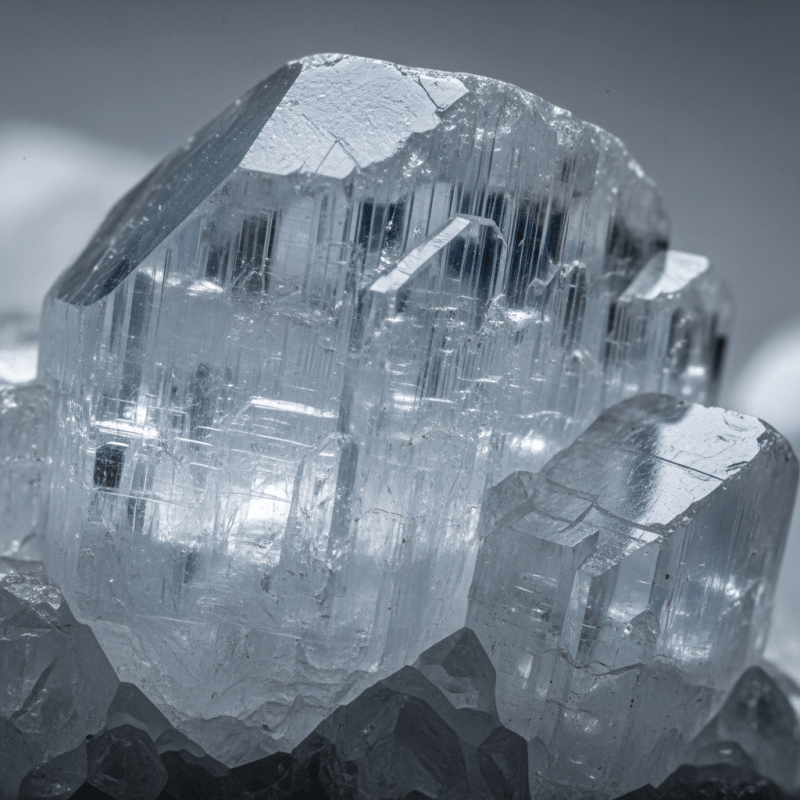
Soft cotton tee, unisex sizes
Buy ShirtThe heavenly blue color of celestine has inspired its name and lent it a subtle cultural aura, often symbolizing tranquility and the sky. While not as prominent in art or myth as some gemstones, its beauty and rarity have made it a sought-after specimen in museums and private collections, sometimes featured in decorative displays or as a symbol of serenity.
Celestine’s chemical formula is SrSO₄, meaning it is composed of strontium, sulfur, and oxygen. This strontium sulfate structure defines its unique properties and industrial value.
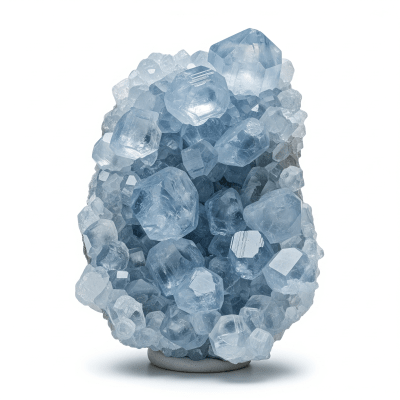

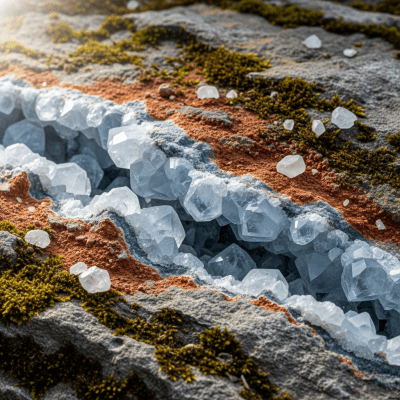
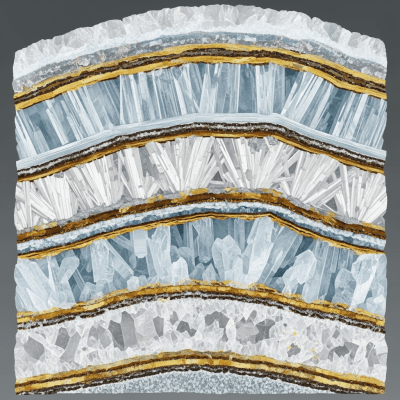

Celestine crystallizes in the orthorhombic crystal system, typically forming tabular or prismatic crystals. Its atomic arrangement is highly ordered, contributing to its perfect cleavage and distinctive crystal habits.
Celestine is most commonly found in sedimentary rocks, especially limestones and dolomites. It forms through the precipitation of strontium-rich solutions and is often associated with minerals such as gypsum, anhydrite, halite, and calcite. Notable deposits are located in Madagascar, Sicily, Ohio, and Bristol, making these regions important sources for both industrial and collector-grade specimens.
Celestine is synonymously known as celestite, with "celestite" favored in North America and "celestine" in Europe. While no formal mineralogical varieties are recognized, specimens may vary in color and crystal habit depending on locality and trace impurities.
Celestine is the world’s main source of strontium, which is essential in producing fireworks (for red hues), flares, ceramics, specialty glass, and in the refining of zinc. Its aesthetic crystals are also used in ornamental stonework and are highly valued by mineral collectors.
Some of the world’s largest and most spectacular celestine geodes are found in Madagascar, with individual crystals reaching impressive sizes. The blue celestine geodes of Put-in-Bay, Ohio, are also renowned among collectors and museums for their clarity and scale.