Calcite
Calcite is a naturally occurring mineral and the most stable polymorph of calcium carbonate (CaCO₃), renowned for its abundance and pivotal role in sedimentary rocks such as limestone and marble.
Calcite is a naturally occurring mineral and the most stable polymorph of calcium carbonate (CaCO₃), renowned for its abundance and pivotal role in sedimentary rocks such as limestone and marble.
Calcite’s story stretches back to antiquity, with early mentions by Pliny the Elder in the 1st century AD. Its formal mineralogical description was established in 1845 by Carl Friedrich Christian Mohs, who named it after the Latin word calx, meaning lime. Throughout history, calcite has been recognized and utilized across cultures, and today it is an IMA-approved mineral species.
Calcite belongs to the carbonate group of minerals, defined by their chemical composition containing carbonate ions. It is classified under Dana code 16a.1.1.1 and Strunz code 5/A.01-05.1.1.1, and is the principal representative of calcium carbonate minerals. Its trigonal crystal system and distinctive cleavage set it apart within its group.
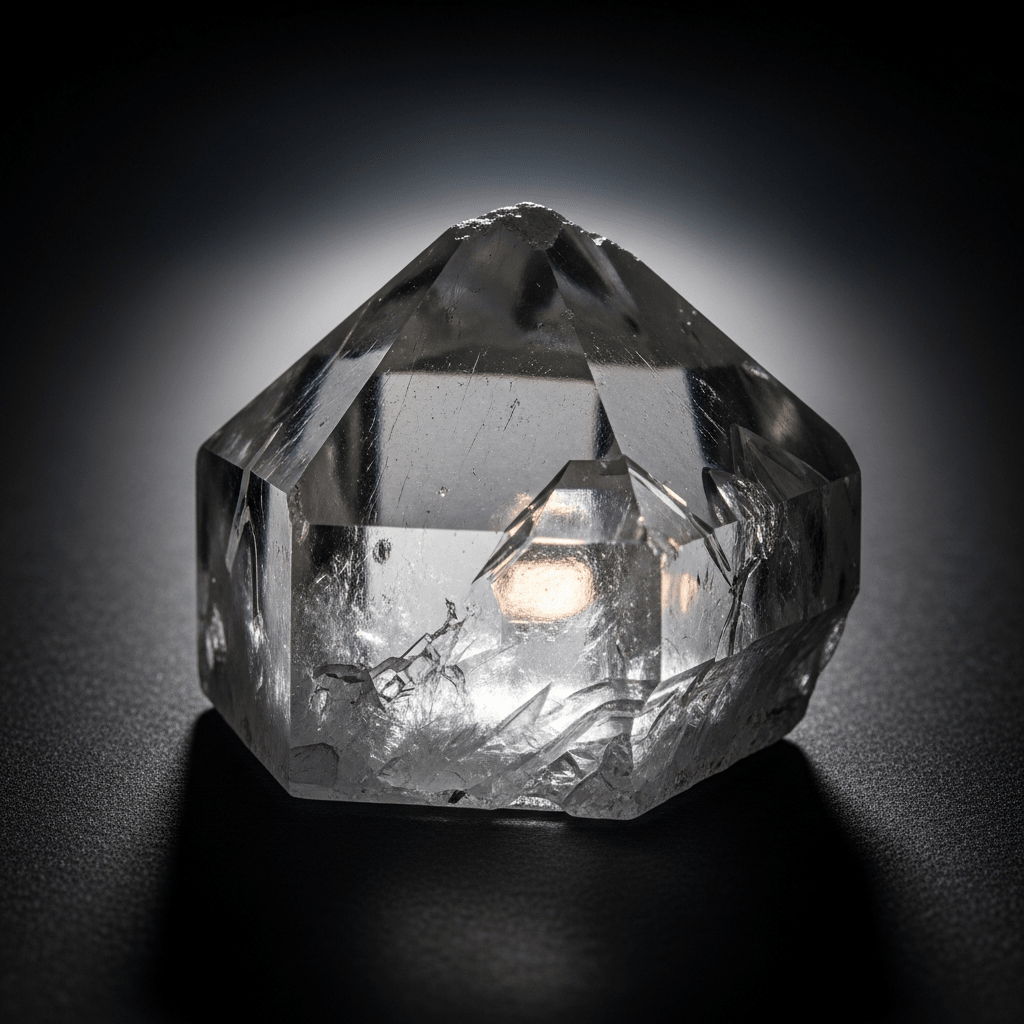
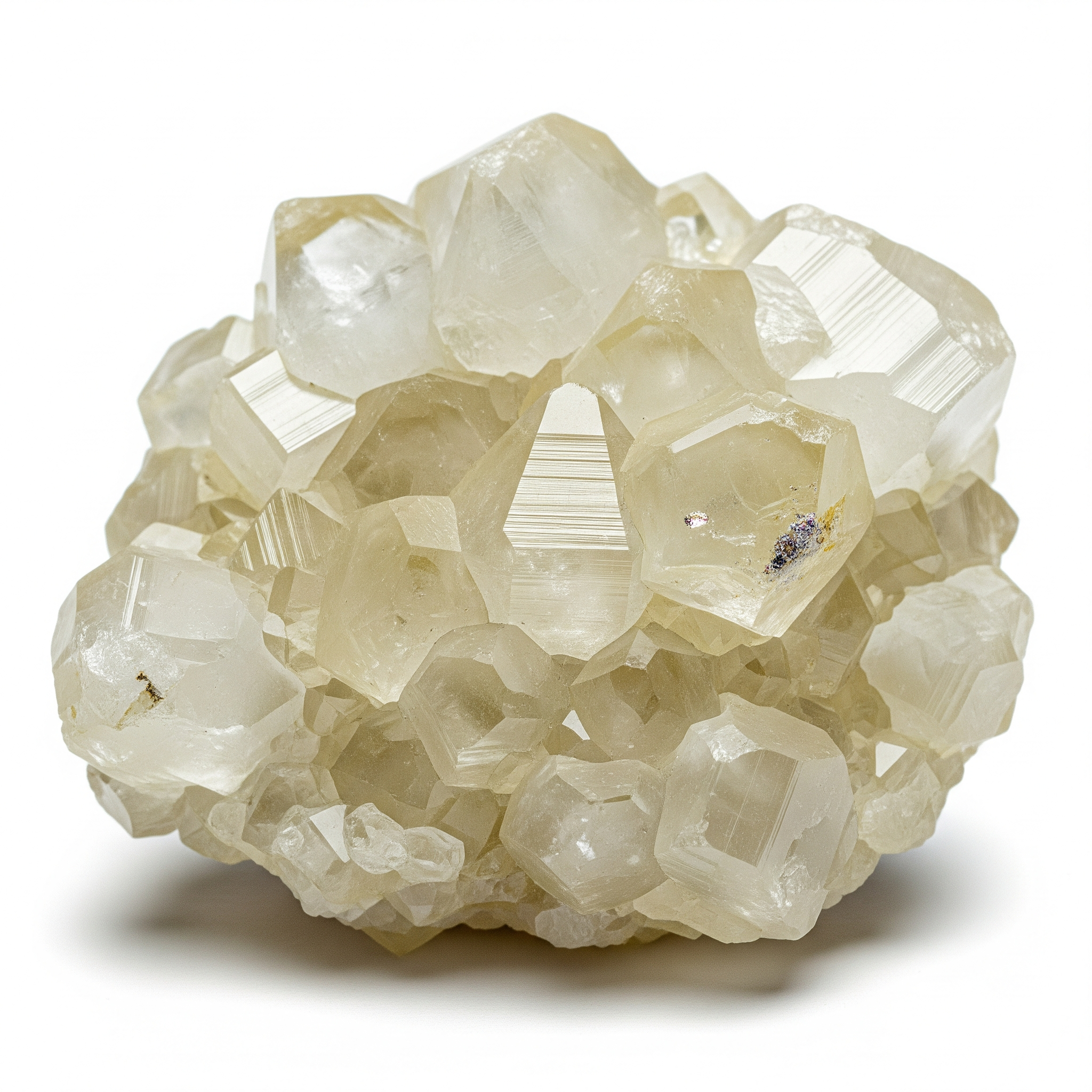
Calcite typically forms rhombohedral or scalenohedral crystals, often displaying a glassy (vitreous) to pearly luster. Pure specimens are colorless or white, but natural calcite can exhibit a spectrum of colors—gray, yellow, green, blue, or black—due to trace impurities. Its transparency ranges from transparent to translucent, and it is renowned for its perfect rhombohedral cleavage and striking double refraction, which can split light into two distinct rays.
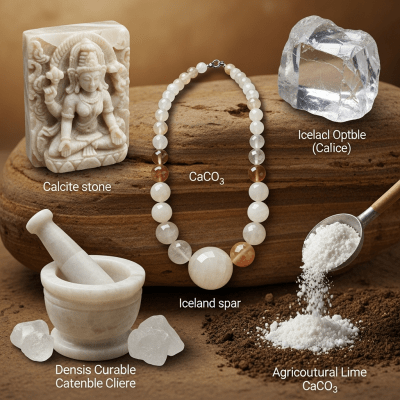
Calcite reacts vigorously with dilute acids, effervescing as carbon dioxide gas is released—a key trait for field identification. Its softness (Mohs hardness 3) makes it easy to carve, and its solubility in acids influences its role in geological processes. Humans have harnessed calcite for centuries, using it in construction, ornamentation, and industrial applications such as cement and lime production. Optical-grade calcite (Iceland Spar) is prized for its ability to polarize light in scientific instruments.
Bring this kind into your world illustrated posters, mugs, and shirts.
Archival print, museum-grade paper
Buy Poster
Stoneware mug, dishwasher safe
Buy Mug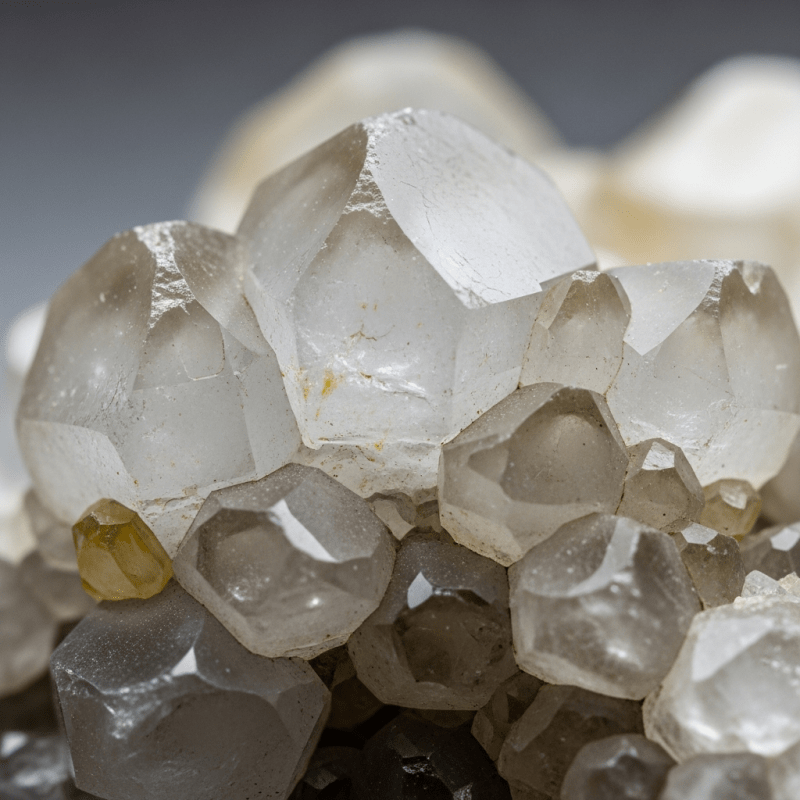
Soft cotton tee, unisex sizes
Buy ShirtThroughout history, calcite has been a cornerstone of architecture and art, featured in iconic structures built from limestone and marble. Its transparent variety, Iceland Spar, played a role in early optical research and navigation. Ornamental forms like Carrara Marble and Mexican Onyx have adorned palaces, sculptures, and decorative objects, making calcite a mineral deeply woven into human culture and heritage.
Calcite’s chemical formula is CaCO₃, indicating it is composed of calcium, carbon, and oxygen. This simple yet versatile composition underpins its widespread occurrence and utility.
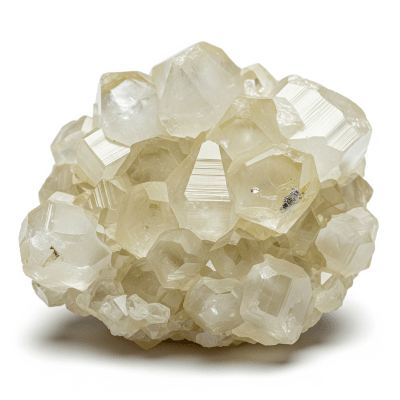
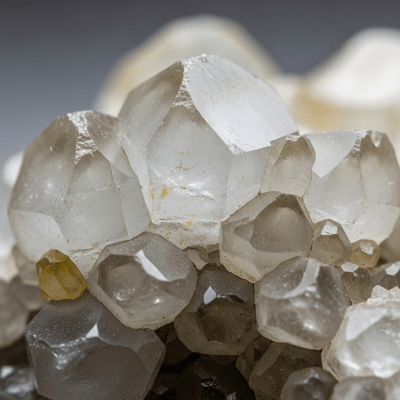
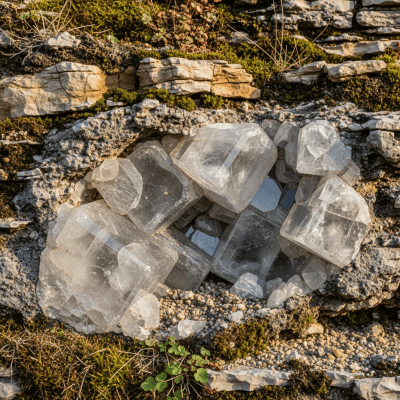
Calcite crystallizes in the trigonal (hexagonal scalenohedral) crystal system. Its crystals commonly display rhombohedral shapes, and the mineral is famed for its perfect rhombohedral cleavage and pronounced birefringence, a result of its ordered atomic arrangement.
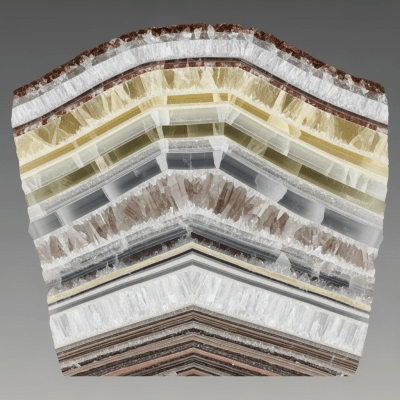
Calcite is ubiquitous in sedimentary environments, forming the bulk of limestone and marble. It also appears in hydrothermal veins, metamorphic rocks, and as a secondary mineral in igneous rocks. Major localities include the Elmwood Mine in Tennessee, Iceland Spar deposits in Iceland, and the famed Carrara Marble quarries in Italy.
Calcite’s industrial importance is vast: it is a primary raw material for cement and lime, a flux in steel production, and a soil conditioner in agriculture. Its optical-grade form, Iceland Spar, is utilized in polarizing microscopes and other scientific instruments. Decorative varieties are widely used as ornamental stone in architecture and sculpture.