Beryl
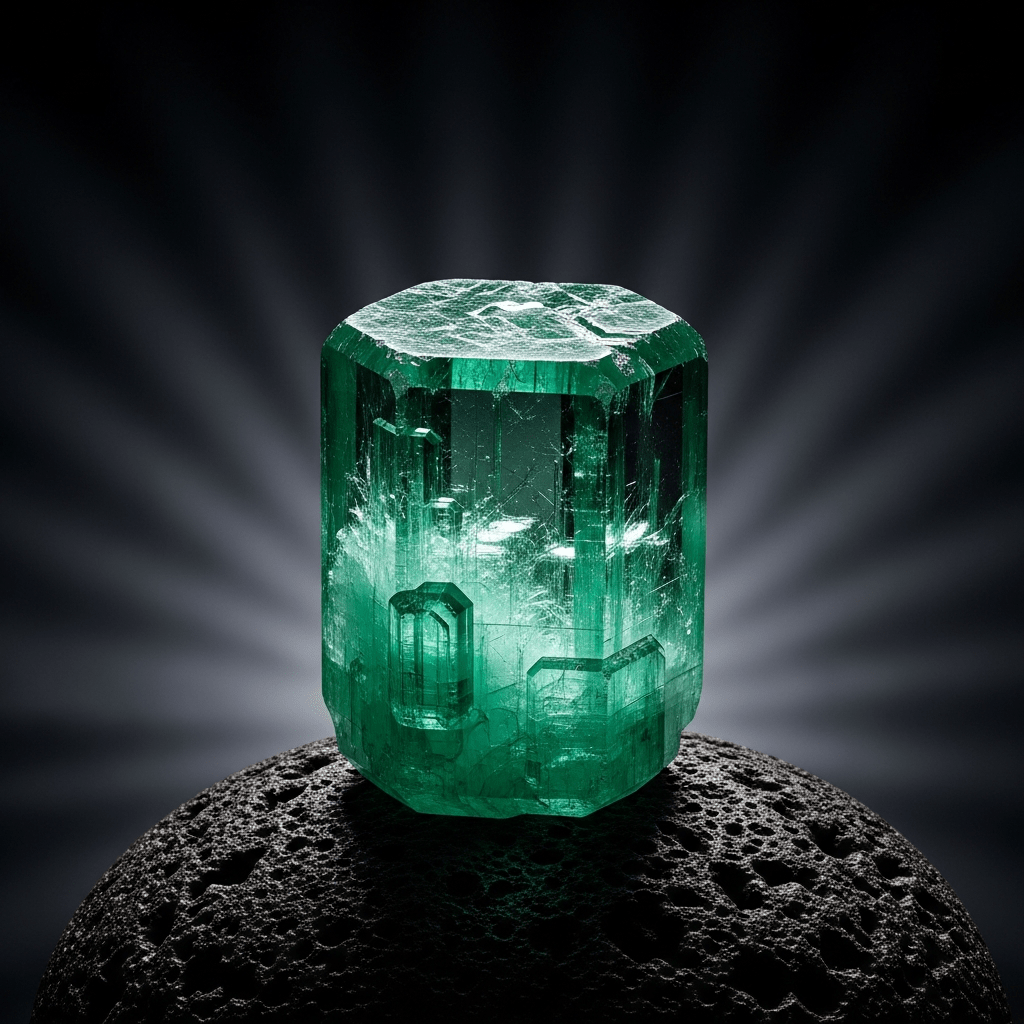
Beryl is a hard, hexagonal cyclosilicate mineral renowned as the parent species of several prized gemstones, including emerald and aquamarine.
Beryl is a hard, hexagonal cyclosilicate mineral renowned as the parent species of several prized gemstones, including emerald and aquamarine.
Beryl’s story begins in antiquity, with ancient Greeks and Romans treasuring its green variety—emerald—for its beauty and rarity. The mineral itself was formally named in the 18th century, drawing from the Greek word beryllos, which referred to blue-green stones imported from India. Today, beryl is recognized globally as a valid mineral species by the International Mineralogical Association (IMA), with its historic allure continuing through both scientific study and cultural admiration.
Beryl belongs to the cyclosilicate class of minerals, defined by its ring-shaped silicate structure. It is catalogued in the Dana system as 61.1.3.1 and in the Strunz classification as 9.CJ.05. As a mineral species, beryl is the foundational member of a group whose varieties are distinguished by trace impurities, resulting in a spectrum of colors and gem types.
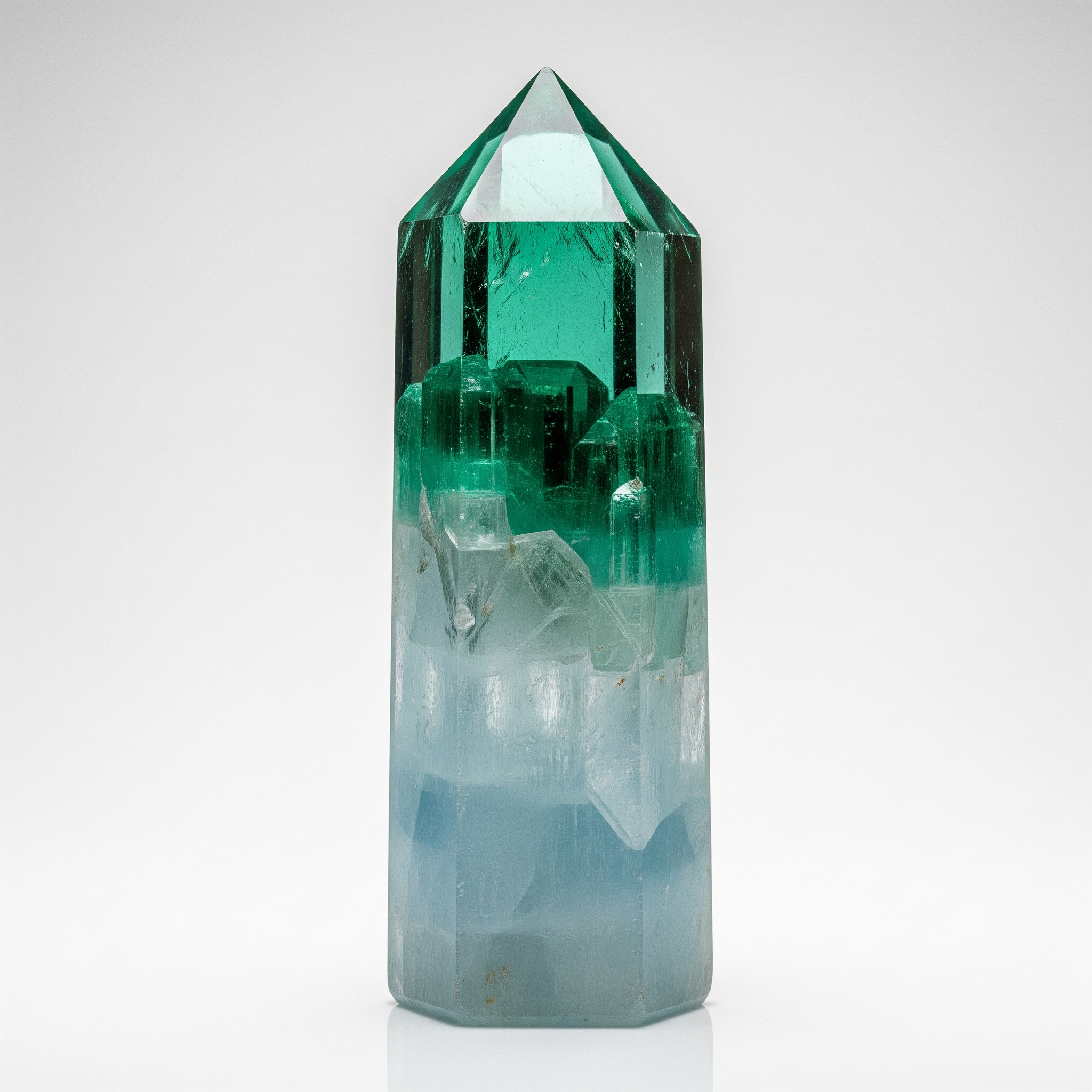
Beryl typically forms elongated, prismatic hexagonal crystals with sharp edges and smooth faces. Pure beryl is colorless (goshenite), but trace elements create vibrant hues: green (emerald), blue (aquamarine), yellow (heliodor), pink (morganite), and rare red (red beryl). Its luster is vitreous, and specimens are transparent to translucent, often found embedded in pale, coarse-grained granitic pegmatite matrices.
Beryl’s durability and resistance to acids (except hydrofluoric acid) make it valuable both as a gemstone and as the principal ore of beryllium. Gem varieties are cut and polished for jewelry, while industrial-grade beryl is processed for beryllium extraction, supporting aerospace, nuclear, and electronic industries. Collectors prize well-formed crystals for their clarity and aesthetic appeal.
Bring this kind into your world illustrated posters, mugs, and shirts.
Archival print, museum-grade paper
Buy Poster
Stoneware mug, dishwasher safe
Buy Mug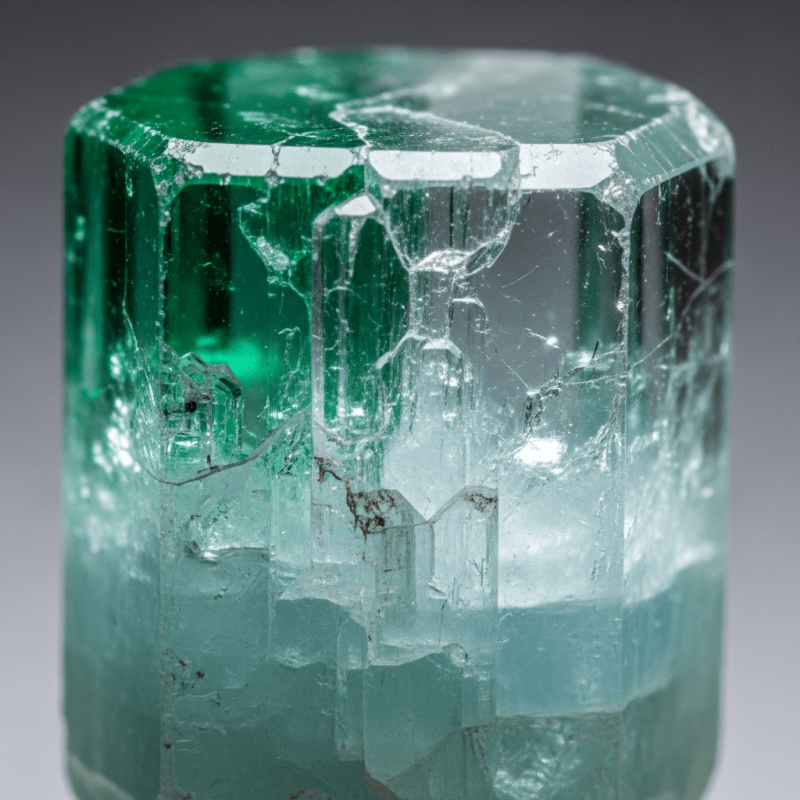
Soft cotton tee, unisex sizes
Buy ShirtEmeralds—green beryl—have captivated cultures for millennia, symbolizing wealth, rebirth, and protection in ancient Greece and Rome. Aquamarine and other varieties are celebrated in folklore, art, and jewelry worldwide. Beryl’s gem forms have shaped legends, adorned royalty, and continue to influence modern fashion and design.
Beryl’s chemical formula is Be₃Al₂Si₆O₁₈, comprising beryllium, aluminum, and silicate rings. Trace elements such as chromium, vanadium, and iron impart its various colors.

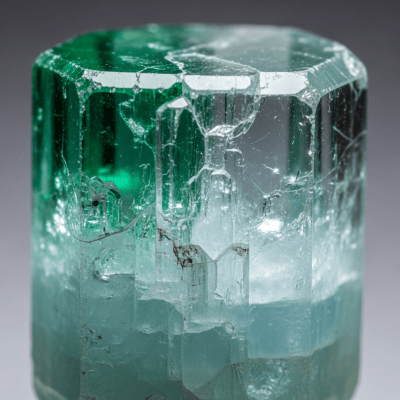
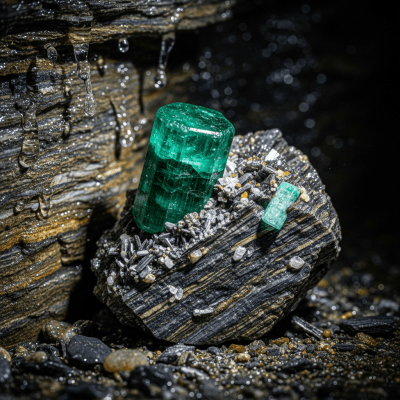


Beryl crystallizes in the hexagonal system, forming six-sided prismatic crystals. Its cyclosilicate structure features rings of six linked silicate tetrahedra, giving rise to its characteristic symmetry and form.
Beryl is most commonly found in granitic pegmatites and mica schists, occasionally in hydrothermal veins. Major localities include Minas Gerais (Brazil), the Ural Mountains (Russia), Colombia (emeralds), Madagascar, and the United States (Utah, California, North Carolina). It is often associated with quartz, feldspar, and mica.
Beryl is the principal ore of beryllium, a metal essential for aerospace components, nuclear reactors, and advanced electronics due to its light weight and high strength. Gem-quality beryl—emerald, aquamarine, morganite, heliodor, and red beryl—is highly valued in the jewelry industry, driving global trade and craftsmanship.