Barite
Barite is a naturally occurring barium sulfate mineral renowned for its exceptional density and vital role in industrial applications, especially as a weighting agent in drilling fluids.
Barite is a naturally occurring barium sulfate mineral renowned for its exceptional density and vital role in industrial applications, especially as a weighting agent in drilling fluids.
Barite was first described in 1800 by the German mineralogist Abraham Gottlob Werner. Its name is derived from the Greek word barys, meaning "heavy," a nod to its substantial specific gravity. The mineral has been recognized and approved by the International Mineralogical Association (IMA), and its discovery marked a significant addition to the catalog of economically important minerals.
Barite belongs to the sulfate mineral group, classified scientifically as barium sulfate (BaSO₄). Its Dana classification is 28.3.1.1 and Strunz code is 7.AD.35, placing it among minerals defined by their sulfate anion and distinctive crystal structure. Barite is a well-established mineral species within the broader mineral taxonomy, recognized for its unique chemical and physical attributes.
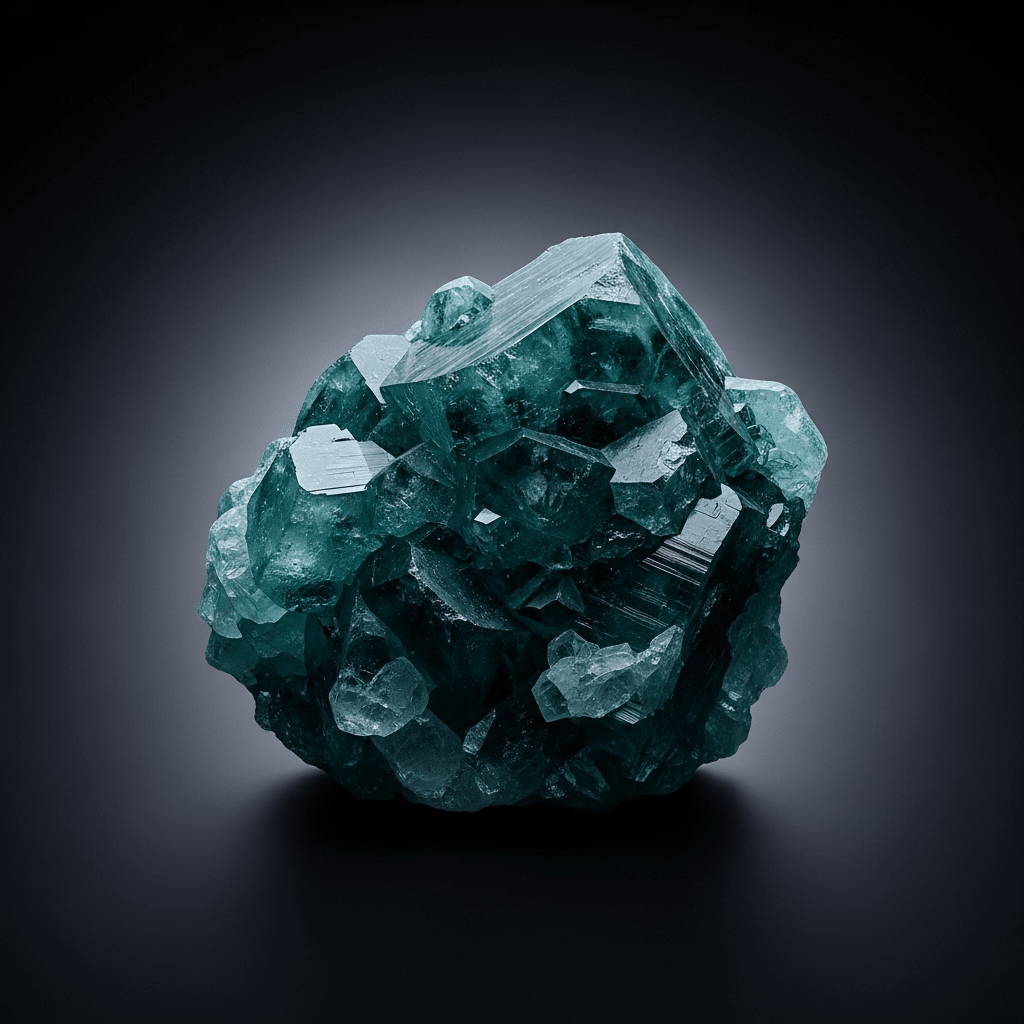
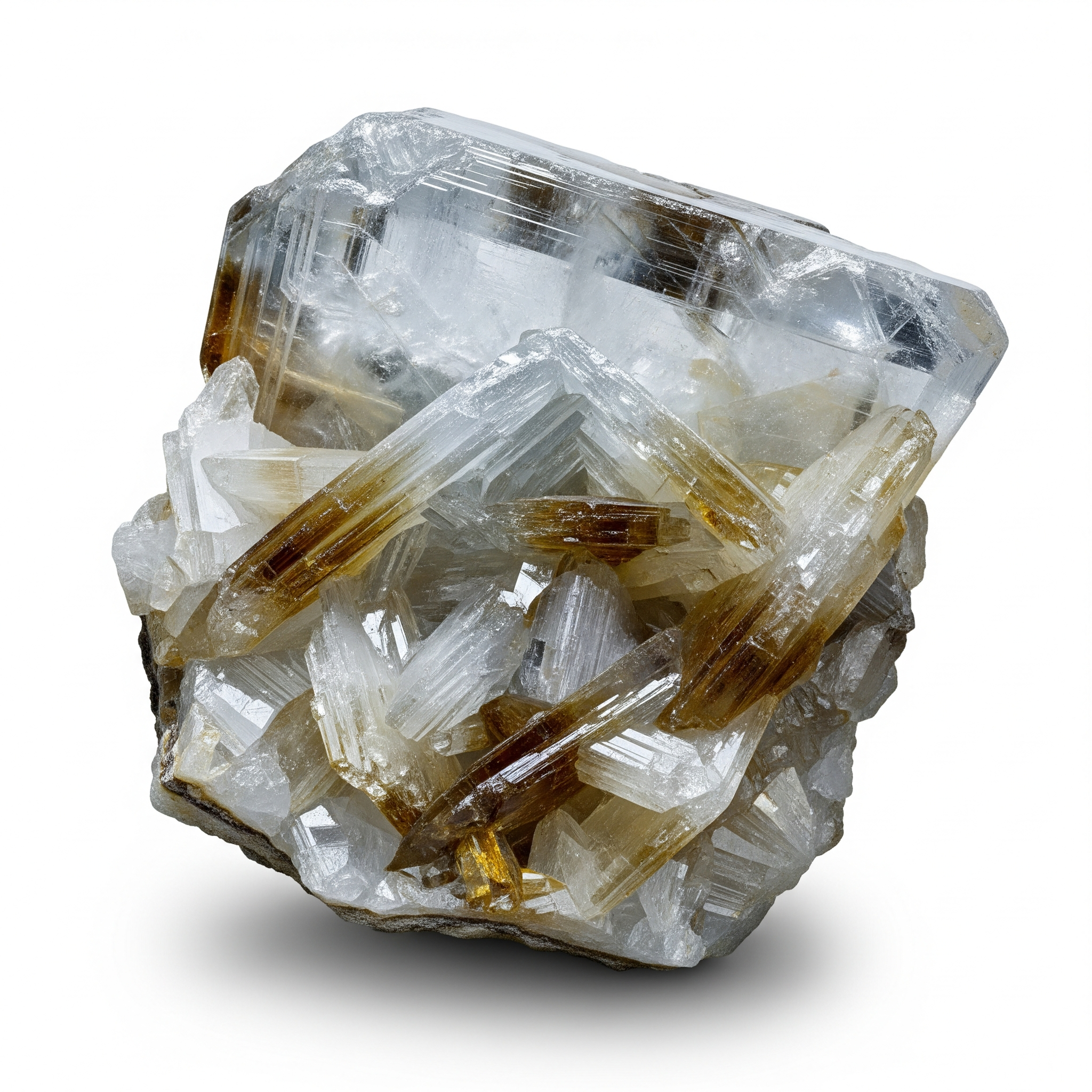
Barite typically forms tabular or prismatic crystals, often displaying a glassy, vitreous to pearly luster. Its color ranges from colorless and white to subtle shades of light blue, yellow, or gray. Specimens can be transparent to opaque, and the mineral is also found in massive, fibrous, or granular habits. Well-formed crystals are prized by collectors for their clarity and heft.
Barite’s most prominent function is as a weighting agent in drilling muds for oil and gas exploration, where its high density helps control well pressure. Its chemical inertness and insolubility make it ideal for use in the production of barium chemicals, as a filler in paints and plastics, and in medical radiology for barium meals. The mineral’s softness and brittleness limit its use in jewelry or ornamental objects, but its industrial value is substantial.
Bring this kind into your world illustrated posters, mugs, and shirts.
Archival print, museum-grade paper
Buy Poster
Stoneware mug, dishwasher safe
Buy Mug
Soft cotton tee, unisex sizes
Buy ShirtBarite holds limited cultural significance but is occasionally collected for its attractive crystal forms. While it does not feature prominently in art or mythology, mineral enthusiasts and museums value high-quality specimens for their aesthetic and educational appeal.
Barite’s chemical formula is BaSO₄, indicating it is composed of barium, sulfur, and oxygen. This simple yet distinctive composition accounts for its high density and chemical stability.
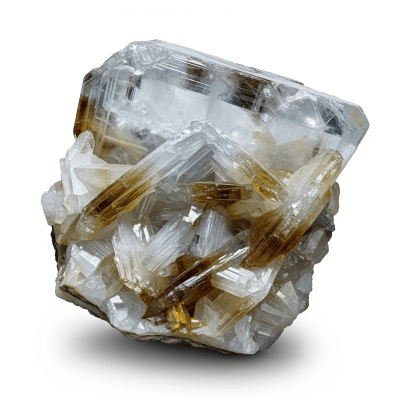
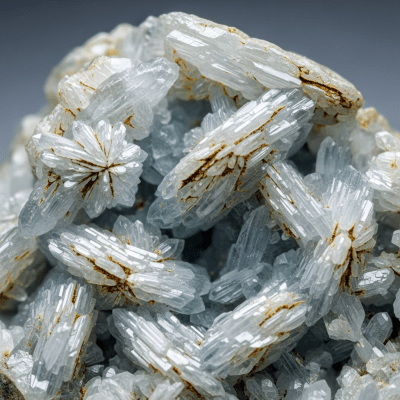
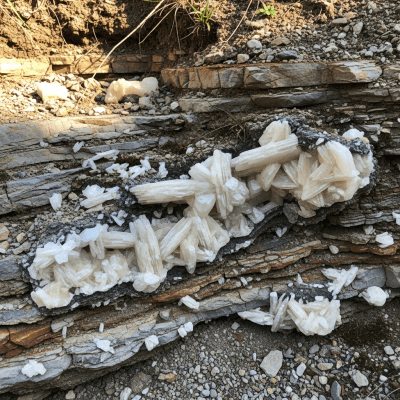
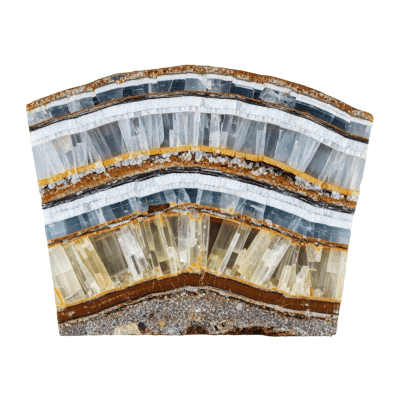
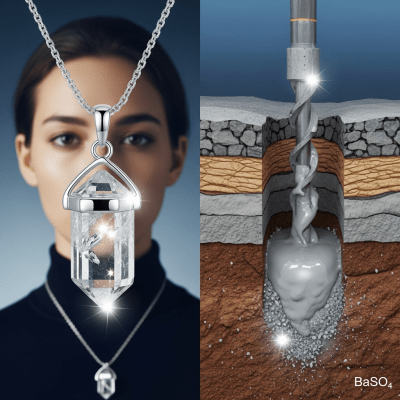
Barite crystallizes in the orthorhombic crystal system, typically forming tabular or prismatic crystals. Its structure is characterized by perfect cleavage in one direction and good cleavage in two others, contributing to its brittle nature and distinctive crystal shapes.
Barite is commonly found in hydrothermal veins, sedimentary rocks, and as concretions in limestone. It often occurs alongside minerals such as galena, sphalerite, and fluorite. Major deposits are mined in China, India, Morocco, the United States (notably Nevada and Missouri), and Peru. Its presence in diverse geological settings makes it a widespread and economically important mineral.
Notable barite specimens include large, well-formed crystals from the Elk Creek locality in South Dakota, USA, and striking blue barite clusters from Morocco. These samples are highly valued by collectors and museums for their clarity, color, and impressive crystal habits.