Azurite
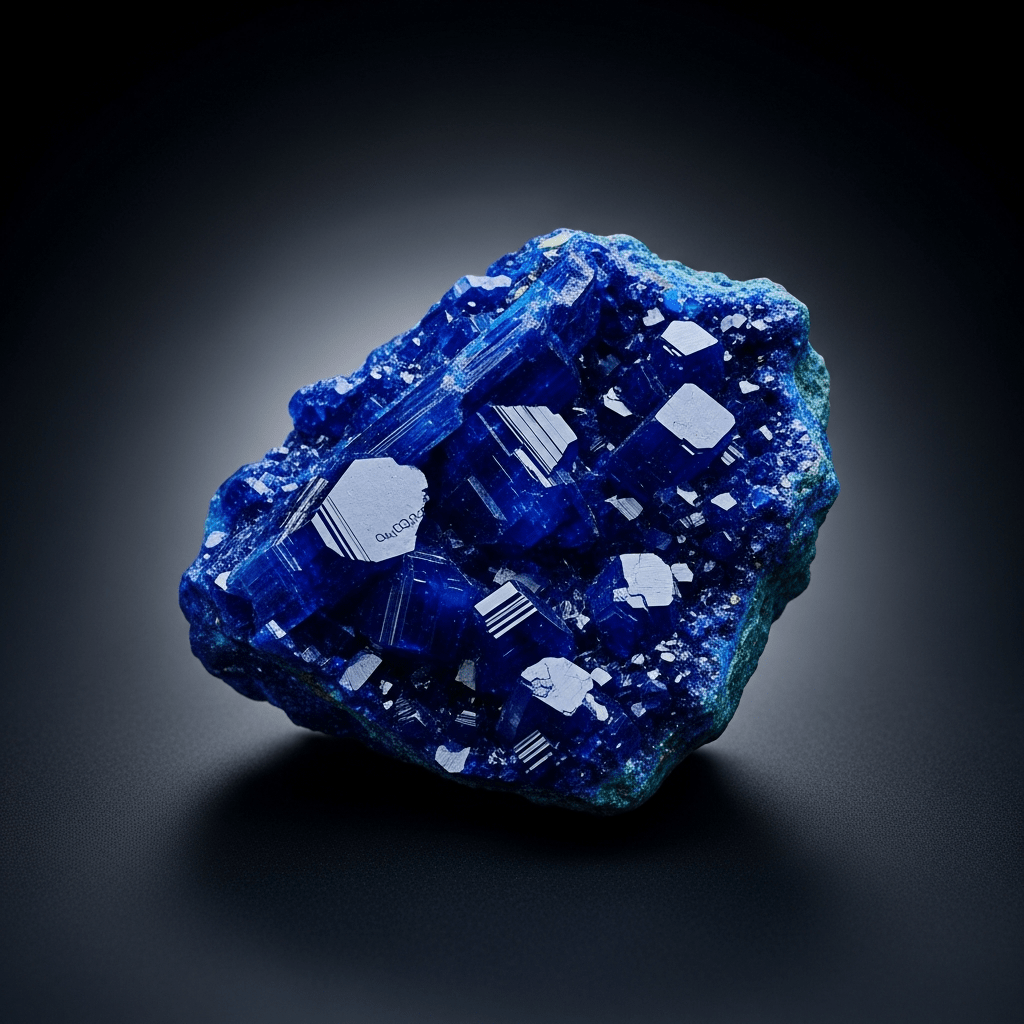
Azurite is a vibrant deep blue copper carbonate mineral, celebrated for its intense color and historical role as a pigment in art and decoration.
Azurite is a vibrant deep blue copper carbonate mineral, celebrated for its intense color and historical role as a pigment in art and decoration.
Known since antiquity, azurite has roots in ancient Egypt, Greece, and Rome, where it was prized for its brilliant blue hue. The name "azurite" comes from the Persian word "lazhward," meaning blue. Its formal recognition as a mineral species predates modern mineralogical authorities, with scientific documentation dating back to the 18th century and early studies by Abraham Gottlob Werner. Famous localities such as Chessy-les-Mines in France have contributed to its mineralogical legacy.
Azurite belongs to the copper carbonate hydroxide group and is classified as a secondary mineral formed in the oxidized zones of copper deposits. It is recognized by the International Mineralogical Association (IMA) and is cataloged under Dana classification 16a.2.1.1 and Strunz classification 5.BA.01. Its close relationship with malachite, a green copper carbonate mineral, is notable due to frequent co-occurrence and alteration.
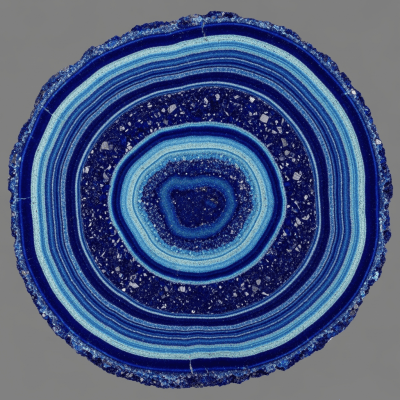
Azurite is instantly recognizable for its striking azure to deep blue color, which can appear almost electric in intensity. Crystals often form as prismatic or tabular shapes, but the mineral can also be found in massive aggregates. Its luster ranges from vitreous to dull, and specimens may display a light blue streak when scratched. The mineral's surface may be smooth or slightly granular, and its perfect cleavage in one direction can result in flat, reflective faces.
Historically, azurite was ground into powder and used as a blue pigment in painting and decoration, valued for its vivid color. Today, its softness and brittleness limit its use in jewelry, but it remains highly sought after by mineral collectors and museums. Azurite is also a minor ore of copper, though its rarity prevents large-scale industrial extraction. In nature, it often alters to malachite when exposed to moisture and carbon dioxide, reflecting its dynamic behavior in the environment.
Bring this kind into your world illustrated posters, mugs, and shirts.
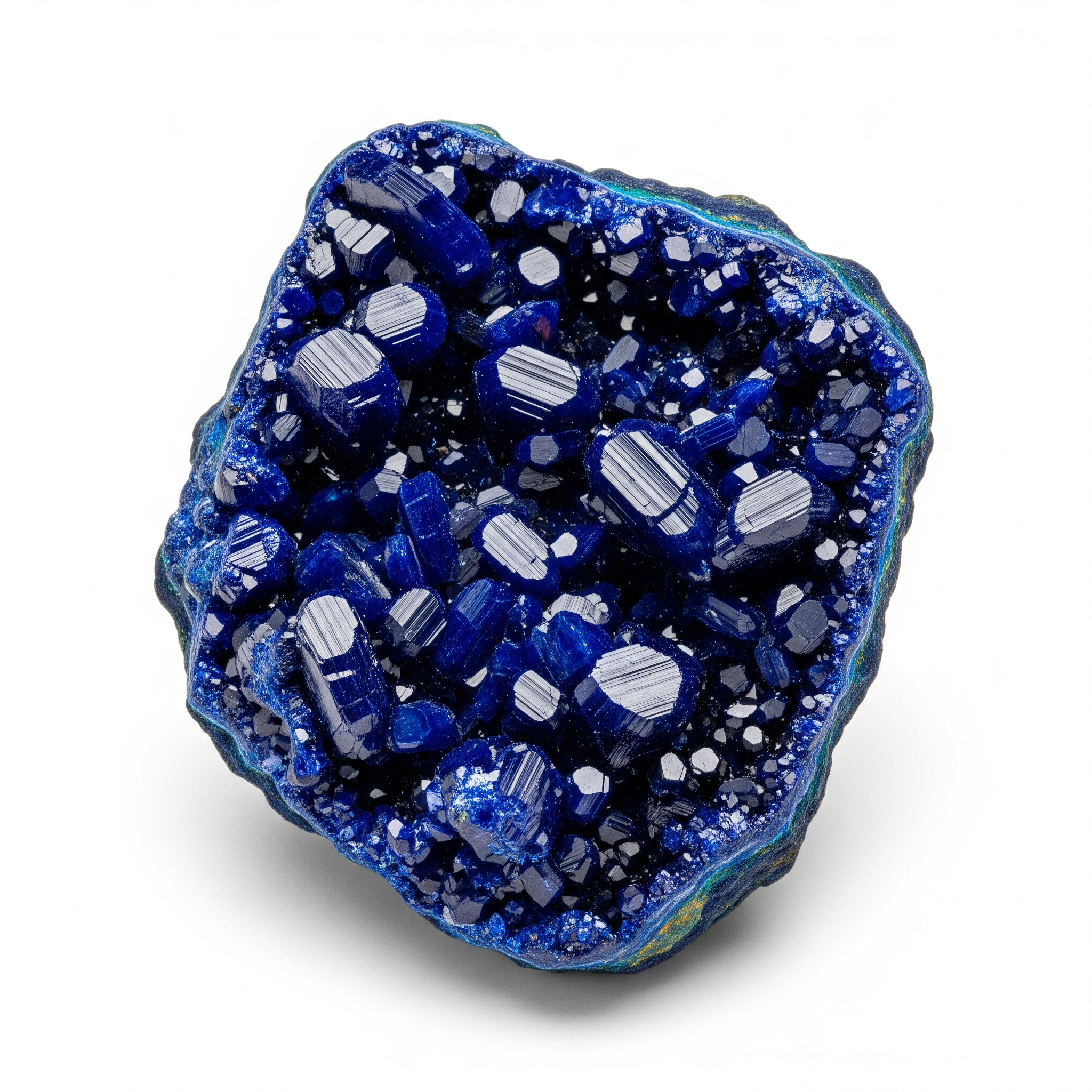
Archival print, museum-grade paper
Buy Poster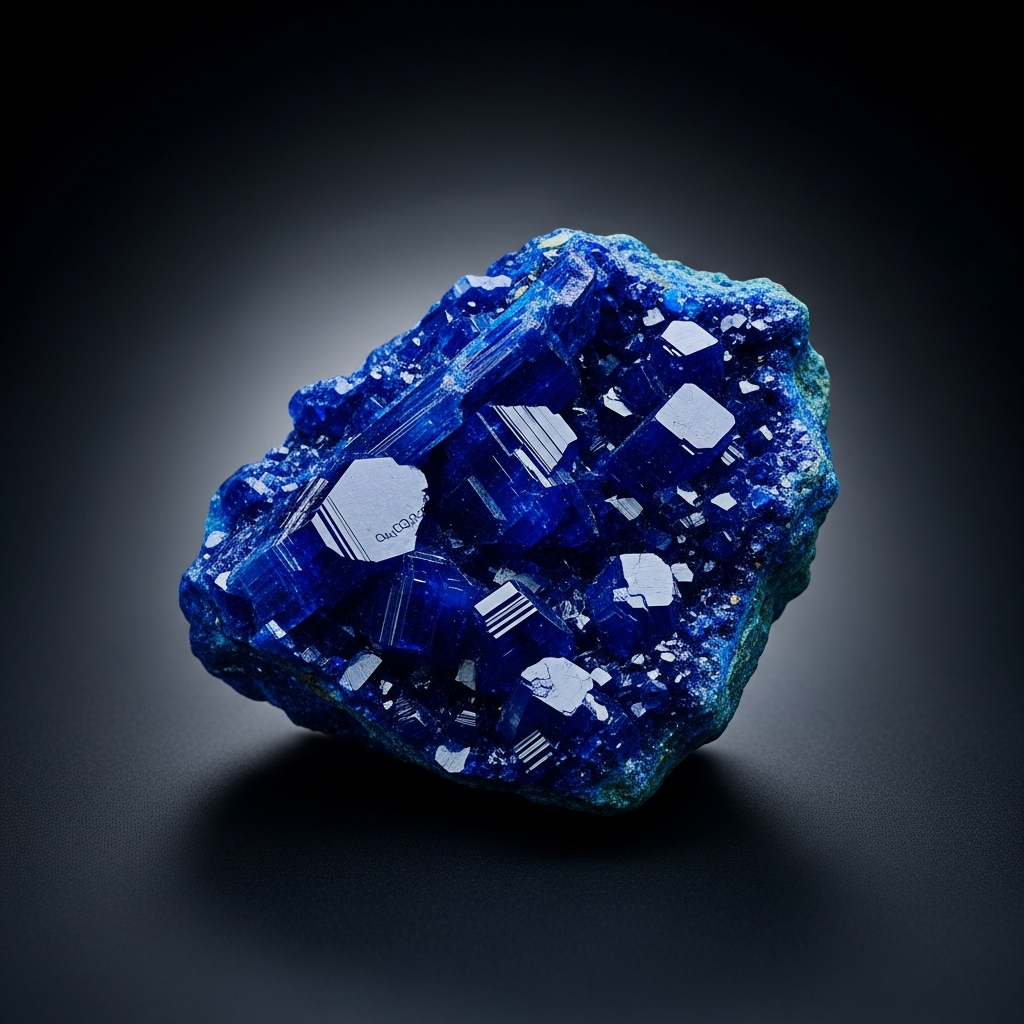
Stoneware mug, dishwasher safe
Buy Mug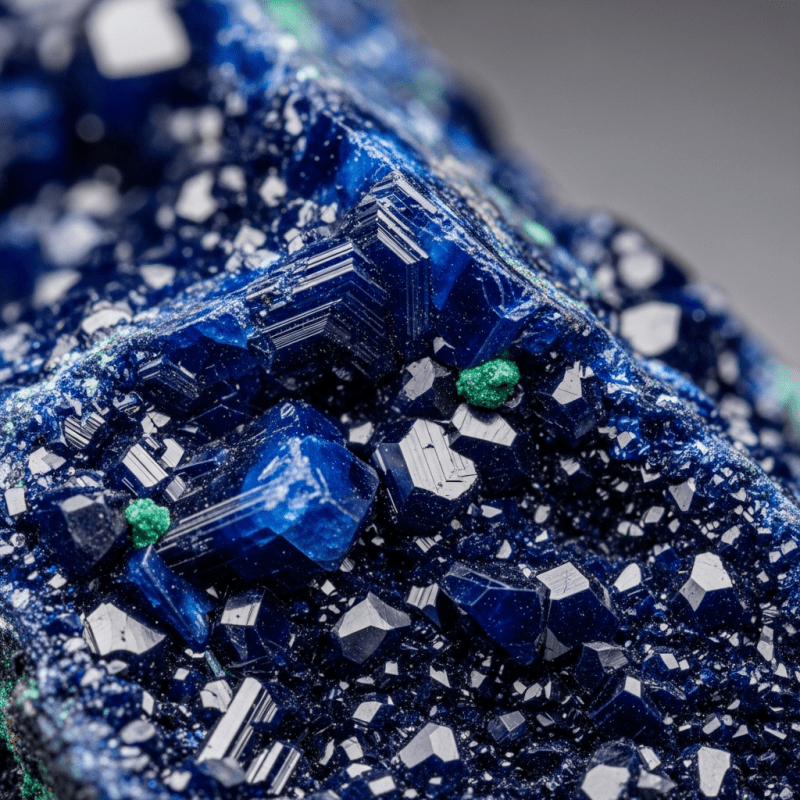
Soft cotton tee, unisex sizes
Buy ShirtAzurite holds a distinguished place in cultural history, especially as a pigment in ancient art. It adorned the tombs and temples of Egypt, the frescoes of Greece, and the icons of Rome, imparting a rich blue hue that symbolized the heavens and the divine. Its use persisted through the Middle Ages and Renaissance, where artists sought its unparalleled color for religious and decorative works. Today, azurite continues to inspire fascination in both art and science.
Azurite has the chemical formula Cu₃(CO₃)₂(OH)₂, making it a copper carbonate hydroxide mineral. Its structure contains copper, carbonate, and hydroxide ions.
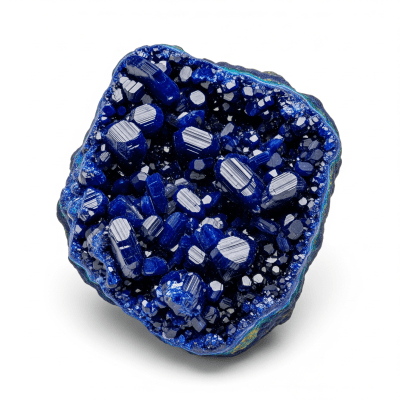
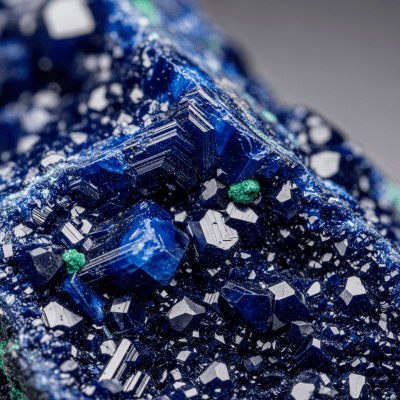

Azurite crystallizes in the monoclinic crystal system. Its crystals are typically prismatic or tabular, and the mineral exhibits perfect cleavage in one direction, contributing to its characteristic crystal faces.
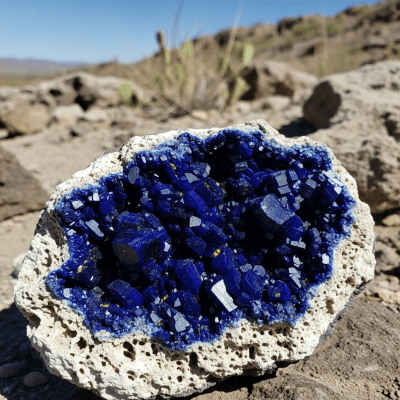
Azurite forms in the oxidized zones of copper ore deposits, where it is often found alongside minerals such as malachite, cuprite, and chrysocolla. It occurs in sedimentary, metamorphic, and igneous rocks that contain copper. Notable localities include Chessy-les-Mines in France, Bisbee and Morenci in Arizona (USA), and Tsumeb in Namibia.
These alternative names reflect regional usage and historical references. Azurite does not have widely recognized varieties, but its synonyms are common in mineralogical literature.
Azurite's industrial use is limited due to its rarity and softness. Historically, it was ground into pigment for paints and dyes, valued for its vivid blue color. While it can serve as a minor copper ore, most commercial copper extraction relies on more abundant minerals. Today, azurite's primary value lies in its appeal to collectors, museums, and as a decorative stone in jewelry and ornamentation.
Azurite is relatively soft and brittle, so specimens should be handled gently and stored in padded containers. Avoid prolonged exposure to moisture and carbon dioxide, as azurite can alter to malachite over time. Clean specimens with a soft brush and avoid harsh chemicals, especially acids, which can dissolve the mineral.
Some of the world's most celebrated azurite specimens hail from Chessy-les-Mines in France, renowned for their large, well-formed crystals. Bisbee, Arizona, has also produced notable examples, prized for their color and crystal quality. Museum collections worldwide feature azurite from these localities, showcasing its beauty and historical significance.