Andalusite
Andalusite is an alumino-silicate mineral recognized for its orthorhombic crystals, distinctive pleochroism, and importance as both a metamorphic indicator and a gemstone.
Andalusite is an alumino-silicate mineral recognized for its orthorhombic crystals, distinctive pleochroism, and importance as both a metamorphic indicator and a gemstone.
First described in 1789 by Jean-Claude Delamétherie, Andalusite takes its name from the Spanish province of Andalusia, though its true type locality is El Cardoso de la Sierra, Guadalajara, Spain. The mineral’s official recognition and approval by the International Mineralogical Association (IMA) underscore its geological significance, with its discovery marking a milestone in mineralogical classification during the late 18th century.
Andalusite belongs to the alumino-silicate group, specifically classified as a nesosilicate. It shares its chemical formula, Al₂SiO₅, with two other polymorphs—kyanite and sillimanite—distinguished by their unique crystal structures. According to the Dana system, Andalusite is categorized under code 52.04.01.01, while the Strunz classification lists it as 9.AF.15. Its orthorhombic symmetry sets it apart within the broader silicate family.
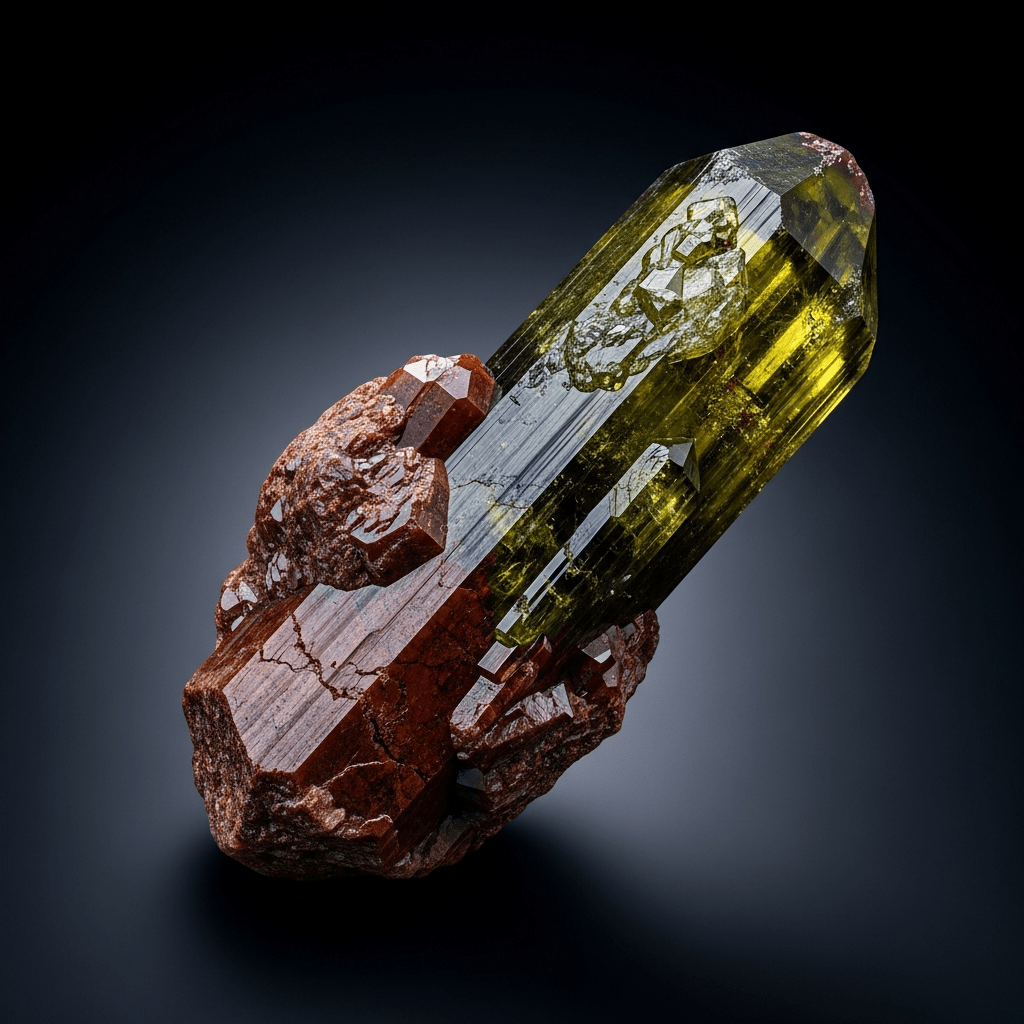
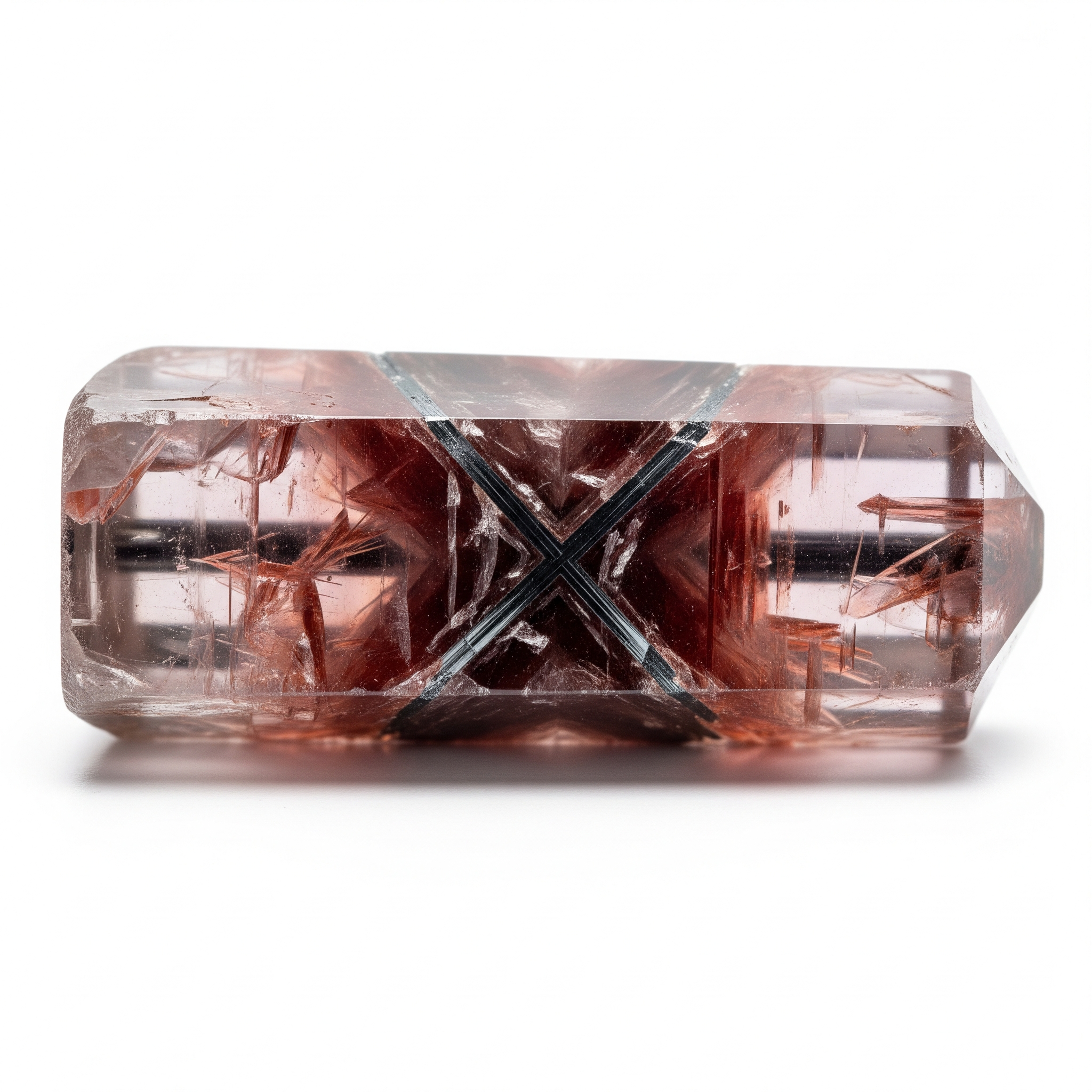
Andalusite typically forms prismatic crystals with a square cross-section, often displaying hues of reddish-brown, pink, green, or gray. Its strong pleochroism means the mineral can appear different colors depending on the viewing angle. The luster ranges from vitreous to dull, and specimens may be transparent to opaque. Notably, the chiastolite variety features striking cross-shaped graphite inclusions, adding visual intrigue to its form.
Highly resistant to chemical weathering and thermal alteration, Andalusite serves as a key petrogenetic indicator in metamorphic rocks, helping geologists interpret pressure-temperature conditions during rock formation. Industrially, its durability makes it valuable as a refractory material, while gem-quality crystals are faceted for jewelry, prized for their color-changing pleochroism. The chiastolite variety, with its unique cross pattern, has been used historically as a protective talisman.
Bring this kind into your world illustrated posters, mugs, and shirts.
Archival print, museum-grade paper
Buy Poster
Stoneware mug, dishwasher safe
Buy Mug
Soft cotton tee, unisex sizes
Buy ShirtThe chiastolite variety of Andalusite, marked by its natural cross-shaped inclusions, has held cultural and mystical significance for centuries. Often carried as a talisman or amulet, it was believed to offer protection and spiritual guidance. In modern times, Andalusite’s pleochroic gemstones are admired in jewelry, blending natural beauty with historical lore.
Andalusite’s chemical formula is Al₂SiO₅, comprising aluminum, silicon, and oxygen. This composition is shared with its polymorphs, but only Andalusite crystallizes in the orthorhombic system.

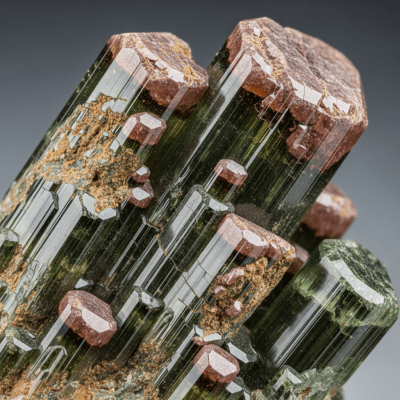
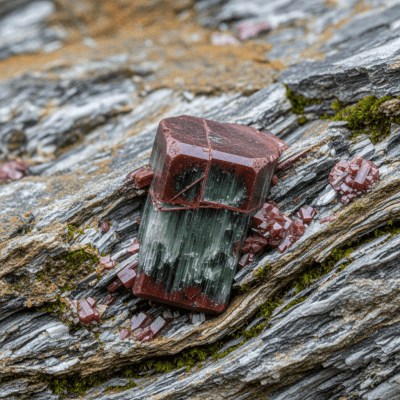


Crystallizing in the orthorhombic system (space group Pnma), Andalusite forms prismatic crystals often with square cross-sections. Its atomic arrangement distinguishes it from kyanite and sillimanite, which share the same chemical makeup but have different crystal systems.
Andalusite is typically found in metamorphic rocks, especially those formed under low-pressure, high-temperature conditions such as hornfels and pelitic schists. It often coexists with kyanite and sillimanite, reflecting specific pressure-temperature regimes. Major deposits are located in Spain, Brazil, Sri Lanka, Russia, and the United States (notably California and Colorado).
Andalusite’s exceptional resistance to heat and chemical attack makes it a preferred raw material for refractory products, including kiln linings and furnace bricks. Gem-quality crystals are cut for jewelry, valued for their color-changing pleochroism. The chiastolite variety is also collected for its ornamental and talismanic properties.
Notable Andalusite specimens include large chiastolite crystals from El Cardoso de la Sierra, Spain, the mineral’s type locality. Chiastolite crosses from Spain and Russia have been prized by collectors and featured in museum collections for their striking natural patterns and historical significance as talismans.