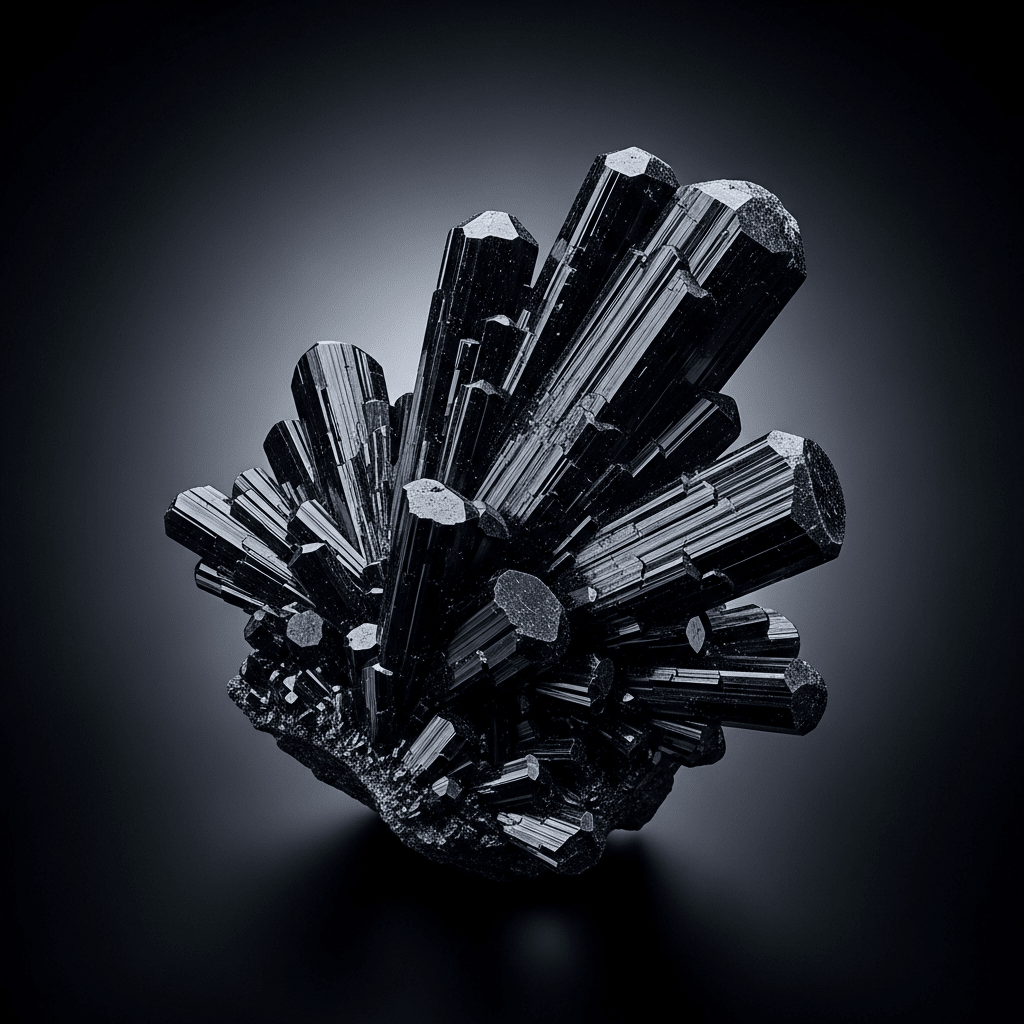
Amphibole
Amphibole is a prominent group of inosilicate minerals defined by their double-chain silicate structure, elongated prismatic crystals, and essential role in forming igneous and metamorphic rocks.
Amphibole is a prominent group of inosilicate minerals defined by their double-chain silicate structure, elongated prismatic crystals, and essential role in forming igneous and metamorphic rocks.
The name "amphibole" was coined in 1797 by René Just Haüy, inspired by the Greek word for "ambiguous" due to the group's variable appearance and composition. Since its introduction, the amphibole group has evolved through rigorous classification by the International Mineralogical Association, reflecting ongoing advances in mineralogy. Amphibole encompasses several distinct species, each with unique characteristics, but united by their structural and chemical lineage. Their origin is deeply tied to the dynamic processes of Earth's crust, forming in environments ranging from volcanic flows to high-pressure metamorphic terrains.
Amphibole belongs to the inosilicate subclass within the silicate mineral class, distinguished by its double-chain silicate structure. It is recognized as a mineral group rather than a single species, with notable members including hornblende, tremolite, actinolite, and others. The Dana classification assigns amphibole to category 66.1, while the Strunz system places it in 9.D. Most amphiboles crystallize in the monoclinic system, though some, such as anthophyllite and grunerite, are orthorhombic. The group is often contrasted with pyroxenes, which share similar habits but differ in cleavage and atomic arrangement.
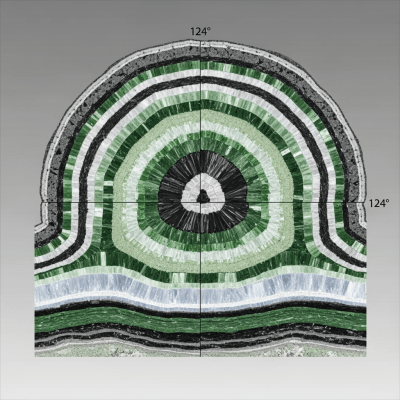
Amphibole minerals typically display elongated, prismatic crystals with a distinctive columnar or fibrous habit. Their colors range from dark green, black, and brown to gray, white, and even blue, depending on species and impurities. The luster varies from vitreous to silky or dull, and specimens often show perfect cleavage at angles of approximately 56° and 124°, a key diagnostic trait. In hand specimen, amphiboles may appear as dark, glassy blades or fibrous aggregates, while thin sections reveal strong pleochroism and complex internal textures.
Amphibole minerals are integral to geological processes, serving as major rock-forming constituents in igneous and metamorphic rocks. Their presence helps petrologists classify rocks and interpret metamorphic conditions. Industrially, fibrous amphibole varieties (such as amosite and crocidolite) were once widely used for insulation and fireproofing, though these uses are now heavily regulated due to health risks. In gemology, nephrite (a variety of amphibole) is prized as a gemstone and ornamental material. Amphiboles also play a role in geothermobarometry, aiding in the reconstruction of pressure-temperature histories of rocks.
Bring this kind into your world illustrated posters, mugs, and shirts.
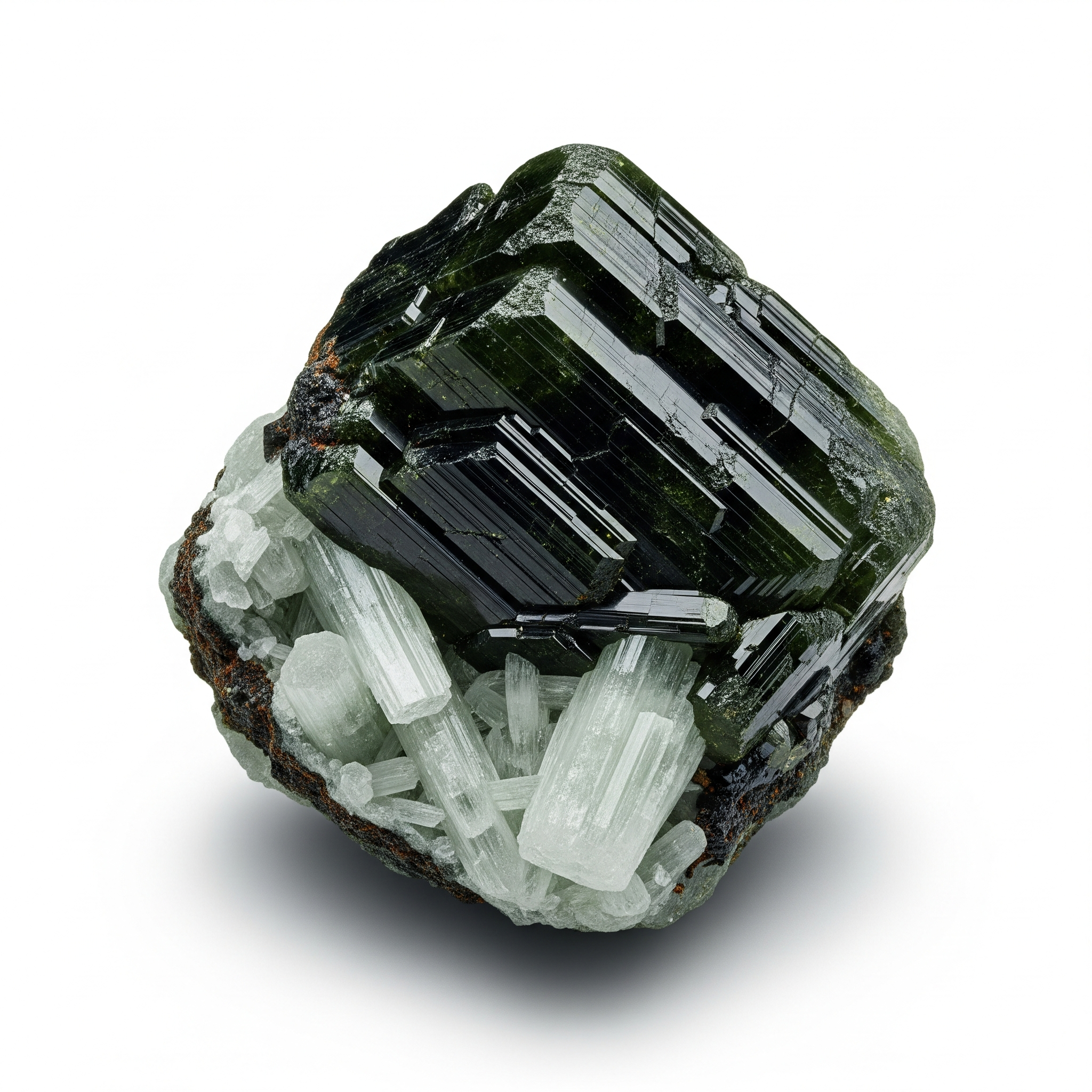
Archival print, museum-grade paper
Buy Poster
Stoneware mug, dishwasher safe
Buy Mug
Soft cotton tee, unisex sizes
Buy ShirtAmphibole minerals, especially nephrite jade, hold deep cultural value in art and ornamentation, notably in East Asian traditions. Their striking appearance and durability have made them favorites among collectors and museums. In mineralogical education, amphibole serves as a classic example for teaching crystal habits, cleavage, and mineral identification. The historical use of asbestos (fibrous amphibole) in construction and industry has left a complex legacy, shaping public perceptions and regulatory frameworks.
Amphibole minerals share a generalized chemical formula: (Ca,Na)2(Mg,Fe,Al)5(Si,Al)8O22(OH)2. Their composition varies widely among species, reflecting substitutions of calcium, sodium, magnesium, iron, aluminum, and silicon within the crystal lattice. This chemical diversity underpins the group's complex taxonomy and physical variability.
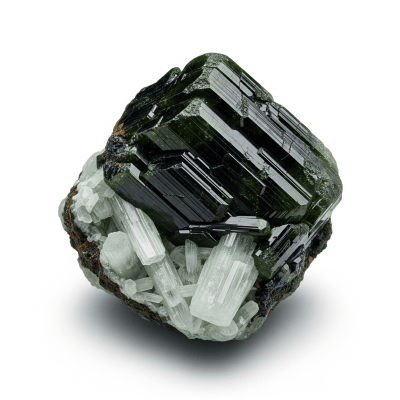
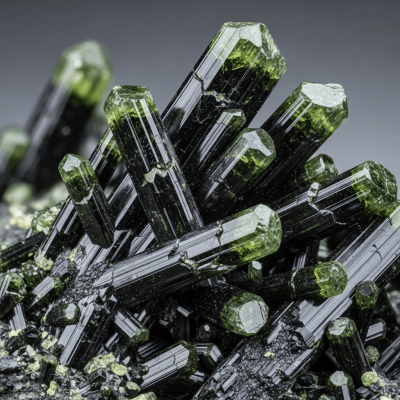
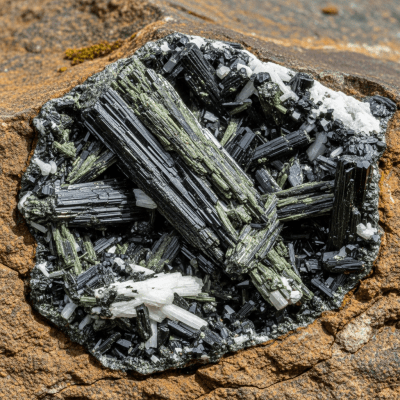

Amphiboles crystallize primarily in the monoclinic system, with some species (such as anthophyllite and grunerite) adopting orthorhombic symmetry. Their defining structural feature is the double-chain arrangement of silicate tetrahedra, which imparts unique cleavage angles and elongated crystal habits. This structure also facilitates extensive chemical substitution, resulting in a broad range of mineral species within the group.
Amphibole minerals typically have a Mohs hardness of 5–6 and a specific gravity ranging from 2.9 to 3.6. Their colors span dark green, black, brown, gray, white, and blue, with a vitreous to dull luster. Cleavage is perfect in two directions at ~56° and ~124°, and fracture is uneven to splintery. Most amphiboles are brittle and may show strong pleochroism in thin section. Transparency ranges from transparent to opaque, and their streak is usually white to gray.
Amphibole minerals are globally distributed and commonly found in igneous rocks such as andesite, basalt, and diorite, as well as metamorphic rocks like schist, gneiss, and marble. They are key constituents of amphibolite facies rocks and serve as index minerals for metamorphic grade. Notable localities include Campolungo, Switzerland (tremolite), Syros, Greece (glaucophane), and Namibia (riebeckite). Their formation reflects a range of geological environments, from volcanic flows to high-pressure metamorphic zones.
Historically, fibrous amphibole minerals (such as amosite, crocidolite, tremolite, and actinolite) were mined as asbestos for use in insulation, fireproofing, and construction materials. These uses are now strictly regulated or banned due to health hazards. Nephrite, a gem variety, is valued for jewelry and ornamental carvings. Amphibole-bearing rocks (amphibolite) are used as aggregate in building stone. In geology, amphiboles are crucial for rock classification and as index minerals in metamorphic studies.
Store amphibole specimens in a dry, stable environment to prevent alteration to chlorite or serpentine. Handle fibrous varieties with caution; avoid inhaling dust from asbestos forms. Clean crystals gently with a soft brush and avoid harsh chemicals. Display elongated specimens securely to minimize breakage, as amphiboles are brittle and prone to splintering.