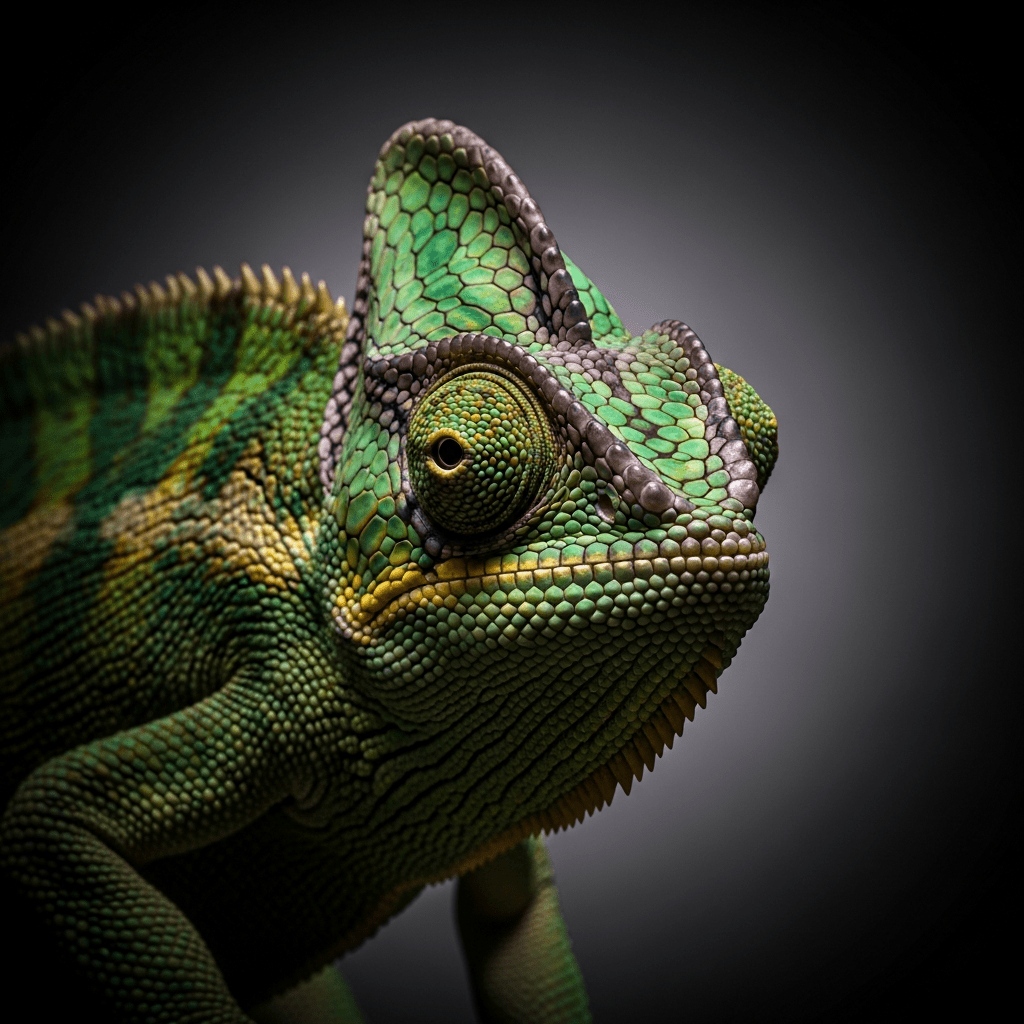
Veiled Chameleon
The Veiled Chameleon (Chamaeleo calyptratus) is a striking arboreal lizard native to the Arabian Peninsula, celebrated for its prominent helmet-like casque and remarkable ability to change color.
The Veiled Chameleon (Chamaeleo calyptratus) is a striking arboreal lizard native to the Arabian Peninsula, celebrated for its prominent helmet-like casque and remarkable ability to change color.
First scientifically described in 1851 by Duméril and Bibron, the Veiled Chameleon originates from Yemen and southwestern Saudi Arabia. Its wild populations thrive in these arid, mountainous regions, while captive breeding programs have been established worldwide since the late 20th century.
Belonging to the family Chamaeleonidae and genus Chamaeleo, the Veiled Chameleon is part of the diverse lizard suborder Lacertilia within the order Squamata. This classification places it among specialized arboreal reptiles known for their unique morphological adaptations and color-changing capabilities.
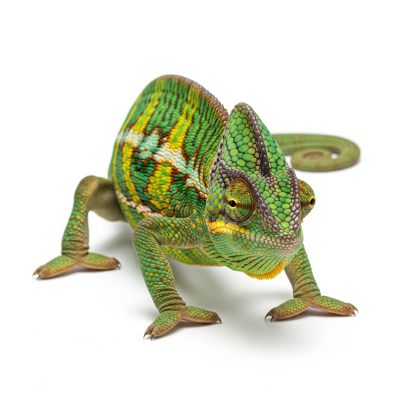
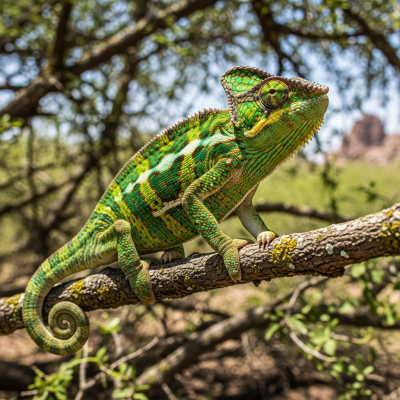
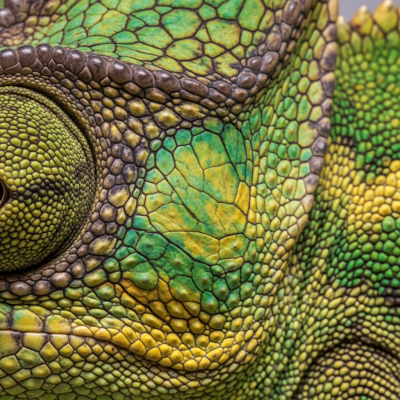
The Veiled Chameleon features a tall, helmet-like casque atop its head, especially pronounced in males, and a laterally compressed body ideal for navigating tree branches. Adults range from 25 to 60 centimeters in total length, with males larger than females. Its coloration shifts dynamically with mood and environment, displaying vivid greens, yellows, blues, and browns. Adapted for arboreal life, it has zygodactylous limbs for grasping and a prehensile tail that aids in climbing.
Active during the day, the Veiled Chameleon uses its color-changing ability for communication, camouflage, and thermoregulation. It is primarily arboreal, skillfully maneuvering through trees and shrubs. Its unique limbs and tail enhance its grip, enabling precise movement in its environment. In captivity, it is valued for its engaging behaviors and adaptability.
Bring this kind into your world illustrated posters, mugs, and shirts.
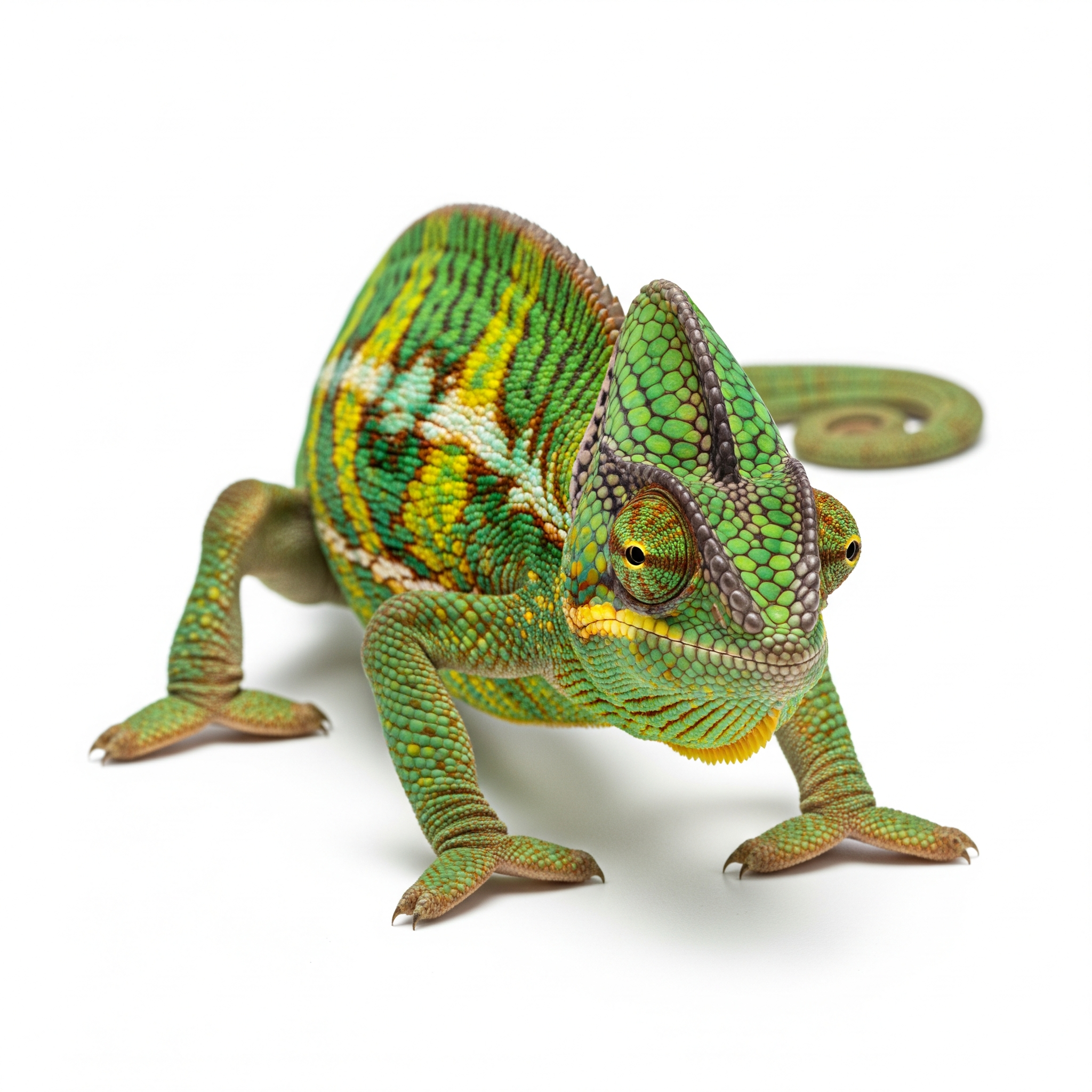
Archival print, museum-grade paper
Buy Poster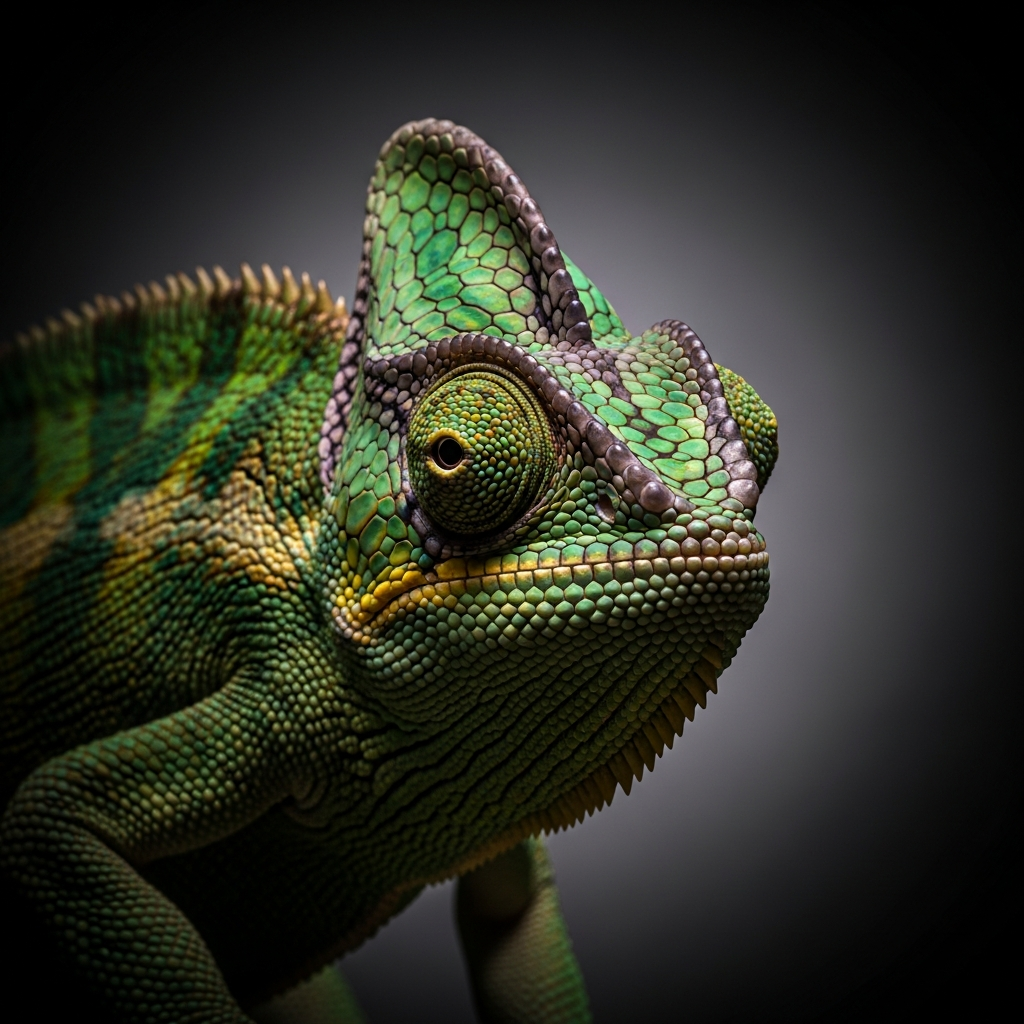
Stoneware mug, dishwasher safe
Buy Mug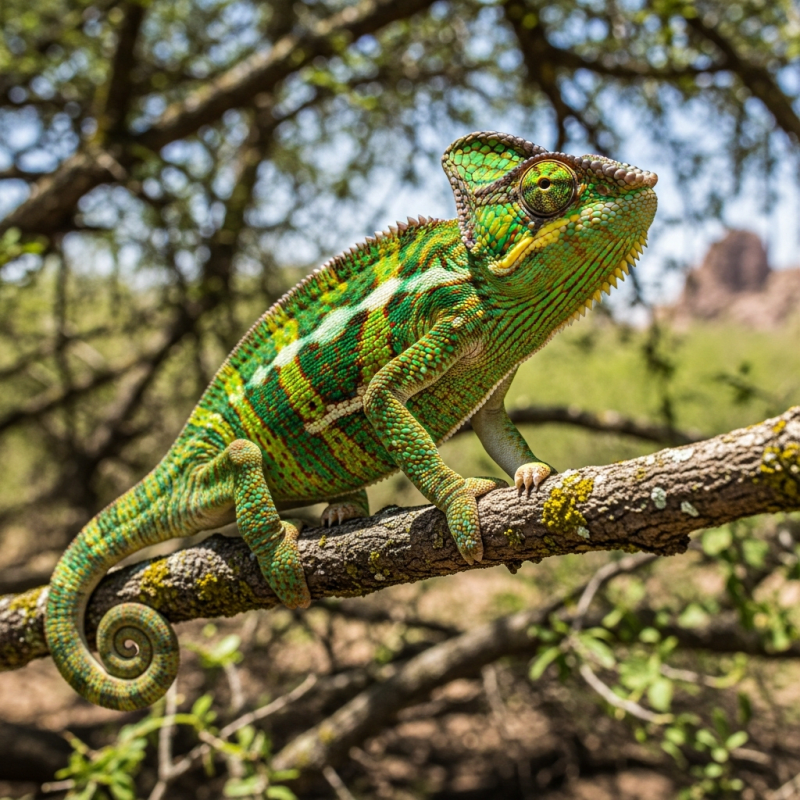
Soft cotton tee, unisex sizes
Buy ShirtThe Veiled Chameleon holds a special place in the pet trade, admired for its vivid colors and distinctive form. Occasionally, it appears in educational exhibits and zoological programs, helping raise awareness about reptile diversity and adaptation. While it is not traditionally featured in folklore or cuisine, its striking presence has made it a popular ambassador for reptile enthusiasts worldwide.
Native to Yemen and southwestern Saudi Arabia, the Veiled Chameleon inhabits arboreal environments in mountainous and shrubland regions. It thrives in trees and bushes where it can use its climbing adaptations effectively. Though primarily wild to the Arabian Peninsula, it has been introduced in limited areas through the pet trade but remains largely confined to its native range.
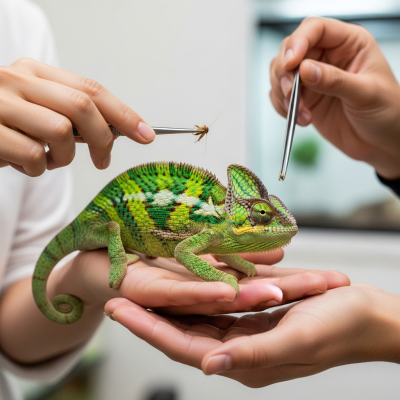

In the wild, Veiled Chameleons are insectivorous, feeding on a variety of insects and other small invertebrates. Their hunting strategy relies on stealth and their projectile tongue to capture prey efficiently. In captivity, their diet is typically supplemented with crickets, worms, and specially formulated reptile foods to ensure balanced nutrition.
The Veiled Chameleon is oviparous, with females laying clutches ranging from 30 to 85 eggs. After laying, eggs incubate in soil or substrate until hatching. Juveniles grow rapidly under favorable conditions, reaching maturity within a year. Lifespan in captivity typically ranges from 5 to 8 years, with proper care extending longevity.
Currently, the Veiled Chameleon faces no major threats in the wild and benefits from established captive breeding programs. Its tolerance to varied humidity and adaptability have helped maintain stable populations. However, habitat disturbance and the pet trade require ongoing monitoring to ensure sustainable conservation.
Veiled Chameleons require carefully controlled environments with UVB lighting to support calcium metabolism and healthy growth. Proper ventilation and humidity control are essential to prevent respiratory issues. Captive breeding is well-established globally, making them accessible to enthusiasts. Their diet should include live insects supplemented with vitamins, and enclosures must provide ample climbing structures to mimic their arboreal lifestyle.