Origin Story

First scientifically described by Carl Linnaeus in 1758, the Tokay Gecko originates from Southeast Asia, with its type locality in Java, Indonesia. Over time, it has adapted to thrive in both natural and urban environments across its native range and has been introduced to places like Florida, USA.

Classification

The Tokay Gecko belongs to the genus Gekko within the family Gekkonidae, a diverse group of geckos characterized by their adhesive toe pads and nocturnal habits. Its scientific name is Gekko gecko, with historical synonyms including Lacerta gecko Linnaeus, 1758.

Appearance or Form

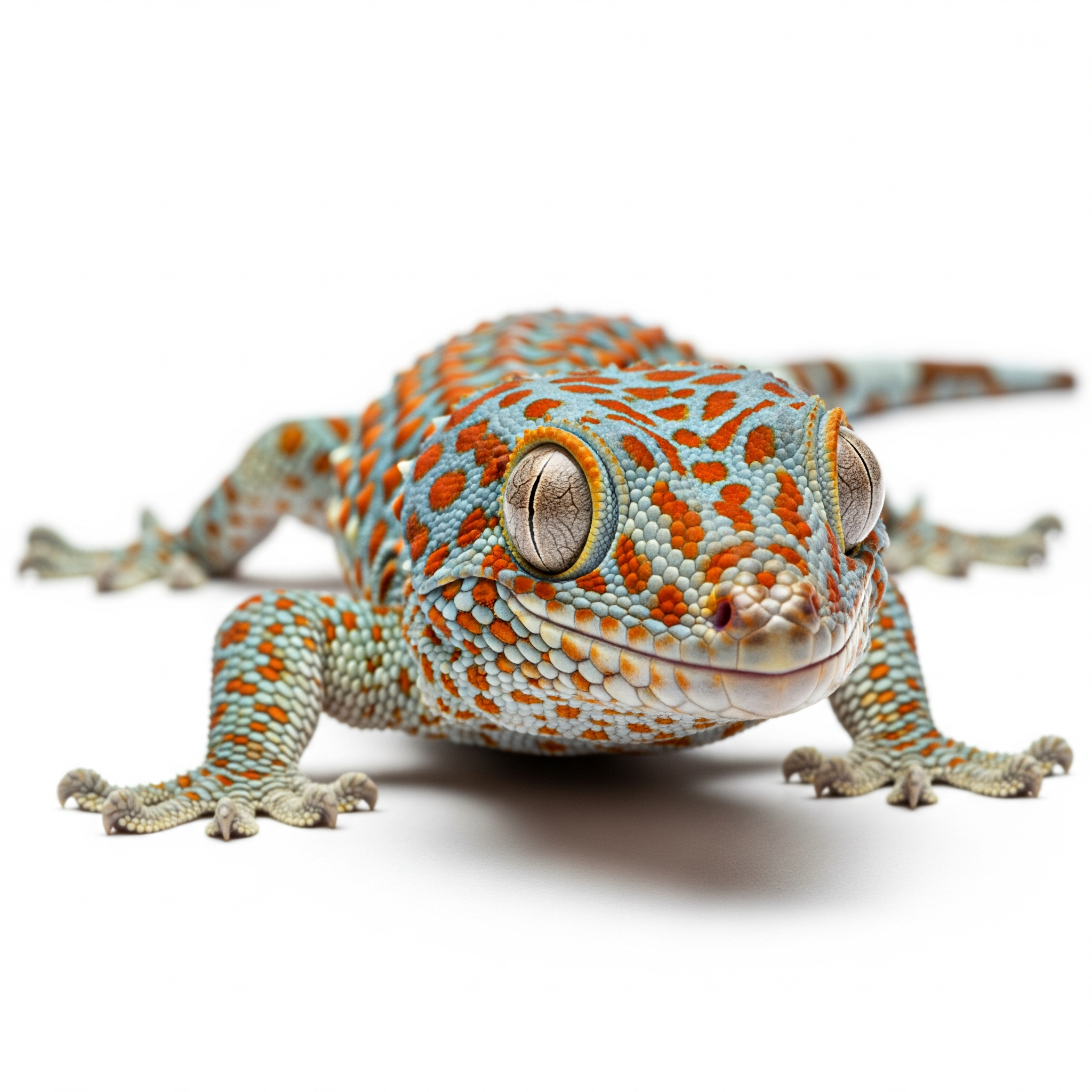
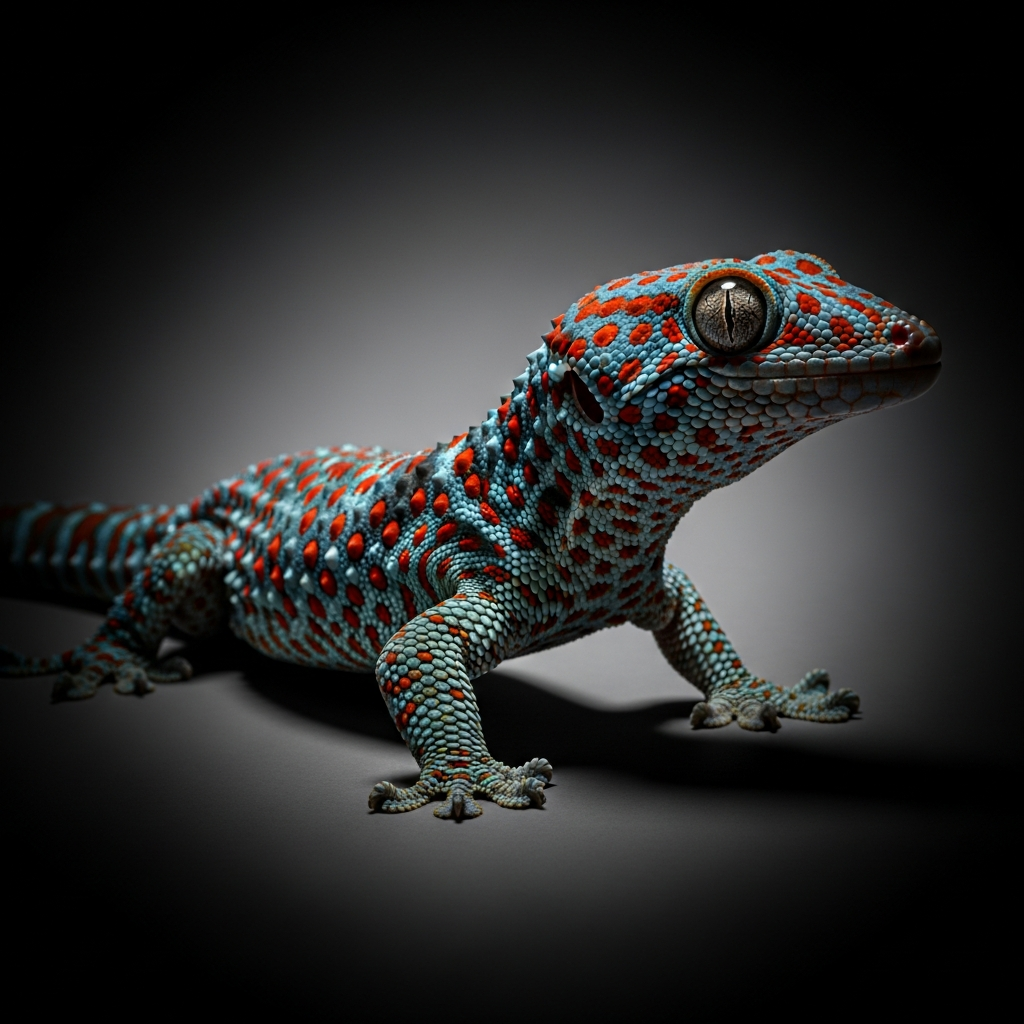
This gecko is notable for its large size, reaching up to 35 centimeters in total length. It has a robust body, broad head, and specialized adhesive toe pads that enable agile climbing. Its striking coloration features a blue-gray background punctuated by vivid orange or red spots, with some regional and individual variation adding to its visual appeal.

Behavior or Usage

The Tokay Gecko is primarily nocturnal and highly vocal, famous for its distinctive “to-kay” call that serves territorial and communication purposes. It exhibits territorial behavior and is an adept climber. Its diet mainly consists of insects, though it occasionally preys on small vertebrates. In captivity, it requires secure enclosures due to its strength and tendency to bite when threatened.

Merchandise & Prints

Bring this kind into your world � illustrated posters, mugs, and shirts.

Tokay Gecko Tokay Gecko Poster

Tokay Gecko Poster

Archival print, museum-grade paper

Tokay Gecko Tokay Gecko Mug

Tokay Gecko Mug

Stoneware mug, dishwasher safe

Tokay Gecko Tokay Gecko Shirt

Tokay Gecko Shirt

Soft cotton tee, unisex sizes

Attributes & Insights

Taxon-Specific Insights

🌍Cultural Significance

In various Southeast Asian cultures, the Tokay Gecko is revered and often appears in traditional medicine, believed to possess healing properties despite lacking scientific validation. It is also a popular species in the exotic pet trade, admired for its striking appearance and vocal nature. Regional names such as “Tuko,” “Tokek,” and “Tohkeh” reflect its cultural presence across its native range.

📌Notable Facts

  • The Tokay Gecko is one of the largest gecko species globally, reaching lengths up to 35 cm.
  • It produces a loud, distinctive call that sounds like “to-kay,” giving the species its common name.
  • Its adhesive toe pads allow it to climb smooth vertical surfaces with ease.
  • It lays small clutches of 1–2 hard-shelled eggs, often sticking them to surfaces.
  • Despite adaptability, it faces threats from habitat loss and overcollection for the pet and traditional medicine trades.

🌍Habitat And Distribution

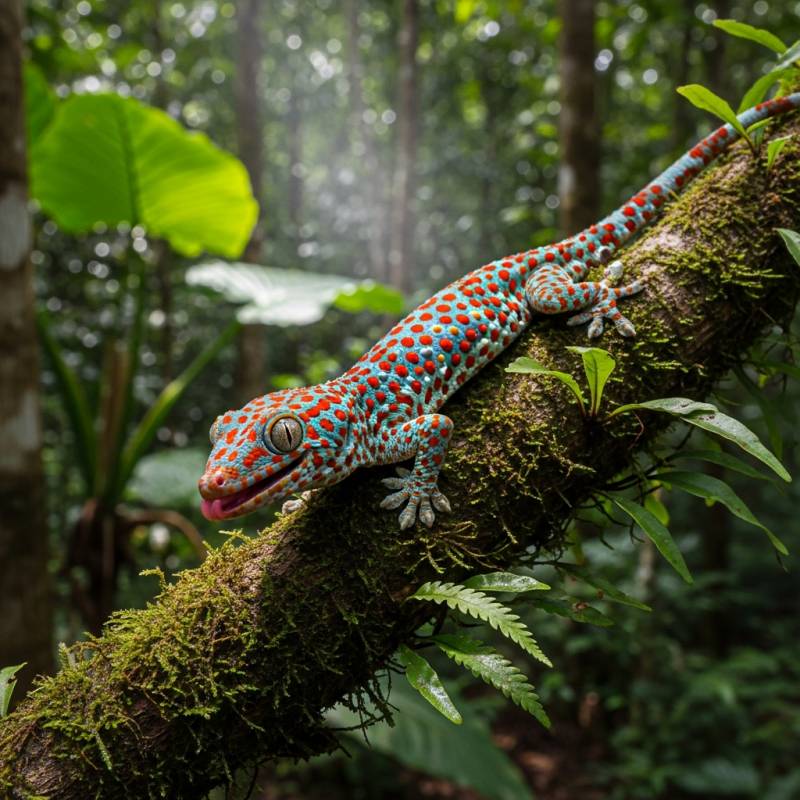
The Tokay Gecko inhabits a variety of natural and urban environments across Southeast Asia, demonstrating remarkable adaptability to disturbed habitats. It is commonly found on trees, buildings, and rocky areas. Outside its native range, established populations exist in places like Florida, USA, where it has been introduced.

Visual Variations

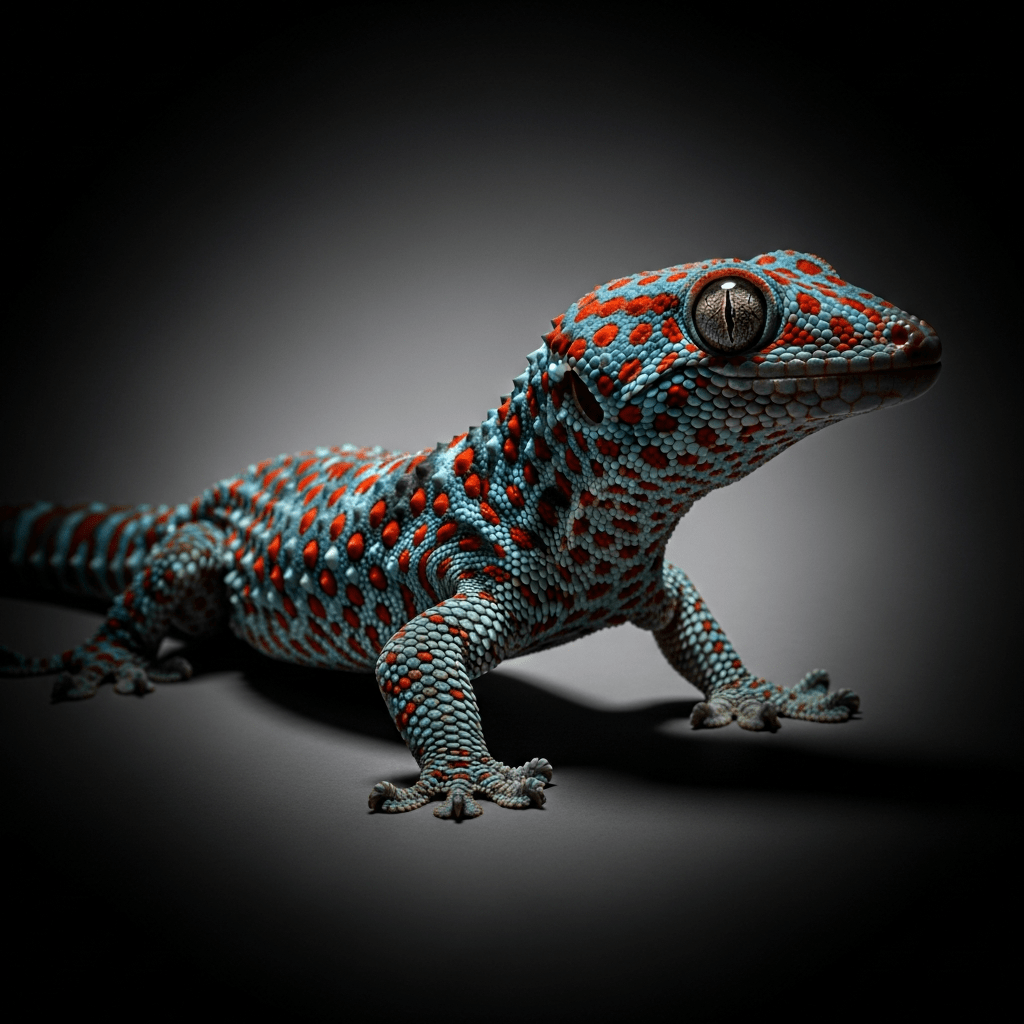
High quality studio photograph of a Tokay Gecko, part of the taxonomy lizards
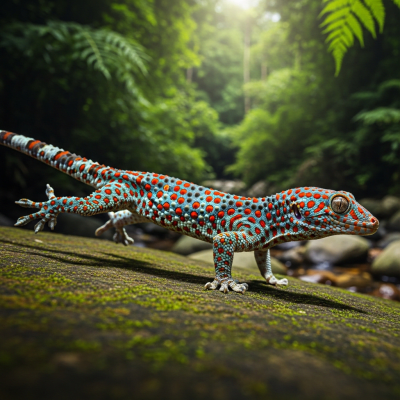
Detailed image of a Tokay Gecko (lizards) in its natural habitat
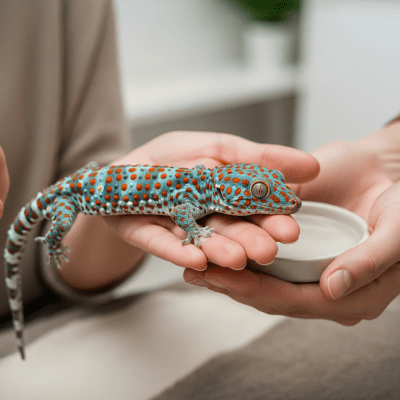
Image of a Tokay Gecko interacting with humans in a responsible pet-keeping context
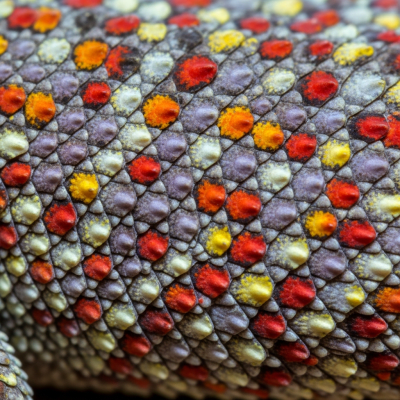
Macro close-up image of the skin texture and scale pattern of a Tokay Gecko, part of the taxonomy lizards
A dynamic action scene featuring a single Tokay Gecko (lizards) running, climbing, or catching prey in its typical environment

Composition & Context

Taxon-Specific Insights

🍽️Diet And Feeding

This species is primarily insectivorous, feeding on a wide range of insects. It may also consume small vertebrates when available. Its nocturnal hunting habits and agile climbing ability allow it to exploit diverse prey in its environment.

🦎Reproduction And Lifecycle

The Tokay Gecko is oviparous, laying clutches of one to two hard-shelled eggs. These eggs are often adhered to surfaces such as tree bark or walls. Details on lifespan are limited, but the species undergoes typical gecko developmental stages from egg to juvenile to adult.

🛡️Conservation Status

While adaptable, the Tokay Gecko faces threats from habitat loss and overcollection driven by demand in the pet trade and traditional medicine. Conservation efforts focus on habitat protection and regulating trade to ensure sustainable populations.

🏡Pet Care And Husbandry

Widely kept and bred in captivity, the Tokay Gecko requires secure enclosures due to its strength and defensive biting behavior. Proper husbandry includes providing climbing structures, maintaining appropriate temperature and humidity, and offering a diet rich in insects. Captive breeding is common, helping to reduce pressure on wild populations.

Faq

Q: What does the Tokay Gecko eat?
The Tokay Gecko primarily feeds on insects and occasionally small vertebrates.

Q: Is the Tokay Gecko a good pet?
While popular in the pet trade for its striking appearance, it requires secure housing due to its strength and can bite if threatened.

Q: Where is the Tokay Gecko naturally found?
It is native to Southeast Asia but has been introduced to regions like Florida in the USA.