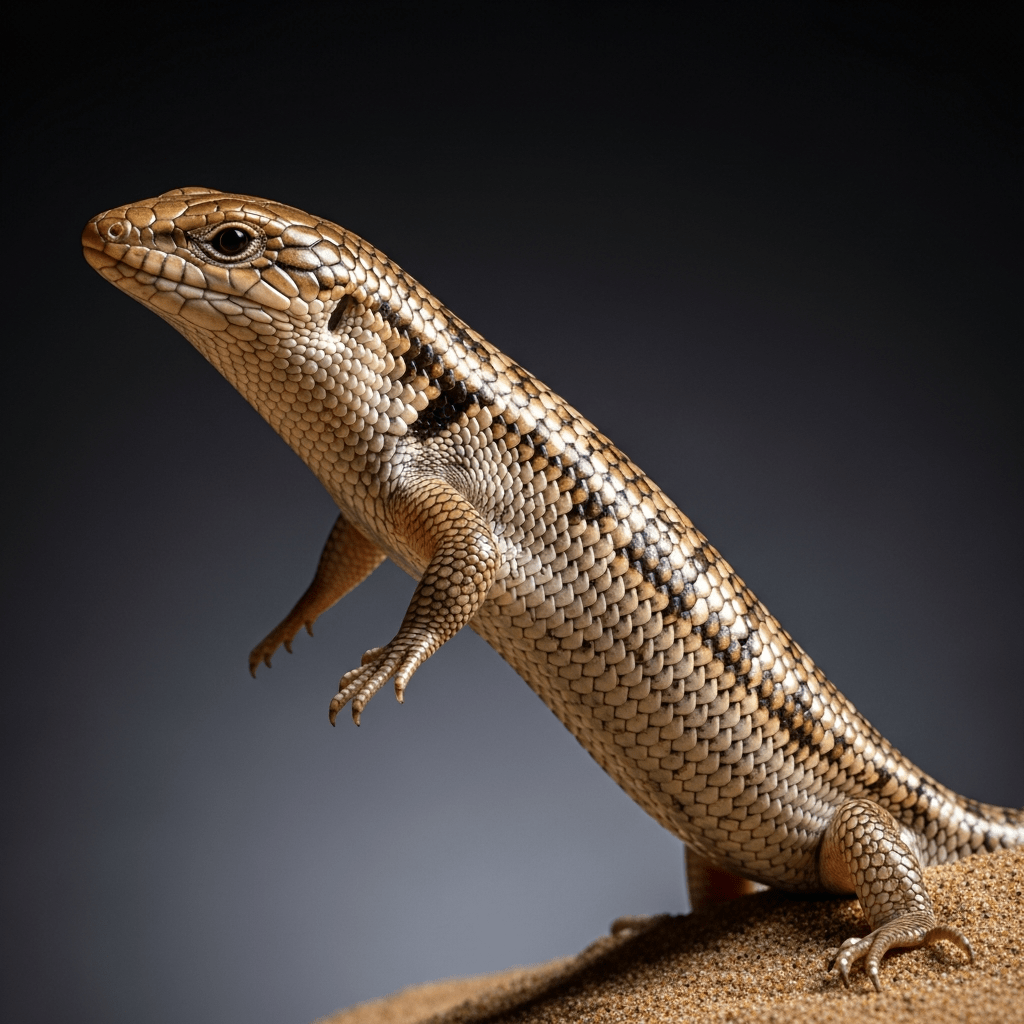
Sandfish Skink
The Sandfish Skink (Scincus scincus) is a desert-dwelling lizard famed for its unique ability to "swim" swiftly through loose sand, using its streamlined body and smooth scales to navigate beneath the surface.
The Sandfish Skink (Scincus scincus) is a desert-dwelling lizard famed for its unique ability to "swim" swiftly through loose sand, using its streamlined body and smooth scales to navigate beneath the surface.
First scientifically described by Carl Linnaeus in 1758, the Sandfish Skink originates from the deserts of North Africa and the Middle East, with Egypt as its type locality. It has been studied extensively by natural history institutions but remains a wild-type species without captive breeding origins.
The Sandfish Skink belongs to the family Scincidae, within the genus Scincus. It is part of the broader lizard suborder Lacertilia, which encompasses true lizards distinguished by features like external ear openings and movable eyelids. Synonymously, it has been known as Lacerta scincus since Linnaeus's original classification.
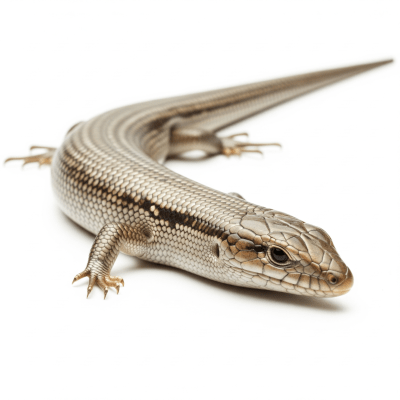
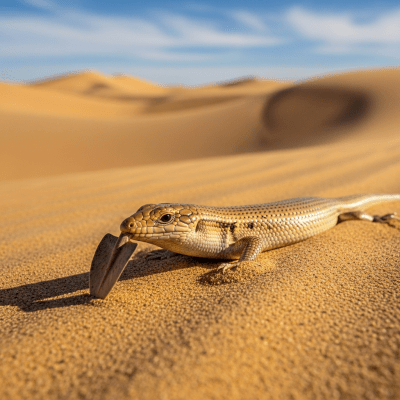
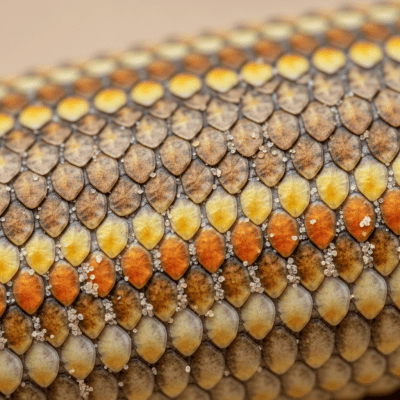
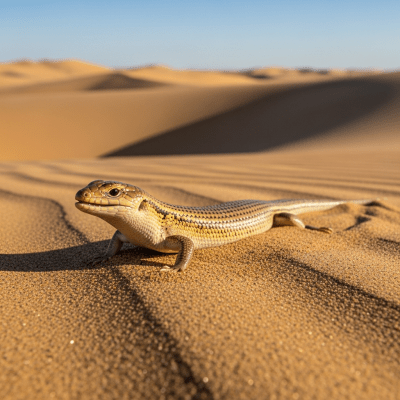
This skink measures between 16 and 20 centimeters in length, featuring a wedge-shaped head and short limbs that aid its burrowing lifestyle. Its smooth, shiny scales reduce friction, allowing it to glide effortlessly through sand. Its coloration ranges from pale yellow to golden, accented with faint brown stripes or spots that provide effective camouflage in desert landscapes.
The Sandfish Skink exhibits fossorial behavior, spending much of its life beneath the sand where it "swims" to escape predators and avoid extreme surface temperatures. It primarily feeds on small arthropods, using its specialized morphology to forage efficiently in its arid environment. Its unique locomotion has made it a subject of fascination and occasional interest in the exotic pet trade.
Bring this kind into your world illustrated posters, mugs, and shirts.
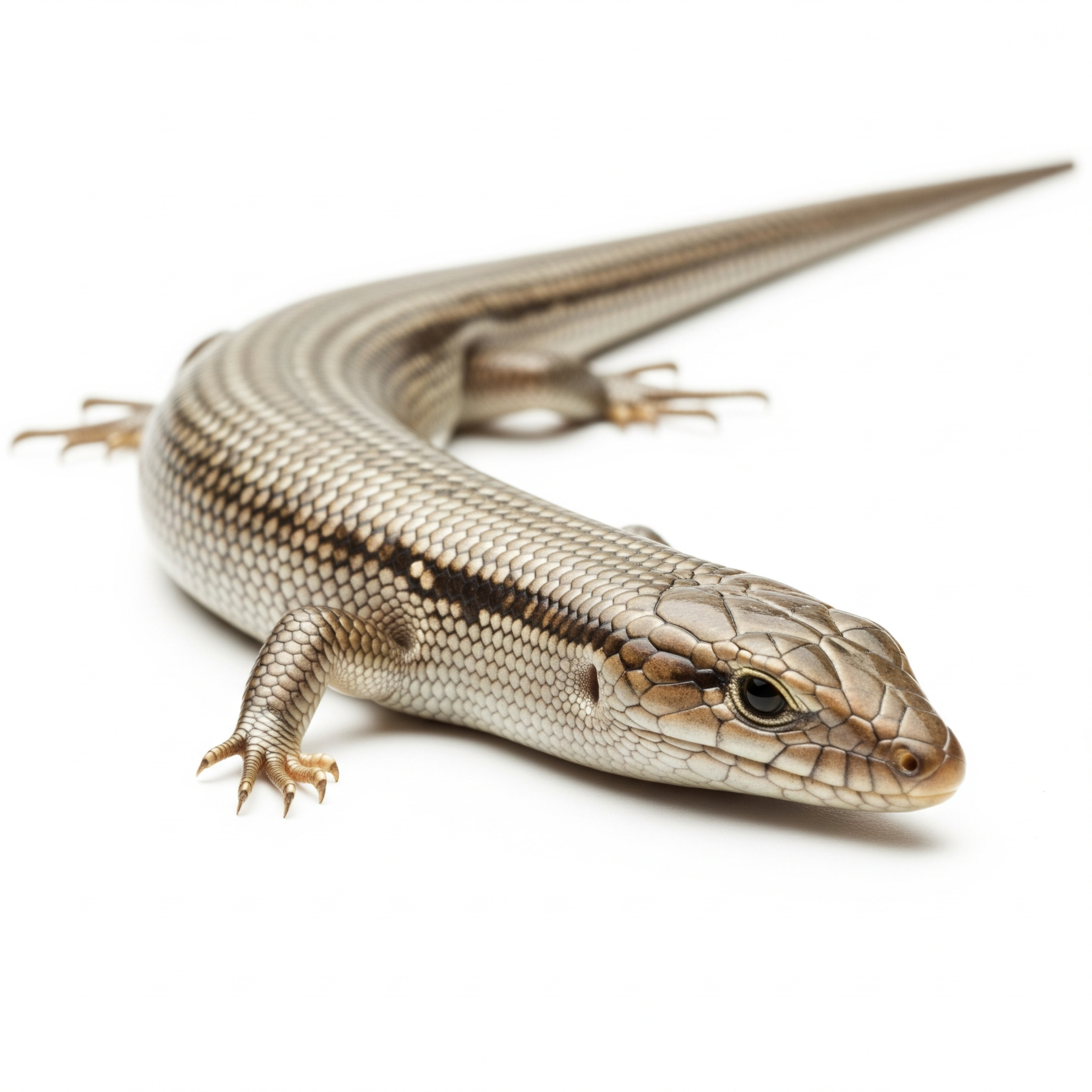
Archival print, museum-grade paper
Buy Poster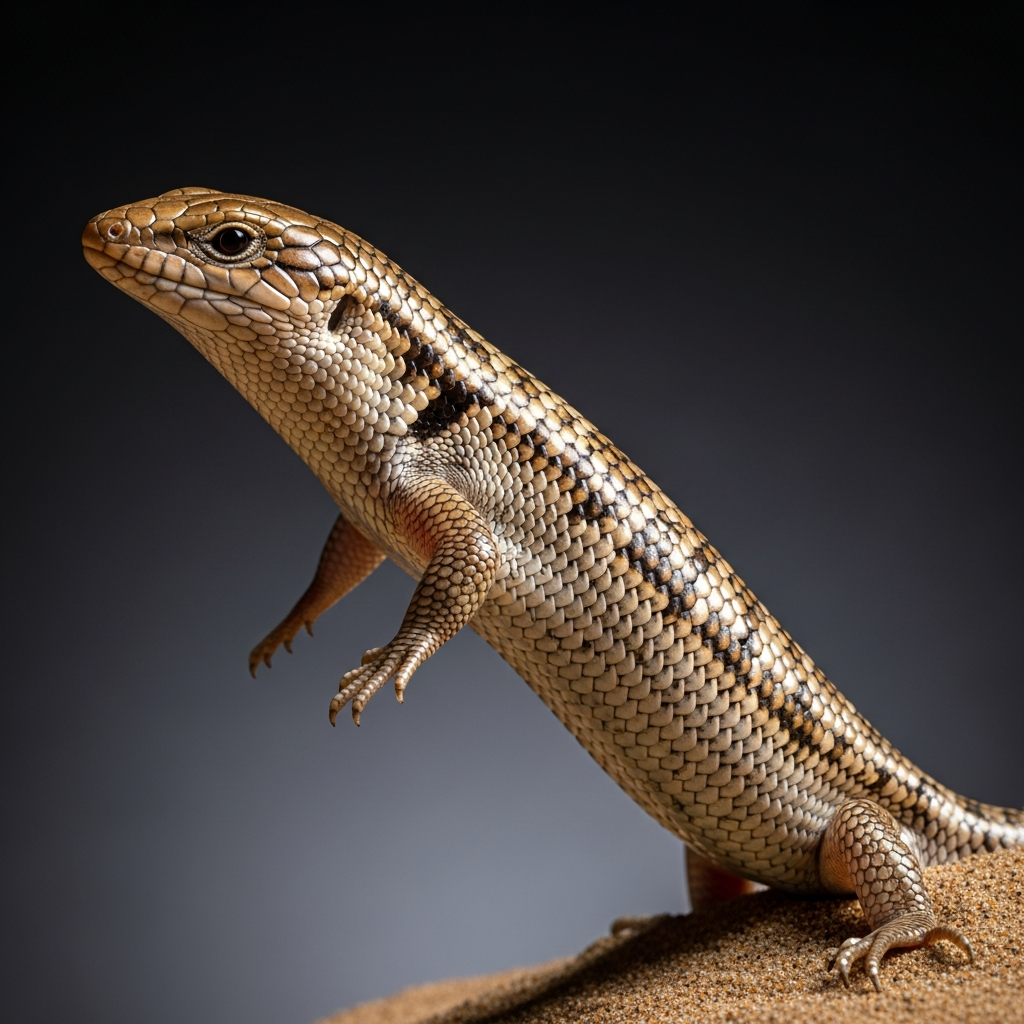
Stoneware mug, dishwasher safe
Buy Mug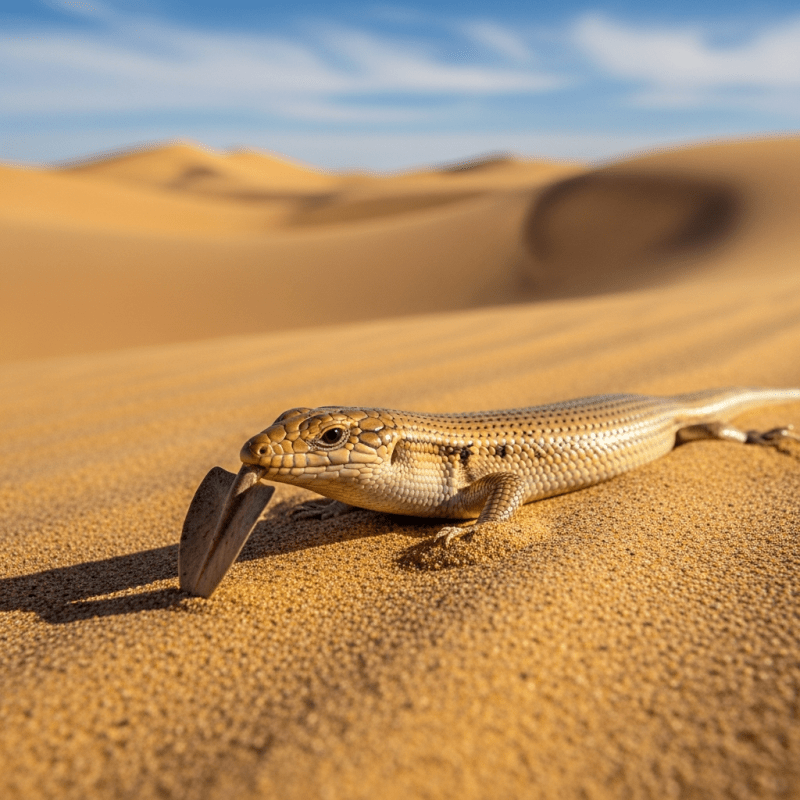
Soft cotton tee, unisex sizes
Buy ShirtWhile not widely prominent in cultural traditions, the Sandfish Skink holds minor symbolic value in some desert regions as an emblem of adaptation and survival in harsh environments. It does not feature prominently in art or mythology but is occasionally recognized in local vernacular and natural history contexts.
The Sandfish Skink thrives in desert environments characterized by loose, sandy soils across North Africa and the Middle East. It prefers arid habitats where it can burrow and "swim" beneath the sand, avoiding surface heat and predators. Its distribution is centered around the Sahara and adjacent desert regions, with minimal regional variation.

Primarily insectivorous, the Sandfish Skink feeds on small arthropods found within its sandy habitat. Its fossorial lifestyle allows it to hunt beneath the surface, using stealth and rapid movement to capture prey efficiently in the desert environment.
Details on the Sandfish Skink's reproductive habits are limited, but like many skinks, it is presumed to be oviparous, laying eggs in sheltered sandy areas. Information on clutch size, breeding season, and lifespan remains sparse, reflecting gaps in field research.
While the Sandfish Skink is well-adapted to harsh desert conditions, it faces threats from habitat disturbance and collection for the pet trade. Conservation efforts focus on habitat protection and monitoring trade impacts to ensure populations remain stable in the wild.
Occasionally kept by exotic pet enthusiasts, the Sandfish Skink requires specialized care that mimics its desert environment. This includes providing loose sand substrates for burrowing, controlled temperature gradients, and a diet rich in live arthropods. Captive breeding is not well established, and health issues often arise from improper husbandry, making it best suited for experienced keepers.